
Japan
News

26 Dec 2009
RIKEN
By being picky about its binding partners, an RNA-modifying enzyme brings an important measure of quality control to the protein production process
26 Dec 2009
RIKEN
Structural details of an environment-sensing protein complex could guide development of new drugs to direct plant growth or combat bacterial infection
26 Dec 2009
RIKEN
A new terahertz light source and detector could open the way for the practical application of terahertz waves
26 Dec 2009
RIKEN
On October 24, RIKEN Executive Director Kenji Takeda visited Zhejiang University in China to sign an important collaborative agreement between the two institutions.
24 Dec 2009
RIKEN
Press Release - A new fluorescent protein has illuminated complex neural networks of the hippocampus. The protein, engineered by researchers at RIKEN opens the possibility to dramatically extend the scope of research into brain function.

23 Dec 2009
Tokyo University of Science
The Tokyo University of Science held the Fourth International Collaboration Workshop for three days from Tuesday, December 8 to Thursday, December 10 at the Hotel Metropolitan Edmont in Iidabashi, Tokyo.
23 Dec 2009
Tokyo University of Science
A one-week intensive course "Building Fire Protection & Safety" was held from December 14th to 18th at the Urban & Architectural Institute, National University of Civil Engineering in Hanoi, Vietnam.
18 Dec 2009
RIKEN
The joint symposium was held on November 12, 2009 at the RIKEN Wako campus and featured presentations by five visiting members of the UoL and five RIKEN researchers.
18 Dec 2009
RIKEN
Nihar Ranjan Jana writes to Nobuyuki Nukina, laboratory head of the Laboratory for Structural Neuropathology at the RIKEN Brain Science Institute
18 Dec 2009
RIKEN
The nuclei in the core of a collapsing supernova can form a range of unusual ‘pasta-like’ structures
18 Dec 2009
Keio University
On November 28, 2009, the First General Assembly of the Keio Federation of Mita-Kai (Alumni Association) in South East Asia that each Mita-Kai in Jakarta, Kuala Lumpur, Manila, Singapore, Saigon, Hanoi and Bangkok participated all together, was held at Dusit Thani Hotel in Bangkok with 207 participants.
15 Dec 2009
Waseda University
Over the last dozen years, it has been apparent to all that journalism is facing imminent danger. Further, this was followed closely by the tumultuous wave of global financial instability resulting from the collapse of Lehman Brothers in September of last year.
15 Dec 2009
Waseda University
The media reported that Japanese Prime Minister Hatoyama and United States President Obama agreed to “deepen” the U.S.-Japan alliance to conclude Obama’s first visit to Japan.
15 Dec 2009
Waseda University
The Waseda Institute for Advanced Study (WIAS) was established in September 2006 as part of the actions to materialize the future concept called “Second Founding,” aimed in the 125th Anniversary Project of the University.
15 Dec 2009
Waseda University
Japanese Prime Minister Yukio Hatoyama stated in his address delivered to the United Nations Climate Change Summit in September that Japan would reduce greenhouse gas emissions by 25% from the 1990 level by 2020 on the condition that the major emitters in the world establish a fair and effective international framework for greenhouse gas reduction.
11 Dec 2009
Keio University
The Keio Research Institute at SFC hosted the 14th SFC Open Research Forum (ORF) on 23rd and 24th November, 2009 at Roppongi Academyhills.
11 Dec 2009
RIKEN
On Sunday November 15, 2009, RIKEN and the Tokyo University of the Arts (TUA) held a joint symposium to commemorate an agreement, signed in April 2009, toward cooperation in research and education, with the aim of achieving broad-based advances benefitting all of society.
11 Dec 2009
RIKEN
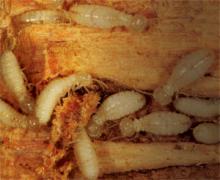
Genetic analyses help decode symbiosis in the termite gut as a model for the highly efficient conversion of plant cellulose
11 Dec 2009
RIKEN
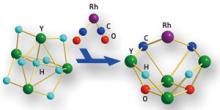
Combining rare-earth clusters with traditional metal catalysts reveals secrets of chemical transformation
11 Dec 2009
RIKEN
A switch that controls formation of stacks from nucleic acid strands has potential applications in gene expression and molecular machines
07 Dec 2009
Keio University
Never Lose Fighting Spirit
04 Dec 2009
RIKEN
First-ever observation of electronic states in aqueous acetic acid reveals water’s unexpected influence
04 Dec 2009
RIKEN
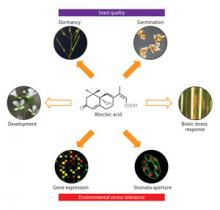
The plant hormone abscisic acid makes use of a surprisingly elegant and straightforward system to regulate its many essential functions
30 Nov 2009
Waseda University
Robert D. Hormats, Under Secretary of State for Economic, Energy and Agricultural Affairs(USA), delivers a lecture at Waseda university.
27 Nov 2009
RIKEN
As part of plans to launch its new Drug-discovery Technology Program in 2010, RIKEN is making its life sciences technology infrastructure available to outside users on a trial basis to facilitate drug-discovery research and development. The new program will be headed by Toshio Goto, currently a senior advisor of RIKEN.
27 Nov 2009
RIKEN
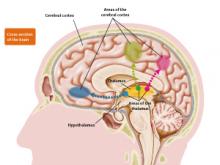
Gene expression studies shed light on how the brain develops in the fetus and how new areas of the brain may evolve
27 Nov 2009
RIKEN
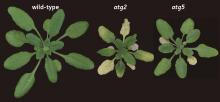
Internal degradation within plant cells and their response to aging and disease are linked
25 Nov 2009
Keio University
Good, Right - What does that mean?
We discuss fundamental issues of Ethics and Social Philosophy both in Japanese and English. In our seminars, we have two seniors, three juniors, and three graduate students.
23 Nov 2009
Waseda University
With its history as a city since the Edo Period, the Tokyo metropolitan Yamanote area on the eastern edge of the Musashino Plateau comprises terrain with plateaus, valleys, and an intricate network of streams and rivers, such as the Kanda River, that erode the plateau.
23 Nov 2009
Waseda University
The mass media cover the issue of Japan Airlines (JAL) reconstruction nearly every day. It would be a mistake to regard this as simply an issue of management at one corporation. It is, in fact, a significant issue which involves airline administration and airport administration, and which also affects transportation policy as a whole.
Researchers
Sorry, no researchers coming up for this topic.
Giants in history

Japanese biochemist Akira Endo (1933 – 2024) discovered the first statin, called mevastatin, which lowered cholesterol levels in the blood by inhibiting a key enzyme in the cholesterol biosynthesis pathway. His work laid the foundation for the development of statins to help patients lower their blood cholesterol levels and reduce their risk of heart disease or stroke.
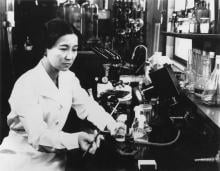
Ruby Sakae Hirose (1904 – 1960) was a Japanese-American scientist whose research contributed significantly to our understanding of blood clotting, allergies and cancer.
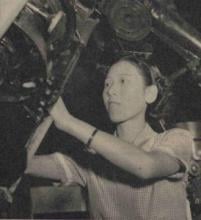
Haisako Koyama (1916 – 1997) was a Japanese solar observer whose dedication to recording sunspots – cooler parts of the sun’s surface that appear dark – produced a sunspot record of historic importance.
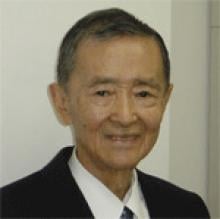
Michiaki Takahashi (17 February 1928 – 16 December 2013) was a Japanese virologist who developed the first chickenpox vaccine.
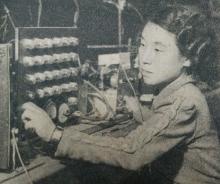
Toshiko Yuasa (11 December 1909 – 1 February 1980) was the first Japanese female physicist whose research on radioactivity shed light on beta decay – the process in which an atom emits a beta particle (electron) and turns into a different element.
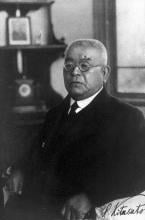
Baron Kitasato Shibasaburo (29 January 1856 – 13 June 1931) was a Japanese physician and bacteriologist whose work led to a new understanding of preventing and treating tetanus, diphtheria and anthrax.
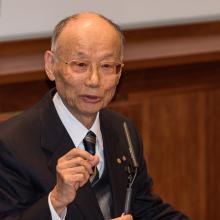
By isolating soil microorganisms and studying the compounds they produce, Satoshi Omura (born 1935) discovered almost 500 organic compounds with unique properties that were produced by these microorganisms, including many new antibiotics.
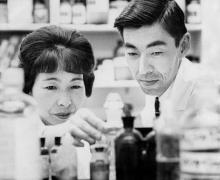
Husband and wife team, Kimishige (3 December 1925 – 6 July 2018) and Teruko Ishizaka (28 September 1926 – 4 June 2019) discovered the antibody class Immunoglobulin E (IgE) that triggers allergic reactions. They also discovered that IgE antibodies attach to white blood cells, known as mast cells, releasing histamine, which causes allergic reactions.
Husband and wife team, Kimishige (3 December 1925 – 6 July 2018) and Teruko Ishizaka (28 September 1926 – 4 June 2019) discovered the antibody class Immunoglobulin E (IgE) that triggers allergic reactions. They also discovered that IgE antibodies attach to white blood cells, known as mast cells, releasing histamine, which causes allergic reactions.
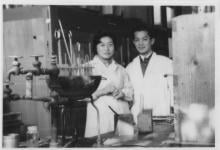
Reiji Okazaki (8 October 1930 – 1 August 1975) and Tsuneko (7 June 1933) were a Japanese couple who discovered Okazaki fragments – short sequences of DNA that are synthesized during DNA replication and linked together to form a continuous strand.
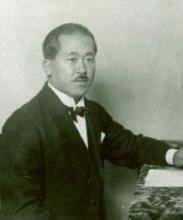
In 1915, Koichi Ichikawa along with pathologist Katsusaburo Yamagiwa became the first to prove that chronic exposure to chemicals can cause cancer.
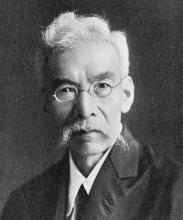
In 1915, pathologist Katsusaburo Yamagiwa and his research assistant Koichi Ichikawa became the first to prove that chronic exposure to chemicals can cause cancer.
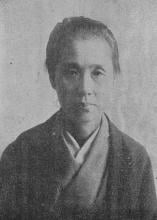
Ogino Ginko (3 March 1851 – 23 June 1913) was the first registered female doctor to practise modern medicine in Japan.
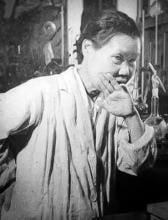
Michiyo Tsujimura (17 September 1888 – 1 June 1969) was a Japanese agricultural scientist and biochemist recognized for her research of green tea components.
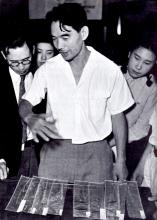
Hitoshi Kihara (1893 – 1986) was one of the most famous Japanese geneticists of the 20th century. One of his most significant contributions was identifying sex chromosomes (X and Y) in flowering plants.
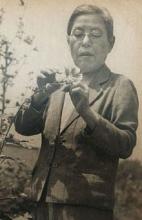
Kono Yasui (16 February 1880 – 24 March 1971) was a Japanese botanist who researched the genetics of poppies, corn and spiderworts and surveyed the plants that had been affected by the nuclear fallout after the atomic bombings of Hiroshima and Nagasaki.
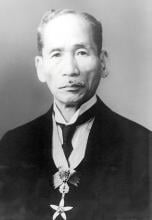
Umetaro Suzuki (7 April 1874 – 20 September 1943) was a Japanese scientist best remembered for his research on beriberi, a disease caused by vitamin B1 deficiency, characterized by limb stiffness, paralysis and pain.
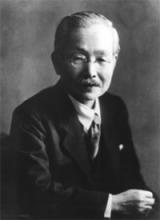
Kikunae Ikeda (8 October 1864 – 3 May 1936) was a Japanese chemist who discovered the fifth basic taste, umami.
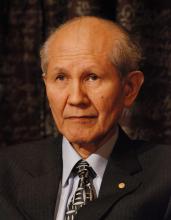
Osamu Shimomura (27 August 1928 – 19 October 2018) was a Japanese organic chemist and marine biologist who dedicated his career to understanding how organisms emitted light.
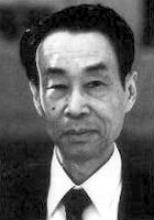
Motoo Kimura (13 November 1924 – 13 November 1994) was a Japanese theoretical population geneticist who is best remembered for developing the neutral theory of molecular evolution.

Chika Kuroda (24 March 1884 – 8 November 1968) was a Japanese chemist whose research focussed on the structures of natural pigments.
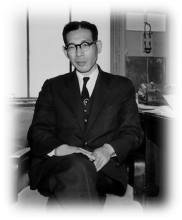
The field of solid-state ionics originated in Europe, but Takehiko Takahashi of Nagoya University in Japan was the first to coin the term ‘solid ionics’ in 1967. ‘Solid-state ionics’ first appeared in 1971 in another of his papers, and was likely a play on ‘solid-state electronics’, another rapidly growing field at the time.
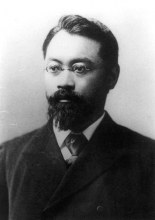
The techniques that make industrial pearl culturing possible were developed over a century ago at the Misaki Marine Biological Station in Japan. The station’s first director, Professor Kakichi Mitsukuri, emphasized to Kokichi Mikimoto in 1890 that stimulating pearl sac formation was important for pearl growth, and they went on to successfully develop methods for culturing pearls.
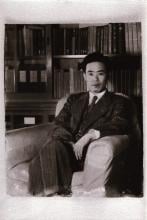
Japanese physicist Ukichiro Nakaya (1900-1962) made the world’s first artificial snowflakes. He started his research on snow crystals in the early 1930s at Hokkaido University, where there is an unlimited supply of natural snow in winter. By taking over 3,000 photographs, he established a classification of natural snow crystals and described their relationship with weather conditions.
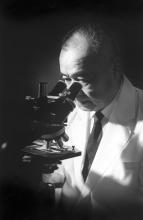
Minoru Shirota (April 23, 1899 – March 10, 1982) was a Japanese microbiologist who invented the popular fermented drink Yakult.
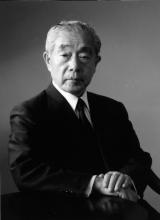
Japanese chemist Kenichi Fukui (4 October 1918 – 9 January 1998) was the first Asian scientist to be awarded the Nobel Prize in Chemistry. Together with Roald Hoffman, he received this honour in 1981 for his independent research into the mechanisms of chemical reactions.
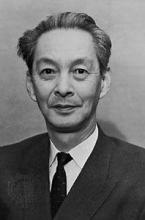
Shinichiro Tomonaga (31 March 1906 – 8 July 1979), together with Richard Feynman and Julian Schwinger, was awarded the Nobel Prize in Physics in 1965, for their contributions to advance the field of quantum electrodynamics. Tomonaga was also a strong proponent of peace, who actively campaigned against the proliferation of nuclear weapons and promoted the peaceful use of nuclear energy.
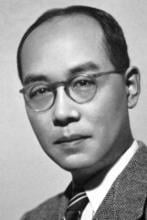
Hideki Yukawa (23 January 1907 – 8 September 1981) was awarded the Nobel Prize in Physics in 1949 for predicting the existence of the pi meson subatomic particle. Japan’s first Nobel laureate, Yakawa also expressed his support for nuclear disarmament by signing the Russell–Einstein Manifesto in 1955.
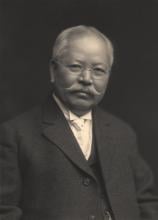
Japanese chemist Takamine Jokichi (3 November 1854 – 22 July 1922) founded the Tokyo Artificial Fertilizer Company, where he isolated a starch-digesting enzyme (named takadiastase) from the fungus Aspergillus oryzae.
Tsuneko (7 June 1933) and Reiji Okazaki (8 October 1930 – 1 August 1975) were a Japanese couple who discovered Okazaki fragments – short sequences of DNA that are synthesized during DNA replication and linked together to form a continuous strand.
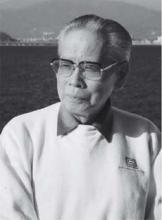
A Japanese surgeon, Tetsuzo Akutsu (20 August 1922 – 9 August 2007) built the first artificial heart capable of keeping an animal alive.
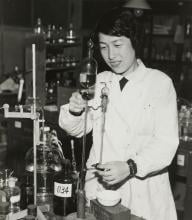
Japanese geochemist Katsuko Saruhashi developed the first method and tools for measuring carbon dioxide in seawater