

Japan
News

29 Jan 2010
RIKEN
The Asia-Oceania Forum for Synchrotron Radiation Research (AOFSRR) held its third school from November 2 to 11 at SPring-8, the world-largest synchrotron radiation facility located at the RIKEN Harima Institute.
29 Jan 2010
RIKEN
Molecular fluorescence applied in an unconventional way allows the life-sustaining chemical reactions in genes to be observed in real time
29 Jan 2010
RIKEN
An unexpected result leads to new insights about a poorly understood mode of communication between cells
29 Jan 2010
RIKEN
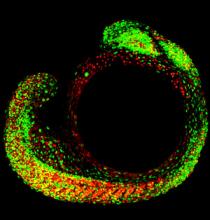
Cell-cycle progression in fish embryos can now be tracked visually in three dimensions
22 Jan 2010
RIKEN
A molecule that regulates expression of two growth factors is critical for inner ear development
22 Jan 2010
RIKEN
Inhibitory neurons in the visual cortex of the brain exhibit a bidirectional form of plasticity after visual deprivation
22 Jan 2010
RIKEN
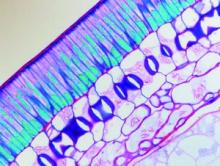
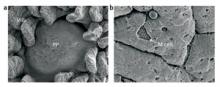
The photograph depicts epidermal layer cells of dry Lotus japonicus seed, dyed so as to highlight seed segmentation.
18 Jan 2010
Waseda University
In determining whether or not the contract with the renewal fee clause infringed the Consumer Contract Act, Article 10, the court continued to rule that it did not infringe and that it was valid up to the decision that was made by the Otsu District Court on March 27, 2009.
18 Jan 2010
Waseda University
For eleven years straight, from 1998 on, the suicide rate in Japan has exceeded 30,000 per year, and this year shows no signs of letting up. Young people do not make up a large number of these suicides by any means, but as youth is a period with a low mortality rate in general, suicide is becoming a leading cause of death among them.
18 Jan 2010
Waseda University
Archaeology values actual historical facts as a first priority, rather than what is often referred to as the implied truth and meaning of history. Ruins and relics, also known as buried cultural properties, are almost the only hard evidence that reveals such historical facts.
18 Jan 2010
Waseda University
We defined “ill-temperedness” as employees’ inability to cooperate with each other and analyzed it from a viewpoint of social exchange theory, which is my primary research interest. In general, the company organization is based on a system where employees pay a cost in the form of labor to earn a profit that is later distributed among them.
18 Jan 2010
Waseda University
I am specialized in ergonomics and am focusing my research on the next generation media, which is currently not yet prevalent but have a potential in the near future. When I was an undergraduate student, I undertook a research evaluating 3D images from the human perspective for the first time.
18 Jan 2010
Waseda University
I have been voicing my dissenting opinion of abolishing the use of Food for Specified Health Uses (FOSHU)—as well as the system itself—on the grounds that consumers are given no guarantee of the effectiveness of such products.
15 Jan 2010
RIKEN
RIKEN invites applications for the position of Chief Scientist (Laboratory Director) to head a new laboratory in Innovative Light Sources Division of RIKEN SPring-8 Center (RSC). Applications from overseas are welcome.
15 Jan 2010
RIKEN
RIKEN invites applications for the position of Chief Scientist to lead a new laboratory working on The Advanced Science Institute (ASI).
15 Jan 2010
RIKEN
Eight Nobel laureates, including RIKEN President Ryoji Noyori and Brain Science Institute Director Susumu Tonegawa, delivered a message to Japanese Prime Minister Yukio Hatoyama on November 26 rejecting recently proposed cuts to basic science budgets.
15 Jan 2010
RIKEN
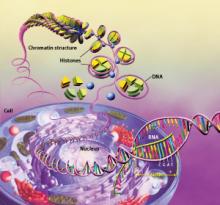
Research on the mechanism of gene switching could pave the way for regenerative medicine and provide a phenomenological foundation for the emerging field of epigenetics
15 Jan 2010
RIKEN
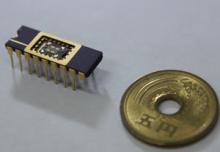
Combining design concepts produces a high-sensitivity detector that could enable greater exploitation of terahertz radiation
15 Jan 2010
RIKEN
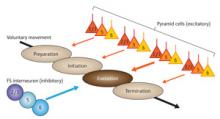
A new recording method shows how microcircuitry in the motor cortex of the brain controls voluntary movements
13 Jan 2010
RIKEN
Internship/Lecture: Jul. 1 - Aug. 26, 2010
Lecture July 20 - 30, 2010
Application Deadline Feb. 28, 2010
08 Jan 2010
RIKEN
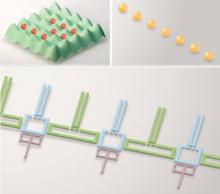
Controllable quantum systems that allow us to better understand complex physical processes are now within reach
08 Jan 2010
RIKEN
Revelation of key elements of how the digestive system defends the body broadens the scope for oral vaccines
06 Jan 2010
RIKEN
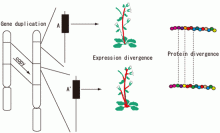
A research team at RIKEN has clarified details of key mechanisms driving the emergence of functional novelty in genes of eukaryotes. In a paper to appear in PLoS Genetics, the researchers analyze the molecular-level mechanisms of functionalization in duplicate genes, shedding light on their relationship to morphological evolution.
06 Jan 2010
Keio University
A Happy New Year to you all. I wish you the best of health and happiness for 2010.
04 Jan 2010
RIKEN
The RIKEN CDB seeks laboratory heads to lead laboratories under the following two Programs. Applicants can choose to apply for a specific position, or allow the search committee to assign them to an appropriate position during the course of the evaluation.
04 Jan 2010
RIKEN
The RIKEN CDB seeks laboratory heads to lead laboratories under the following two Programs. Applicants can choose to apply for a specific position, or allow the search committee to assign them to an appropriate position during the course of the evaluation.
04 Jan 2010
RIKEN
RIKEN invites applications for the position of Chief Scientist to lead a new laboratory working on The Advanced Science Institute (ASI).
04 Jan 2010
RIKEN
RIKEN invites applications for the position of Chief Scientist (Laboratory Director) to head a new laboratory in Innovative Light Sources Division of RIKEN SPring-8 Center (RSC).
04 Jan 2010
RIKEN
The 23rd Japan IBM Science Prize in Computer Science was presented to Dr. Hiroki R. Ueda for his work in systems biology based on large-scale biological information analysis. Dr. Ueda is a Project Leader in the RIKEN Center for Developmental Biology (CDB). There were four projects and four prize recipients announced this year.
02 Jan 2010
RIKEN
Five new research projects expand an international, collaborative effort to advance understanding of how genetic factors influence a person’s responses to medicines. The additions bring the number of projects in the Global Alliance for Pharmacogenomics to 15.
Researchers
Sorry, no researchers coming up for this topic.
Giants in history

Japanese biochemist Akira Endo (1933 – 2024) discovered the first statin, called mevastatin, which lowered cholesterol levels in the blood by inhibiting a key enzyme in the cholesterol biosynthesis pathway. His work laid the foundation for the development of statins to help patients lower their blood cholesterol levels and reduce their risk of heart disease or stroke.
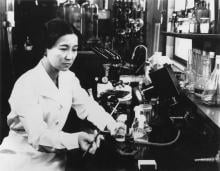
Ruby Sakae Hirose (1904 – 1960) was a Japanese-American scientist whose research contributed significantly to our understanding of blood clotting, allergies and cancer.
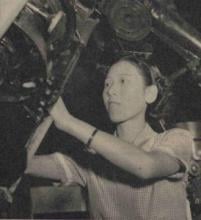
Haisako Koyama (1916 – 1997) was a Japanese solar observer whose dedication to recording sunspots – cooler parts of the sun’s surface that appear dark – produced a sunspot record of historic importance.
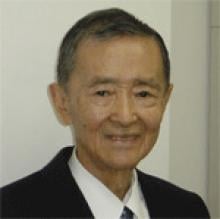
Michiaki Takahashi (17 February 1928 – 16 December 2013) was a Japanese virologist who developed the first chickenpox vaccine.
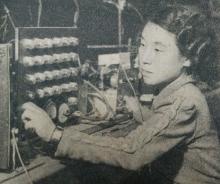
Toshiko Yuasa (11 December 1909 – 1 February 1980) was the first Japanese female physicist whose research on radioactivity shed light on beta decay – the process in which an atom emits a beta particle (electron) and turns into a different element.
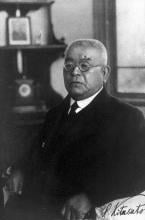
Baron Kitasato Shibasaburo (29 January 1856 – 13 June 1931) was a Japanese physician and bacteriologist whose work led to a new understanding of preventing and treating tetanus, diphtheria and anthrax.
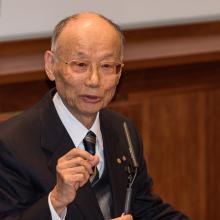
By isolating soil microorganisms and studying the compounds they produce, Satoshi Omura (born 1935) discovered almost 500 organic compounds with unique properties that were produced by these microorganisms, including many new antibiotics.
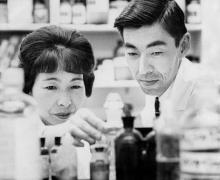
Husband and wife team, Kimishige (3 December 1925 – 6 July 2018) and Teruko Ishizaka (28 September 1926 – 4 June 2019) discovered the antibody class Immunoglobulin E (IgE) that triggers allergic reactions. They also discovered that IgE antibodies attach to white blood cells, known as mast cells, releasing histamine, which causes allergic reactions.
Husband and wife team, Kimishige (3 December 1925 – 6 July 2018) and Teruko Ishizaka (28 September 1926 – 4 June 2019) discovered the antibody class Immunoglobulin E (IgE) that triggers allergic reactions. They also discovered that IgE antibodies attach to white blood cells, known as mast cells, releasing histamine, which causes allergic reactions.
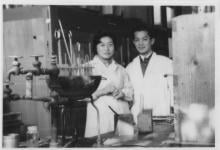
Reiji Okazaki (8 October 1930 – 1 August 1975) and Tsuneko (7 June 1933) were a Japanese couple who discovered Okazaki fragments – short sequences of DNA that are synthesized during DNA replication and linked together to form a continuous strand.
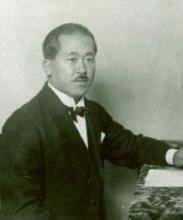
In 1915, Koichi Ichikawa along with pathologist Katsusaburo Yamagiwa became the first to prove that chronic exposure to chemicals can cause cancer.
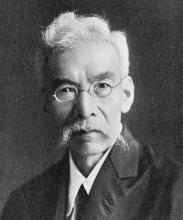
In 1915, pathologist Katsusaburo Yamagiwa and his research assistant Koichi Ichikawa became the first to prove that chronic exposure to chemicals can cause cancer.
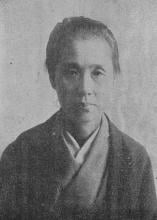
Ogino Ginko (3 March 1851 – 23 June 1913) was the first registered female doctor to practise modern medicine in Japan.
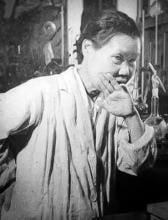
Michiyo Tsujimura (17 September 1888 – 1 June 1969) was a Japanese agricultural scientist and biochemist recognized for her research of green tea components.
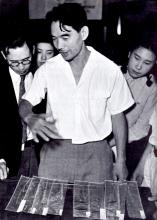
Hitoshi Kihara (1893 – 1986) was one of the most famous Japanese geneticists of the 20th century. One of his most significant contributions was identifying sex chromosomes (X and Y) in flowering plants.
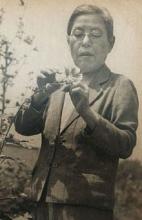
Kono Yasui (16 February 1880 – 24 March 1971) was a Japanese botanist who researched the genetics of poppies, corn and spiderworts and surveyed the plants that had been affected by the nuclear fallout after the atomic bombings of Hiroshima and Nagasaki.
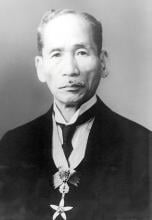
Umetaro Suzuki (7 April 1874 – 20 September 1943) was a Japanese scientist best remembered for his research on beriberi, a disease caused by vitamin B1 deficiency, characterized by limb stiffness, paralysis and pain.
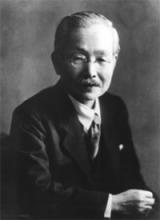
Kikunae Ikeda (8 October 1864 – 3 May 1936) was a Japanese chemist who discovered the fifth basic taste, umami.
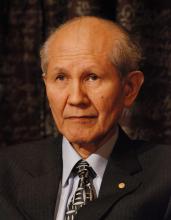
Osamu Shimomura (27 August 1928 – 19 October 2018) was a Japanese organic chemist and marine biologist who dedicated his career to understanding how organisms emitted light.
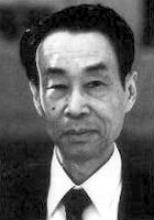
Motoo Kimura (13 November 1924 – 13 November 1994) was a Japanese theoretical population geneticist who is best remembered for developing the neutral theory of molecular evolution.

Chika Kuroda (24 March 1884 – 8 November 1968) was a Japanese chemist whose research focussed on the structures of natural pigments.
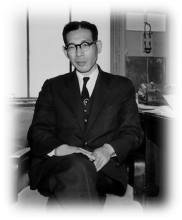
The field of solid-state ionics originated in Europe, but Takehiko Takahashi of Nagoya University in Japan was the first to coin the term ‘solid ionics’ in 1967. ‘Solid-state ionics’ first appeared in 1971 in another of his papers, and was likely a play on ‘solid-state electronics’, another rapidly growing field at the time.
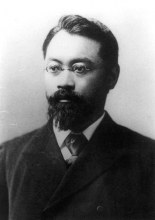
The techniques that make industrial pearl culturing possible were developed over a century ago at the Misaki Marine Biological Station in Japan. The station’s first director, Professor Kakichi Mitsukuri, emphasized to Kokichi Mikimoto in 1890 that stimulating pearl sac formation was important for pearl growth, and they went on to successfully develop methods for culturing pearls.
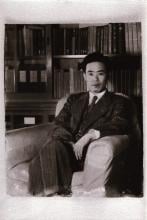
Japanese physicist Ukichiro Nakaya (1900-1962) made the world’s first artificial snowflakes. He started his research on snow crystals in the early 1930s at Hokkaido University, where there is an unlimited supply of natural snow in winter. By taking over 3,000 photographs, he established a classification of natural snow crystals and described their relationship with weather conditions.
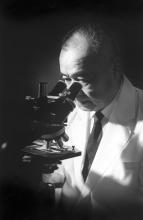
Minoru Shirota (April 23, 1899 – March 10, 1982) was a Japanese microbiologist who invented the popular fermented drink Yakult.
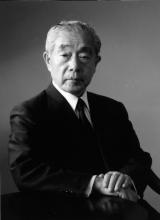
Japanese chemist Kenichi Fukui (4 October 1918 – 9 January 1998) was the first Asian scientist to be awarded the Nobel Prize in Chemistry. Together with Roald Hoffman, he received this honour in 1981 for his independent research into the mechanisms of chemical reactions.
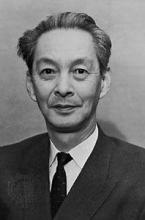
Shinichiro Tomonaga (31 March 1906 – 8 July 1979), together with Richard Feynman and Julian Schwinger, was awarded the Nobel Prize in Physics in 1965, for their contributions to advance the field of quantum electrodynamics. Tomonaga was also a strong proponent of peace, who actively campaigned against the proliferation of nuclear weapons and promoted the peaceful use of nuclear energy.
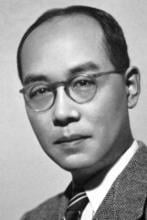
Hideki Yukawa (23 January 1907 – 8 September 1981) was awarded the Nobel Prize in Physics in 1949 for predicting the existence of the pi meson subatomic particle. Japan’s first Nobel laureate, Yakawa also expressed his support for nuclear disarmament by signing the Russell–Einstein Manifesto in 1955.
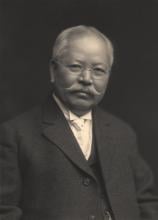
Japanese chemist Takamine Jokichi (3 November 1854 – 22 July 1922) founded the Tokyo Artificial Fertilizer Company, where he isolated a starch-digesting enzyme (named takadiastase) from the fungus Aspergillus oryzae.
Tsuneko (7 June 1933) and Reiji Okazaki (8 October 1930 – 1 August 1975) were a Japanese couple who discovered Okazaki fragments – short sequences of DNA that are synthesized during DNA replication and linked together to form a continuous strand.
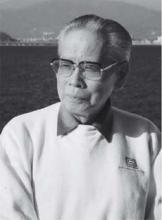
A Japanese surgeon, Tetsuzo Akutsu (20 August 1922 – 9 August 2007) built the first artificial heart capable of keeping an animal alive.
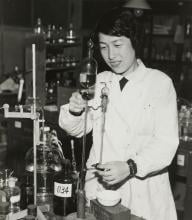
Japanese geochemist Katsuko Saruhashi developed the first method and tools for measuring carbon dioxide in seawater