

Japan
News
09 Oct 2009
RIKEN
Researchers at RIKEN created a new graphite nanotube that conducts electricity when exposed to light, which could lead to efficient solar batteries based on organic materials and developed molecular devices that can respond to various types of stimuli, similar to living organisms.
09 Oct 2009
RIKEN
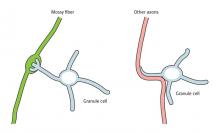
Neurons may be casual initially about their interactions, but get very picky when it comes to making a lasting synaptic connection

02 Oct 2009
RIKEN
Photosynthetic processes in an artificial system can be described accurately by a quantum physical theory
02 Oct 2009
RIKEN
Intelligent search engines called PosMed and PosMed-plus make it easier for researchers to identify candidate genes for cloning
01 Oct 2009
RIKEN
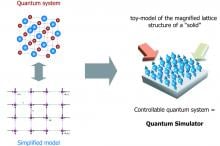
Press Release - A review in Science this week outlines the main theoretical and experimental aspects of quantum simulation and emphasizes some of the challenges and promises of this fast-growing field.
25 Sep 2009
RIKEN
Collaboration between RIKEN and J-TEC on research into age-related macular degeneration may lead to new treatment
25 Sep 2009
RIKEN
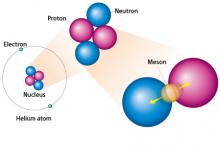
Muon research at the RIKEN–RAL Muon Facility could lead to commercially viable fusion technology for clean energy generation
25 Sep 2009
RIKEN
Plants biosynthesize a wide variety of compounds by processes that involve enzymes...
25 Sep 2009
RIKEN
Porous coordination polymers that strongly adsorb polar guest molecules can be made using a ligand with separated positive and negative charges

25 Sep 2009
Waseda University
As the number of children who have mobile phones has risen to 40% of elementary school students, 70% of middle school students, and 90% of high school students, e-Safety Education is vital in order to protect children from the myriad mobile phone dangers to which they are exposed.
25 Sep 2009
Waseda University
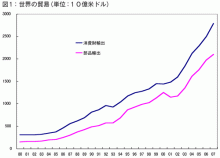
World trade has been expanding and driving economic growth in many countries over the past several decades. The trade value of the world as a whole increased more than eight-fold from 1980 to 2007, to approximately 14 trillion dollars.
25 Sep 2009
RIKEN
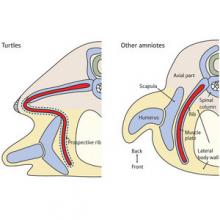
An investigation of developing embryos reveals that tissue folding and movement is the key to the turtle’s unusual body plan
22 Sep 2009
RIKEN
Press Release - Japanese researchers have unlocked the secret to ABA, a single plant hormone which play a key role to developing stress resistant crops.
18 Sep 2009
RIKEN
A high-resolution spectrometer to unravel the secrets of nuclear structure
18 Sep 2009
RIKEN
Peiyan Wong
Department of Psychology, Vanderbilt University, Nashville, Tennessee, USA
18 Sep 2009
RIKEN
Several regions of the primate brain’s prefrontal cortex have distinct functions in high-level cognitive tasks
18 Sep 2009
RIKEN
Unusual behavior in an exotic isotope of neon challenges the traditional foundations of nuclear physics
11 Sep 2009
RIKEN
The 12th summer program at the RIKEN Brain Science Institute (BSI)
11 Sep 2009
RIKEN
Hybrid mice help researchers zoom in on a gene with a potential role in controlling allergic responses
11 Sep 2009
RIKEN
Imaging electron movements that cause chemical reactions is now possible by using high-speed lasers
04 Sep 2009
RIKEN
PRESS RELEASE - RIKEN Plant Science Center marks a major step forward in plant cell growth
04 Sep 2009
RIKEN
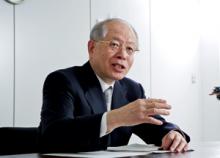
INTERVIEW - Conversation between Ryoji Noyori and Susumu Tonegawa.
At the inauguration of the new director of the Brain Science Institute
04 Sep 2009
RIKEN
Hierarchical networks of transcription factors maintain self-renewal of mouse embryonic stem cells
04 Sep 2009
Waseda University
OPINION/ COMMENTARY - When reflecting on the passing of Jackson, one cannot help thinking of other public cultural figures whose personal integrity and astounding talent helped paved the way for America’s “crossover” in the election of Barack Obama as president.
04 Sep 2009
Waseda University
OPINION/ COMMENTARY - The ceremony to celebrate the completion of restoration work on the northern library at Bayon was to be held on September 29, 1999. This work was the result of the first phase of the Japanese Government Team for Safeguarding Angkor (JSA)’s commitment.
04 Sep 2009
Waseda University
In recent years, environmental and energy issues have been a primary focus in the automotive field, and there has been an increasingly strong public demand for cleaner ICEVs (Internal Combustion Engine Vehicle) and for the development of alternative automobiles.
04 Sep 2009
Waseda University
The COOLBIZ campaign has had a very positive effect on Japanese people, as psychological resistance and social barriers to informal dress have been removed, and as each individual has been encouraged to consider saving energy.
04 Sep 2009
Waseda University
OPINION/ COMMENTARY - With the end of the rainy season, I have high hopes for good weather in the Tukhuar Islands and the Bonin Islands, which are expected to have views of a total eclipse of the sun.
01 Sep 2009
RIKEN
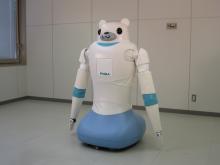
Press Release - The new robot, named RIBA (Robot for Interactive Body Assistance), is the first of its kind in the world, capable of safely lifting and moving a human patient of up to 61 kg from a bed to a wheelchair and back.
31 Aug 2009
RIKEN
Press Release - The findings suggest the need to fundamentally revise existing models of the mammalian circadian clock. They also point the way toward novel approaches to treatment of sleeping disorders and other debilitating clock-related conditions.
Researchers
Sorry, no researchers coming up for this topic.
Giants in history

Japanese biochemist Akira Endo (1933 – 2024) discovered the first statin, called mevastatin, which lowered cholesterol levels in the blood by inhibiting a key enzyme in the cholesterol biosynthesis pathway. His work laid the foundation for the development of statins to help patients lower their blood cholesterol levels and reduce their risk of heart disease or stroke.
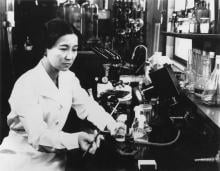
Ruby Sakae Hirose (1904 – 1960) was a Japanese-American scientist whose research contributed significantly to our understanding of blood clotting, allergies and cancer.
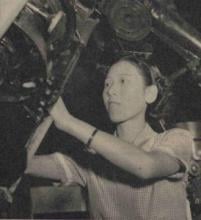
Haisako Koyama (1916 – 1997) was a Japanese solar observer whose dedication to recording sunspots – cooler parts of the sun’s surface that appear dark – produced a sunspot record of historic importance.
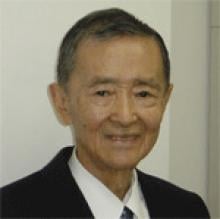
Michiaki Takahashi (17 February 1928 – 16 December 2013) was a Japanese virologist who developed the first chickenpox vaccine.
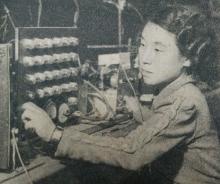
Toshiko Yuasa (11 December 1909 – 1 February 1980) was the first Japanese female physicist whose research on radioactivity shed light on beta decay – the process in which an atom emits a beta particle (electron) and turns into a different element.
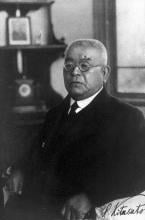
Baron Kitasato Shibasaburo (29 January 1856 – 13 June 1931) was a Japanese physician and bacteriologist whose work led to a new understanding of preventing and treating tetanus, diphtheria and anthrax.
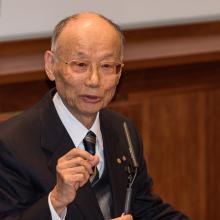
By isolating soil microorganisms and studying the compounds they produce, Satoshi Omura (born 1935) discovered almost 500 organic compounds with unique properties that were produced by these microorganisms, including many new antibiotics.
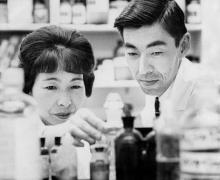
Husband and wife team, Kimishige (3 December 1925 – 6 July 2018) and Teruko Ishizaka (28 September 1926 – 4 June 2019) discovered the antibody class Immunoglobulin E (IgE) that triggers allergic reactions. They also discovered that IgE antibodies attach to white blood cells, known as mast cells, releasing histamine, which causes allergic reactions.
Husband and wife team, Kimishige (3 December 1925 – 6 July 2018) and Teruko Ishizaka (28 September 1926 – 4 June 2019) discovered the antibody class Immunoglobulin E (IgE) that triggers allergic reactions. They also discovered that IgE antibodies attach to white blood cells, known as mast cells, releasing histamine, which causes allergic reactions.
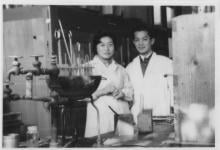
Reiji Okazaki (8 October 1930 – 1 August 1975) and Tsuneko (7 June 1933) were a Japanese couple who discovered Okazaki fragments – short sequences of DNA that are synthesized during DNA replication and linked together to form a continuous strand.
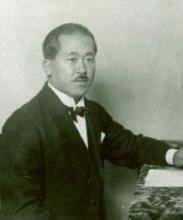
In 1915, Koichi Ichikawa along with pathologist Katsusaburo Yamagiwa became the first to prove that chronic exposure to chemicals can cause cancer.
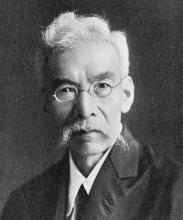
In 1915, pathologist Katsusaburo Yamagiwa and his research assistant Koichi Ichikawa became the first to prove that chronic exposure to chemicals can cause cancer.
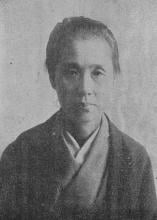
Ogino Ginko (3 March 1851 – 23 June 1913) was the first registered female doctor to practise modern medicine in Japan.
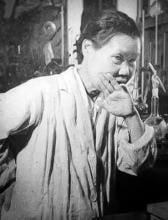
Michiyo Tsujimura (17 September 1888 – 1 June 1969) was a Japanese agricultural scientist and biochemist recognized for her research of green tea components.
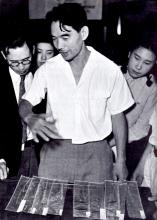
Hitoshi Kihara (1893 – 1986) was one of the most famous Japanese geneticists of the 20th century. One of his most significant contributions was identifying sex chromosomes (X and Y) in flowering plants.
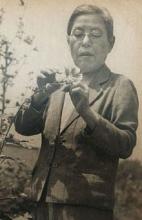
Kono Yasui (16 February 1880 – 24 March 1971) was a Japanese botanist who researched the genetics of poppies, corn and spiderworts and surveyed the plants that had been affected by the nuclear fallout after the atomic bombings of Hiroshima and Nagasaki.
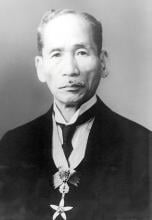
Umetaro Suzuki (7 April 1874 – 20 September 1943) was a Japanese scientist best remembered for his research on beriberi, a disease caused by vitamin B1 deficiency, characterized by limb stiffness, paralysis and pain.
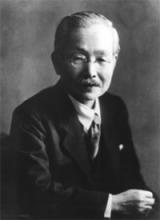
Kikunae Ikeda (8 October 1864 – 3 May 1936) was a Japanese chemist who discovered the fifth basic taste, umami.
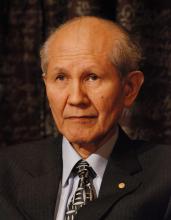
Osamu Shimomura (27 August 1928 – 19 October 2018) was a Japanese organic chemist and marine biologist who dedicated his career to understanding how organisms emitted light.
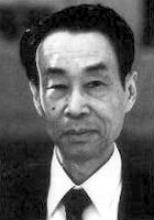
Motoo Kimura (13 November 1924 – 13 November 1994) was a Japanese theoretical population geneticist who is best remembered for developing the neutral theory of molecular evolution.

Chika Kuroda (24 March 1884 – 8 November 1968) was a Japanese chemist whose research focussed on the structures of natural pigments.
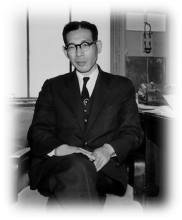
The field of solid-state ionics originated in Europe, but Takehiko Takahashi of Nagoya University in Japan was the first to coin the term ‘solid ionics’ in 1967. ‘Solid-state ionics’ first appeared in 1971 in another of his papers, and was likely a play on ‘solid-state electronics’, another rapidly growing field at the time.
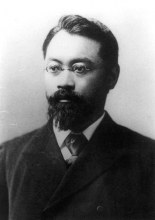
The techniques that make industrial pearl culturing possible were developed over a century ago at the Misaki Marine Biological Station in Japan. The station’s first director, Professor Kakichi Mitsukuri, emphasized to Kokichi Mikimoto in 1890 that stimulating pearl sac formation was important for pearl growth, and they went on to successfully develop methods for culturing pearls.
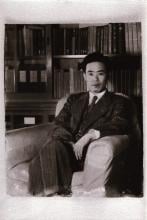
Japanese physicist Ukichiro Nakaya (1900-1962) made the world’s first artificial snowflakes. He started his research on snow crystals in the early 1930s at Hokkaido University, where there is an unlimited supply of natural snow in winter. By taking over 3,000 photographs, he established a classification of natural snow crystals and described their relationship with weather conditions.
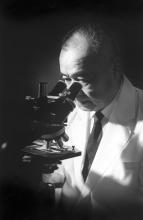
Minoru Shirota (April 23, 1899 – March 10, 1982) was a Japanese microbiologist who invented the popular fermented drink Yakult.
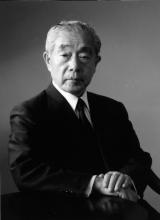
Japanese chemist Kenichi Fukui (4 October 1918 – 9 January 1998) was the first Asian scientist to be awarded the Nobel Prize in Chemistry. Together with Roald Hoffman, he received this honour in 1981 for his independent research into the mechanisms of chemical reactions.
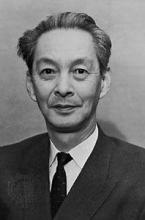
Shinichiro Tomonaga (31 March 1906 – 8 July 1979), together with Richard Feynman and Julian Schwinger, was awarded the Nobel Prize in Physics in 1965, for their contributions to advance the field of quantum electrodynamics. Tomonaga was also a strong proponent of peace, who actively campaigned against the proliferation of nuclear weapons and promoted the peaceful use of nuclear energy.
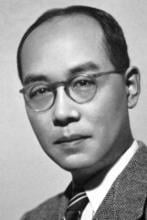
Hideki Yukawa (23 January 1907 – 8 September 1981) was awarded the Nobel Prize in Physics in 1949 for predicting the existence of the pi meson subatomic particle. Japan’s first Nobel laureate, Yakawa also expressed his support for nuclear disarmament by signing the Russell–Einstein Manifesto in 1955.
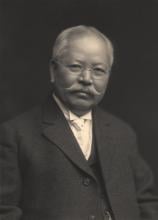
Japanese chemist Takamine Jokichi (3 November 1854 – 22 July 1922) founded the Tokyo Artificial Fertilizer Company, where he isolated a starch-digesting enzyme (named takadiastase) from the fungus Aspergillus oryzae.
Tsuneko (7 June 1933) and Reiji Okazaki (8 October 1930 – 1 August 1975) were a Japanese couple who discovered Okazaki fragments – short sequences of DNA that are synthesized during DNA replication and linked together to form a continuous strand.
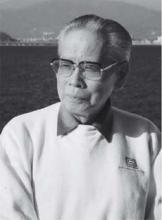
A Japanese surgeon, Tetsuzo Akutsu (20 August 1922 – 9 August 2007) built the first artificial heart capable of keeping an animal alive.
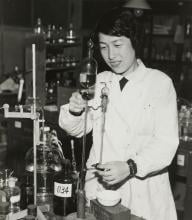
Japanese geochemist Katsuko Saruhashi developed the first method and tools for measuring carbon dioxide in seawater