

Japan
News

05 Jun 2009
RIKEN
New phosphorescent complexes improve manufacturing of high-efficiency light sources
05 Jun 2009
RIKEN
RIKEN has developed a common infrastructure called RIKEN SciNeS (Science Networking System) to execute large-scale releases of data in a format conforming to the international Semantic Web standard.
03 Jun 2009
Keio University
In 2007, Kanoko Uchino was the crew on the Hokule'a which used ancient Polynesian navigation techniques in its voyage from Hawaii to Okinawa.

02 Jun 2009
Waseda University
The economic crisis which began with the collapse of the American subprime loan market in 2007 and the Lehman Brothers shock of 2008 has led to a series of losses throughout the world and caused a global recession that has no end in sight.
02 Jun 2009
Waseda University
By the spring of 2010, two new large insurance groups will be established through management integration: one comprises Mitsui Sumitomo Insurance Group Holdings, Aioi Insurance, and Nissay Dowa General Insurance; the other comprises Sompo Japan Insurance and Nippon Koa Insurance.
29 May 2009
RIKEN
A well-tuned sense of taste is about far more than being able to enjoy a fancy dinner—it represents a key survival mechanism, helping animals to rapidly identify potential food sources as tasty or toxic. A combination of computational and experimental techniques helps researchers to identify a gene involved in taste bud development
29 May 2009
RIKEN
Immature mice father faster medical research via an assisted reproduction technique that speeds up the production of mouse models
29 May 2009
RIKEN
If all dendritic projections and axons in the whole brain were joined together in a line, they would extend for 100,000 kilometers. This article describes RIKEN's work on elucidating the huge complexity of the brain’s neural network.
29 May 2009
RIKEN
This year Maeda and his colleagues discovered a gene that is closely associated with the development of diabetes in East Asians, including Japanese. Now research is progressing rapidly with the aim of conquering diabetes
29 May 2009
RIKEN
The Foreign Postdoctoral Researcher (FPR) program offers aspiring young foreign researchers with creative ideas and who show promise of becoming internationally active in the future the opportunity to pursue innovative research at RIKEN under the direction of a RIKEN laboratory head.
29 May 2009
RIKEN
Genome Profiling Technology Unit proceeds with development of gene diversity detecting technology which can be popularized and contribute to society. Especially we focus on the technical achievement which is practical convenient and accurate and also popularize that technology.
29 May 2009
RIKEN
Lasing of the XFEL is set to commence by 2010. Starting from 2011, XFEL will serve as a common-use facility for researchers from Japan and from overseas, enabling them to carry out a wide range of new cutting-edge experiments.
29 May 2009
Waseda University
In China, there is a major economic gap between family registration in farming villages and in cities. If women can become teachers, they can escape from the registration in farming villages and obtain registration in cities, thus obtaining a social status which enables them to receive a fixed income. This is a revolutionary change in their lives.
29 May 2009
Waseda University
While gloomy topics have been prevailing since last fall, there were also some events bearing a sign of optimism. One example is “toshikoshi haken-mura,” a camp for providing food and beds to unemployed temporary workers around the New Year’s Day.
29 May 2009
Waseda University
The 2nd World Baseball Classic excited everyone in Japan. The Japanese team, withstood the pressure of being the returning champions, and won the championship again. The article discusses the diplomatic role of baseball including being hosted by Major League Baseball, the idea of a baseball FIFA, The Japan-Korea matches and The Netherlands team.
29 May 2009
Waseda University
Sazae-san, a four-frame manga popular throughout Japan, originally started in the morning edition of the Asahi Shimbun newspaper in 1951, and it continues today as a TV animation program.
24 May 2009
RIKEN
Environmental conditions may determine which particular process plants will use to build an essential hormone
24 May 2009
RIKEN
Enhancements to an experimental technique reveal novel magnetic materials
24 May 2009
RIKEN
RIKEN researchers proposed a new pathway map for the differentiation of blood cells.
24 May 2009
RIKEN
What is the mechanism that controls the growth of living organisms? Hiroshi Sasaki at RIKEN is attempting to probe the mechanism by focusing on special groups of cells called ‘signaling centers,’ which control the differentiation, proliferation, and migration of surrounding cells.
24 May 2009
RIKEN
Every year on this day, prominent cultural figures are invited to RIKEN to give talks on their respective areas of expertise, bridging the world of science with the world of culture. This year RIKEN invited ceramicist Imaemon Imaizumi, the 14th in a long line of traditional craftsmen.
20 May 2009
Keio University
19 May - Japanese researchers have shown that the metabolism used by cancer cells to create the energy necessary for proliferation could be the same or similar to the specific type of metabolism used by parasites such as roundworms in low-oxygen environments. These are the first such findings ever made worldwide.
15 May 2009
RIKEN
An international team of scientists have shown that deletion of the G-substrate gene in mice causes motor learning deficits during particular periods of postnatal development
15 May 2009
RIKEN
Replacing hazardous solvents with water and improving efficiencies are ways that chemists can reduce the environmental impact of their reactions. RIKEN researchers have developed recyclable catalysts that selectively generate chiral organic molecules in water - a nearly ideal green chemical process.
15 May 2009
RIKEN
Mincle, a protein expressed on immune cells, is a receptor that recognizes Malassezia fungal species and mediates inflammatory responses
15 May 2009
RIKEN
Accumulating data has demonstrated that Japanese macaques and degus, the latter a kind of rodent, are capable of using tools after training. Changes in brain functioning that may have led to human intelligence are being elucidated.
15 May 2009
RIKEN
There are liquids that can climb up the walls of their container like a life form and down the other side. Superfluid helium is the only liquid that exhibits this mysterious phenomenon.
15 May 2009
RIKEN
RIKEN BioResource Center (BRC) in collaboration with Kyoto University has started a service to provide human induced pluripotent stem (iPS) cells and human embryonic stem (ES) cells to nonprofit research organizations.
08 May 2009
RIKEN
In their latest work, Tahara and a team of international and Japanese scientists have directly observed how an organic molecule named stilbene rearranges its structure.
08 May 2009
RIKEN
The new Fermi Gamma-Ray Space Telescope has identified a new pulsar by detecting its gamma-ray emission
Researchers
Sorry, no researchers coming up for this topic.
Giants in history

Japanese biochemist Akira Endo (1933 – 2024) discovered the first statin, called mevastatin, which lowered cholesterol levels in the blood by inhibiting a key enzyme in the cholesterol biosynthesis pathway. His work laid the foundation for the development of statins to help patients lower their blood cholesterol levels and reduce their risk of heart disease or stroke.
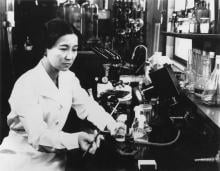
Ruby Sakae Hirose (1904 – 1960) was a Japanese-American scientist whose research contributed significantly to our understanding of blood clotting, allergies and cancer.
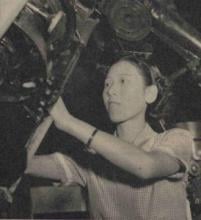
Haisako Koyama (1916 – 1997) was a Japanese solar observer whose dedication to recording sunspots – cooler parts of the sun’s surface that appear dark – produced a sunspot record of historic importance.
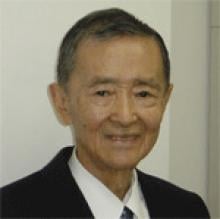
Michiaki Takahashi (17 February 1928 – 16 December 2013) was a Japanese virologist who developed the first chickenpox vaccine.
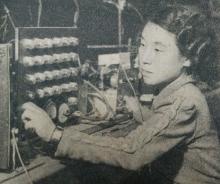
Toshiko Yuasa (11 December 1909 – 1 February 1980) was the first Japanese female physicist whose research on radioactivity shed light on beta decay – the process in which an atom emits a beta particle (electron) and turns into a different element.
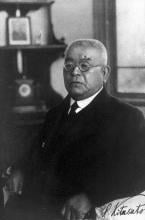
Baron Kitasato Shibasaburo (29 January 1856 – 13 June 1931) was a Japanese physician and bacteriologist whose work led to a new understanding of preventing and treating tetanus, diphtheria and anthrax.
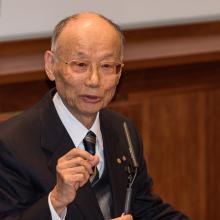
By isolating soil microorganisms and studying the compounds they produce, Satoshi Omura (born 1935) discovered almost 500 organic compounds with unique properties that were produced by these microorganisms, including many new antibiotics.
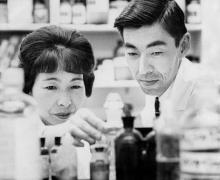
Husband and wife team, Kimishige (3 December 1925 – 6 July 2018) and Teruko Ishizaka (28 September 1926 – 4 June 2019) discovered the antibody class Immunoglobulin E (IgE) that triggers allergic reactions. They also discovered that IgE antibodies attach to white blood cells, known as mast cells, releasing histamine, which causes allergic reactions.
Husband and wife team, Kimishige (3 December 1925 – 6 July 2018) and Teruko Ishizaka (28 September 1926 – 4 June 2019) discovered the antibody class Immunoglobulin E (IgE) that triggers allergic reactions. They also discovered that IgE antibodies attach to white blood cells, known as mast cells, releasing histamine, which causes allergic reactions.
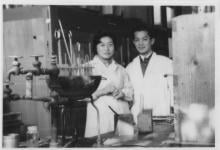
Reiji Okazaki (8 October 1930 – 1 August 1975) and Tsuneko (7 June 1933) were a Japanese couple who discovered Okazaki fragments – short sequences of DNA that are synthesized during DNA replication and linked together to form a continuous strand.
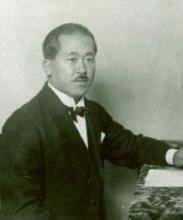
In 1915, Koichi Ichikawa along with pathologist Katsusaburo Yamagiwa became the first to prove that chronic exposure to chemicals can cause cancer.
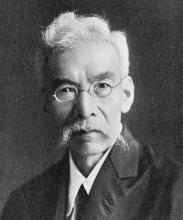
In 1915, pathologist Katsusaburo Yamagiwa and his research assistant Koichi Ichikawa became the first to prove that chronic exposure to chemicals can cause cancer.
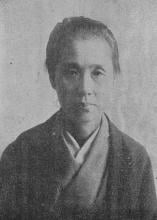
Ogino Ginko (3 March 1851 – 23 June 1913) was the first registered female doctor to practise modern medicine in Japan.
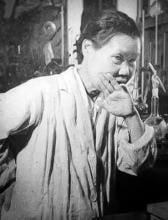
Michiyo Tsujimura (17 September 1888 – 1 June 1969) was a Japanese agricultural scientist and biochemist recognized for her research of green tea components.
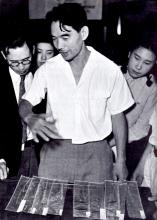
Hitoshi Kihara (1893 – 1986) was one of the most famous Japanese geneticists of the 20th century. One of his most significant contributions was identifying sex chromosomes (X and Y) in flowering plants.
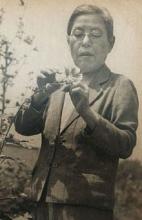
Kono Yasui (16 February 1880 – 24 March 1971) was a Japanese botanist who researched the genetics of poppies, corn and spiderworts and surveyed the plants that had been affected by the nuclear fallout after the atomic bombings of Hiroshima and Nagasaki.
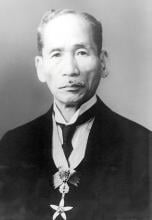
Umetaro Suzuki (7 April 1874 – 20 September 1943) was a Japanese scientist best remembered for his research on beriberi, a disease caused by vitamin B1 deficiency, characterized by limb stiffness, paralysis and pain.
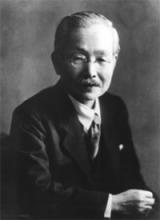
Kikunae Ikeda (8 October 1864 – 3 May 1936) was a Japanese chemist who discovered the fifth basic taste, umami.
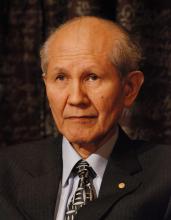
Osamu Shimomura (27 August 1928 – 19 October 2018) was a Japanese organic chemist and marine biologist who dedicated his career to understanding how organisms emitted light.
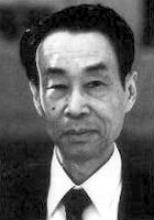
Motoo Kimura (13 November 1924 – 13 November 1994) was a Japanese theoretical population geneticist who is best remembered for developing the neutral theory of molecular evolution.
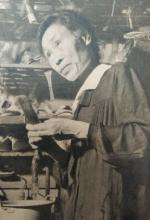
Chika Kuroda (24 March 1884 – 8 November 1968) was a Japanese chemist whose research focussed on the structures of natural pigments.
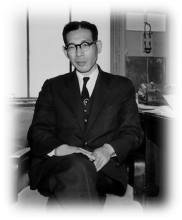
The field of solid-state ionics originated in Europe, but Takehiko Takahashi of Nagoya University in Japan was the first to coin the term ‘solid ionics’ in 1967. ‘Solid-state ionics’ first appeared in 1971 in another of his papers, and was likely a play on ‘solid-state electronics’, another rapidly growing field at the time.
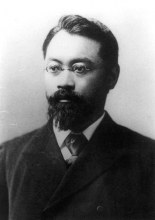
The techniques that make industrial pearl culturing possible were developed over a century ago at the Misaki Marine Biological Station in Japan. The station’s first director, Professor Kakichi Mitsukuri, emphasized to Kokichi Mikimoto in 1890 that stimulating pearl sac formation was important for pearl growth, and they went on to successfully develop methods for culturing pearls.
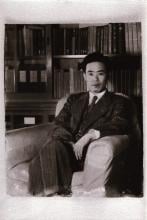
Japanese physicist Ukichiro Nakaya (1900-1962) made the world’s first artificial snowflakes. He started his research on snow crystals in the early 1930s at Hokkaido University, where there is an unlimited supply of natural snow in winter. By taking over 3,000 photographs, he established a classification of natural snow crystals and described their relationship with weather conditions.
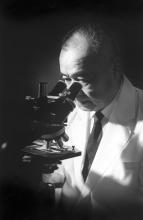
Minoru Shirota (April 23, 1899 – March 10, 1982) was a Japanese microbiologist who invented the popular fermented drink Yakult.
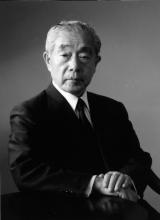
Japanese chemist Kenichi Fukui (4 October 1918 – 9 January 1998) was the first Asian scientist to be awarded the Nobel Prize in Chemistry. Together with Roald Hoffman, he received this honour in 1981 for his independent research into the mechanisms of chemical reactions.
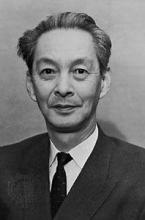
Shinichiro Tomonaga (31 March 1906 – 8 July 1979), together with Richard Feynman and Julian Schwinger, was awarded the Nobel Prize in Physics in 1965, for their contributions to advance the field of quantum electrodynamics. Tomonaga was also a strong proponent of peace, who actively campaigned against the proliferation of nuclear weapons and promoted the peaceful use of nuclear energy.
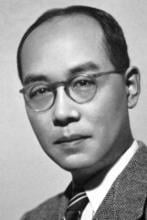
Hideki Yukawa (23 January 1907 – 8 September 1981) was awarded the Nobel Prize in Physics in 1949 for predicting the existence of the pi meson subatomic particle. Japan’s first Nobel laureate, Yakawa also expressed his support for nuclear disarmament by signing the Russell–Einstein Manifesto in 1955.
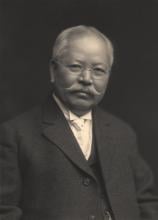
Japanese chemist Takamine Jokichi (3 November 1854 – 22 July 1922) founded the Tokyo Artificial Fertilizer Company, where he isolated a starch-digesting enzyme (named takadiastase) from the fungus Aspergillus oryzae.
Tsuneko (7 June 1933) and Reiji Okazaki (8 October 1930 – 1 August 1975) were a Japanese couple who discovered Okazaki fragments – short sequences of DNA that are synthesized during DNA replication and linked together to form a continuous strand.
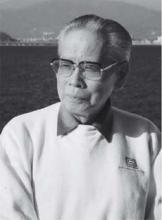
A Japanese surgeon, Tetsuzo Akutsu (20 August 1922 – 9 August 2007) built the first artificial heart capable of keeping an animal alive.
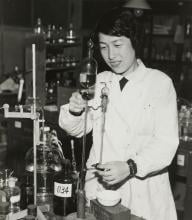
Japanese geochemist Katsuko Saruhashi developed the first method and tools for measuring carbon dioxide in seawater