

Japan
News

07 Nov 2008
RIKEN
Theories on atomic reactions are being tested in collision experiments using a very slow beam of antiprotons
07 Nov 2008
RIKEN
A RIKEN-led team has designed and constructed a high-resolution, computed tomography (CT) system that can visualize the motion and deformation of the heart, coronary arteries and small airways of live rats and mice, the animals most often used as models for human disease.
07 Nov 2008
RIKEN
Japanese plant biologists have provided the first molecular evidence that when plants are in combat with environmental stressors they are less able to battle invading pathogens.
07 Nov 2008
RIKEN
Electrical oscillations in one part of the brain suggest that it may interact with another to guide body movements
05 Nov 2008
Waseda University
New disparities are becoming apparent, including disparity between countries accessible to sophisticated prosthetics and high-performance wheelchairs and those not accessible, between almost professional sports like basketball and rugby and minor sports and between the Paralympics and Olympic Games.
05 Nov 2008
Waseda University
Jigme Singye Wangchuck, the fourth king of the Kingdom of Bhutan was the originator of the word when, at a conference in Colombo in 1976, he was quoted saying that “Gross National Happiness is more important than Gross National Product.”
31 Oct 2008
RIKEN
A new design for compact free-electron lasers leads the way towards exploiting extremely short wavelengths
31 Oct 2008
RIKEN
Molecules containing both electron donors and acceptors have been functionalized with tails that control their arrangement in a liquid-crystal photovoltaic device
31 Oct 2008
RIKEN
A method for single-cell genomic profiling has helped researchers to identify a putative ‘master switch’ for reproductive cell development in the mouse embryo
31 Oct 2008
RIKEN
RIKEN scientists have developed a method for trapping and manipulating antimatter that could be key to solving one of the universe’s biggest mysteries.
25 Oct 2008
RIKEN
Amyotrophic lateral sclerosis (ALS) is a devastating disease, gradually causing paralysis of the muscles in the hand and leg. The discovery by Koji Yamanaka and colleagues at the Brain Science Institute that the glial cells cause damage to the nerve cells shows great promise in the development of new treatments to prevent the progression of ALS.
24 Oct 2008
RIKEN
New research clarifies how cells rearrange from two-dimensional sheets into three-dimensional structures during embryonic development
24 Oct 2008
RIKEN
Researchers shed light on the molecular mechanism responsible for fluorescent and dark states of a genetically engineered protein
24 Oct 2008
RIKEN
Substrate-induced strain can be used to switch an organic superconductor into an insulator that responds to the application of a voltage
24 Oct 2008
RIKEN
A new algorithm crunches genomic data to predict maps of variable chromosomal regions that may yield valuable indicators of disease susceptibility or drug response
19 Oct 2008
Waseda University
While Westerners do not expect robots to have human emotions, Japanese want them more human-like. Japan has greater number of humanoid robots and precedent researches in robotics than any other nation does. Unlike conventional bipedal humanoid robots such as Honda's ASIMO, Waseda University's WABIAN-2 can walk while keeping its knees straight.
19 Oct 2008
Waseda University
This is a new concept espoused by Waseda University towards becoming a next-generation information society. The foremost goal of the project is the realization of a gigascale system including a 100-million-gate circuit and 1-million-step software as a chip which consumes an ultra-low amount of power.
19 Oct 2008
Waseda University
Assoc. Prof. Iwasaki was part of the team that generated the 24 hour "biological clock" in a test tube. "Biological clocks" are internal, and are said to regulate our sleeping and daily rhythms. The concept first appeared in Germany at the start of the 20th century. He elaborates more on his current research.
19 Oct 2008
Waseda University
Until now, the focus of war experience has been experiences during actual wartime where the bullets were flying. The memories and emotional scars of survivors after the war is a theme that has been slow to surface. On the other hand, the very factuality of war experiences which are talked about has become the focus of discussion.
17 Oct 2008
RIKEN
Two RIKEN researchers, Yasunobu Nakamura and Jaw-Shen Tsai, have jointly won the prestigious 2008 Simon Memorial Prize for their ground-breaking contributions to the development of low-temperature physics, in particular quantum computing.
17 Oct 2008
RIKEN
Ripples in the structure of graphene could be the key to understanding its unusual characteristics
17 Oct 2008
RIKEN
Identification of a novel protein involved in embryonic development leads to new insights into the first stage of neural development
17 Oct 2008
RIKEN
An investigation into the pathway by which bone-remodeling cells differentiate has yielded information about an unexpected, parallel development pathway
17 Oct 2008
RIKEN
A RIKEN-led international research group has puzzled out details of the intricate mechanism by which the immune system in the gut can respond rapidly to changes in its bacterial environment. Eventually, the work could lead to better treatment and control of gut infections and inflammatory bowel diseases.
16 Oct 2008
Waseda University
Following in the footsteps of the United States, Japan seems to gradually challenge lifestyle centers. In spite of the depressed state of the economy, Japan has a considerable number of wealthy people who establish and respect their own life style.
16 Oct 2008
Waseda University
The election for Japan’s highest governing body, the House of Representatives, will be held for the first time in recent years. The Abe and Fukuda cabinets were not tested by the Japanese public but were merely regime changes within the Liberal Democratic Party.
16 Oct 2008
Waseda University
The constellations we are currently familiar with originate from “Ptolemy’s 48 constellations” compiled from ancient Greek constellations by Claudius Ptolemaeus (from 90 A.D. to about 168 A.D.).
10 Oct 2008
Waseda University
Rikidozan was proclaimed the "hero of the Japanese race." However, he was actually born on the Korean Peninsula to Korean parents. Today he would be called a "Korean resident of Japan." This led me to think about the relationship between sport, race, and nationality.
10 Oct 2008
RIKEN
Chemical biology is a study that uses chemistry to explore life phenomena. This article reports on what is happening at the forefront of chemical genetics and chemical genomics, which are currently hot topics for both basic and applied research.
10 Oct 2008
RIKEN
The fourth RCAI-JSI International Symposium on Immunology 2008 took place on June 26-27 in Yokohama. This annual symposium is jointly organized by the RIKEN Research Center for Allergy and Immunology (RCAI) and the Japanese Society for Immunology (JSI).
Researchers
Sorry, no researchers coming up for this topic.
Giants in history

Japanese biochemist Akira Endo (1933 – 2024) discovered the first statin, called mevastatin, which lowered cholesterol levels in the blood by inhibiting a key enzyme in the cholesterol biosynthesis pathway. His work laid the foundation for the development of statins to help patients lower their blood cholesterol levels and reduce their risk of heart disease or stroke.
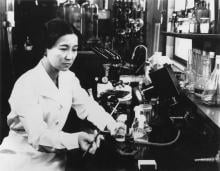
Ruby Sakae Hirose (1904 – 1960) was a Japanese-American scientist whose research contributed significantly to our understanding of blood clotting, allergies and cancer.
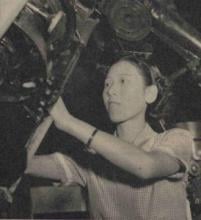
Haisako Koyama (1916 – 1997) was a Japanese solar observer whose dedication to recording sunspots – cooler parts of the sun’s surface that appear dark – produced a sunspot record of historic importance.
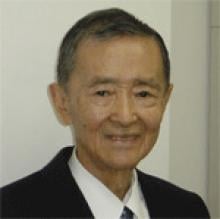
Michiaki Takahashi (17 February 1928 – 16 December 2013) was a Japanese virologist who developed the first chickenpox vaccine.
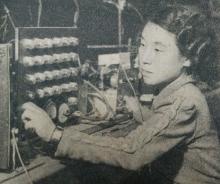
Toshiko Yuasa (11 December 1909 – 1 February 1980) was the first Japanese female physicist whose research on radioactivity shed light on beta decay – the process in which an atom emits a beta particle (electron) and turns into a different element.
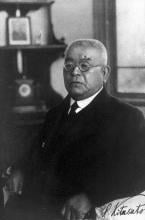
Baron Kitasato Shibasaburo (29 January 1856 – 13 June 1931) was a Japanese physician and bacteriologist whose work led to a new understanding of preventing and treating tetanus, diphtheria and anthrax.
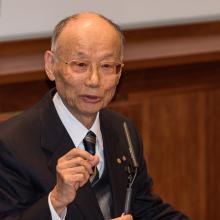
By isolating soil microorganisms and studying the compounds they produce, Satoshi Omura (born 1935) discovered almost 500 organic compounds with unique properties that were produced by these microorganisms, including many new antibiotics.
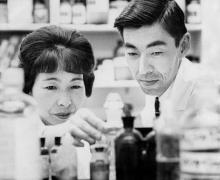
Husband and wife team, Kimishige (3 December 1925 – 6 July 2018) and Teruko Ishizaka (28 September 1926 – 4 June 2019) discovered the antibody class Immunoglobulin E (IgE) that triggers allergic reactions. They also discovered that IgE antibodies attach to white blood cells, known as mast cells, releasing histamine, which causes allergic reactions.
Husband and wife team, Kimishige (3 December 1925 – 6 July 2018) and Teruko Ishizaka (28 September 1926 – 4 June 2019) discovered the antibody class Immunoglobulin E (IgE) that triggers allergic reactions. They also discovered that IgE antibodies attach to white blood cells, known as mast cells, releasing histamine, which causes allergic reactions.
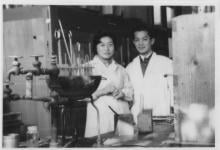
Reiji Okazaki (8 October 1930 – 1 August 1975) and Tsuneko (7 June 1933) were a Japanese couple who discovered Okazaki fragments – short sequences of DNA that are synthesized during DNA replication and linked together to form a continuous strand.
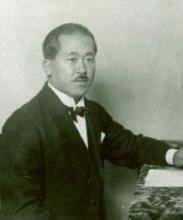
In 1915, Koichi Ichikawa along with pathologist Katsusaburo Yamagiwa became the first to prove that chronic exposure to chemicals can cause cancer.
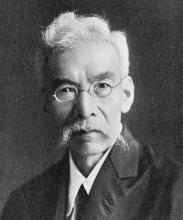
In 1915, pathologist Katsusaburo Yamagiwa and his research assistant Koichi Ichikawa became the first to prove that chronic exposure to chemicals can cause cancer.
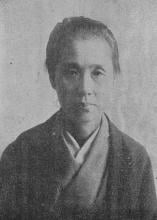
Ogino Ginko (3 March 1851 – 23 June 1913) was the first registered female doctor to practise modern medicine in Japan.
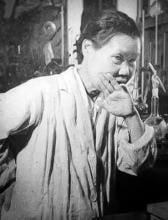
Michiyo Tsujimura (17 September 1888 – 1 June 1969) was a Japanese agricultural scientist and biochemist recognized for her research of green tea components.
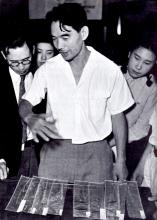
Hitoshi Kihara (1893 – 1986) was one of the most famous Japanese geneticists of the 20th century. One of his most significant contributions was identifying sex chromosomes (X and Y) in flowering plants.
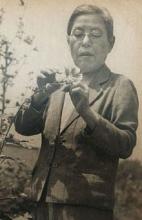
Kono Yasui (16 February 1880 – 24 March 1971) was a Japanese botanist who researched the genetics of poppies, corn and spiderworts and surveyed the plants that had been affected by the nuclear fallout after the atomic bombings of Hiroshima and Nagasaki.
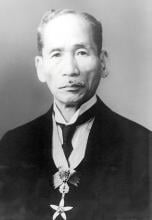
Umetaro Suzuki (7 April 1874 – 20 September 1943) was a Japanese scientist best remembered for his research on beriberi, a disease caused by vitamin B1 deficiency, characterized by limb stiffness, paralysis and pain.
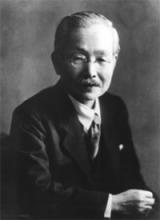
Kikunae Ikeda (8 October 1864 – 3 May 1936) was a Japanese chemist who discovered the fifth basic taste, umami.
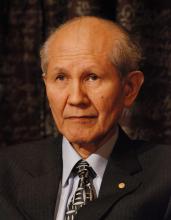
Osamu Shimomura (27 August 1928 – 19 October 2018) was a Japanese organic chemist and marine biologist who dedicated his career to understanding how organisms emitted light.
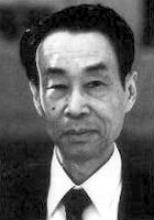
Motoo Kimura (13 November 1924 – 13 November 1994) was a Japanese theoretical population geneticist who is best remembered for developing the neutral theory of molecular evolution.

Chika Kuroda (24 March 1884 – 8 November 1968) was a Japanese chemist whose research focussed on the structures of natural pigments.
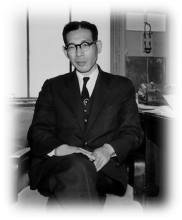
The field of solid-state ionics originated in Europe, but Takehiko Takahashi of Nagoya University in Japan was the first to coin the term ‘solid ionics’ in 1967. ‘Solid-state ionics’ first appeared in 1971 in another of his papers, and was likely a play on ‘solid-state electronics’, another rapidly growing field at the time.
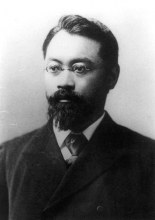
The techniques that make industrial pearl culturing possible were developed over a century ago at the Misaki Marine Biological Station in Japan. The station’s first director, Professor Kakichi Mitsukuri, emphasized to Kokichi Mikimoto in 1890 that stimulating pearl sac formation was important for pearl growth, and they went on to successfully develop methods for culturing pearls.
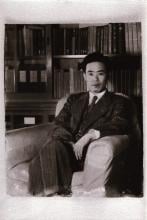
Japanese physicist Ukichiro Nakaya (1900-1962) made the world’s first artificial snowflakes. He started his research on snow crystals in the early 1930s at Hokkaido University, where there is an unlimited supply of natural snow in winter. By taking over 3,000 photographs, he established a classification of natural snow crystals and described their relationship with weather conditions.
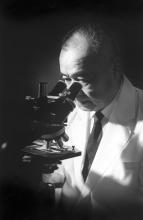
Minoru Shirota (April 23, 1899 – March 10, 1982) was a Japanese microbiologist who invented the popular fermented drink Yakult.
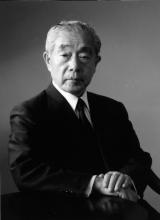
Japanese chemist Kenichi Fukui (4 October 1918 – 9 January 1998) was the first Asian scientist to be awarded the Nobel Prize in Chemistry. Together with Roald Hoffman, he received this honour in 1981 for his independent research into the mechanisms of chemical reactions.
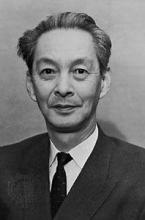
Shinichiro Tomonaga (31 March 1906 – 8 July 1979), together with Richard Feynman and Julian Schwinger, was awarded the Nobel Prize in Physics in 1965, for their contributions to advance the field of quantum electrodynamics. Tomonaga was also a strong proponent of peace, who actively campaigned against the proliferation of nuclear weapons and promoted the peaceful use of nuclear energy.
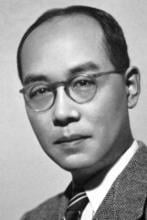
Hideki Yukawa (23 January 1907 – 8 September 1981) was awarded the Nobel Prize in Physics in 1949 for predicting the existence of the pi meson subatomic particle. Japan’s first Nobel laureate, Yakawa also expressed his support for nuclear disarmament by signing the Russell–Einstein Manifesto in 1955.
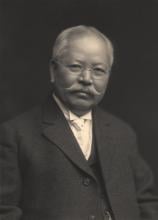
Japanese chemist Takamine Jokichi (3 November 1854 – 22 July 1922) founded the Tokyo Artificial Fertilizer Company, where he isolated a starch-digesting enzyme (named takadiastase) from the fungus Aspergillus oryzae.
Tsuneko (7 June 1933) and Reiji Okazaki (8 October 1930 – 1 August 1975) were a Japanese couple who discovered Okazaki fragments – short sequences of DNA that are synthesized during DNA replication and linked together to form a continuous strand.
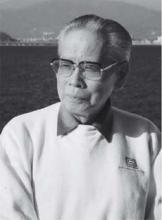
A Japanese surgeon, Tetsuzo Akutsu (20 August 1922 – 9 August 2007) built the first artificial heart capable of keeping an animal alive.
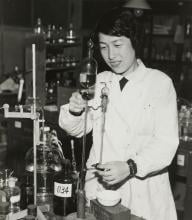
Japanese geochemist Katsuko Saruhashi developed the first method and tools for measuring carbon dioxide in seawater