
Japan
News
11 Sep 2008
Waseda University
Prof. Takeyama, one of Japan's top scientist writes about her research in marine biotechnology and her life as a female scientist, wife and mother in Japan.
08 Sep 2008
Waseda University
When environmental issues are talked about, only global warming issues due to man-caused CO2 emission come under close scrutiny, but there are also many other environmental issues.
04 Sep 2008
Waseda University
The word “kanikosen” (crab-fishing and canning boat) has recently been making the headlines in the Japanese media. First published by Takiji Kobayashi in 1929, “Kanikose” is a representative work of proletarian literature.
03 Sep 2008
Waseda University
The Beijing Olympic Games attracted the world's attention even before it had started. One of the incidents symbolizing this was the protest against the Olympic Torch Relay.
19 Aug 2008
Waseda University
In spite of tighter security than ever before in the Olympic Games history, large-scaled civil riots and repeated terrorist bombings have occurred here and there in China. This report describes why so many civil protests and riots occur even when the Olympic Games as a symbol of national solidarity is just around the corner.
19 Aug 2008
Waseda University
Now, on the opposite side of the globe to Japan and quite far away from it, the largest Japanese community in the world is coming into the spotlight. It is a Japanese community of more than 1.5 million in Brazil whose seasons are opposite from those in Japan.
10 Aug 2008
Keio University
Japan-Brazil Exchange Year & Keio University 150th Anniversary International Symposium to commemorate the 100th anniversary of Japanese emigration to Brazil and 150th anniversary of Keio University “ Dekasegi (migrant workers) workshop” will also be held
10 Aug 2008
Keio University
The program, named “Keio KANRINMARU Project” invites applications from around the world for 3 positions as Associate Professor and 10 positions as Assistant Professor.
04 Aug 2008
Waseda University
Concurrently with 21 other countries, SoftBank began selling iPhones in Japan on July 11, selling a reported one million units in three days. This paper will review how the iPhone has affected the Japanese cell phone market.

03 Aug 2008
Tokyo University of Science
On June 7, 2008, the Tokyo University of Science and the China University of Petroleum - Beijing signed an academic exchange agreement.
03 Aug 2008
Tokyo University of Science
On June 17, 2008, the Tokyo University of Science and the National Taiwan University of Science and Technology signed an academic exchange agreement.
03 Aug 2008
Tokyo University of Science
Copenmind is a global event, founded and hosted in Copenhagen, Denmark. The value of COPENMIND is the unique combination of academia and business; a cutting-edge platform for partnerships creating the world' s first truly global marketplace for university-industry interaction in relation to technology transfer and research partnerships.
03 Aug 2008
Keio University
Karolinska Institutet is one of Europe's largest medical universities. It is also Sweden´s
largest center for medical training and research, located in Stockholm, Sweden. Keio
University has entered into the agreement with Karolinska Institutet in 2007.
28 Jul 2008
Waseda University
In the Group of Eight Hokkaido Toyako Summit 2008 which was held from July 7 to July 9, one of the main themes raised was the problem of global warming.
27 Jul 2008
Keio University
Keio University is pleased to announce the setup of Keio-NUS CUTE (Connective Ubiquitous Technology for Embodiments) Center in Singapore in response to the Singapore government’s push to partner international Interactive Digital Media (IDM) research institutes with Singapore universities
23 Jul 2008
Waseda University
This essay discusses from a viewpoint of "believe in quality rather than quantity" how international students should be accepted by Japanese firms and settled in Japan in a satisfactory manner.
18 Jul 2008
Waseda University
Why did Hillary lose? Waseda's Prof. Toyonaga reflects on how the long US presidential election process made her initial desire and expectation of Hillary's candidacy turn to disappointment.
16 Jul 2008
Waseda University
With the upcoming Olympics, Waseda University has put forward experts in Sports Science, Sports Business, Fan Behaviour, Coaching and Sports Medicine.
16 Jul 2008
Waseda University
Spreading Japan's unique Egyptology to the world - Waseda University was the first Asian team allowed to excavate. With dedication & technology, they confirmed the Great Pyramid's Second Boat, found Tutankhamun and his wife's rings - the first pair of rings in Egyptology, found one of the oldest mummies in perfect condition and more.
16 Jul 2008
Waseda University
Hydrogen energy: it attracts hope with its potential as the new, clean, eco-friendly energy of the 21st century. A significant topic on the front lines of developmental research is the establishment of hydrogen-synthesizing techniques which would produce energy suitable as a foundation for society, supporting both industry and everyday life.
14 Jul 2008
Waseda University
In the future, we hope to use advanced multi-core processor to create high-performance cell phones driven by solar batteries, safer, comfortable and energy-saving automobiles, small, quiet desktop super-computers and small food generating robots driven by sunlight.
11 Jul 2008
Waseda University
The Waseda University affiliated Waseda Saga Junior High School and High School is scheduled to open in April of 2010 in Karatsu City. The proximity of Karatsu to China and Korea makes it the perfect place for the development of individuals who will become active in Asia and throughout the world.
09 Jul 2008
Waseda University
The research spans a wide-range, from people who study plays with a literary approach and people who study the history of noh theater and kabuki to people who study how theater should be promoted in cultural policies.
09 Jul 2008
Waseda University
"If Japan can only spend $1 million dollars where Hollywood spends $50 million dollars, then we must have the determination to give that $1 million dollars a value of $20 million dollars by utilizing technology, networking, and alliances."
04 Jul 2008
Waseda University
This program by Japan's Ministry of Education, Culture, Sports, Science and Technology seeks to promote the advancement of international competitiveness of the university.

30 Jun 2008
RIKEN
On July 21, RIKEN will host a science session entitled “Drought-tolerant plants: helping the world to cope with global warming” at EuroScience Open Forum 2008 (ESOF2008) held in Barcelona, Spain.
22 Jun 2008
Keio University
This year, Keio University has become Japan's first modern university to celebrate its 150th anniversary. As part of its celebration of this achievement, Keio will host the Annual Presidents Meeting of the Association of Pacific Rim Universities (APRU) for the first time in Japan.
22 Jun 2008
Keio University
Members of the press are invited to the Press Conference on Occasion of the Signing of a Cooperative Agreement between UNESCO and Keio University on June 26.
20 Jun 2008
Keio University
The People's Republic of China (PRC) has now decided to shift its value-added tax (VAT) from production-based to consumption-based. This transition is currently piloted in the three provinces of the northeast PRC, and is expected to be extended to the whole country in the coming 2 or 3 years.
20 Jun 2008
Keio University
Cambodia has been growing rapidly over the past few years, but remains one of the poorest countries in East Asia. This paper analyzes rural poverty in Cambodia to identify the factors that explain its occurrence and persistence.
Researchers
Sorry, no researchers coming up for this topic.
Giants in history

Japanese biochemist Akira Endo (1933 – 2024) discovered the first statin, called mevastatin, which lowered cholesterol levels in the blood by inhibiting a key enzyme in the cholesterol biosynthesis pathway. His work laid the foundation for the development of statins to help patients lower their blood cholesterol levels and reduce their risk of heart disease or stroke.
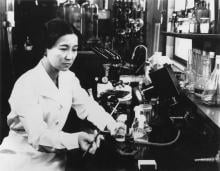
Ruby Sakae Hirose (1904 – 1960) was a Japanese-American scientist whose research contributed significantly to our understanding of blood clotting, allergies and cancer.
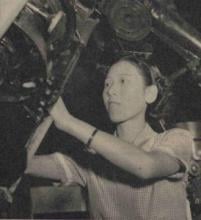
Haisako Koyama (1916 – 1997) was a Japanese solar observer whose dedication to recording sunspots – cooler parts of the sun’s surface that appear dark – produced a sunspot record of historic importance.
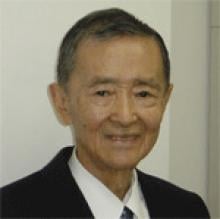
Michiaki Takahashi (17 February 1928 – 16 December 2013) was a Japanese virologist who developed the first chickenpox vaccine.
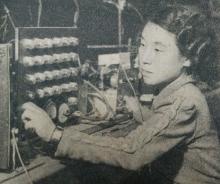
Toshiko Yuasa (11 December 1909 – 1 February 1980) was the first Japanese female physicist whose research on radioactivity shed light on beta decay – the process in which an atom emits a beta particle (electron) and turns into a different element.
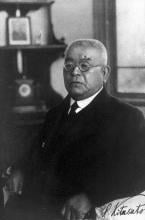
Baron Kitasato Shibasaburo (29 January 1856 – 13 June 1931) was a Japanese physician and bacteriologist whose work led to a new understanding of preventing and treating tetanus, diphtheria and anthrax.
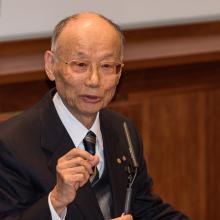
By isolating soil microorganisms and studying the compounds they produce, Satoshi Omura (born 1935) discovered almost 500 organic compounds with unique properties that were produced by these microorganisms, including many new antibiotics.
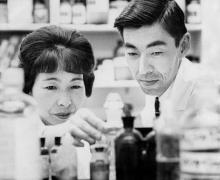
Husband and wife team, Kimishige (3 December 1925 – 6 July 2018) and Teruko Ishizaka (28 September 1926 – 4 June 2019) discovered the antibody class Immunoglobulin E (IgE) that triggers allergic reactions. They also discovered that IgE antibodies attach to white blood cells, known as mast cells, releasing histamine, which causes allergic reactions.
Husband and wife team, Kimishige (3 December 1925 – 6 July 2018) and Teruko Ishizaka (28 September 1926 – 4 June 2019) discovered the antibody class Immunoglobulin E (IgE) that triggers allergic reactions. They also discovered that IgE antibodies attach to white blood cells, known as mast cells, releasing histamine, which causes allergic reactions.
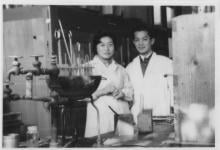
Reiji Okazaki (8 October 1930 – 1 August 1975) and Tsuneko (7 June 1933) were a Japanese couple who discovered Okazaki fragments – short sequences of DNA that are synthesized during DNA replication and linked together to form a continuous strand.
In 1915, Koichi Ichikawa along with pathologist Katsusaburo Yamagiwa became the first to prove that chronic exposure to chemicals can cause cancer.
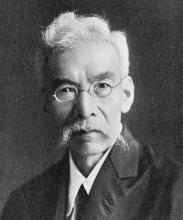
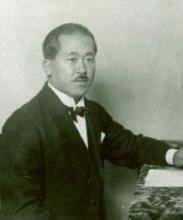
In 1915, pathologist Katsusaburo Yamagiwa and his research assistant Koichi Ichikawa became the first to prove that chronic exposure to chemicals can cause cancer.
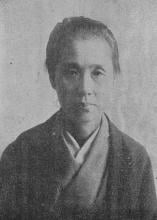
Ogino Ginko (3 March 1851 – 23 June 1913) was the first registered female doctor to practise modern medicine in Japan.
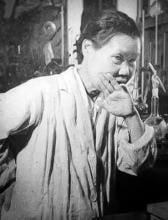
Michiyo Tsujimura (17 September 1888 – 1 June 1969) was a Japanese agricultural scientist and biochemist recognized for her research of green tea components.
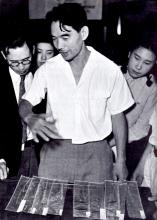
Hitoshi Kihara (1893 – 1986) was one of the most famous Japanese geneticists of the 20th century. One of his most significant contributions was identifying sex chromosomes (X and Y) in flowering plants.
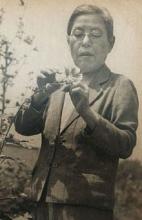
Kono Yasui (16 February 1880 – 24 March 1971) was a Japanese botanist who researched the genetics of poppies, corn and spiderworts and surveyed the plants that had been affected by the nuclear fallout after the atomic bombings of Hiroshima and Nagasaki.
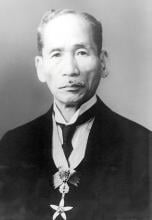
Umetaro Suzuki (7 April 1874 – 20 September 1943) was a Japanese scientist best remembered for his research on beriberi, a disease caused by vitamin B1 deficiency, characterized by limb stiffness, paralysis and pain.
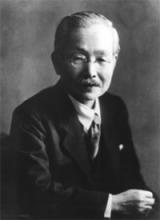
Kikunae Ikeda (8 October 1864 – 3 May 1936) was a Japanese chemist who discovered the fifth basic taste, umami.
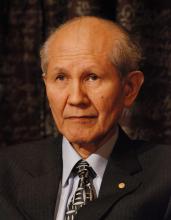
Osamu Shimomura (27 August 1928 – 19 October 2018) was a Japanese organic chemist and marine biologist who dedicated his career to understanding how organisms emitted light.
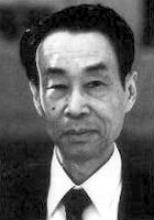
Motoo Kimura (13 November 1924 – 13 November 1994) was a Japanese theoretical population geneticist who is best remembered for developing the neutral theory of molecular evolution.
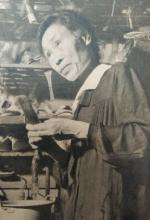
Chika Kuroda (24 March 1884 – 8 November 1968) was a Japanese chemist whose research focussed on the structures of natural pigments.
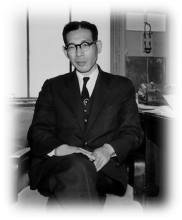
The field of solid-state ionics originated in Europe, but Takehiko Takahashi of Nagoya University in Japan was the first to coin the term ‘solid ionics’ in 1967. ‘Solid-state ionics’ first appeared in 1971 in another of his papers, and was likely a play on ‘solid-state electronics’, another rapidly growing field at the time.
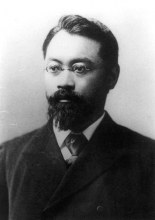
The techniques that make industrial pearl culturing possible were developed over a century ago at the Misaki Marine Biological Station in Japan. The station’s first director, Professor Kakichi Mitsukuri, emphasized to Kokichi Mikimoto in 1890 that stimulating pearl sac formation was important for pearl growth, and they went on to successfully develop methods for culturing pearls.
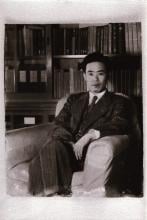
Japanese physicist Ukichiro Nakaya (1900-1962) made the world’s first artificial snowflakes. He started his research on snow crystals in the early 1930s at Hokkaido University, where there is an unlimited supply of natural snow in winter. By taking over 3,000 photographs, he established a classification of natural snow crystals and described their relationship with weather conditions.
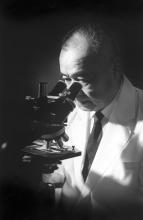
Minoru Shirota (April 23, 1899 – March 10, 1982) was a Japanese microbiologist who invented the popular fermented drink Yakult.
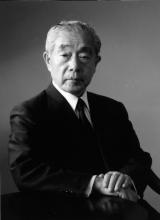
Japanese chemist Kenichi Fukui (4 October 1918 – 9 January 1998) was the first Asian scientist to be awarded the Nobel Prize in Chemistry. Together with Roald Hoffman, he received this honour in 1981 for his independent research into the mechanisms of chemical reactions.
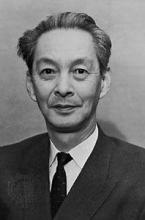
Shinichiro Tomonaga (31 March 1906 – 8 July 1979), together with Richard Feynman and Julian Schwinger, was awarded the Nobel Prize in Physics in 1965, for their contributions to advance the field of quantum electrodynamics. Tomonaga was also a strong proponent of peace, who actively campaigned against the proliferation of nuclear weapons and promoted the peaceful use of nuclear energy.
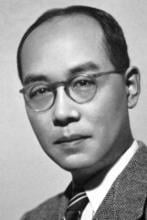
Hideki Yukawa (23 January 1907 – 8 September 1981) was awarded the Nobel Prize in Physics in 1949 for predicting the existence of the pi meson subatomic particle. Japan’s first Nobel laureate, Yakawa also expressed his support for nuclear disarmament by signing the Russell–Einstein Manifesto in 1955.
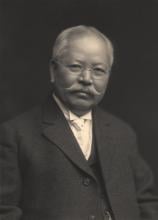
Japanese chemist Takamine Jokichi (3 November 1854 – 22 July 1922) founded the Tokyo Artificial Fertilizer Company, where he isolated a starch-digesting enzyme (named takadiastase) from the fungus Aspergillus oryzae.
Tsuneko (7 June 1933) and Reiji Okazaki (8 October 1930 – 1 August 1975) were a Japanese couple who discovered Okazaki fragments – short sequences of DNA that are synthesized during DNA replication and linked together to form a continuous strand.
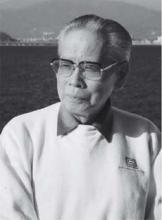
A Japanese surgeon, Tetsuzo Akutsu (20 August 1922 – 9 August 2007) built the first artificial heart capable of keeping an animal alive.
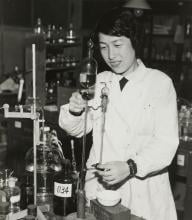
Japanese geochemist Katsuko Saruhashi developed the first method and tools for measuring carbon dioxide in seawater