

Japan
News
16 Oct 2008
Waseda University
Following in the footsteps of the United States, Japan seems to gradually challenge lifestyle centers. In spite of the depressed state of the economy, Japan has a considerable number of wealthy people who establish and respect their own life style.
16 Oct 2008
Waseda University
The election for Japan’s highest governing body, the House of Representatives, will be held for the first time in recent years. The Abe and Fukuda cabinets were not tested by the Japanese public but were merely regime changes within the Liberal Democratic Party.
16 Oct 2008
Waseda University
The constellations we are currently familiar with originate from “Ptolemy’s 48 constellations” compiled from ancient Greek constellations by Claudius Ptolemaeus (from 90 A.D. to about 168 A.D.).
10 Oct 2008
Waseda University
Rikidozan was proclaimed the "hero of the Japanese race." However, he was actually born on the Korean Peninsula to Korean parents. Today he would be called a "Korean resident of Japan." This led me to think about the relationship between sport, race, and nationality.

10 Oct 2008
RIKEN
Chemical biology is a study that uses chemistry to explore life phenomena. This article reports on what is happening at the forefront of chemical genetics and chemical genomics, which are currently hot topics for both basic and applied research.
10 Oct 2008
RIKEN
The fourth RCAI-JSI International Symposium on Immunology 2008 took place on June 26-27 in Yokohama. This annual symposium is jointly organized by the RIKEN Research Center for Allergy and Immunology (RCAI) and the Japanese Society for Immunology (JSI).
10 Oct 2008
RIKEN
RIKEN Center for Developmental Biology is an internationally recognized research institute. They are seeking Team Leaders (approximately 2) who meet the requirements.
10 Oct 2008
RIKEN
Carbon dioxide (CO2) is produced whenever fossil fuels are burned. RIKEN chemists have developed a catalyst that should allow carbon dioxide to be used as a versatile synthetic chemical.
10 Oct 2008
RIKEN
Researchers in Japan have developed a design concept for a device that allows imaging at scales previously impossible for optical instruments.
10 Oct 2008
RIKEN
Researchers in Japan have identified part of the mechanism responsible for preventing prolonged—and potentially dangerous—activation of immune cells called T lymphocytes .
10 Oct 2008
RIKEN
Molecular geneticists in Japan and China have identified a previously unknown gene associated with susceptibility to osteoarthritis, a common disease affecting knee and hip joints through abnormal wearing of the cushioning cartilage.
09 Oct 2008
Keio University
Since 2000, Malaysian-manufactured exports performance has been declining mainly due to the downturn of the global electronic industry and the rise of China's economy. The competitiveness of Malaysian manufactured exports can be improved by examining the pattern of revealed comparative advantage.
09 Oct 2008
Keio University
This paper examines how recent increases in offshoring by Japanese firms relates to the changes in the composition of export, the structure of national production, and the international distribution of manufacturing value-added in Japan, China, East Asian countries, the US and Europe
09 Oct 2008
Keio University
China has been accused of exchange rate manipulation that has caused large U.S. trade deficits, which have reduced U.S. welfare by increasing unemployment and reducing wages.
09 Oct 2008
Keio University
This paper argues that declining transaction costs in exporting on the one hand and the structural and institutional barriers to importing and consumption on the other hand are the main causes for China's rising current account surplus.
09 Oct 2008
Keio University
This paper examines U.S. goods trade with China, focusing on the performance of exports. The authors present evidence that the United States underperforms as an exporter relative to a peer group of high-income European countries and Japan.
03 Oct 2008
RIKEN
Repetition is essential for acquisition and retention of new information and skills. Researchers uncover a mechanism by which the brain regulates restructuring of neuronal connections during the processes of learning and memory-building
03 Oct 2008
RIKEN
An international team of scientists including Koji Yamanaka and colleagues at the RIKEN Brain Science Institute, Wako, have found that damage to brain cells other than motor neurons is critical to the onset of Amyotrophic lateral sclerosis (ALS)
03 Oct 2008
RIKEN
Mapping of electron distribution in highly unusual hypervalent atom will advance our understanding of rare carbon compounds
03 Oct 2008
RIKEN
Each moment that we are awake, our senses are bombarded with stimuli. Focusing our attention on the few stimuli that are important allows us to filter out the ones irrelevant to the task at hand. RIKEN researchers have found that attention does in fact modulate primary cortical responses to both auditory and visual stimuli.
03 Oct 2008
RIKEN
Japanese researchers provide the first large-scale identification of protein control sites from the model plant Arabidopsis
26 Sep 2008
RIKEN
RIKEN Center for Developmental Biology is an internationally recognized research institute working to elucidate the principles of animal development and regeneration, as well as develop innovative cell manipulation techniques. They are currently seeking 2 Team Leaders.
26 Sep 2008
RIKEN
The conference has been a forum for plant metabolomics researchers from all over the world to meet every one to two years since 2002. It was held in Asia for the first time this year.
26 Sep 2008
RIKEN
Scientists use a theory that exists in higher dimensions to better understand the process by which a neutron decays into a proton
26 Sep 2008
RIKEN
Study obtains protein structures more efficiently using a combination of techniques
26 Sep 2008
RIKEN
New man-made materials could produce unique chaotic motion in electron beams
26 Sep 2008
RIKEN
New experiments reveal detailed physical features of a protein thought to exacerbate the pathology of Alzheimer’s disease
17 Sep 2008
Keio University
Interview with Toshi Shioya Actor, film director, producer, acting trainer and President of WILL Do Co. Ltd.
17 Sep 2008
Keio University
Prof. Itoh's laboratory focuses on quantum computers that use atoms for calculation.
Inviting researchers from around the world, everyone aims at positively getting out of stereotypes in their research and everyday life.
11 Sep 2008
Waseda University
Theatre which is expressed through the bodies of people themselves is an animate being (raw and alive). No trace is left after a performance. Theatre is a once in a lifetime experience that remains only in the memories of the audience.
Researchers
Sorry, no researchers coming up for this topic.
Giants in history

Japanese biochemist Akira Endo (1933 – 2024) discovered the first statin, called mevastatin, which lowered cholesterol levels in the blood by inhibiting a key enzyme in the cholesterol biosynthesis pathway. His work laid the foundation for the development of statins to help patients lower their blood cholesterol levels and reduce their risk of heart disease or stroke.
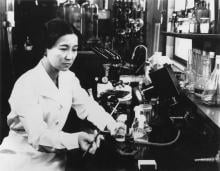
Ruby Sakae Hirose (1904 – 1960) was a Japanese-American scientist whose research contributed significantly to our understanding of blood clotting, allergies and cancer.
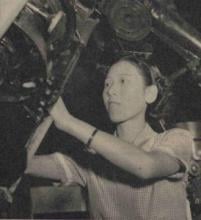
Haisako Koyama (1916 – 1997) was a Japanese solar observer whose dedication to recording sunspots – cooler parts of the sun’s surface that appear dark – produced a sunspot record of historic importance.
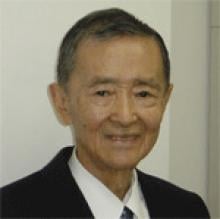
Michiaki Takahashi (17 February 1928 – 16 December 2013) was a Japanese virologist who developed the first chickenpox vaccine.
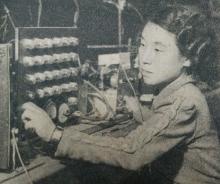
Toshiko Yuasa (11 December 1909 – 1 February 1980) was the first Japanese female physicist whose research on radioactivity shed light on beta decay – the process in which an atom emits a beta particle (electron) and turns into a different element.
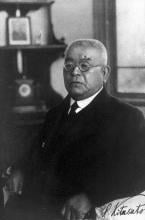
Baron Kitasato Shibasaburo (29 January 1856 – 13 June 1931) was a Japanese physician and bacteriologist whose work led to a new understanding of preventing and treating tetanus, diphtheria and anthrax.
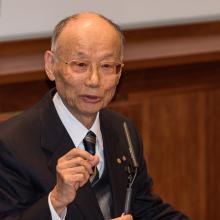
By isolating soil microorganisms and studying the compounds they produce, Satoshi Omura (born 1935) discovered almost 500 organic compounds with unique properties that were produced by these microorganisms, including many new antibiotics.
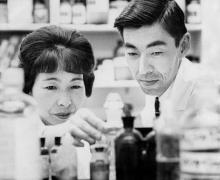
Husband and wife team, Kimishige (3 December 1925 – 6 July 2018) and Teruko Ishizaka (28 September 1926 – 4 June 2019) discovered the antibody class Immunoglobulin E (IgE) that triggers allergic reactions. They also discovered that IgE antibodies attach to white blood cells, known as mast cells, releasing histamine, which causes allergic reactions.
Husband and wife team, Kimishige (3 December 1925 – 6 July 2018) and Teruko Ishizaka (28 September 1926 – 4 June 2019) discovered the antibody class Immunoglobulin E (IgE) that triggers allergic reactions. They also discovered that IgE antibodies attach to white blood cells, known as mast cells, releasing histamine, which causes allergic reactions.
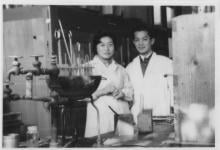
Reiji Okazaki (8 October 1930 – 1 August 1975) and Tsuneko (7 June 1933) were a Japanese couple who discovered Okazaki fragments – short sequences of DNA that are synthesized during DNA replication and linked together to form a continuous strand.
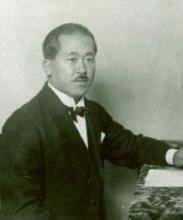
In 1915, Koichi Ichikawa along with pathologist Katsusaburo Yamagiwa became the first to prove that chronic exposure to chemicals can cause cancer.
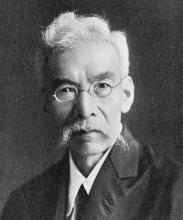
In 1915, pathologist Katsusaburo Yamagiwa and his research assistant Koichi Ichikawa became the first to prove that chronic exposure to chemicals can cause cancer.
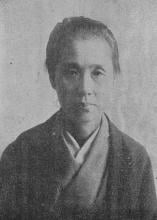
Ogino Ginko (3 March 1851 – 23 June 1913) was the first registered female doctor to practise modern medicine in Japan.
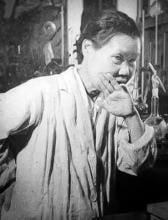
Michiyo Tsujimura (17 September 1888 – 1 June 1969) was a Japanese agricultural scientist and biochemist recognized for her research of green tea components.
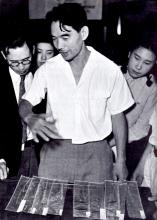
Hitoshi Kihara (1893 – 1986) was one of the most famous Japanese geneticists of the 20th century. One of his most significant contributions was identifying sex chromosomes (X and Y) in flowering plants.
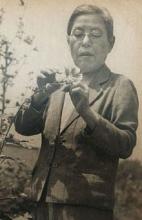
Kono Yasui (16 February 1880 – 24 March 1971) was a Japanese botanist who researched the genetics of poppies, corn and spiderworts and surveyed the plants that had been affected by the nuclear fallout after the atomic bombings of Hiroshima and Nagasaki.
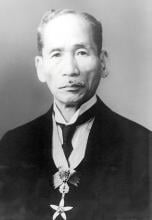
Umetaro Suzuki (7 April 1874 – 20 September 1943) was a Japanese scientist best remembered for his research on beriberi, a disease caused by vitamin B1 deficiency, characterized by limb stiffness, paralysis and pain.
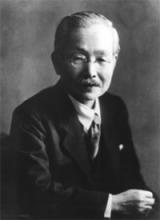
Kikunae Ikeda (8 October 1864 – 3 May 1936) was a Japanese chemist who discovered the fifth basic taste, umami.
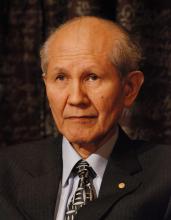
Osamu Shimomura (27 August 1928 – 19 October 2018) was a Japanese organic chemist and marine biologist who dedicated his career to understanding how organisms emitted light.
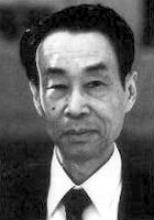
Motoo Kimura (13 November 1924 – 13 November 1994) was a Japanese theoretical population geneticist who is best remembered for developing the neutral theory of molecular evolution.

Chika Kuroda (24 March 1884 – 8 November 1968) was a Japanese chemist whose research focussed on the structures of natural pigments.
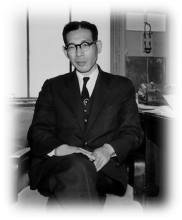
The field of solid-state ionics originated in Europe, but Takehiko Takahashi of Nagoya University in Japan was the first to coin the term ‘solid ionics’ in 1967. ‘Solid-state ionics’ first appeared in 1971 in another of his papers, and was likely a play on ‘solid-state electronics’, another rapidly growing field at the time.
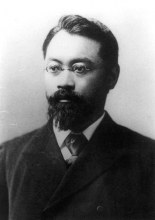
The techniques that make industrial pearl culturing possible were developed over a century ago at the Misaki Marine Biological Station in Japan. The station’s first director, Professor Kakichi Mitsukuri, emphasized to Kokichi Mikimoto in 1890 that stimulating pearl sac formation was important for pearl growth, and they went on to successfully develop methods for culturing pearls.
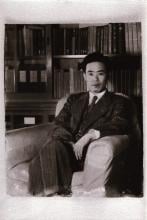
Japanese physicist Ukichiro Nakaya (1900-1962) made the world’s first artificial snowflakes. He started his research on snow crystals in the early 1930s at Hokkaido University, where there is an unlimited supply of natural snow in winter. By taking over 3,000 photographs, he established a classification of natural snow crystals and described their relationship with weather conditions.
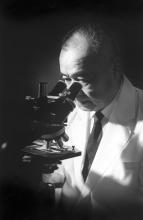
Minoru Shirota (April 23, 1899 – March 10, 1982) was a Japanese microbiologist who invented the popular fermented drink Yakult.
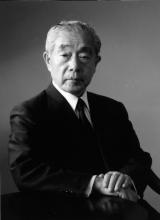
Japanese chemist Kenichi Fukui (4 October 1918 – 9 January 1998) was the first Asian scientist to be awarded the Nobel Prize in Chemistry. Together with Roald Hoffman, he received this honour in 1981 for his independent research into the mechanisms of chemical reactions.
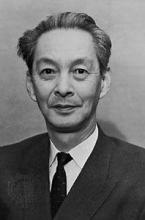
Shinichiro Tomonaga (31 March 1906 – 8 July 1979), together with Richard Feynman and Julian Schwinger, was awarded the Nobel Prize in Physics in 1965, for their contributions to advance the field of quantum electrodynamics. Tomonaga was also a strong proponent of peace, who actively campaigned against the proliferation of nuclear weapons and promoted the peaceful use of nuclear energy.
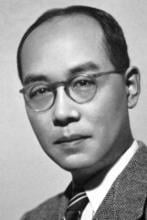
Hideki Yukawa (23 January 1907 – 8 September 1981) was awarded the Nobel Prize in Physics in 1949 for predicting the existence of the pi meson subatomic particle. Japan’s first Nobel laureate, Yakawa also expressed his support for nuclear disarmament by signing the Russell–Einstein Manifesto in 1955.
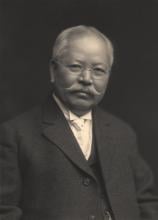
Japanese chemist Takamine Jokichi (3 November 1854 – 22 July 1922) founded the Tokyo Artificial Fertilizer Company, where he isolated a starch-digesting enzyme (named takadiastase) from the fungus Aspergillus oryzae.
Tsuneko (7 June 1933) and Reiji Okazaki (8 October 1930 – 1 August 1975) were a Japanese couple who discovered Okazaki fragments – short sequences of DNA that are synthesized during DNA replication and linked together to form a continuous strand.
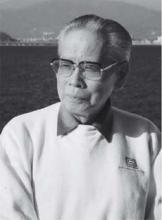
A Japanese surgeon, Tetsuzo Akutsu (20 August 1922 – 9 August 2007) built the first artificial heart capable of keeping an animal alive.
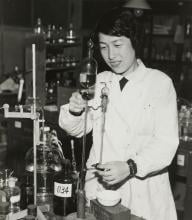
Japanese geochemist Katsuko Saruhashi developed the first method and tools for measuring carbon dioxide in seawater