

Japan
News
14 Mar 2008
Keio University
Researchers from Keio University are working on new medical technology to balance immunological and inflammatory reactions. They are also working on monitoring chips for the critically ill patients, quick diagnostic procedures for infectious diseases and materials for prevention of in-hospital infection

06 Mar 2008
Tokyo University of Science
Research findings relating to a method for diagnosing breast cancer developed by Professor Masami Ando of the DDS Center, Research Institute for Science and Technology, Tokyo University of Science were announced.

01 Mar 2008
RIKEN
Researchers map genetic alterations associated with human schizophrenia
01 Mar 2008
RIKEN
RIKEN researchers have shown that electron beams, like light, can be twisted into vortices that have useful functions
01 Mar 2008
RIKEN
Alternating electric current can be used to precisely control tiny vortices of magnetism
22 Feb 2008
Keio University
Dr. Hans-Gert Pöttering, President of the European Parliament and his entourage visited Keio University and gave a lecture entitled "The Lisbon Treaty and the Future of the European Union". The year 2008 is European Year of Inter-Cultural Dialogue.
22 Feb 2008
Keio University
President Anzai participated in the GULF (Global University Leaders Forum) Winter Meeting, at which leaders of institutions of higher learning in developed and developing countries discussed the future role of universities.
22 Feb 2008
RIKEN
Tying short RNA molecules into loops gives them a stability boost, which could lead to more effective therapeutic strategies for modulating gene expression
22 Feb 2008
RIKEN
The neurons in the primary visual cortex processing high- and low-frequency images are distinct
22 Feb 2008
RIKEN
RIKEN researchers find link with protein build-up
22 Feb 2008
RIKEN
An exhibition created by RIKEN researchers at the National Science Museum in Tokyo is educating the public about the sequencing of the human genome and new directions in the post-genomic world.
15 Feb 2008
Keio University
In-depth interviews with over 100 entrepreneurs in Bangalore suggest that deficiencies in the performance of basic governmental functions (such as in collecting taxes and maintaining land records) play a significant role in discouraging businesses from starting at or expanding to an economically efficient scale of operation.
15 Feb 2008
Keio University
Although signs have emerged that some of the forces that caused the 1997–98 Asian financial crisis have begun to diminish and progress has been made in macroeconomic affairs, 10 years after the meltdown Indonesia's recovery is still among the slowest in Asian crisis countries.
15 Feb 2008
Keio University
This paper contributes to the debate on the use of temporary controls on capital outflows as a crisis resolution measure by examining the outcome of Malaysia's radical response to the 1997–98 financial crisis.
15 Feb 2008
Keio University
This study shows that India's export performance is still far behind that of China. The implication of this study is that India's reform measures need to be bolstered effectively to catch up and to overtake China.
15 Feb 2008
RIKEN
A protein with an important role in regulating gene expression may have other duties relating to chromosome maintenance
15 Feb 2008
RIKEN
Researchers unravel how specific connections result in the layering of neurons in the brain
15 Feb 2008
RIKEN
High-energy gamma rays from thunderclouds may help us to predict when lightning will strike
10 Feb 2008
Keio University
Prof.Yoshiyasu Takefuji was the first person with the idea of camera-equipped cellular phones using satellites and is now taking on the challenge for new public transportation services with unique ideas including floors for passengers to generate electricity, speakers for noisy stations and GPS inside trains.
10 Feb 2008
Keio University
Building for Clinical Research*, a cluster-type research infrastructure, was inaugrated at Shinanomachi Campus. The facility will be used for several research clusters to promote research between different fields. It was designed to be low-impact and long-lasting, and cope with the ever-changing needs of leading-edge medical research.
08 Feb 2008
RIKEN
The future of computing may emerge not from electronics, but from ‘spintronics’. This new technology relies on the transport of electrons whose quantum spin states—or internal angular momentum—are all the same.
08 Feb 2008
RIKEN
Researchers at RIKEN’s Discovery Research Institute in Wako, in collaboration with researchers from Cornell University in the US, and Kyoto University, have refined a method that measures small electronic excitations in superconductors.
08 Feb 2008
RIKEN
RIKEN scientists have discovered a new state of matter with unusual magnetic properties—its constituent electrons are in a continuous state of flux, even at incredibly cold temperatures.
05 Feb 2008
Keio University
Interview with Masamichi Toyama, artist and Chairman of Smiles Co., Ltd, the first example of entrepreneurship within Mitsubishi. He established Soup Stock Tokyo, while on loan to KFC. Soup Stock Tokyo is a new high quality fast food culture for mainly young women in Tokyo which operates from more than 40 outlets.
01 Feb 2008
RIKEN
Researchers solve the mystery of how biological clocks are disrupted - A team led by researchers from RIKEN has revealed how daily or circadian rhythms in mammals can be reinforced, shifted or disrupted by exposure to a burst of bright light.
01 Feb 2008
RIKEN
Two different chemical compounds can be used to draw perpendicular molecular lines on the surface of silicon substrates
25 Jan 2008
RIKEN
Molecular-scale rearrangements influence how receptors transmit their message, adding another layer of complexity to the regulation of cell signaling
25 Jan 2008
RIKEN
X-rays, neutrons and theoretical modeling are used to explore the physics of quasi-crystals
25 Jan 2008
RIKEN
Japanese researchers unravel how cells move to form the brain
Researchers
Sorry, no researchers coming up for this topic.
Giants in history

Japanese biochemist Akira Endo (1933 – 2024) discovered the first statin, called mevastatin, which lowered cholesterol levels in the blood by inhibiting a key enzyme in the cholesterol biosynthesis pathway. His work laid the foundation for the development of statins to help patients lower their blood cholesterol levels and reduce their risk of heart disease or stroke.
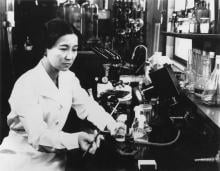
Ruby Sakae Hirose (1904 – 1960) was a Japanese-American scientist whose research contributed significantly to our understanding of blood clotting, allergies and cancer.
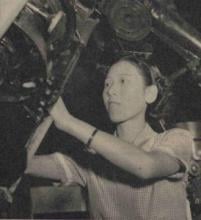
Haisako Koyama (1916 – 1997) was a Japanese solar observer whose dedication to recording sunspots – cooler parts of the sun’s surface that appear dark – produced a sunspot record of historic importance.
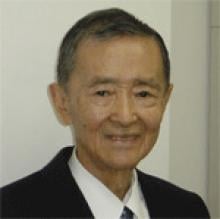
Michiaki Takahashi (17 February 1928 – 16 December 2013) was a Japanese virologist who developed the first chickenpox vaccine.
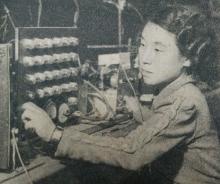
Toshiko Yuasa (11 December 1909 – 1 February 1980) was the first Japanese female physicist whose research on radioactivity shed light on beta decay – the process in which an atom emits a beta particle (electron) and turns into a different element.
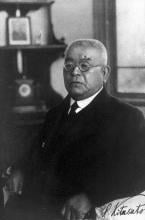
Baron Kitasato Shibasaburo (29 January 1856 – 13 June 1931) was a Japanese physician and bacteriologist whose work led to a new understanding of preventing and treating tetanus, diphtheria and anthrax.
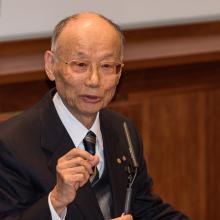
By isolating soil microorganisms and studying the compounds they produce, Satoshi Omura (born 1935) discovered almost 500 organic compounds with unique properties that were produced by these microorganisms, including many new antibiotics.
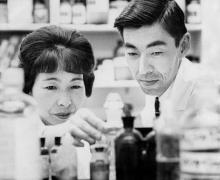
Husband and wife team, Kimishige (3 December 1925 – 6 July 2018) and Teruko Ishizaka (28 September 1926 – 4 June 2019) discovered the antibody class Immunoglobulin E (IgE) that triggers allergic reactions. They also discovered that IgE antibodies attach to white blood cells, known as mast cells, releasing histamine, which causes allergic reactions.
Husband and wife team, Kimishige (3 December 1925 – 6 July 2018) and Teruko Ishizaka (28 September 1926 – 4 June 2019) discovered the antibody class Immunoglobulin E (IgE) that triggers allergic reactions. They also discovered that IgE antibodies attach to white blood cells, known as mast cells, releasing histamine, which causes allergic reactions.
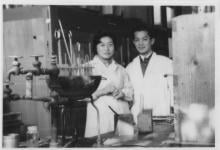
Reiji Okazaki (8 October 1930 – 1 August 1975) and Tsuneko (7 June 1933) were a Japanese couple who discovered Okazaki fragments – short sequences of DNA that are synthesized during DNA replication and linked together to form a continuous strand.
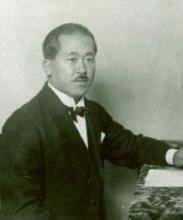
In 1915, Koichi Ichikawa along with pathologist Katsusaburo Yamagiwa became the first to prove that chronic exposure to chemicals can cause cancer.
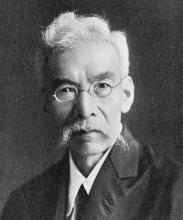
In 1915, pathologist Katsusaburo Yamagiwa and his research assistant Koichi Ichikawa became the first to prove that chronic exposure to chemicals can cause cancer.
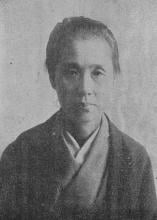
Ogino Ginko (3 March 1851 – 23 June 1913) was the first registered female doctor to practise modern medicine in Japan.
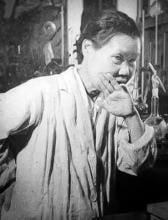
Michiyo Tsujimura (17 September 1888 – 1 June 1969) was a Japanese agricultural scientist and biochemist recognized for her research of green tea components.
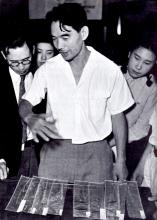
Hitoshi Kihara (1893 – 1986) was one of the most famous Japanese geneticists of the 20th century. One of his most significant contributions was identifying sex chromosomes (X and Y) in flowering plants.
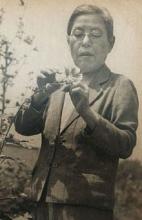
Kono Yasui (16 February 1880 – 24 March 1971) was a Japanese botanist who researched the genetics of poppies, corn and spiderworts and surveyed the plants that had been affected by the nuclear fallout after the atomic bombings of Hiroshima and Nagasaki.
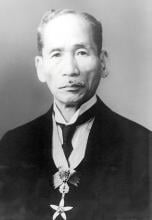
Umetaro Suzuki (7 April 1874 – 20 September 1943) was a Japanese scientist best remembered for his research on beriberi, a disease caused by vitamin B1 deficiency, characterized by limb stiffness, paralysis and pain.
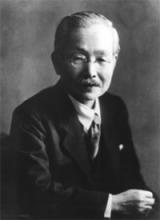
Kikunae Ikeda (8 October 1864 – 3 May 1936) was a Japanese chemist who discovered the fifth basic taste, umami.
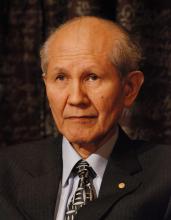
Osamu Shimomura (27 August 1928 – 19 October 2018) was a Japanese organic chemist and marine biologist who dedicated his career to understanding how organisms emitted light.
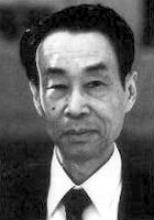
Motoo Kimura (13 November 1924 – 13 November 1994) was a Japanese theoretical population geneticist who is best remembered for developing the neutral theory of molecular evolution.
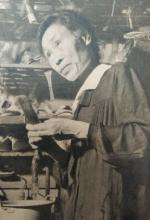
Chika Kuroda (24 March 1884 – 8 November 1968) was a Japanese chemist whose research focussed on the structures of natural pigments.
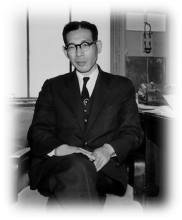
The field of solid-state ionics originated in Europe, but Takehiko Takahashi of Nagoya University in Japan was the first to coin the term ‘solid ionics’ in 1967. ‘Solid-state ionics’ first appeared in 1971 in another of his papers, and was likely a play on ‘solid-state electronics’, another rapidly growing field at the time.
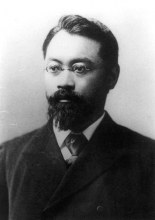
The techniques that make industrial pearl culturing possible were developed over a century ago at the Misaki Marine Biological Station in Japan. The station’s first director, Professor Kakichi Mitsukuri, emphasized to Kokichi Mikimoto in 1890 that stimulating pearl sac formation was important for pearl growth, and they went on to successfully develop methods for culturing pearls.
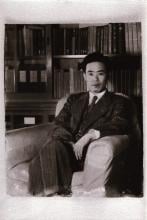
Japanese physicist Ukichiro Nakaya (1900-1962) made the world’s first artificial snowflakes. He started his research on snow crystals in the early 1930s at Hokkaido University, where there is an unlimited supply of natural snow in winter. By taking over 3,000 photographs, he established a classification of natural snow crystals and described their relationship with weather conditions.
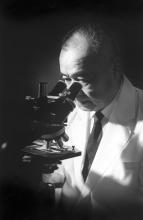
Minoru Shirota (April 23, 1899 – March 10, 1982) was a Japanese microbiologist who invented the popular fermented drink Yakult.
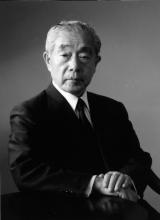
Japanese chemist Kenichi Fukui (4 October 1918 – 9 January 1998) was the first Asian scientist to be awarded the Nobel Prize in Chemistry. Together with Roald Hoffman, he received this honour in 1981 for his independent research into the mechanisms of chemical reactions.
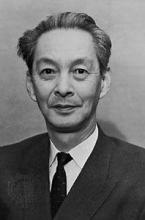
Shinichiro Tomonaga (31 March 1906 – 8 July 1979), together with Richard Feynman and Julian Schwinger, was awarded the Nobel Prize in Physics in 1965, for their contributions to advance the field of quantum electrodynamics. Tomonaga was also a strong proponent of peace, who actively campaigned against the proliferation of nuclear weapons and promoted the peaceful use of nuclear energy.
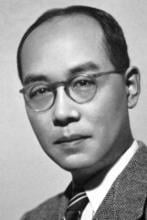
Hideki Yukawa (23 January 1907 – 8 September 1981) was awarded the Nobel Prize in Physics in 1949 for predicting the existence of the pi meson subatomic particle. Japan’s first Nobel laureate, Yakawa also expressed his support for nuclear disarmament by signing the Russell–Einstein Manifesto in 1955.
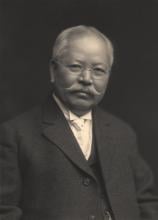
Japanese chemist Takamine Jokichi (3 November 1854 – 22 July 1922) founded the Tokyo Artificial Fertilizer Company, where he isolated a starch-digesting enzyme (named takadiastase) from the fungus Aspergillus oryzae.
Tsuneko (7 June 1933) and Reiji Okazaki (8 October 1930 – 1 August 1975) were a Japanese couple who discovered Okazaki fragments – short sequences of DNA that are synthesized during DNA replication and linked together to form a continuous strand.
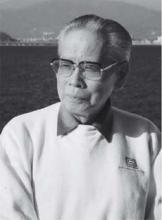
A Japanese surgeon, Tetsuzo Akutsu (20 August 1922 – 9 August 2007) built the first artificial heart capable of keeping an animal alive.
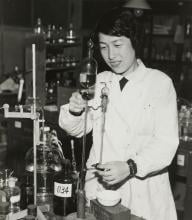
Japanese geochemist Katsuko Saruhashi developed the first method and tools for measuring carbon dioxide in seawater