
Japan
News
05 Oct 2007
Keio University
The collaboration is aimed to contribute to "Human, Society, and Globe", and promotes joint research projects mainly in the fields of Medical, Life Science, Economic and Area Studies

05 Oct 2007
RIKEN
A new route to synthesize an antibiotic may also lead to new drugs
05 Oct 2007
RIKEN
Physicists have long known that, when cooled to very low temperatures, electrons can be placed on the surface of liquefied helium. Now, researchers from RIKEN and Keio University have discovered they can effectively excite these electrons using microwave radiation.
04 Oct 2007
RIKEN
New development to contribute to the application of quantum codes that will be essential for absolutely secure information management.
03 Oct 2007
Keio University
The first three students in the Keio-EC Double Degree Program successfully graduated from the Graduate School of Science and Technology.
02 Oct 2007
RIKEN
Ultrahigh-energy cosmic particles are extremely rare—only 11 have been observed in 13 years. No one knows where they come from, or how they could have that much energy left over after the long journey through intergalactic and interstellar space. RIKEN is planning to observe them on board the International Space Station.
28 Sep 2007
Keio University
Keio University receives approval from MEXT for its merger with Kyoritsu University of Pharmacy and establishment of the Faculty of Pharmacy and Graduate School of Pharmaceutical Sciences
28 Sep 2007
RIKEN
One jellyfish can throw a swimmer into a panic, but relentless swarms can disrupt entire economies. The isolation of a promising new protein by Japanese researchers could help reverse the economic damage being done by exploding jellyfish populations
28 Sep 2007
RIKEN
Scientists have confirmed that a powerful particle accelerator has recreated the intense conditions that existed just microseconds after the beginning of the universe.
28 Sep 2007
RIKEN
Japanese neuroscientists from the RIKEN Brain Science Institute have uncovered a mechanism for an epileptic disorder which occurs in infants. “We hope to develop effective therapies for this intractable epilepsy from further work,” says project leader Kazuhiro Yamakawa.
21 Sep 2007
RIKEN
Collective motion of molecules in a crystal could lead to new electronic devices
21 Sep 2007
RIKEN
Multipolar-to-biopolar neuronal transition is essential during brain development. A team of Japanese scientists have determined that a protein called cyclin-dependent kinase 5 (Cdk5) is required for neurons to develop their proper shape.
21 Sep 2007
RIKEN
New research has revealed how protein filaments drive a key cellular process by physically wrapping around and constricting bits of cell membrane

20 Sep 2007
Tokyo University of Science
Japanese and American scientists have discovered a bactericidal peptide in M cells that is connected with gut immunity. M cells ingest bacteria or viruses and deliver them to our immune system. This research will help scientists develop a drug delivery system that can deliver medicines specifically to M cells.
18 Sep 2007
Tokyo University of Science
Tokyo, Japan - Both universities declare their intention to promote cooperation in research and education in various fields.
16 Sep 2007
Keio University
The partnership, which also includes Keio’s affiliated high school in New York State, aims to promote student and research exchange, and to explore various other possibilities for collaboration between the three schools.
15 Sep 2007
RIKEN
Japanese scientists describe crystal structures at the heart of antitumor compound synthesis
15 Sep 2007
RIKEN
A RIKEN-led team of researchers from Japan and the US has used an innovative combination of genome survey techniques in live Drosophila fruit flies to reveal a previously unknown master gene involved in setting circadian rhythms.
13 Sep 2007
Keio University
The Ecole des Mines is the oldest school in Paris, it can claim a French president and Nobel Prize winner amongst its many graduates; it is ranked in the top three universities for science and technology in France.
09 Sep 2007
RIKEN
Two researchers from RIKEN’s SPring-8 Center in Harima have demonstrated the conversion of x-rays into longer wavelengths that preserves some of their useful properties, such as high spatial resolution.
09 Sep 2007
RIKEN
A three-component catalytic system enables the formation of carbon–fluorine bonds at precise positions in organic molecules
09 Sep 2007
RIKEN
Researchers find superconductivity in a material typically used as cement
03 Sep 2007
Tokyo University of Science
The advanced international collaboration program proposed by the Tokyo University of Science has been selected for adoption under the Program to Promote Internationalization of University Education (Support for Pioneering International Collaboration) of the Ministry of Education, Culture, Sports, Science and Technology for FY2007.
02 Sep 2007
Keio University
On the occasion of President Anzai’s first visit to India, and to begin strengthening its academic ties in that country, Keio University established 11 partnerships with Indian institutions:
01 Sep 2007
RIKEN
Neurobiologists from Japan and the US have identified a signaling system functioning during vertebrate development that controls the proper positioning of cells giving rise to future olfactory neurons, and their eventual correct wiring to the brain.
01 Sep 2007
RIKEN
Researchers from the RIKEN SPring-8 Center in Harima and from the universities of Tsukuba and Tokyo have demonstrated that laser light of a single wavelength can induce reversible transformations in the molecular bond, leading to changes in a material’s magnetic properties.
01 Sep 2007
RIKEN
Japanese researchers may have found a simple solution to the problem of keeping human embryonic stem (hES) cells alive after dissociation of the embryo into individual cells.
28 Aug 2007
Keio University
As one of a series of events to celebrate its 150th anniversary in 2008, Keio University hosted the APRU Doctoral Students Conference from Monday, 30 July to Friday, 3 August at its Mita Campus. The conference is one of the main activities of the Association of Pacific Rim Universities
24 Aug 2007
RIKEN
Ultrahigh-energy cosmic particles are an intriguing puzzle in high-energy physics, and RIKEN is involved in a project to solve it. RIKEN proposal for the second utilization plan of the Japanese Experiment Module (JEM) on board the International Space Station was recently accepted
Researchers
Sorry, no researchers coming up for this topic.
Giants in history

Japanese biochemist Akira Endo (1933 – 2024) discovered the first statin, called mevastatin, which lowered cholesterol levels in the blood by inhibiting a key enzyme in the cholesterol biosynthesis pathway. His work laid the foundation for the development of statins to help patients lower their blood cholesterol levels and reduce their risk of heart disease or stroke.
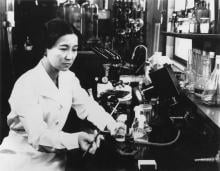
Ruby Sakae Hirose (1904 – 1960) was a Japanese-American scientist whose research contributed significantly to our understanding of blood clotting, allergies and cancer.
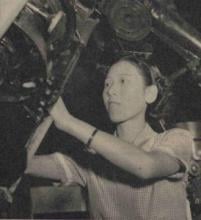
Haisako Koyama (1916 – 1997) was a Japanese solar observer whose dedication to recording sunspots – cooler parts of the sun’s surface that appear dark – produced a sunspot record of historic importance.
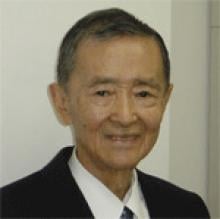
Michiaki Takahashi (17 February 1928 – 16 December 2013) was a Japanese virologist who developed the first chickenpox vaccine.
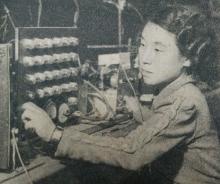
Toshiko Yuasa (11 December 1909 – 1 February 1980) was the first Japanese female physicist whose research on radioactivity shed light on beta decay – the process in which an atom emits a beta particle (electron) and turns into a different element.
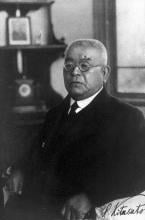
Baron Kitasato Shibasaburo (29 January 1856 – 13 June 1931) was a Japanese physician and bacteriologist whose work led to a new understanding of preventing and treating tetanus, diphtheria and anthrax.
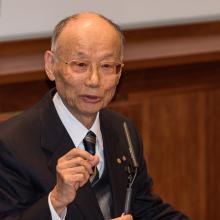
By isolating soil microorganisms and studying the compounds they produce, Satoshi Omura (born 1935) discovered almost 500 organic compounds with unique properties that were produced by these microorganisms, including many new antibiotics.
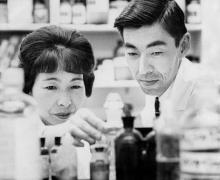
Husband and wife team, Kimishige (3 December 1925 – 6 July 2018) and Teruko Ishizaka (28 September 1926 – 4 June 2019) discovered the antibody class Immunoglobulin E (IgE) that triggers allergic reactions. They also discovered that IgE antibodies attach to white blood cells, known as mast cells, releasing histamine, which causes allergic reactions.
Husband and wife team, Kimishige (3 December 1925 – 6 July 2018) and Teruko Ishizaka (28 September 1926 – 4 June 2019) discovered the antibody class Immunoglobulin E (IgE) that triggers allergic reactions. They also discovered that IgE antibodies attach to white blood cells, known as mast cells, releasing histamine, which causes allergic reactions.
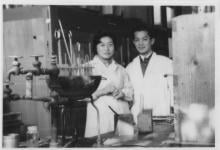
Reiji Okazaki (8 October 1930 – 1 August 1975) and Tsuneko (7 June 1933) were a Japanese couple who discovered Okazaki fragments – short sequences of DNA that are synthesized during DNA replication and linked together to form a continuous strand.
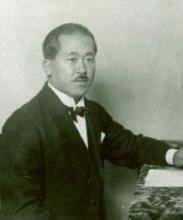
In 1915, Koichi Ichikawa along with pathologist Katsusaburo Yamagiwa became the first to prove that chronic exposure to chemicals can cause cancer.
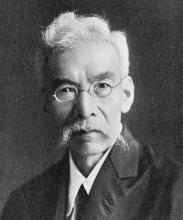
In 1915, pathologist Katsusaburo Yamagiwa and his research assistant Koichi Ichikawa became the first to prove that chronic exposure to chemicals can cause cancer.
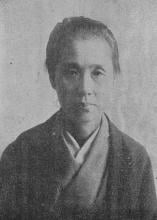
Ogino Ginko (3 March 1851 – 23 June 1913) was the first registered female doctor to practise modern medicine in Japan.
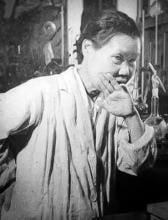
Michiyo Tsujimura (17 September 1888 – 1 June 1969) was a Japanese agricultural scientist and biochemist recognized for her research of green tea components.
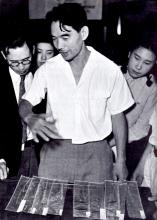
Hitoshi Kihara (1893 – 1986) was one of the most famous Japanese geneticists of the 20th century. One of his most significant contributions was identifying sex chromosomes (X and Y) in flowering plants.
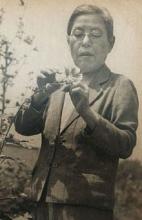
Kono Yasui (16 February 1880 – 24 March 1971) was a Japanese botanist who researched the genetics of poppies, corn and spiderworts and surveyed the plants that had been affected by the nuclear fallout after the atomic bombings of Hiroshima and Nagasaki.
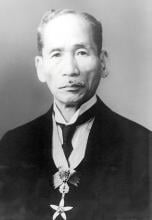
Umetaro Suzuki (7 April 1874 – 20 September 1943) was a Japanese scientist best remembered for his research on beriberi, a disease caused by vitamin B1 deficiency, characterized by limb stiffness, paralysis and pain.
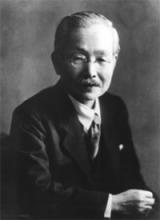
Kikunae Ikeda (8 October 1864 – 3 May 1936) was a Japanese chemist who discovered the fifth basic taste, umami.
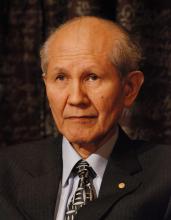
Osamu Shimomura (27 August 1928 – 19 October 2018) was a Japanese organic chemist and marine biologist who dedicated his career to understanding how organisms emitted light.
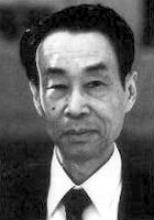
Motoo Kimura (13 November 1924 – 13 November 1994) was a Japanese theoretical population geneticist who is best remembered for developing the neutral theory of molecular evolution.

Chika Kuroda (24 March 1884 – 8 November 1968) was a Japanese chemist whose research focussed on the structures of natural pigments.
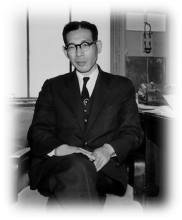
The field of solid-state ionics originated in Europe, but Takehiko Takahashi of Nagoya University in Japan was the first to coin the term ‘solid ionics’ in 1967. ‘Solid-state ionics’ first appeared in 1971 in another of his papers, and was likely a play on ‘solid-state electronics’, another rapidly growing field at the time.
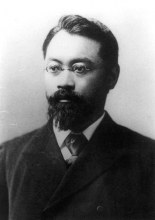
The techniques that make industrial pearl culturing possible were developed over a century ago at the Misaki Marine Biological Station in Japan. The station’s first director, Professor Kakichi Mitsukuri, emphasized to Kokichi Mikimoto in 1890 that stimulating pearl sac formation was important for pearl growth, and they went on to successfully develop methods for culturing pearls.
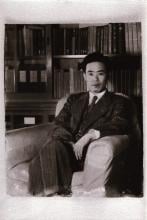
Japanese physicist Ukichiro Nakaya (1900-1962) made the world’s first artificial snowflakes. He started his research on snow crystals in the early 1930s at Hokkaido University, where there is an unlimited supply of natural snow in winter. By taking over 3,000 photographs, he established a classification of natural snow crystals and described their relationship with weather conditions.
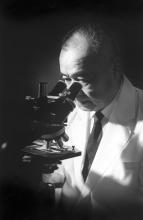
Minoru Shirota (April 23, 1899 – March 10, 1982) was a Japanese microbiologist who invented the popular fermented drink Yakult.
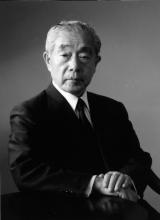
Japanese chemist Kenichi Fukui (4 October 1918 – 9 January 1998) was the first Asian scientist to be awarded the Nobel Prize in Chemistry. Together with Roald Hoffman, he received this honour in 1981 for his independent research into the mechanisms of chemical reactions.
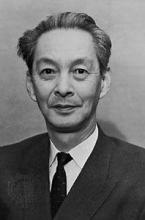
Shinichiro Tomonaga (31 March 1906 – 8 July 1979), together with Richard Feynman and Julian Schwinger, was awarded the Nobel Prize in Physics in 1965, for their contributions to advance the field of quantum electrodynamics. Tomonaga was also a strong proponent of peace, who actively campaigned against the proliferation of nuclear weapons and promoted the peaceful use of nuclear energy.
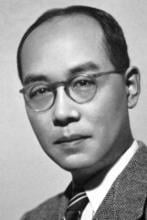
Hideki Yukawa (23 January 1907 – 8 September 1981) was awarded the Nobel Prize in Physics in 1949 for predicting the existence of the pi meson subatomic particle. Japan’s first Nobel laureate, Yakawa also expressed his support for nuclear disarmament by signing the Russell–Einstein Manifesto in 1955.
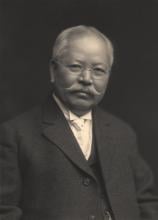
Japanese chemist Takamine Jokichi (3 November 1854 – 22 July 1922) founded the Tokyo Artificial Fertilizer Company, where he isolated a starch-digesting enzyme (named takadiastase) from the fungus Aspergillus oryzae.
Tsuneko (7 June 1933) and Reiji Okazaki (8 October 1930 – 1 August 1975) were a Japanese couple who discovered Okazaki fragments – short sequences of DNA that are synthesized during DNA replication and linked together to form a continuous strand.
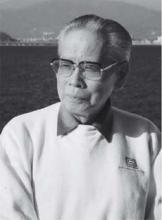
A Japanese surgeon, Tetsuzo Akutsu (20 August 1922 – 9 August 2007) built the first artificial heart capable of keeping an animal alive.
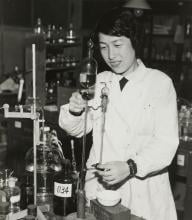
Japanese geochemist Katsuko Saruhashi developed the first method and tools for measuring carbon dioxide in seawater