

Japan
News

12 Dec 2008
RIKEN
Magnetic fluctuations may play an important role in the mechanism for superconductivity in the iron-pnictides
12 Dec 2008
RIKEN
Sandra Blakeslee, a science writer for The New York Times who specializes in the brain sciences, recently interviewed Atsushi Iriki of the RIKEN Brain Science Institute (BSI), Wako, Japan.
12 Dec 2008
RIKEN
The meeting, titled ‘‘Toward Synthesis of Cells—Reconstruction and Design of Cellular Functions,’’ brought together experts with diverse backgrounds to discuss ways eventually realize the synthesis of molecules, cells and organs.
11 Dec 2008
Waseda University
Journalist and news anchor Tetsuya Chikushi lost his battle with lung cancer in November 2008. He was a lecturer in Waseda University. His colleague and fellow news anchor, Yasuhiro Tase remembers his legacy.
09 Dec 2008
Keio University
The HUMI Project has earned a reputation internationally for its technique of photographing rare books using a special book cradle and a camera mount.
05 Dec 2008
Waseda University
Professor Morikawa from Waseda University analyzes the love affairs of college students and the era of the “marriage hunting” that is expected to materialize in the near future.
05 Dec 2008
RIKEN
Visual information from both eyes finally comes together when it is transmitted to the primary visual cortex. Transport of the Otx2 protein from the eye to the brain may initiate visual cortex plasticity
05 Dec 2008
RIKEN
Eliminating signaling molecules from tissue culture results in the generation of hypothalamic neurons from embryonic stem cells
05 Dec 2008
RIKEN
Tracking and halting the making of new neurons shows that continued neurogenesis is needed for spatial memory
05 Dec 2008
RIKEN
The search for improved ‘multiferroic’ materials may benefit from a new discovery in an iron-based oxide compound
05 Dec 2008
RIKEN
Additions to the genome map yield important clues on how plants respond and adapt to adverse environmental conditions
28 Nov 2008
RIKEN
A method for deriving complex neuronal tissues from embryonic stem cells could yield major benefits for clinical research and the development of new therapeutics
28 Nov 2008
RIKEN
A common mechanism may explain cognitive dysfunction during both aging and Alzheimer’s disease
28 Nov 2008
RIKEN
A genetic variant highly associated with diabetes is found in both East Asian and European populations
28 Nov 2008
RIKEN
A new large high-precision mirror is capable of focusing x-ray radiation to spot sizes of just a few nanometers
28 Nov 2008
RIKEN
Molecular imaging is expected to help in the detection of lifestyle-related diseases, such as cancer, dementia, and diabetes, at an early stage, as well as in developing good new drugs with the fewest side-effects far more quickly.
28 Nov 2008
RIKEN
Researchers at the RIKEN Research Center for Allergy and Immunology (RCAI) have begun bridging research for a vaccine to prevent and treat pollen disease caused by cedar pollen. Human clinical trials are still needed, but a vaccine appears to be in sight.
26 Nov 2008
Keio University
The agreement marks the first MBA double degree set up by Keio Business School with a school from another country at MBA level, as well as this is the first time that ESSEC has established such a partnership with a Japanese Business School.
21 Nov 2008
RIKEN
The origin of superconductivity in iron-based materials can now be studied using a basic theoretical model
21 Nov 2008
RIKEN
The discovery of an inhibitor of the production of bone-resorptive cells opens new possibilities for regulating bone loss.The work is important because an excess of osteoclasts has been implicated in diseases like osteoporosis, rheumatoid arthritis and bone cancer.
21 Nov 2008
RIKEN
A RIKEN-led research group has uncovered another class of plant hormones involved in regulating shoot branching. The identity of the compounds suggests a means by which plant form can be linked to the level of nutrients in the soil.
21 Nov 2008
RIKEN
RIKEN researchers have uncovered the significant role played by a little-known gene regulator in determining which cells in developing mammalian embryos eventually give rise to sperm and eggs in the adult.
21 Nov 2008
RIKEN
The first integrated database of terahertz data in the world opened on September 15 at RIKEN and the Next Generation Network Center at the National Institute of Information and Communications Technology (NICT)
21 Nov 2008
Waseda University
Some interest facts on Okinawa is how 4 different languages have developed in such a small geographical area. Okinawa is a perfect field in which to consider the question of "what is language?" There is also the tradition in which only women have spiritual vocations and perform Shinto rituals.
21 Nov 2008
Waseda University
Herbert von Karajan, who was called the "Caesar of the conductor' s podium" , was born in Salzburg in 1908. Beginning with his first trip to Japan in 1954, he visited Japan 11 times.
19 Nov 2008
Keio University
Keio SFC Jr. & Sr. High School, the newest secondary school affiliated with Keio University, is urgently seeking applicants for a part-time teaching position(s) from April, 2009.
19 Nov 2008
Keio University
In the main venue of Hiyoshi Campus, about 8,300 people including guests, students, graduates, students' parents and faculty and staff gathered, as well as about 3,100 people in Mita Campus, about 600 in Shonan Fujisawa Campus and about 500 people in the Osaka venue (Dojima River Forum), all to celebrate the 150th anniversary.
14 Nov 2008
RIKEN
RIKEN recently sponsored a symposium at the Center for Developmental Biology in Kobe on ‘cell and tissue scale’ research in the life sciences to explore directions for the next generation of study.
14 Nov 2008
RIKEN
RIKEN researchers have produced healthy cloned mice from cells taken from bodies frozen for 16 years
14 Nov 2008
RIKEN
Terahertz (THz) radiation is currently attracting considerable interest for imaging and sensing applications, because it has the potential to supersede x-rays that are more damaging. A new near-field design for terahertz radiation detection promises high-resolution imaging devices on a chip
Researchers
Sorry, no researchers coming up for this topic.
Giants in history

Japanese biochemist Akira Endo (1933 – 2024) discovered the first statin, called mevastatin, which lowered cholesterol levels in the blood by inhibiting a key enzyme in the cholesterol biosynthesis pathway. His work laid the foundation for the development of statins to help patients lower their blood cholesterol levels and reduce their risk of heart disease or stroke.
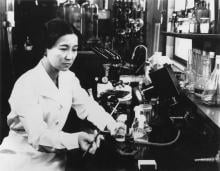
Ruby Sakae Hirose (1904 – 1960) was a Japanese-American scientist whose research contributed significantly to our understanding of blood clotting, allergies and cancer.
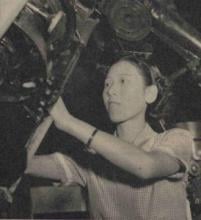
Haisako Koyama (1916 – 1997) was a Japanese solar observer whose dedication to recording sunspots – cooler parts of the sun’s surface that appear dark – produced a sunspot record of historic importance.
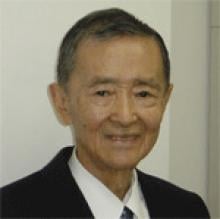
Michiaki Takahashi (17 February 1928 – 16 December 2013) was a Japanese virologist who developed the first chickenpox vaccine.
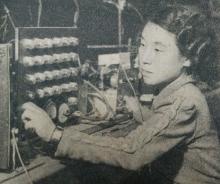
Toshiko Yuasa (11 December 1909 – 1 February 1980) was the first Japanese female physicist whose research on radioactivity shed light on beta decay – the process in which an atom emits a beta particle (electron) and turns into a different element.
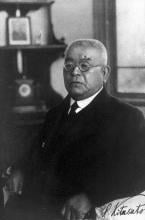
Baron Kitasato Shibasaburo (29 January 1856 – 13 June 1931) was a Japanese physician and bacteriologist whose work led to a new understanding of preventing and treating tetanus, diphtheria and anthrax.
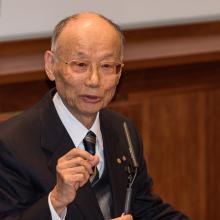
By isolating soil microorganisms and studying the compounds they produce, Satoshi Omura (born 1935) discovered almost 500 organic compounds with unique properties that were produced by these microorganisms, including many new antibiotics.
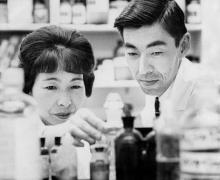
Husband and wife team, Kimishige (3 December 1925 – 6 July 2018) and Teruko Ishizaka (28 September 1926 – 4 June 2019) discovered the antibody class Immunoglobulin E (IgE) that triggers allergic reactions. They also discovered that IgE antibodies attach to white blood cells, known as mast cells, releasing histamine, which causes allergic reactions.
Husband and wife team, Kimishige (3 December 1925 – 6 July 2018) and Teruko Ishizaka (28 September 1926 – 4 June 2019) discovered the antibody class Immunoglobulin E (IgE) that triggers allergic reactions. They also discovered that IgE antibodies attach to white blood cells, known as mast cells, releasing histamine, which causes allergic reactions.
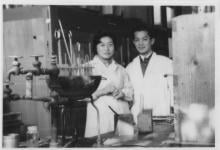
Reiji Okazaki (8 October 1930 – 1 August 1975) and Tsuneko (7 June 1933) were a Japanese couple who discovered Okazaki fragments – short sequences of DNA that are synthesized during DNA replication and linked together to form a continuous strand.
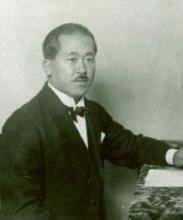
In 1915, Koichi Ichikawa along with pathologist Katsusaburo Yamagiwa became the first to prove that chronic exposure to chemicals can cause cancer.
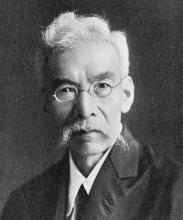
In 1915, pathologist Katsusaburo Yamagiwa and his research assistant Koichi Ichikawa became the first to prove that chronic exposure to chemicals can cause cancer.
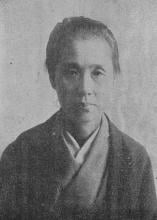
Ogino Ginko (3 March 1851 – 23 June 1913) was the first registered female doctor to practise modern medicine in Japan.
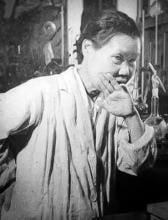
Michiyo Tsujimura (17 September 1888 – 1 June 1969) was a Japanese agricultural scientist and biochemist recognized for her research of green tea components.
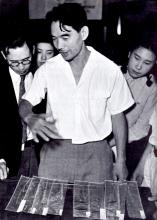
Hitoshi Kihara (1893 – 1986) was one of the most famous Japanese geneticists of the 20th century. One of his most significant contributions was identifying sex chromosomes (X and Y) in flowering plants.
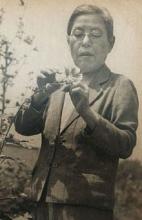
Kono Yasui (16 February 1880 – 24 March 1971) was a Japanese botanist who researched the genetics of poppies, corn and spiderworts and surveyed the plants that had been affected by the nuclear fallout after the atomic bombings of Hiroshima and Nagasaki.
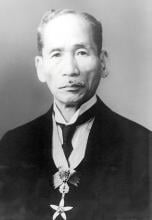
Umetaro Suzuki (7 April 1874 – 20 September 1943) was a Japanese scientist best remembered for his research on beriberi, a disease caused by vitamin B1 deficiency, characterized by limb stiffness, paralysis and pain.
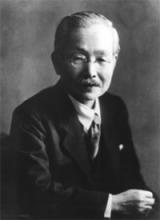
Kikunae Ikeda (8 October 1864 – 3 May 1936) was a Japanese chemist who discovered the fifth basic taste, umami.
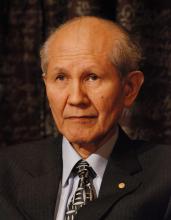
Osamu Shimomura (27 August 1928 – 19 October 2018) was a Japanese organic chemist and marine biologist who dedicated his career to understanding how organisms emitted light.
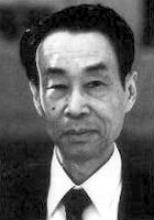
Motoo Kimura (13 November 1924 – 13 November 1994) was a Japanese theoretical population geneticist who is best remembered for developing the neutral theory of molecular evolution.

Chika Kuroda (24 March 1884 – 8 November 1968) was a Japanese chemist whose research focussed on the structures of natural pigments.
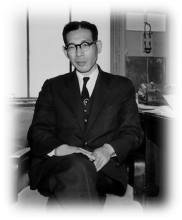
The field of solid-state ionics originated in Europe, but Takehiko Takahashi of Nagoya University in Japan was the first to coin the term ‘solid ionics’ in 1967. ‘Solid-state ionics’ first appeared in 1971 in another of his papers, and was likely a play on ‘solid-state electronics’, another rapidly growing field at the time.
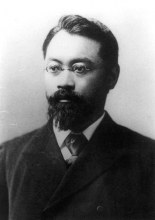
The techniques that make industrial pearl culturing possible were developed over a century ago at the Misaki Marine Biological Station in Japan. The station’s first director, Professor Kakichi Mitsukuri, emphasized to Kokichi Mikimoto in 1890 that stimulating pearl sac formation was important for pearl growth, and they went on to successfully develop methods for culturing pearls.
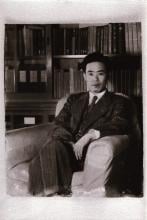
Japanese physicist Ukichiro Nakaya (1900-1962) made the world’s first artificial snowflakes. He started his research on snow crystals in the early 1930s at Hokkaido University, where there is an unlimited supply of natural snow in winter. By taking over 3,000 photographs, he established a classification of natural snow crystals and described their relationship with weather conditions.
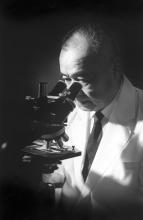
Minoru Shirota (April 23, 1899 – March 10, 1982) was a Japanese microbiologist who invented the popular fermented drink Yakult.
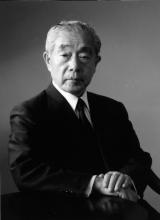
Japanese chemist Kenichi Fukui (4 October 1918 – 9 January 1998) was the first Asian scientist to be awarded the Nobel Prize in Chemistry. Together with Roald Hoffman, he received this honour in 1981 for his independent research into the mechanisms of chemical reactions.
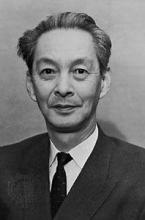
Shinichiro Tomonaga (31 March 1906 – 8 July 1979), together with Richard Feynman and Julian Schwinger, was awarded the Nobel Prize in Physics in 1965, for their contributions to advance the field of quantum electrodynamics. Tomonaga was also a strong proponent of peace, who actively campaigned against the proliferation of nuclear weapons and promoted the peaceful use of nuclear energy.
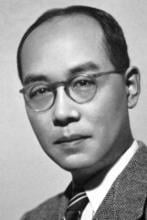
Hideki Yukawa (23 January 1907 – 8 September 1981) was awarded the Nobel Prize in Physics in 1949 for predicting the existence of the pi meson subatomic particle. Japan’s first Nobel laureate, Yakawa also expressed his support for nuclear disarmament by signing the Russell–Einstein Manifesto in 1955.
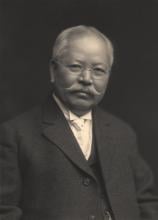
Japanese chemist Takamine Jokichi (3 November 1854 – 22 July 1922) founded the Tokyo Artificial Fertilizer Company, where he isolated a starch-digesting enzyme (named takadiastase) from the fungus Aspergillus oryzae.
Tsuneko (7 June 1933) and Reiji Okazaki (8 October 1930 – 1 August 1975) were a Japanese couple who discovered Okazaki fragments – short sequences of DNA that are synthesized during DNA replication and linked together to form a continuous strand.
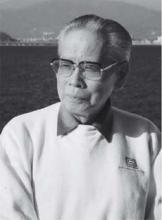
A Japanese surgeon, Tetsuzo Akutsu (20 August 1922 – 9 August 2007) built the first artificial heart capable of keeping an animal alive.
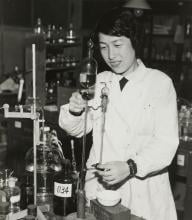
Japanese geochemist Katsuko Saruhashi developed the first method and tools for measuring carbon dioxide in seawater