

Japan
News

14 Aug 2009
RIKEN
Mechanically trapped molecules throw light on energy transfer within artificial photosynthetic systems
14 Aug 2009
RIKEN
Radiation bursts from thunderclouds may not always be associated with lightning
07 Aug 2009
RIKEN
Mutual controllability of electricity and magnetism in a weak magnetic material points the way to low-power electronics
07 Aug 2009
RIKEN
Controlled positioning of nucleic acids on gold nanoparticles creates new possibilities for bottom-up nanotechnologies
04 Aug 2009
Tokyo University of Science
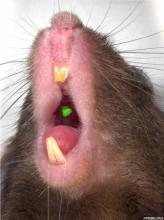
Japanese scientists have grown teeth in mice. This research is expected to advance the development of "tooth regenerative therapy" which have the potential for replacing diseased or damaged teeth with bioengineered teeth. The research is expected to evolve into a wide variety of organ regenerative technologies for liver, kidneys and other organs.
31 Jul 2009
RIKEN
Subtle structural changes can markedly affect one protein’s toxic impact, and may help explain the distinctive pathology of Huntington’s disease
31 Jul 2009
RIKEN
Neurons communicate more efficiently when neuronal activity causes inhibitory receptors to diffuse away from the synapse
31 Jul 2009
RIKEN
With the rise of (H1N1) cases around the world, there is a pressing need at medical institutions to detect infections. As a part of emergency government research aimed at addressing this need, RIKEN and University of Tokyo, are developing an H1N1 detection technique based on its SmartAmp technology.
26 Jul 2009
Waseda University
This year, a change of administration may possibly occur. Once the change of administration occurs, this project is expected to show us detailed mechanisms, such as the reasons for the change of government, based on accumulated data over the years.
26 Jul 2009
Waseda University
On June 13th, 1948, Osamu Dazai, who had quickly gained popularity after World War II with such works as “The Setting Sun [Shayo]” (1947), committed double suicide, jumping into the Tamagawa Josui River together with a war-widow.
26 Jul 2009
Waseda University
Looking back on Japanese history, we notice the extreme significance of the samurai, the warrior class in old Japan. However, it is actually not well understood when and how the samurai was born. In this article, Associate Professor Akio Kawajiri introduces his studies on it.
26 Jul 2009
Waseda University
This focus on the coal industry, a symbol of capitalist heavy industry, is important in studying the development process of modern capitalism in Japan.
26 Jul 2009
Waseda University
Shanghai was once known as the “devil’s city”. This image is represented by the modern architecture which exists along the banks of the Huangpu River in the area known as the Bund (Wai Tan), and by Nanking Road, which bustles with people.
26 Jul 2009
Waseda University
Works from many different fields are exhibited in this gallery including two illustrations based on Hokke-Kyo sutras (Muromachi Period), kohitsugire, as well as calligraphic works and paintings of Zen Buddhist monks such as Shunpo Soki and Ousen Keisan of the Muromachi Period, and Hakuin Ekaku and Sengai Gibon of the Edo Period.
26 Jul 2009
Waseda University
The history of archaeology at Waseda University began long ago. In 1882 (the 15th year of the Meiji Era), archaeologist E.S. Morse was invited by Shigenobu Okuma to speak at the opening ceremony of Tokyo Senmon Gakko, which was the precursor of Waseda University.
26 Jul 2009
Waseda University
On June 11, 2009, the Information, Production, and Systems Research Center of Waseda University presented a public demonstration of Ninomiya-kun, a robot that reads books aloud (see Waseda Movie), at the Robot Industry Matching Fair in Kitakyushu, part of the 49th West Japan Machine Tool & Industry System Fair.
24 Jul 2009
RIKEN
Synthesis of graphitic nanotubes containing platinum metals achieved through self-assembly techniques
24 Jul 2009
RIKEN
Fluctuations in the levels of various molecules in the blood provide a reliable indicator of the body’s internal clock
24 Jul 2009
RIKEN
To enable the identification of different varieties and prevent illegal cultivation, a broad range of research and development at the DNA level has been conducted so far.
24 Jul 2009
RIKEN
The new center, one of the Keio Advanced Research Centers (KARCs), will act as a space for joint collaboration among researchers attempting to understand the intelligence that makes us human.
17 Jul 2009
RIKEN
Researchers identify a population of olfactory sensory neurons that is responsible for zebrafish attraction towards amino acids
17 Jul 2009
RIKEN
A technique for characterizing ultrafast light pulses will lead to better optical probes for studying electron dynamics
17 Jul 2009
RIKEN
A total of around 200 people, including 24 members of RIKEN, attended the event, which showcased cutting-edge research and technology in chemical and materials science.
15 Jul 2009
RIKEN
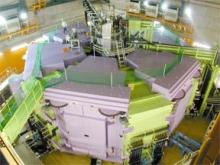
A beam 100 times stronger than any other in the world has allowed an international research group to demonstrate in only eight hours what it would take other scientists more than six months to achieve.

14 Jul 2009
Tokyo University of Science
The Tokyo University of Science concluded an agreement related to a graduate school Master's double degree program with the Institut Teknologi Bandung in Indonesia.
13 Jul 2009
RIKEN
A team of Japanese scientists has uncovered anatomical clues charting the developmental path by which the turtle acquired its shell.
10 Jul 2009
RIKEN
A naturally occurring population of dendritic cells reduces the incidence and severity of graft-versus-host-disease in mice
10 Jul 2009
RIKEN
A timid knockout mouse separates conflicting emotional behavior for the first time
10 Jul 2009
RIKEN
‘Metamaterials’ — artificially created materials with nanostructures designed to control light — are attracting considerable attention for the development of a range of new technologies, such as very thin eyeglass lenses, optical microscopes that will allow the observation of atoms and optical fibers with no transmission loss.
10 Jul 2009
RIKEN
RIKEN has implemented significant changes since the previous external evaluation in 2006 by the RIKEN Advisory Council (RAC). At the seventh meeting, held in April 2009, the RAC made several new recommendations. RIKEN President Ryoji Noyori and RAC Chair Zach Hall discuss RIKEN’s progress and future directions.
Researchers
Sorry, no researchers coming up for this topic.
Giants in history

Japanese biochemist Akira Endo (1933 – 2024) discovered the first statin, called mevastatin, which lowered cholesterol levels in the blood by inhibiting a key enzyme in the cholesterol biosynthesis pathway. His work laid the foundation for the development of statins to help patients lower their blood cholesterol levels and reduce their risk of heart disease or stroke.
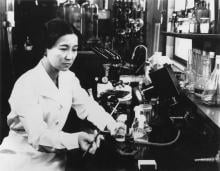
Ruby Sakae Hirose (1904 – 1960) was a Japanese-American scientist whose research contributed significantly to our understanding of blood clotting, allergies and cancer.
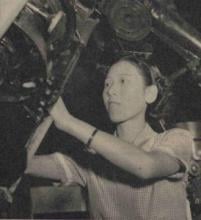
Haisako Koyama (1916 – 1997) was a Japanese solar observer whose dedication to recording sunspots – cooler parts of the sun’s surface that appear dark – produced a sunspot record of historic importance.
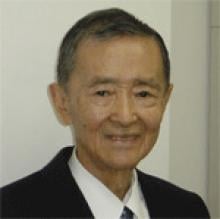
Michiaki Takahashi (17 February 1928 – 16 December 2013) was a Japanese virologist who developed the first chickenpox vaccine.
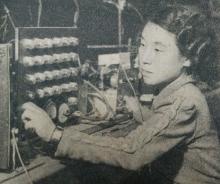
Toshiko Yuasa (11 December 1909 – 1 February 1980) was the first Japanese female physicist whose research on radioactivity shed light on beta decay – the process in which an atom emits a beta particle (electron) and turns into a different element.
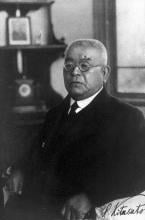
Baron Kitasato Shibasaburo (29 January 1856 – 13 June 1931) was a Japanese physician and bacteriologist whose work led to a new understanding of preventing and treating tetanus, diphtheria and anthrax.
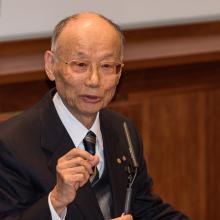
By isolating soil microorganisms and studying the compounds they produce, Satoshi Omura (born 1935) discovered almost 500 organic compounds with unique properties that were produced by these microorganisms, including many new antibiotics.
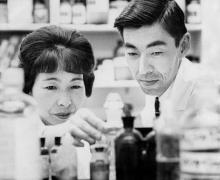
Husband and wife team, Kimishige (3 December 1925 – 6 July 2018) and Teruko Ishizaka (28 September 1926 – 4 June 2019) discovered the antibody class Immunoglobulin E (IgE) that triggers allergic reactions. They also discovered that IgE antibodies attach to white blood cells, known as mast cells, releasing histamine, which causes allergic reactions.
Husband and wife team, Kimishige (3 December 1925 – 6 July 2018) and Teruko Ishizaka (28 September 1926 – 4 June 2019) discovered the antibody class Immunoglobulin E (IgE) that triggers allergic reactions. They also discovered that IgE antibodies attach to white blood cells, known as mast cells, releasing histamine, which causes allergic reactions.
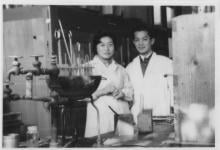
Reiji Okazaki (8 October 1930 – 1 August 1975) and Tsuneko (7 June 1933) were a Japanese couple who discovered Okazaki fragments – short sequences of DNA that are synthesized during DNA replication and linked together to form a continuous strand.
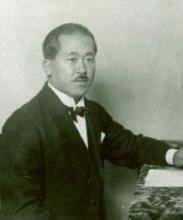
In 1915, Koichi Ichikawa along with pathologist Katsusaburo Yamagiwa became the first to prove that chronic exposure to chemicals can cause cancer.
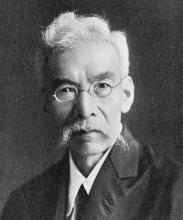
In 1915, pathologist Katsusaburo Yamagiwa and his research assistant Koichi Ichikawa became the first to prove that chronic exposure to chemicals can cause cancer.
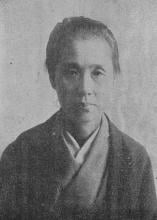
Ogino Ginko (3 March 1851 – 23 June 1913) was the first registered female doctor to practise modern medicine in Japan.
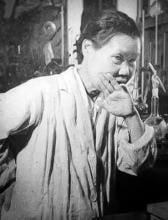
Michiyo Tsujimura (17 September 1888 – 1 June 1969) was a Japanese agricultural scientist and biochemist recognized for her research of green tea components.
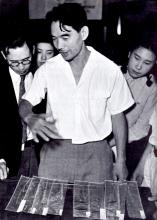
Hitoshi Kihara (1893 – 1986) was one of the most famous Japanese geneticists of the 20th century. One of his most significant contributions was identifying sex chromosomes (X and Y) in flowering plants.
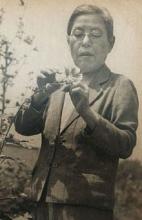
Kono Yasui (16 February 1880 – 24 March 1971) was a Japanese botanist who researched the genetics of poppies, corn and spiderworts and surveyed the plants that had been affected by the nuclear fallout after the atomic bombings of Hiroshima and Nagasaki.
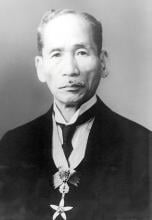
Umetaro Suzuki (7 April 1874 – 20 September 1943) was a Japanese scientist best remembered for his research on beriberi, a disease caused by vitamin B1 deficiency, characterized by limb stiffness, paralysis and pain.
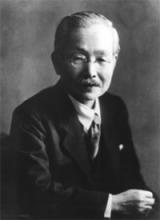
Kikunae Ikeda (8 October 1864 – 3 May 1936) was a Japanese chemist who discovered the fifth basic taste, umami.
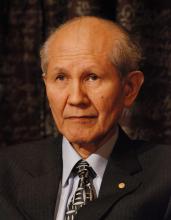
Osamu Shimomura (27 August 1928 – 19 October 2018) was a Japanese organic chemist and marine biologist who dedicated his career to understanding how organisms emitted light.
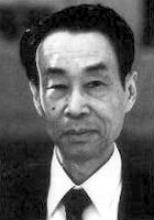
Motoo Kimura (13 November 1924 – 13 November 1994) was a Japanese theoretical population geneticist who is best remembered for developing the neutral theory of molecular evolution.

Chika Kuroda (24 March 1884 – 8 November 1968) was a Japanese chemist whose research focussed on the structures of natural pigments.
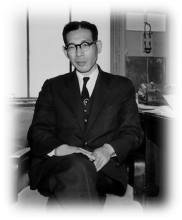
The field of solid-state ionics originated in Europe, but Takehiko Takahashi of Nagoya University in Japan was the first to coin the term ‘solid ionics’ in 1967. ‘Solid-state ionics’ first appeared in 1971 in another of his papers, and was likely a play on ‘solid-state electronics’, another rapidly growing field at the time.
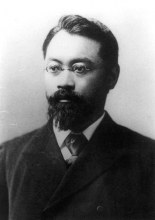
The techniques that make industrial pearl culturing possible were developed over a century ago at the Misaki Marine Biological Station in Japan. The station’s first director, Professor Kakichi Mitsukuri, emphasized to Kokichi Mikimoto in 1890 that stimulating pearl sac formation was important for pearl growth, and they went on to successfully develop methods for culturing pearls.
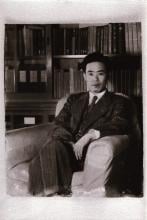
Japanese physicist Ukichiro Nakaya (1900-1962) made the world’s first artificial snowflakes. He started his research on snow crystals in the early 1930s at Hokkaido University, where there is an unlimited supply of natural snow in winter. By taking over 3,000 photographs, he established a classification of natural snow crystals and described their relationship with weather conditions.
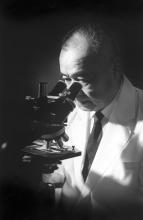
Minoru Shirota (April 23, 1899 – March 10, 1982) was a Japanese microbiologist who invented the popular fermented drink Yakult.
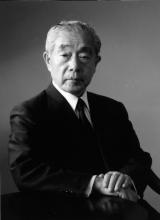
Japanese chemist Kenichi Fukui (4 October 1918 – 9 January 1998) was the first Asian scientist to be awarded the Nobel Prize in Chemistry. Together with Roald Hoffman, he received this honour in 1981 for his independent research into the mechanisms of chemical reactions.
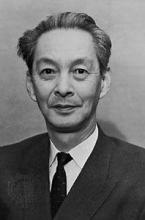
Shinichiro Tomonaga (31 March 1906 – 8 July 1979), together with Richard Feynman and Julian Schwinger, was awarded the Nobel Prize in Physics in 1965, for their contributions to advance the field of quantum electrodynamics. Tomonaga was also a strong proponent of peace, who actively campaigned against the proliferation of nuclear weapons and promoted the peaceful use of nuclear energy.
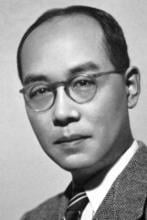
Hideki Yukawa (23 January 1907 – 8 September 1981) was awarded the Nobel Prize in Physics in 1949 for predicting the existence of the pi meson subatomic particle. Japan’s first Nobel laureate, Yakawa also expressed his support for nuclear disarmament by signing the Russell–Einstein Manifesto in 1955.
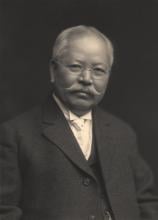
Japanese chemist Takamine Jokichi (3 November 1854 – 22 July 1922) founded the Tokyo Artificial Fertilizer Company, where he isolated a starch-digesting enzyme (named takadiastase) from the fungus Aspergillus oryzae.
Tsuneko (7 June 1933) and Reiji Okazaki (8 October 1930 – 1 August 1975) were a Japanese couple who discovered Okazaki fragments – short sequences of DNA that are synthesized during DNA replication and linked together to form a continuous strand.
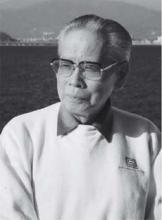
A Japanese surgeon, Tetsuzo Akutsu (20 August 1922 – 9 August 2007) built the first artificial heart capable of keeping an animal alive.
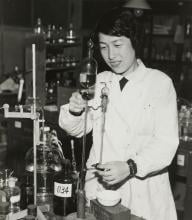
Japanese geochemist Katsuko Saruhashi developed the first method and tools for measuring carbon dioxide in seawater