

Japan
News

09 Apr 2025
Hokkaido University
FLUID, an open-source, 3D-printed robot, offers an affordable and customizable solution for automated material synthesis, making advanced research accessible to more scientists.

08 Apr 2025
Tohoku University
From harmful to helpful; researchers at Tohoku University and Hokkaido University have developed a record-breaking method to efficiently convert carbon dioxide into a fuel source.

07 Apr 2025
Hokkaido University
Large-scale multidisciplinary ecological survey reveals long-term changes in the eastern Indian sector of the Southern Ocean

07 Apr 2025
Osaka Metropolitan University
Examining group effects on motivation in English as second language classes

04 Apr 2025
Osaka Metropolitan University
An Osaka Metropolitan University-led research team investigated the case of a male Asian small-clawed otter that fell down the stairs while sleeping, after which it developed left-sided paralysis

03 Apr 2025
Osaka Metropolitan University
New machine learning model cuts fluid simulation time from 45 minutes to 3

03 Apr 2025
Hokkaido University
A genomic study of hydrogen-producing bacteria has revealed entirely new gene clusters capable of producing large volumes of hydrogen.

03 Apr 2025
Ehime University
The presence of T cells with low-levels of Bach2 contributes to the worsening and/or prolongation of allergic dermatitis symptoms

01 Apr 2025
The University of Osaka
Researchers from The University of Osaka identify a molecule that can support specific therapeutic targeting of AML with chimeric antigen receptor therapy

01 Apr 2025
Hiroshima University
A well-timed “furrowed face”—a subtle expression we instinctively recognize as “thinking”—can make androids appear less creepy and more relatable to humans.

01 Apr 2025
Hokkaido University
Enhanced westerly winds associated with global warming will strengthen the clockwise circulations and heat transport to the ice sheet in the East Antarctic coastal area.

28 Mar 2025
Hokkaido University
Researchers develop innovative phospholipids that improve the functional delivery of mRNA via lipid nanoparticles, paving the way for advanced therapeutic applications.

28 Mar 2025
Osaka Metropolitan University
Non-Muslim communities were recognized, given authority as way to monitor themselves amid Ottoman suspicions in wake of Greek revolt

28 Mar 2025
Institute of Industrial Science, The University of Tokyo (UTokyo-IIS)
Researchers from the Institute of Industrial Science, The University of Tokyo, discover brand new one-dimensional diffraction patterns in two-dimensional nanomaterials, with exciting implications

28 Mar 2025
Ehime University
We created novel artificial cells by encapsulating a riboswitch-gene fusion with wheat germ extract in liposomes. These non-living cells promoted the expression of a glowing protein encoded in the gene in response to an external target at room temperature. They (precisely, a riboswitch in them) can be rationally designed for a user-defined target, allowing a cocktail of artificial cells (each group has a specific riboswitch-gene fusion) to simultaneously detect multiple targets with different glowing proteins.

27 Mar 2025
YOKOHAMA National University
YNU researchers analyzed how vascular plant species richness, asynchrony, bryophyte cover, and other factors influence the temporal stability of plant communities.

27 Mar 2025
Osaka Metropolitan University
Suppression of the CcMCA1 gene has potential in halting invasive plant species

26 Mar 2025
Hiroshima University
The current capabilities of large language models already qualify them to advise students on medical ethics

26 Mar 2025
Osaka Metropolitan University
Examining the effects of the ONIKURU multifunctional facility on daily walking time

26 Mar 2025
Tohoku University
Quantum computers can solve calculations that would take traditional computers thousands of years in mere minutes. What if that analytical power is turned inwards?

26 Mar 2025
Tohoku University
A novel method to improve the photoluminescent efficiency of metal clusters has been developed – which could potentially be used in applications such as bioimaging or display technologies.

26 Mar 2025
YOKOHAMA National University
YNU research team discovered a novel global cooperative phenomenon in cervical cancer cells, suggesting they are metabolically connected.

25 Mar 2025
Tohoku University
Researchers investigated different compositions of tin sulfides to find the ideal material for devices that harness solar energy.

25 Mar 2025
Osaka Metropolitan University
The Super-Kamiokande and Tokai-to-Kamioka (T2K) Collaborations have produced a first joint analysis of their data

24 Mar 2025
The University of Osaka
All-in-one OS developed in Japan is fully customizable from set-up through operation and is available via GitHub

24 Mar 2025
Tohoku University
Researchers at Tohoku University examined the change in brain energy dynamics from induced seizures - which could potentially help us better understand individuals with epilepsy.

21 Mar 2025
Hiroshima University
A virtual reality experiment suggests that fear, pain, and expectations shaped by prior experiences can disrupt the mind’s grip on the body.

21 Mar 2025
Osaka Metropolitan University
Considerable positive results found in mice with skin condition induced by external factors

21 Mar 2025
Hokkaido University
Despite decades of warnings about overfishing, Southeast Asia’s capture fisheries have proven remarkably robust.

21 Mar 2025
Osaka Metropolitan University
Constructed strain achieves record-high yield from methanol, advancing eco-friendly biomanufacturing
Researchers
Sorry, no researchers coming up for this topic.
Giants in history

Japanese biochemist Akira Endo (1933 – 2024) discovered the first statin, called mevastatin, which lowered cholesterol levels in the blood by inhibiting a key enzyme in the cholesterol biosynthesis pathway. His work laid the foundation for the development of statins to help patients lower their blood cholesterol levels and reduce their risk of heart disease or stroke.
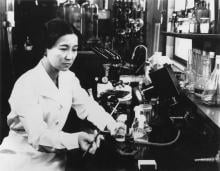
Ruby Sakae Hirose (1904 – 1960) was a Japanese-American scientist whose research contributed significantly to our understanding of blood clotting, allergies and cancer.
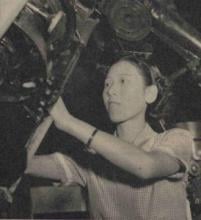
Haisako Koyama (1916 – 1997) was a Japanese solar observer whose dedication to recording sunspots – cooler parts of the sun’s surface that appear dark – produced a sunspot record of historic importance.
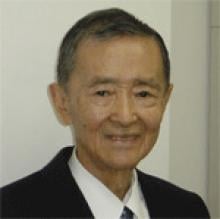
Michiaki Takahashi (17 February 1928 – 16 December 2013) was a Japanese virologist who developed the first chickenpox vaccine.
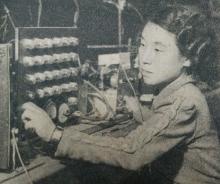
Toshiko Yuasa (11 December 1909 – 1 February 1980) was the first Japanese female physicist whose research on radioactivity shed light on beta decay – the process in which an atom emits a beta particle (electron) and turns into a different element.
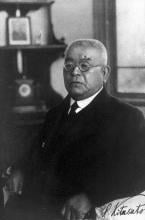
Baron Kitasato Shibasaburo (29 January 1856 – 13 June 1931) was a Japanese physician and bacteriologist whose work led to a new understanding of preventing and treating tetanus, diphtheria and anthrax.
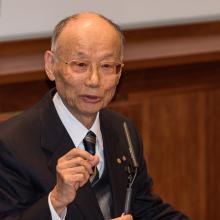
By isolating soil microorganisms and studying the compounds they produce, Satoshi Omura (born 1935) discovered almost 500 organic compounds with unique properties that were produced by these microorganisms, including many new antibiotics.
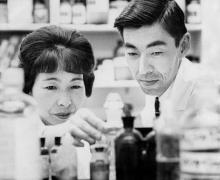
Husband and wife team, Kimishige (3 December 1925 – 6 July 2018) and Teruko Ishizaka (28 September 1926 – 4 June 2019) discovered the antibody class Immunoglobulin E (IgE) that triggers allergic reactions. They also discovered that IgE antibodies attach to white blood cells, known as mast cells, releasing histamine, which causes allergic reactions.
Husband and wife team, Kimishige (3 December 1925 – 6 July 2018) and Teruko Ishizaka (28 September 1926 – 4 June 2019) discovered the antibody class Immunoglobulin E (IgE) that triggers allergic reactions. They also discovered that IgE antibodies attach to white blood cells, known as mast cells, releasing histamine, which causes allergic reactions.
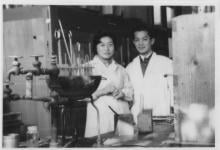
Reiji Okazaki (8 October 1930 – 1 August 1975) and Tsuneko (7 June 1933) were a Japanese couple who discovered Okazaki fragments – short sequences of DNA that are synthesized during DNA replication and linked together to form a continuous strand.
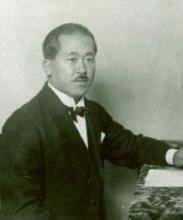
In 1915, Koichi Ichikawa along with pathologist Katsusaburo Yamagiwa became the first to prove that chronic exposure to chemicals can cause cancer.
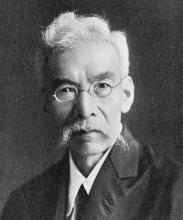
In 1915, pathologist Katsusaburo Yamagiwa and his research assistant Koichi Ichikawa became the first to prove that chronic exposure to chemicals can cause cancer.
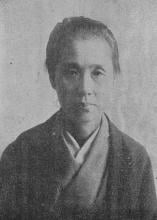
Ogino Ginko (3 March 1851 – 23 June 1913) was the first registered female doctor to practise modern medicine in Japan.
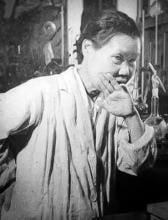
Michiyo Tsujimura (17 September 1888 – 1 June 1969) was a Japanese agricultural scientist and biochemist recognized for her research of green tea components.
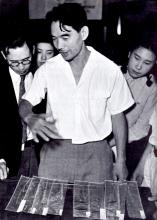
Hitoshi Kihara (1893 – 1986) was one of the most famous Japanese geneticists of the 20th century. One of his most significant contributions was identifying sex chromosomes (X and Y) in flowering plants.
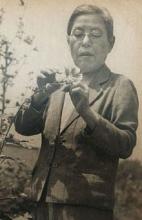
Kono Yasui (16 February 1880 – 24 March 1971) was a Japanese botanist who researched the genetics of poppies, corn and spiderworts and surveyed the plants that had been affected by the nuclear fallout after the atomic bombings of Hiroshima and Nagasaki.
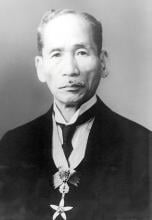
Umetaro Suzuki (7 April 1874 – 20 September 1943) was a Japanese scientist best remembered for his research on beriberi, a disease caused by vitamin B1 deficiency, characterized by limb stiffness, paralysis and pain.
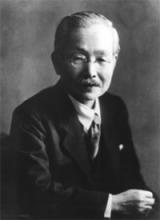
Kikunae Ikeda (8 October 1864 – 3 May 1936) was a Japanese chemist who discovered the fifth basic taste, umami.
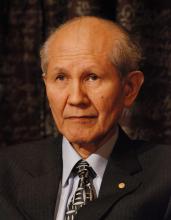
Osamu Shimomura (27 August 1928 – 19 October 2018) was a Japanese organic chemist and marine biologist who dedicated his career to understanding how organisms emitted light.
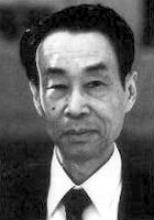
Motoo Kimura (13 November 1924 – 13 November 1994) was a Japanese theoretical population geneticist who is best remembered for developing the neutral theory of molecular evolution.

Chika Kuroda (24 March 1884 – 8 November 1968) was a Japanese chemist whose research focussed on the structures of natural pigments.
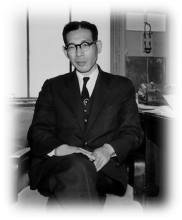
The field of solid-state ionics originated in Europe, but Takehiko Takahashi of Nagoya University in Japan was the first to coin the term ‘solid ionics’ in 1967. ‘Solid-state ionics’ first appeared in 1971 in another of his papers, and was likely a play on ‘solid-state electronics’, another rapidly growing field at the time.
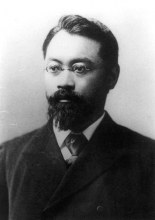
The techniques that make industrial pearl culturing possible were developed over a century ago at the Misaki Marine Biological Station in Japan. The station’s first director, Professor Kakichi Mitsukuri, emphasized to Kokichi Mikimoto in 1890 that stimulating pearl sac formation was important for pearl growth, and they went on to successfully develop methods for culturing pearls.
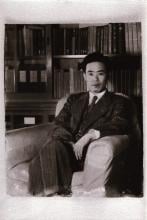
Japanese physicist Ukichiro Nakaya (1900-1962) made the world’s first artificial snowflakes. He started his research on snow crystals in the early 1930s at Hokkaido University, where there is an unlimited supply of natural snow in winter. By taking over 3,000 photographs, he established a classification of natural snow crystals and described their relationship with weather conditions.
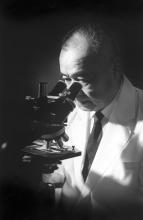
Minoru Shirota (April 23, 1899 – March 10, 1982) was a Japanese microbiologist who invented the popular fermented drink Yakult.
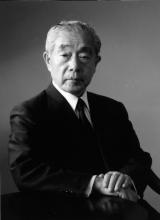
Japanese chemist Kenichi Fukui (4 October 1918 – 9 January 1998) was the first Asian scientist to be awarded the Nobel Prize in Chemistry. Together with Roald Hoffman, he received this honour in 1981 for his independent research into the mechanisms of chemical reactions.
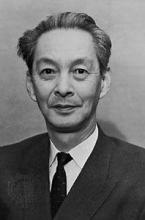
Shinichiro Tomonaga (31 March 1906 – 8 July 1979), together with Richard Feynman and Julian Schwinger, was awarded the Nobel Prize in Physics in 1965, for their contributions to advance the field of quantum electrodynamics. Tomonaga was also a strong proponent of peace, who actively campaigned against the proliferation of nuclear weapons and promoted the peaceful use of nuclear energy.
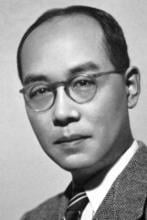
Hideki Yukawa (23 January 1907 – 8 September 1981) was awarded the Nobel Prize in Physics in 1949 for predicting the existence of the pi meson subatomic particle. Japan’s first Nobel laureate, Yakawa also expressed his support for nuclear disarmament by signing the Russell–Einstein Manifesto in 1955.
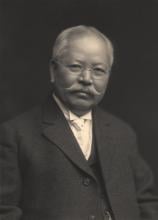
Japanese chemist Takamine Jokichi (3 November 1854 – 22 July 1922) founded the Tokyo Artificial Fertilizer Company, where he isolated a starch-digesting enzyme (named takadiastase) from the fungus Aspergillus oryzae.
Tsuneko (7 June 1933) and Reiji Okazaki (8 October 1930 – 1 August 1975) were a Japanese couple who discovered Okazaki fragments – short sequences of DNA that are synthesized during DNA replication and linked together to form a continuous strand.
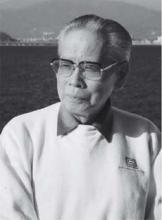
A Japanese surgeon, Tetsuzo Akutsu (20 August 1922 – 9 August 2007) built the first artificial heart capable of keeping an animal alive.
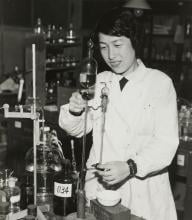
Japanese geochemist Katsuko Saruhashi developed the first method and tools for measuring carbon dioxide in seawater