

Japan
News

05 Jun 2025
Institute of Industrial Science, The University of Tokyo (UTokyo-IIS)
Researchers from the Institute of Industrial Science, The University of Tokyo, discover just how crucial the molecular structure of water is to ice formation

03 Jun 2025
The University of Osaka
Researchers from The University of Osaka found that PM2.5 air pollutants negatively affect mucociliary clearance, a protective mechanism of the respiratory tract. Air pollution led to the formation of lipid peroxide-derived aldehydes, known to damage protective cells in the airway and increase the risk of infections. ALDH1A1 was found to play an important role in protection against aldehydes, making it a potential therapeutic target to diminish the negative effects of air pollution.

02 Jun 2025
Tohoku University
A team of researchers used a machine learning model to predict unknown chemical pathways, and bring us one step closer to efficiently storing next-generation hydrogen fuels.

02 Jun 2025
The University of Osaka
A team led by Professor Masakatsu Murakami has developed a novel concept called micronozzle acceleration (MNA). By designing a microtarget with tiny nozzle-like features and irradiating it with ultraintense, ultrashort laser pulses, the team successfully demonstrated—through advanced numerical simulations—the generation of high-quality, GeV-class proton beams: a world-first achievement.

30 May 2025
Tohoku University
Researchers proposed a novel strategy for using a magnetic field to boost the efficiency of single-atom catalysts – thus speeding up helpful reactions used for ammonia production and wastewater treatment.

30 May 2025
Osaka Metropolitan University
Mutant protein protects against mildew, but leaves turn yellow and age sooner
28 May 2025
Osaka Metropolitan University
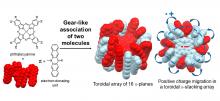
Self-assembling dye rings demonstrate photosynthetic energy and charge circulation

26 May 2025
The University of Osaka
Researchers at The University of Osaka have developed a groundbreaking energy-efficient and high-precision measurement system leveraging the inherent similarity between waveforms generated by the same type of signal source. Unlike black-box approaches such as generative AI, the system is built on the explicit theoretical framework of compressed sensing. This innovative approach drastically reduces the amount of data required for accurate signal reproduction, leading to significant energy savings. Demonstrated with an electroencephalogram (EEG) measuring system, the technology achieved world-leading energy efficiency using only commercially available electronic components, consuming a mere 72μW. This breakthrough paves the way for long-term, battery-powered wearable devices and self-powered, battery-free IoT devices that can operate on minimal energy harvested from the environment, with broad applications in healthcare, disaster prevention, and environmental monitoring.

26 May 2025
Hiroshima University
Examines how patient voices impact decision-making

26 May 2025
The University of Osaka
Researchers from The University of Osaka have revealed that vision transformers can develop gaze patterns similar to humans, learning to prioritize faces without ever being taught what a face is. The findings suggest that self-supervised ViTs may serve as a practical tool in computer vision and a theoretical model for studying human visual processing. The research underscores the potential of biologically inspired AI systems to uncover the mechanisms of human cognition.

23 May 2025
Osaka Metropolitan University
Analysis of tourism-accommodation intensity hotspots

23 May 2025
Institute of Industrial Science, The University of Tokyo (UTokyo-IIS)
Researchers from the Institute of Industrial Science, The University of Tokyo, detail how clusters of cells detach from primary tumors and penetrate blood-vessel walls to enter the bloodstream, enabling them to establish distal metastases
23 May 2025
Institute of Industrial Science, The University of Tokyo (UTokyo-IIS)
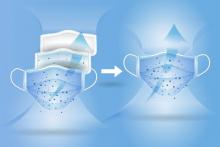
Researchers at The University of Tokyo develop a filter that effectively captures small particles without restricting air flow

22 May 2025
Tohoku University
What if we could supply 85% of Japan’s electricity needs using infrastructure that already exists? Rooftop solar panels and electric vehicle batteries are the dynamic duo proposed by a new study.

21 May 2025
The University of Osaka
A world-first multi-sensor detection of an intense gamma-ray flash has been observed by researchers from The University of Osaka, when two lightning leaders collided. Observations across a wide radiation spectrum enabled precise measurement of the electric current produced during this extreme event, and demonstrated that the gamma-ray flash preceded the collision of the lightning leaders between the thundercloud and the ground.

21 May 2025
The University of Osaka
Researchers at The University of Osaka have developed a non-precious metal catalyst for the efficient hydrogenation of biomass-derived furfural to valuable tetrahydrofuran-based compounds under mild conditions. The catalyst, consisting of nickel carbide nanoparticles supported on alumina, achieved 90% furfural conversion under ambient hydrogen pressure. This result will help advance the development of energy-efficient, cost-effective processes for the conversion of biomass to valuable materials.

21 May 2025
Osaka Metropolitan University
Portable technology offers instant, power-free ethanol detection across concentrations

21 May 2025
The University of Osaka
Researchers from The University of Osaka found that the Wnt5a protein, secreted by inflammatory fibroblasts within cancerous tumors, inhibits angiogenesis and consequently promotes hypoxia within tumors. Hypoxic conditions help sustain the inflammatory fibroblasts, which also secrete the growth factor epiregulin, thereby promoting tumor growth. This newly proposed mechanism for tumor growth offers a promising new target for cancer therapies and possibly other conditions linked to inflammation, such as inflammatory bowel disease.

20 May 2025
Tohoku University
Researchers at Tohoku University have achieved record-breaking energy efficiency for a high-speed memory storage device, called a SOT-MRAM cell.

20 May 2025
Hokkaido University
Higher maternal selenium levels during pregnancy were associated with a lower risk of streptococcal infections in children, suggesting a potential protective effect.

20 May 2025
The University of Osaka
A research team at The University of Osaka has identified a crucial brain region involved in motor learning during reaching movements. The parvocellular division of the red nucleus, a small but specialized structure in the midbrain, was found to generate and transmit “error signals” necessary for adapting hand movements. This discovery clarifies a long-standing question in neuroscience about how the brain detects and corrects motion inaccuracies, with potential applications in developing new rehabilitation methods.

19 May 2025
Hokkaido University
Identification of plant species at high risk of extinction in climate-sensitive alpine ecosystems.

16 May 2025
Tohoku University
Janus heterobilayers – dual-sided materials with unique properties – may be the key to efficiently creating clean hydrogen fuels.

15 May 2025
The University of Osaka
Researchers from The University of Osaka have discovered the mechanism for supercurrent rectification, in which current flows primarily in one direction in a superconductor. By using a specific iron-based superconductor, they were able to observe this phenomenon over a broad range of magnetic and temperature fields. This understanding paves the way for the design and construction of superconducting diodes and other ultra-low energy electronics.

14 May 2025
The University of Osaka
Researchers from The University of Osaka have developed a new technology that allows accurate visualization of the different parts that make up a single cell

14 May 2025
The University of Osaka
Researchers from The University of Osaka found that mass photometry can accurately distinguish full and empty rAAV particles in cell lysates and conditioned medium, without prior purification. This convenient and rapid approach is likely to improve manufacturing of rAAV-based gene therapy products by accelerating the screening steps.

14 May 2025
The University of Osaka
A research team from The University of Osaka has made a significant breakthrough in cancer radiotherapy by identifying conditions under which carbon ion beams—delivered at ultra-high dose rates (uHDR)—can protect normal cells. This phenomenon, known as the “FLASH effect,” could revolutionize cancer treatment by reducing side effects and improving patients’ quality of life.

13 May 2025
Hiroshima University
Using a new fluorescent mouse model with advanced imaging techniques, researchers have successfully visualized how musculoskeletal components are integrated into the functional locomotor system during embryonic development.

13 May 2025
The University of Osaka
Researchers unveil a bio-intelligent insect system using UV light to guide movement, reducing harm while improving control.

12 May 2025
Kanazawa University
Scientists at Nano Life Science Institute (WPI-NanoLSI), Kanazawa University have captured real-time footage showing how a key hormone receptor activates genes, offering a clearer view into one of the most fundamental Kaprocesses in biology.
Researchers
Sorry, no researchers coming up for this topic.
Giants in history

Japanese biochemist Akira Endo (1933 – 2024) discovered the first statin, called mevastatin, which lowered cholesterol levels in the blood by inhibiting a key enzyme in the cholesterol biosynthesis pathway. His work laid the foundation for the development of statins to help patients lower their blood cholesterol levels and reduce their risk of heart disease or stroke.
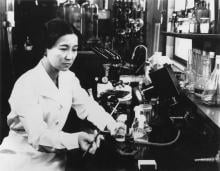
Ruby Sakae Hirose (1904 – 1960) was a Japanese-American scientist whose research contributed significantly to our understanding of blood clotting, allergies and cancer.
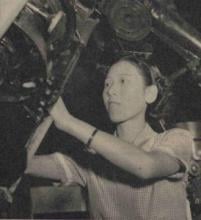
Haisako Koyama (1916 – 1997) was a Japanese solar observer whose dedication to recording sunspots – cooler parts of the sun’s surface that appear dark – produced a sunspot record of historic importance.
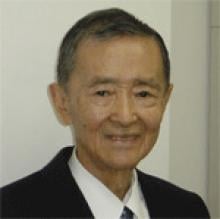
Michiaki Takahashi (17 February 1928 – 16 December 2013) was a Japanese virologist who developed the first chickenpox vaccine.
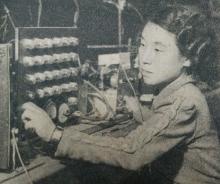
Toshiko Yuasa (11 December 1909 – 1 February 1980) was the first Japanese female physicist whose research on radioactivity shed light on beta decay – the process in which an atom emits a beta particle (electron) and turns into a different element.
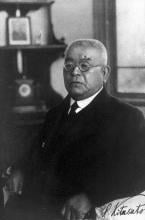
Baron Kitasato Shibasaburo (29 January 1856 – 13 June 1931) was a Japanese physician and bacteriologist whose work led to a new understanding of preventing and treating tetanus, diphtheria and anthrax.
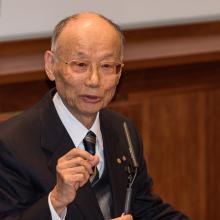
By isolating soil microorganisms and studying the compounds they produce, Satoshi Omura (born 1935) discovered almost 500 organic compounds with unique properties that were produced by these microorganisms, including many new antibiotics.
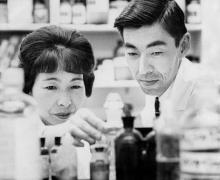
Husband and wife team, Kimishige (3 December 1925 – 6 July 2018) and Teruko Ishizaka (28 September 1926 – 4 June 2019) discovered the antibody class Immunoglobulin E (IgE) that triggers allergic reactions. They also discovered that IgE antibodies attach to white blood cells, known as mast cells, releasing histamine, which causes allergic reactions.
Husband and wife team, Kimishige (3 December 1925 – 6 July 2018) and Teruko Ishizaka (28 September 1926 – 4 June 2019) discovered the antibody class Immunoglobulin E (IgE) that triggers allergic reactions. They also discovered that IgE antibodies attach to white blood cells, known as mast cells, releasing histamine, which causes allergic reactions.
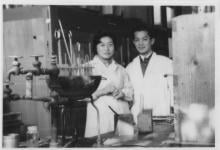
Reiji Okazaki (8 October 1930 – 1 August 1975) and Tsuneko (7 June 1933) were a Japanese couple who discovered Okazaki fragments – short sequences of DNA that are synthesized during DNA replication and linked together to form a continuous strand.
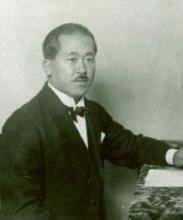
In 1915, Koichi Ichikawa along with pathologist Katsusaburo Yamagiwa became the first to prove that chronic exposure to chemicals can cause cancer.
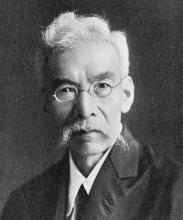
In 1915, pathologist Katsusaburo Yamagiwa and his research assistant Koichi Ichikawa became the first to prove that chronic exposure to chemicals can cause cancer.
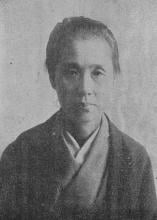
Ogino Ginko (3 March 1851 – 23 June 1913) was the first registered female doctor to practise modern medicine in Japan.
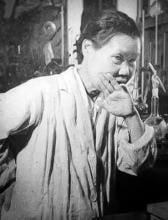
Michiyo Tsujimura (17 September 1888 – 1 June 1969) was a Japanese agricultural scientist and biochemist recognized for her research of green tea components.
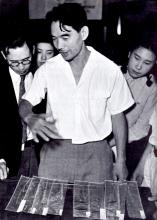
Hitoshi Kihara (1893 – 1986) was one of the most famous Japanese geneticists of the 20th century. One of his most significant contributions was identifying sex chromosomes (X and Y) in flowering plants.
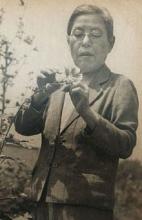
Kono Yasui (16 February 1880 – 24 March 1971) was a Japanese botanist who researched the genetics of poppies, corn and spiderworts and surveyed the plants that had been affected by the nuclear fallout after the atomic bombings of Hiroshima and Nagasaki.
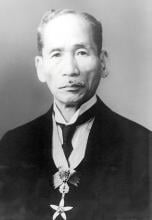
Umetaro Suzuki (7 April 1874 – 20 September 1943) was a Japanese scientist best remembered for his research on beriberi, a disease caused by vitamin B1 deficiency, characterized by limb stiffness, paralysis and pain.
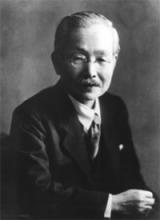
Kikunae Ikeda (8 October 1864 – 3 May 1936) was a Japanese chemist who discovered the fifth basic taste, umami.
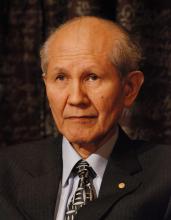
Osamu Shimomura (27 August 1928 – 19 October 2018) was a Japanese organic chemist and marine biologist who dedicated his career to understanding how organisms emitted light.
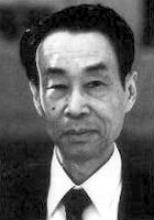
Motoo Kimura (13 November 1924 – 13 November 1994) was a Japanese theoretical population geneticist who is best remembered for developing the neutral theory of molecular evolution.

Chika Kuroda (24 March 1884 – 8 November 1968) was a Japanese chemist whose research focussed on the structures of natural pigments.
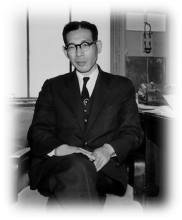
The field of solid-state ionics originated in Europe, but Takehiko Takahashi of Nagoya University in Japan was the first to coin the term ‘solid ionics’ in 1967. ‘Solid-state ionics’ first appeared in 1971 in another of his papers, and was likely a play on ‘solid-state electronics’, another rapidly growing field at the time.
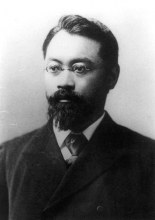
The techniques that make industrial pearl culturing possible were developed over a century ago at the Misaki Marine Biological Station in Japan. The station’s first director, Professor Kakichi Mitsukuri, emphasized to Kokichi Mikimoto in 1890 that stimulating pearl sac formation was important for pearl growth, and they went on to successfully develop methods for culturing pearls.
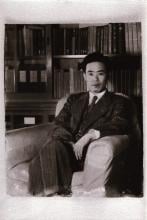
Japanese physicist Ukichiro Nakaya (1900-1962) made the world’s first artificial snowflakes. He started his research on snow crystals in the early 1930s at Hokkaido University, where there is an unlimited supply of natural snow in winter. By taking over 3,000 photographs, he established a classification of natural snow crystals and described their relationship with weather conditions.
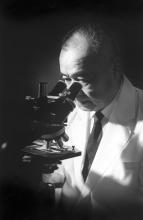
Minoru Shirota (April 23, 1899 – March 10, 1982) was a Japanese microbiologist who invented the popular fermented drink Yakult.
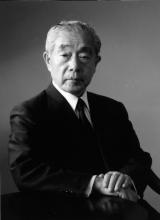
Japanese chemist Kenichi Fukui (4 October 1918 – 9 January 1998) was the first Asian scientist to be awarded the Nobel Prize in Chemistry. Together with Roald Hoffman, he received this honour in 1981 for his independent research into the mechanisms of chemical reactions.
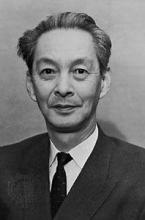
Shinichiro Tomonaga (31 March 1906 – 8 July 1979), together with Richard Feynman and Julian Schwinger, was awarded the Nobel Prize in Physics in 1965, for their contributions to advance the field of quantum electrodynamics. Tomonaga was also a strong proponent of peace, who actively campaigned against the proliferation of nuclear weapons and promoted the peaceful use of nuclear energy.
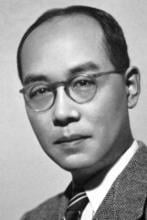
Hideki Yukawa (23 January 1907 – 8 September 1981) was awarded the Nobel Prize in Physics in 1949 for predicting the existence of the pi meson subatomic particle. Japan’s first Nobel laureate, Yakawa also expressed his support for nuclear disarmament by signing the Russell–Einstein Manifesto in 1955.
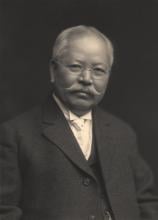
Japanese chemist Takamine Jokichi (3 November 1854 – 22 July 1922) founded the Tokyo Artificial Fertilizer Company, where he isolated a starch-digesting enzyme (named takadiastase) from the fungus Aspergillus oryzae.
Tsuneko (7 June 1933) and Reiji Okazaki (8 October 1930 – 1 August 1975) were a Japanese couple who discovered Okazaki fragments – short sequences of DNA that are synthesized during DNA replication and linked together to form a continuous strand.
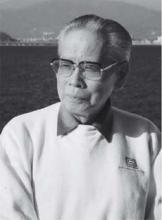
A Japanese surgeon, Tetsuzo Akutsu (20 August 1922 – 9 August 2007) built the first artificial heart capable of keeping an animal alive.
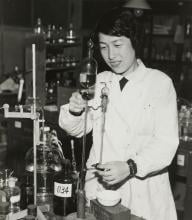
Japanese geochemist Katsuko Saruhashi developed the first method and tools for measuring carbon dioxide in seawater