
Japan
News

12 May 2025
Osaka Metropolitan University
Space-saving version of Paralympic sport increases motivation, mobility among older adults

09 May 2025
Hiroshima University
New research shows that the gum disease bacterium P. gingivalis can slip into the bloodstream and infiltrate the heart. There, it quietly drives scar tissue buildup—distorting the heart’s architecture, disrupting electrical signals, and raising the risk of atrial fibrillation.

09 May 2025
Tohoku University
How does obesity affect insulin production? Researchers at Tohoku University are shining light on new stages of the ERK pathway.

08 May 2025
Tohoku University
The rules about magnetic order may need to be rewritten. An international team of researchers found that it was possible to turn a non-magnetic material into a magnetic material by slicing it into thin films.

08 May 2025
Kavli Institute for the Physics and Mathematics of the Universe (Kavli IPMU)
A research team including Kavli IPMU has found neutrinos from galaxy NGC 1068 might come from helium nuclei smashing into UV light and releasing neutrons that decay into neutrinos without gamma rays.

01 May 2025
Osaka Metropolitan University
Method’s anticancer effects verified at cellular and organismal levels without obvious side effects

30 Apr 2025
Tohoku University
Researchers at Tohoku University have developed a data-driven AI framework that gives scientists a head start by suggesting ideal candidate materials.

30 Apr 2025
Osaka Metropolitan University
Effective per capita municipal expenditures correlated with population changes

28 Apr 2025
Kanazawa University
The power conversion efficiency of all-organic solar cells was doubled through the development of novel organic electrodes that can be fabricated using a moderate process.

25 Apr 2025
Tohoku University
Researchers found a strategy to create catalysts that make the production of hydrogen for clean fuel more efficient and affordable.

25 Apr 2025
Ehime University
Triplet-triplet annihilation up-conversion of cationic iridium(III) complex was achieved in R-limonene using organically modified hectorite.

24 Apr 2025
Osaka Metropolitan University
Raccoons considered to be a source of zoonotic pathogens were monitored

22 Apr 2025
Tohoku University
Researchers at Tohoku University explored a colloidal crystal model to produce specific polymorphs, required for use in materials science and pharmaceuticals.

22 Apr 2025
Osaka Metropolitan University
New light-powered DNA detection enables more accessible, affordable genetic analysis

18 Apr 2025
Hokkaido University
Colder temperatures are linked with increased risk of diarrhea among Rohingya refugees in Bangladesh, emphasizing the need for climate-sensitive health strategies in refugee settings.

18 Apr 2025
Osaka Metropolitan University
Meta-analysis of medical research with LLMs reveals diagnostic accuracy
17 Apr 2025
Hokkaido University
Shin-Etsu Chemical and Hokkaido University have developed system for the production of lipid nanoparticles (LNPs) that incorporates a microfluidic device.

17 Apr 2025
Osaka Metropolitan University
Widespread contamination by emerging foodborne pathogen detected in retail chicken meat

16 Apr 2025
Osaka Metropolitan University
Autonomous driving algorithm for robot using lidar shows promise with high-bed cultivation methods

16 Apr 2025
Tohoku University
Why does dementia affect more women than men? To help solve this mystery, researchers uncovered a new risk factor: age of menopause onset.

15 Apr 2025
Hiroshima University
Researchers discover that inflammation and aging contribute to non-viral liver cancer development. Green tea's role in reversing some of the pathway dysregulation that may contribute to the cancer development and other therapies explored.

15 Apr 2025
Osaka Metropolitan University
New AI model explains the basis for its decisions and the intention behind actions

14 Apr 2025
Osaka Metropolitan University
Light conditions in the morning before waking up affect restfulness

14 Apr 2025
Kanazawa University
Scientists at the Nano Life Science Institute (WPI-NanoLSI), Kanazawa University and colleagues have developed a promising new approach to cancer treatment. By using tiny, naturally occurring particles called extracellular vesicles (EVs), they have created a way to boost the body’s immune system to fight tumors more effectively. This breakthrough could lead to more targeted cancer therapies with fewer side effects.
14 Apr 2025
Kanazawa University
Nano Life Science Institute (WPI-NanoLSI), Kanazawa University, demonstrates a novel approach for nanoscopic profiling of small extracellular vesicles (sEVs) using high-speed atomic force microscopy (HS-AFM) videography. This pioneering method provides an unprecedented level of detail in characterizing sEV subpopulations, offering new insights into their biological roles and potential applications in disease diagnostics.

11 Apr 2025
Kanazawa University
Researchers at Nano Life Science Institute (WPI-NanoLSI), Kanazawa University, report in "Nature Communications" how the targeted suppression of lysosome function may lead to brain cancer therapy.

11 Apr 2025
Kanazawa University
Researchers at Nano Life Science Institute (WPI-NanoLSI), Kanazawa University and colleagues have achieved a major breakthrough in understanding sperm DNA packaging. Using high-speed atomic force microscopy (HS-AFM), they captured the real-time process of protamine (PRM)-induced DNA condensation, providing critical insights into fertility, genome stability, and future applications in medicine. Their findings are published in "Nucleic Acids Research".

11 Apr 2025
Hiroshima University
New research in model mice suggests low-dose opioids may help improve social interactions in people with autism spectrum disorder.

11 Apr 2025
Ehime University
How the core-mantle differentiation shaped volatile elements in the Earth
11 Apr 2025
Osaka Metropolitan University
An Osaka Metropolitan University-led team report on the development of a highly selective isolation medium CT-PS-XR-MacConkey agar for efficient isolation of E. albertii.
Researchers
Sorry, no researchers coming up for this topic.
Giants in history

Japanese biochemist Akira Endo (1933 – 2024) discovered the first statin, called mevastatin, which lowered cholesterol levels in the blood by inhibiting a key enzyme in the cholesterol biosynthesis pathway. His work laid the foundation for the development of statins to help patients lower their blood cholesterol levels and reduce their risk of heart disease or stroke.
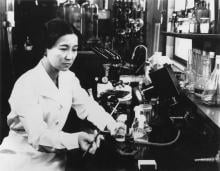
Ruby Sakae Hirose (1904 – 1960) was a Japanese-American scientist whose research contributed significantly to our understanding of blood clotting, allergies and cancer.
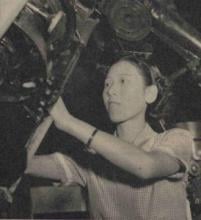
Haisako Koyama (1916 – 1997) was a Japanese solar observer whose dedication to recording sunspots – cooler parts of the sun’s surface that appear dark – produced a sunspot record of historic importance.
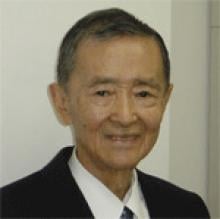
Michiaki Takahashi (17 February 1928 – 16 December 2013) was a Japanese virologist who developed the first chickenpox vaccine.
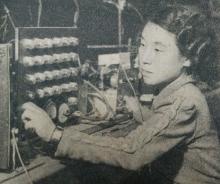
Toshiko Yuasa (11 December 1909 – 1 February 1980) was the first Japanese female physicist whose research on radioactivity shed light on beta decay – the process in which an atom emits a beta particle (electron) and turns into a different element.
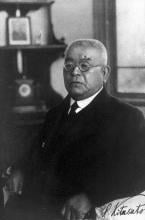
Baron Kitasato Shibasaburo (29 January 1856 – 13 June 1931) was a Japanese physician and bacteriologist whose work led to a new understanding of preventing and treating tetanus, diphtheria and anthrax.
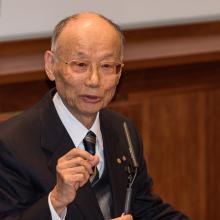
By isolating soil microorganisms and studying the compounds they produce, Satoshi Omura (born 1935) discovered almost 500 organic compounds with unique properties that were produced by these microorganisms, including many new antibiotics.
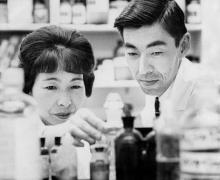
Husband and wife team, Kimishige (3 December 1925 – 6 July 2018) and Teruko Ishizaka (28 September 1926 – 4 June 2019) discovered the antibody class Immunoglobulin E (IgE) that triggers allergic reactions. They also discovered that IgE antibodies attach to white blood cells, known as mast cells, releasing histamine, which causes allergic reactions.
Husband and wife team, Kimishige (3 December 1925 – 6 July 2018) and Teruko Ishizaka (28 September 1926 – 4 June 2019) discovered the antibody class Immunoglobulin E (IgE) that triggers allergic reactions. They also discovered that IgE antibodies attach to white blood cells, known as mast cells, releasing histamine, which causes allergic reactions.
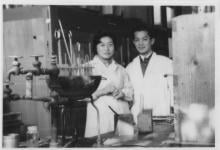
Reiji Okazaki (8 October 1930 – 1 August 1975) and Tsuneko (7 June 1933) were a Japanese couple who discovered Okazaki fragments – short sequences of DNA that are synthesized during DNA replication and linked together to form a continuous strand.
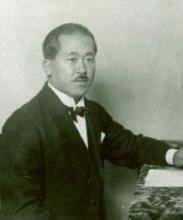
In 1915, Koichi Ichikawa along with pathologist Katsusaburo Yamagiwa became the first to prove that chronic exposure to chemicals can cause cancer.
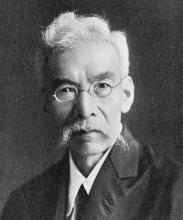
In 1915, pathologist Katsusaburo Yamagiwa and his research assistant Koichi Ichikawa became the first to prove that chronic exposure to chemicals can cause cancer.
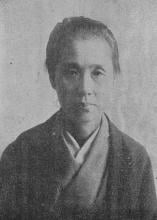
Ogino Ginko (3 March 1851 – 23 June 1913) was the first registered female doctor to practise modern medicine in Japan.
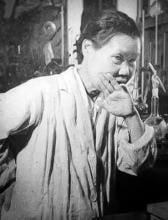
Michiyo Tsujimura (17 September 1888 – 1 June 1969) was a Japanese agricultural scientist and biochemist recognized for her research of green tea components.
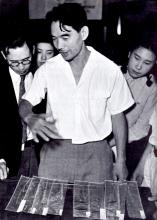
Hitoshi Kihara (1893 – 1986) was one of the most famous Japanese geneticists of the 20th century. One of his most significant contributions was identifying sex chromosomes (X and Y) in flowering plants.
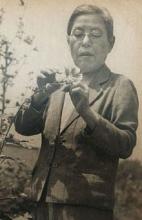
Kono Yasui (16 February 1880 – 24 March 1971) was a Japanese botanist who researched the genetics of poppies, corn and spiderworts and surveyed the plants that had been affected by the nuclear fallout after the atomic bombings of Hiroshima and Nagasaki.
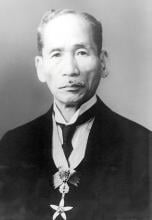
Umetaro Suzuki (7 April 1874 – 20 September 1943) was a Japanese scientist best remembered for his research on beriberi, a disease caused by vitamin B1 deficiency, characterized by limb stiffness, paralysis and pain.
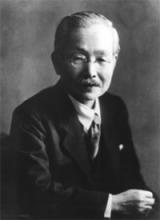
Kikunae Ikeda (8 October 1864 – 3 May 1936) was a Japanese chemist who discovered the fifth basic taste, umami.
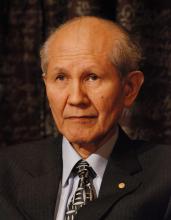
Osamu Shimomura (27 August 1928 – 19 October 2018) was a Japanese organic chemist and marine biologist who dedicated his career to understanding how organisms emitted light.
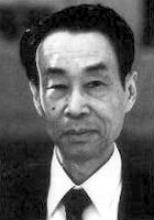
Motoo Kimura (13 November 1924 – 13 November 1994) was a Japanese theoretical population geneticist who is best remembered for developing the neutral theory of molecular evolution.

Chika Kuroda (24 March 1884 – 8 November 1968) was a Japanese chemist whose research focussed on the structures of natural pigments.
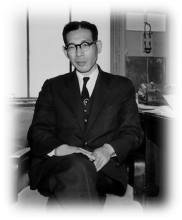
The field of solid-state ionics originated in Europe, but Takehiko Takahashi of Nagoya University in Japan was the first to coin the term ‘solid ionics’ in 1967. ‘Solid-state ionics’ first appeared in 1971 in another of his papers, and was likely a play on ‘solid-state electronics’, another rapidly growing field at the time.
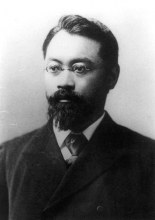
The techniques that make industrial pearl culturing possible were developed over a century ago at the Misaki Marine Biological Station in Japan. The station’s first director, Professor Kakichi Mitsukuri, emphasized to Kokichi Mikimoto in 1890 that stimulating pearl sac formation was important for pearl growth, and they went on to successfully develop methods for culturing pearls.
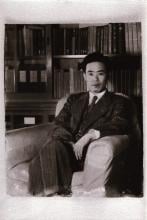
Japanese physicist Ukichiro Nakaya (1900-1962) made the world’s first artificial snowflakes. He started his research on snow crystals in the early 1930s at Hokkaido University, where there is an unlimited supply of natural snow in winter. By taking over 3,000 photographs, he established a classification of natural snow crystals and described their relationship with weather conditions.
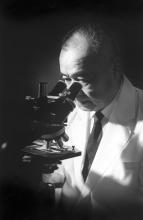
Minoru Shirota (April 23, 1899 – March 10, 1982) was a Japanese microbiologist who invented the popular fermented drink Yakult.
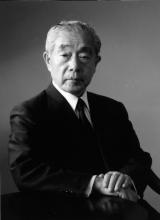
Japanese chemist Kenichi Fukui (4 October 1918 – 9 January 1998) was the first Asian scientist to be awarded the Nobel Prize in Chemistry. Together with Roald Hoffman, he received this honour in 1981 for his independent research into the mechanisms of chemical reactions.
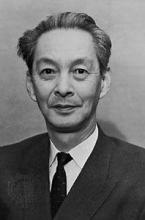
Shinichiro Tomonaga (31 March 1906 – 8 July 1979), together with Richard Feynman and Julian Schwinger, was awarded the Nobel Prize in Physics in 1965, for their contributions to advance the field of quantum electrodynamics. Tomonaga was also a strong proponent of peace, who actively campaigned against the proliferation of nuclear weapons and promoted the peaceful use of nuclear energy.
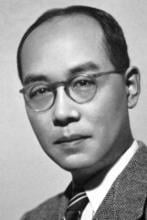
Hideki Yukawa (23 January 1907 – 8 September 1981) was awarded the Nobel Prize in Physics in 1949 for predicting the existence of the pi meson subatomic particle. Japan’s first Nobel laureate, Yakawa also expressed his support for nuclear disarmament by signing the Russell–Einstein Manifesto in 1955.
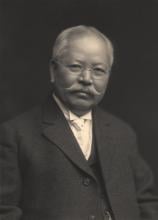
Japanese chemist Takamine Jokichi (3 November 1854 – 22 July 1922) founded the Tokyo Artificial Fertilizer Company, where he isolated a starch-digesting enzyme (named takadiastase) from the fungus Aspergillus oryzae.
Tsuneko (7 June 1933) and Reiji Okazaki (8 October 1930 – 1 August 1975) were a Japanese couple who discovered Okazaki fragments – short sequences of DNA that are synthesized during DNA replication and linked together to form a continuous strand.
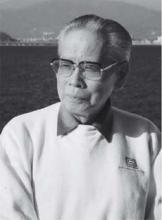
A Japanese surgeon, Tetsuzo Akutsu (20 August 1922 – 9 August 2007) built the first artificial heart capable of keeping an animal alive.
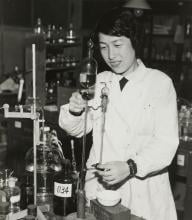
Japanese geochemist Katsuko Saruhashi developed the first method and tools for measuring carbon dioxide in seawater