

Japan
News

12 Dec 2024
Hokkaido University
Scientists unearth a clue to the molecular mechanisms involved in N2O reduction by deep-sea hydrothermal vent bacteria.

12 Dec 2024
Osaka Metropolitan University
Amino acid serine inhibits Clostridium perfringens spore formation

10 Dec 2024
Hokkaido University
Nanostructured two-dimensional gold monolayers offer possibilities in catalysis, electronics, and nanotechnology.

10 Dec 2024
Hiroshima University
Helical structures are ubiquitous across biology, from the double-stranded helix of DNA to how heart muscle cells spiral in a band. Inspired by this twisty ladder, researchers have developed an artificial polymer that organizes itself into a controlled helix.

10 Dec 2024
The University of Osaka
A research team at Osaka University developed a compact microresonator device that generates vacuum ultraviolet (VUV) light at 199 nm. This innovation addresses the growing demand for VUV light in fields like micromachining and wafer inspection. Unlike existing gas lasers, this device offers a compact, efficient solution, potentially revolutionizing light source technology and enabling advanced applications like high-resolution medical imaging.

09 Dec 2024
Institute of Industrial Science, The University of Tokyo (UTokyo-IIS)
Experts from the Institute of Industrial Science, The University of Tokyo, team up with their Indian counterparts to make IIT Hyderabad’s stunning new campus a reality

05 Dec 2024
Tohoku University
New research suggesting a link between motor protein Kif23 and microcephaly may be the key to developing more effective treatments for this condition.

05 Dec 2024
Kavli Institute for the Physics and Mathematics of the Universe (Kavli IPMU)
An international team of researchers including Kavli IPMU has used the ALMA telescope and found old elliptical galaxies in the universe can form from intense star formation within early galaxy cores.

03 Dec 2024
Hiroshima University
Hiroshima University, in partnership with four Japanese institutions and five global collaborators, has launched the “Global Research Initiative on Wireless Terahertz (GROW-THz).” Backed by the JST ASPIRE program with ¥500 million in funding over five years, this project aims to advance next-generation ultra-high-speed wireless communication technologies, strengthen international research networks, and foster intellectual mobility, including the long-term overseas placement of doctoral students for up to one year.

02 Dec 2024
National Institute for Materials Science (NIMS)
By identifying the ideal manufacturing conditions, machine learning reduces the need for expensive and time-consuming experimentation.

01 Dec 2024
The University of Osaka
Researchers at Osaka University have identified ARMC5 as a key regulator of fatty acid balance in adipose tissue. ARMC5 degrades non-SCAP-bound SREBP1, activating it to regulate stearoyl-CoA desaturase (SCD), an enzyme essential for fatty acid desaturation. This discovery opens avenues for developing drugs targeting ARMC5 to manage fatty acid levels and improve health outcomes.

28 Nov 2024
Kavli Institute for the Physics and Mathematics of the Universe (Kavli IPMU)
The University of Tokyo Kavli Institute for the Physics and Mathematics of the Universe (Kavli IPMU, WPI) Professor Yuji Tachikawa and The University of Tokyo School of Science graduate student Masaki Okada have found that any operation of non-invertible symmetries is a quantum operation, uncovering a link between quantum information theory and particle and condensed matter physics that had previously been unknown.

27 Nov 2024
Osaka Metropolitan University
Copolymer solution uses water-loving differential to induce desorption at lower temperatures

27 Nov 2024
Osaka Metropolitan University
Clues found relating repair of photosynthetic protein complex to how plants survive in colder regions

26 Nov 2024
Tohoku University
This unobtrusive, leaf-mounted sensor saves time and improves productivity by remotely monitoring the health of plants in real-time.

26 Nov 2024
Osaka Metropolitan University
Balancing environmental conditions with energy-saving performance

22 Nov 2024
The University of Osaka
To understand the practical challenges of indoor augmented reality applications on smartphones, researchers from Osaka University conducted 113 hours of extensive experiments and case studies over 316 patterns to determine the factors that degrade localization accuracy in real-world indoor environments. Landmarks for vision systems, LiDAR, and the IMU were evaluated. To solve the identified problems, the researchers suggest radio-frequency–based localization as a potential solution for practical augmented reality applications.

22 Nov 2024
Hokkaido University
A new simulator gives nursing students hands-on practice with vital procedures like mechanical ventilation and tracheal suctioning in children.

21 Nov 2024
Osaka Metropolitan University
Conversely, role in controlling cell proliferation might lead to novel tumor therapies in humans

21 Nov 2024
Ehime University
We have proposed methods for calculating topological numbers of two-dimensional lattice systems based on polarization and spiral boundary conditions.

21 Nov 2024
Ehime University
International integration of drug-drug interaction information through mapping of Japanese and international drug codes

20 Nov 2024
Hiroshima University
Typically, closely related animal species have difficulty coexisting because they are competing for similar resources. Despite eating the same figs, binturong, small-toothed palm, masked palm, and common palm civets do coexist together. To understand how they coexist, a new study explores their degree of faunivory.

20 Nov 2024
Tohoku University
A research team at Tohoku University have proposed a strategy to use spinel oxides to improve a reaction called the oxygen evolution reaction.

19 Nov 2024
Osaka Metropolitan University
Community-led urban transformation through the Senboku Hottokenai Network Project

18 Nov 2024
Osaka Metropolitan University
SGLT2 inhibitor canagliflozin helps oxygenate kidneys while causing glucose removal through urine

18 Nov 2024
The University of Osaka
Researchers at Osaka University have developed the world’s first compact, tunable-wavelength blue semiconductor laser, a breakthrough in far-ultraviolet light technology. Utilizing a novel periodically slotted structure, tunable single-mode oscillation was successfully demonstrated. The laser is suitable for pumping compact second harmonic generation devices, and far-ultraviolet light emitted from the combination enables safe, continuous sterilization and disinfection. Its compact, long-lasting design makes it ideal for integration into household appliances, with wide-ranging potential to enhance indoor health and safety.

15 Nov 2024
Tohoku University
A sprinkling of magnetic nanoparticles is just enough to power up catalysts, so they can make hydrogen peroxide production more efficient.

15 Nov 2024
Osaka Metropolitan University
Comprehensive analysis of quantitative changes in various proteins due to aging

15 Nov 2024
Hokkaido University
A new method streamlines the design and effectiveness of ligands used in chemical reactions in catalysis and drug delivery.

15 Nov 2024
Institute of Industrial Science, The University of Tokyo (UTokyo-IIS)
Researchers from Institute of Industrial Science, The University of Tokyo have combined techniques to determine the location of hydrogen in titanium hydride nanofilms
Researchers
Sorry, no researchers coming up for this topic.
Giants in history

Japanese biochemist Akira Endo (1933 – 2024) discovered the first statin, called mevastatin, which lowered cholesterol levels in the blood by inhibiting a key enzyme in the cholesterol biosynthesis pathway. His work laid the foundation for the development of statins to help patients lower their blood cholesterol levels and reduce their risk of heart disease or stroke.
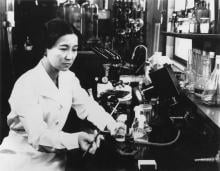
Ruby Sakae Hirose (1904 – 1960) was a Japanese-American scientist whose research contributed significantly to our understanding of blood clotting, allergies and cancer.

Haisako Koyama (1916 – 1997) was a Japanese solar observer whose dedication to recording sunspots – cooler parts of the sun’s surface that appear dark – produced a sunspot record of historic importance.
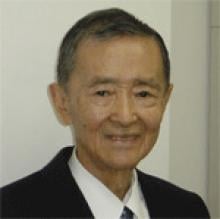
Michiaki Takahashi (17 February 1928 – 16 December 2013) was a Japanese virologist who developed the first chickenpox vaccine.
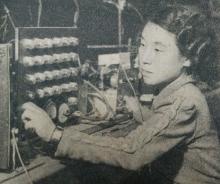
Toshiko Yuasa (11 December 1909 – 1 February 1980) was the first Japanese female physicist whose research on radioactivity shed light on beta decay – the process in which an atom emits a beta particle (electron) and turns into a different element.
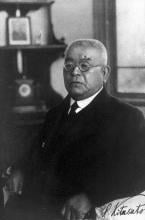
Baron Kitasato Shibasaburo (29 January 1856 – 13 June 1931) was a Japanese physician and bacteriologist whose work led to a new understanding of preventing and treating tetanus, diphtheria and anthrax.
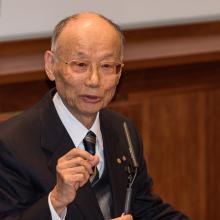
By isolating soil microorganisms and studying the compounds they produce, Satoshi Omura (born 1935) discovered almost 500 organic compounds with unique properties that were produced by these microorganisms, including many new antibiotics.
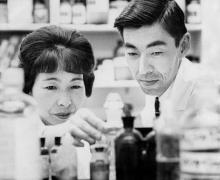
Husband and wife team, Kimishige (3 December 1925 – 6 July 2018) and Teruko Ishizaka (28 September 1926 – 4 June 2019) discovered the antibody class Immunoglobulin E (IgE) that triggers allergic reactions. They also discovered that IgE antibodies attach to white blood cells, known as mast cells, releasing histamine, which causes allergic reactions.
Husband and wife team, Kimishige (3 December 1925 – 6 July 2018) and Teruko Ishizaka (28 September 1926 – 4 June 2019) discovered the antibody class Immunoglobulin E (IgE) that triggers allergic reactions. They also discovered that IgE antibodies attach to white blood cells, known as mast cells, releasing histamine, which causes allergic reactions.
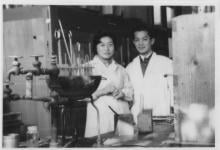
Reiji Okazaki (8 October 1930 – 1 August 1975) and Tsuneko (7 June 1933) were a Japanese couple who discovered Okazaki fragments – short sequences of DNA that are synthesized during DNA replication and linked together to form a continuous strand.
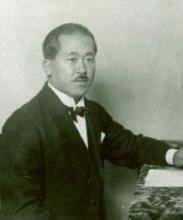
In 1915, Koichi Ichikawa along with pathologist Katsusaburo Yamagiwa became the first to prove that chronic exposure to chemicals can cause cancer.
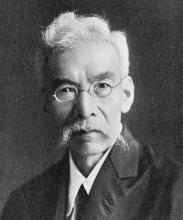
In 1915, pathologist Katsusaburo Yamagiwa and his research assistant Koichi Ichikawa became the first to prove that chronic exposure to chemicals can cause cancer.
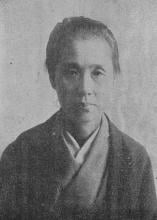
Ogino Ginko (3 March 1851 – 23 June 1913) was the first registered female doctor to practise modern medicine in Japan.
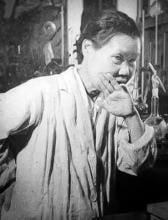
Michiyo Tsujimura (17 September 1888 – 1 June 1969) was a Japanese agricultural scientist and biochemist recognized for her research of green tea components.
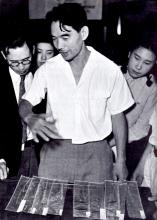
Hitoshi Kihara (1893 – 1986) was one of the most famous Japanese geneticists of the 20th century. One of his most significant contributions was identifying sex chromosomes (X and Y) in flowering plants.
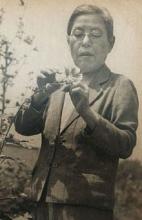
Kono Yasui (16 February 1880 – 24 March 1971) was a Japanese botanist who researched the genetics of poppies, corn and spiderworts and surveyed the plants that had been affected by the nuclear fallout after the atomic bombings of Hiroshima and Nagasaki.
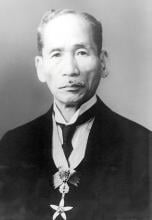
Umetaro Suzuki (7 April 1874 – 20 September 1943) was a Japanese scientist best remembered for his research on beriberi, a disease caused by vitamin B1 deficiency, characterized by limb stiffness, paralysis and pain.
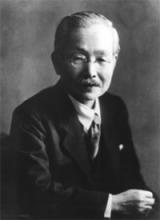
Kikunae Ikeda (8 October 1864 – 3 May 1936) was a Japanese chemist who discovered the fifth basic taste, umami.
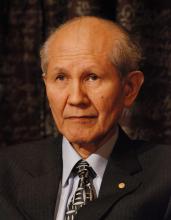
Osamu Shimomura (27 August 1928 – 19 October 2018) was a Japanese organic chemist and marine biologist who dedicated his career to understanding how organisms emitted light.
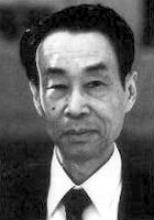
Motoo Kimura (13 November 1924 – 13 November 1994) was a Japanese theoretical population geneticist who is best remembered for developing the neutral theory of molecular evolution.

Chika Kuroda (24 March 1884 – 8 November 1968) was a Japanese chemist whose research focussed on the structures of natural pigments.
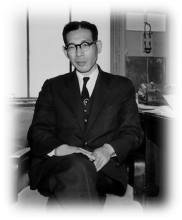
The field of solid-state ionics originated in Europe, but Takehiko Takahashi of Nagoya University in Japan was the first to coin the term ‘solid ionics’ in 1967. ‘Solid-state ionics’ first appeared in 1971 in another of his papers, and was likely a play on ‘solid-state electronics’, another rapidly growing field at the time.
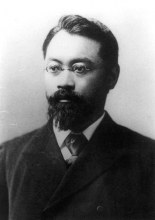
The techniques that make industrial pearl culturing possible were developed over a century ago at the Misaki Marine Biological Station in Japan. The station’s first director, Professor Kakichi Mitsukuri, emphasized to Kokichi Mikimoto in 1890 that stimulating pearl sac formation was important for pearl growth, and they went on to successfully develop methods for culturing pearls.
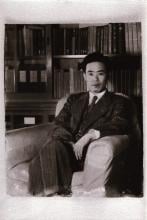
Japanese physicist Ukichiro Nakaya (1900-1962) made the world’s first artificial snowflakes. He started his research on snow crystals in the early 1930s at Hokkaido University, where there is an unlimited supply of natural snow in winter. By taking over 3,000 photographs, he established a classification of natural snow crystals and described their relationship with weather conditions.
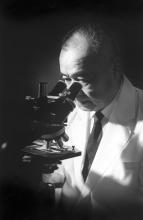
Minoru Shirota (April 23, 1899 – March 10, 1982) was a Japanese microbiologist who invented the popular fermented drink Yakult.
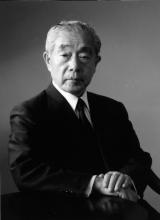
Japanese chemist Kenichi Fukui (4 October 1918 – 9 January 1998) was the first Asian scientist to be awarded the Nobel Prize in Chemistry. Together with Roald Hoffman, he received this honour in 1981 for his independent research into the mechanisms of chemical reactions.
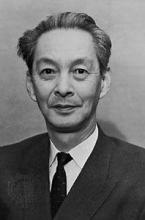
Shinichiro Tomonaga (31 March 1906 – 8 July 1979), together with Richard Feynman and Julian Schwinger, was awarded the Nobel Prize in Physics in 1965, for their contributions to advance the field of quantum electrodynamics. Tomonaga was also a strong proponent of peace, who actively campaigned against the proliferation of nuclear weapons and promoted the peaceful use of nuclear energy.
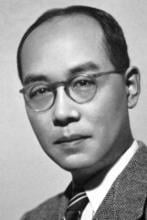
Hideki Yukawa (23 January 1907 – 8 September 1981) was awarded the Nobel Prize in Physics in 1949 for predicting the existence of the pi meson subatomic particle. Japan’s first Nobel laureate, Yakawa also expressed his support for nuclear disarmament by signing the Russell–Einstein Manifesto in 1955.
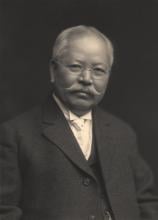
Japanese chemist Takamine Jokichi (3 November 1854 – 22 July 1922) founded the Tokyo Artificial Fertilizer Company, where he isolated a starch-digesting enzyme (named takadiastase) from the fungus Aspergillus oryzae.
Tsuneko (7 June 1933) and Reiji Okazaki (8 October 1930 – 1 August 1975) were a Japanese couple who discovered Okazaki fragments – short sequences of DNA that are synthesized during DNA replication and linked together to form a continuous strand.
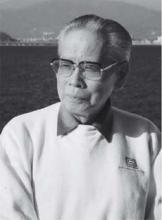
A Japanese surgeon, Tetsuzo Akutsu (20 August 1922 – 9 August 2007) built the first artificial heart capable of keeping an animal alive.
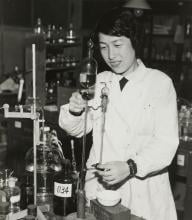
Japanese geochemist Katsuko Saruhashi developed the first method and tools for measuring carbon dioxide in seawater