
Japan
News

14 Nov 2024
Hiroshima University
Sometimes the holes, or pores, in the molecular structure of a chemical only appear in the presence of certain conditions or other ‘guest’ molecules. This affects the field of separation—one of the most important processes in industry—but researchers have only just begun to unravel this phenomenon

14 Nov 2024
Tohoku University
Researchers look to deep learning techniques in order to streamline the time-consuming process of identifying 2D materials.

14 Nov 2024
Osaka Metropolitan University
Development of a low-cost, easy-to-use tool for assessing the lack of essential nutrients

13 Nov 2024
Institute for Integrated Cell-Material Sciences (iCeMS) at Kyoto University
Phase-transformable membrane featuring liquid-glass-crystal states achieves precise CO₂/H₂ selectivity and enhanced gas permeability through modular design with metal-organic polyhedra

13 Nov 2024
The University of Osaka
Osaka University researchers elucidated the molecular details of how Drosophila larval epidermal cells (LECs) undergo cell death in a controlled manner to regulate epithelial tissue remodeling. Specifically, lower activation of the epidermal growth factor receptor (EGFR) signaling pathway occurs following reduced endocytosis. Decreased EGFR pathway activity allows LECs to switch from undergoing single-cell apoptosis to more widespread cell death in clusters. This supports faster LEC elimination and allows for proper tissue remodeling.

12 Nov 2024
Hokkaido University
Hokkaido University and Japan Airlines Co., Ltd. signed a partnership agreement in June 2022 to address various social issues in Hokkaido and lead the creation of a sustainable society. As part of this collaboration, Hokkaido Air System Co., Ltd. will equip one of its aircraft with an external camera to commence the world's first regular flight-based red tide monitoring starting in the summer of 2025.

11 Nov 2024
Tohoku University
Controlling memories in mice means forgetting a light zap, but in humans it could mean letting go of deeply traumatic events.

11 Nov 2024
The University of Osaka
Osaka University and NEC Corporation will showcase a research result at the International Conference for High Performance Computing, Networking, Storage, and Analysis (SC24) scheduled to be held from November 17 to 22, 2024 in Atlanta, Georgia. The experiment to be conducted will transfer huge research data between servers using a 100 Gbps line between Japan and the United States. One file of huge research data stored in the storage of one server is transferred to the other server at high speed. In the preliminary evaluation, we have confirmed that the transfer of 1TB of data can be completed in 87 seconds (effective 92.0Gbps) over a short distance. This experiment will confirm the performance of the long-distance transfer between Japan and the U.S.

08 Nov 2024
Osaka Metropolitan University
Combination enhances microorganisms’ growth environment, uptake of ammonium and phosphate ions

07 Nov 2024
Osaka Metropolitan University
Surgical field expansion plate allows surgeons more independence

06 Nov 2024
Hiroshima University
Research suggests that urban areas could reduce their carbon dioxide (CO2) emissions by optimizing their urban form. However, the relationship between urban form and emissions is highly context-dependent and generalizations cannot be made.

06 Nov 2024
Osaka Metropolitan University
Model mice given extracts and powders show restoration of cognitive and motor functions
05 Nov 2024
Osaka Metropolitan University
Japanese language learning brought prosperity and persecution for women in Korea

04 Nov 2024
The University of Osaka
Researchers from Osaka University found that Highly Sensitive Persons (HSPs) in the workplace experience significantly higher levels of stress compared to their non-HSP colleagues. Approximately 26% of working adults could be classified as HSPs, indicating that a substantial portion of the workforce might be experiencing higher levels of stress. Interestingly, HSPs also exhibit greater empathy, suggesting that their heightened sensitivity enables them to connect deeply with others, potentially fostering a more supportive work environment.

31 Oct 2024
The University of Osaka
A team from Osaka University has developed a large-scale drug screening technique that can track target molecule behavior within cells. The researchers verified their technique by testing the epidermal growth factor receptor (EGFR), a known target for cancer drugs. Their drug screening resulted in the identification of the known drugs, as well as others that were not previously known to affect EGFR. This new method can potentially help develop new drugs and repurpose existing drugs.

31 Oct 2024
The University of Osaka
A new portal linking Japanese genetic variant information with protein sequence and structure date has been launched by Protein Data Bank Japan (PDBj) and Tohoku University Tohoku Medical Megabank Organization (ToMMo). The portal simplifies the mapping of genetic variants to 3D protein structures and includes tools for visualization and analysis. It aims to advance medicine and drug discovery, particularly in precision medicine.

31 Oct 2024
Osaka Metropolitan University
Data could help rethink climate change models regarding sources of carbon and CO2 sinks

31 Oct 2024
Tohoku University
This model reveals how vastly different the atmosphere was on ancient Earth, and how life may have first emerged.

30 Oct 2024
Hokkaido University
Edge computing on a smartphone has been used to analyze data collected by a multimodal flexible wearable sensor patch and detect arrhythmia, coughs and falls.

30 Oct 2024
The University of Osaka
Researchers at Osaka University have developed a new imagining system to monitor pluripotent stem cells during incubation. The new device — INSPCTOR — uses lens-free imaging technology integrated with thin-film transistors. The device is the same size as a standard culture plate, allowing multiple units to be monitored within a compact incubator. By improving quality control during the growth process, this innovation could help accelerate advancements in customized regenerative medicine.

30 Oct 2024
Osaka Metropolitan University
Polymer’s long spin relaxation time helps researchers gain spintronic insights

30 Oct 2024
Osaka Metropolitan University
Arabidopsis thaliana mutant’s lack of KNS3 means boric acid channels don’t arrive properly at plasma membrane

30 Oct 2024
The University of Osaka
Researchers from Osaka University found that Japanese consumers prioritize transparency over performance, while still valuing performance over environmental sustainability when choosing AI assistants. Although transparency was the most important factor, cost remained a critical consideration. This study also highlighted individual differences, showing that future-oriented consumers prefer energy-efficient AI assistants, whereas those with an internal locus of control prioritize transparency. The findings suggest developers should consider these psychological traits to better meet diverse consumer preferences.

29 Oct 2024
The University of Osaka
Researchers from Osaka University overcame the tradeoff between plastic toughness and degradability by developing plastics with movable crosslinks. The crosslinks both increased toughness by over eight times and increased enzymatic degradability by over twenty times compared with those of a reference plastic without movable crosslinks. These advanced biodegradable plastics bring us one step closer to achieving a resource-circulating society.

29 Oct 2024
Hokkaido University
Sorghum possesses unique lipid profiles and bioactive compounds that support health and meet the demand for health-promoting food products.

28 Oct 2024
Osaka Metropolitan University
Scientists develop new approach to analyze 3D structure of lab-made photosynthetic antenna

28 Oct 2024
The University of Osaka
Researchers from Osaka University show that the improvements in signal strength during surface-enhanced fluorescence and Raman spectroscopy can extend even through a nanoscale protective layer. This research may lead to significant improvements in the sensitivity of biosensors and the development of novel point-of-care diagnostics.

27 Oct 2024
Tohoku University
Researchers at Tohoku University and the Tokyo University of Science are finding new ways to make the hydrogen evolution reaction harder, better, faster, and stronger!

25 Oct 2024
Hokkaido University
A new scientific study reveals the complex relationship between the impacts of climate change and the adaptive responses of coastal fishers in the southern coasts of Japan.

25 Oct 2024
Osaka Metropolitan University
Next-generation regenerative treatment shows promise in medicine-engineering collaboration
Researchers
Sorry, no researchers coming up for this topic.
Giants in history

Japanese biochemist Akira Endo (1933 – 2024) discovered the first statin, called mevastatin, which lowered cholesterol levels in the blood by inhibiting a key enzyme in the cholesterol biosynthesis pathway. His work laid the foundation for the development of statins to help patients lower their blood cholesterol levels and reduce their risk of heart disease or stroke.
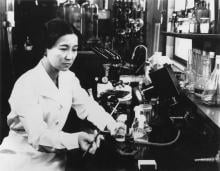
Ruby Sakae Hirose (1904 – 1960) was a Japanese-American scientist whose research contributed significantly to our understanding of blood clotting, allergies and cancer.

Haisako Koyama (1916 – 1997) was a Japanese solar observer whose dedication to recording sunspots – cooler parts of the sun’s surface that appear dark – produced a sunspot record of historic importance.
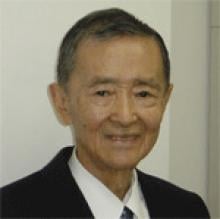
Michiaki Takahashi (17 February 1928 – 16 December 2013) was a Japanese virologist who developed the first chickenpox vaccine.
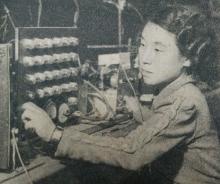
Toshiko Yuasa (11 December 1909 – 1 February 1980) was the first Japanese female physicist whose research on radioactivity shed light on beta decay – the process in which an atom emits a beta particle (electron) and turns into a different element.
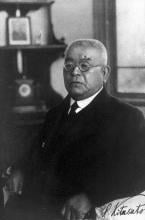
Baron Kitasato Shibasaburo (29 January 1856 – 13 June 1931) was a Japanese physician and bacteriologist whose work led to a new understanding of preventing and treating tetanus, diphtheria and anthrax.
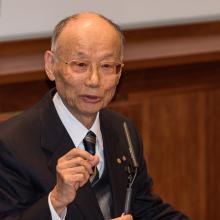
By isolating soil microorganisms and studying the compounds they produce, Satoshi Omura (born 1935) discovered almost 500 organic compounds with unique properties that were produced by these microorganisms, including many new antibiotics.
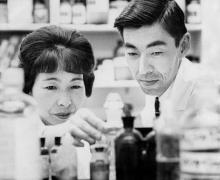
Husband and wife team, Kimishige (3 December 1925 – 6 July 2018) and Teruko Ishizaka (28 September 1926 – 4 June 2019) discovered the antibody class Immunoglobulin E (IgE) that triggers allergic reactions. They also discovered that IgE antibodies attach to white blood cells, known as mast cells, releasing histamine, which causes allergic reactions.
Husband and wife team, Kimishige (3 December 1925 – 6 July 2018) and Teruko Ishizaka (28 September 1926 – 4 June 2019) discovered the antibody class Immunoglobulin E (IgE) that triggers allergic reactions. They also discovered that IgE antibodies attach to white blood cells, known as mast cells, releasing histamine, which causes allergic reactions.
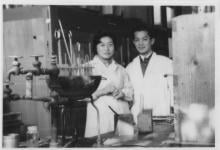
Reiji Okazaki (8 October 1930 – 1 August 1975) and Tsuneko (7 June 1933) were a Japanese couple who discovered Okazaki fragments – short sequences of DNA that are synthesized during DNA replication and linked together to form a continuous strand.
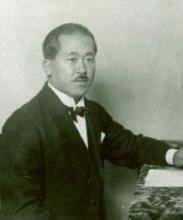
In 1915, Koichi Ichikawa along with pathologist Katsusaburo Yamagiwa became the first to prove that chronic exposure to chemicals can cause cancer.
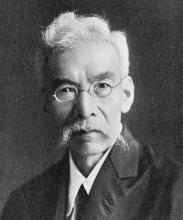
In 1915, pathologist Katsusaburo Yamagiwa and his research assistant Koichi Ichikawa became the first to prove that chronic exposure to chemicals can cause cancer.
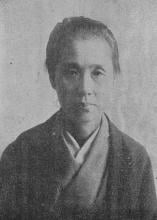
Ogino Ginko (3 March 1851 – 23 June 1913) was the first registered female doctor to practise modern medicine in Japan.
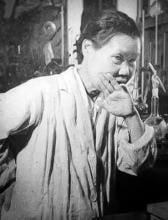
Michiyo Tsujimura (17 September 1888 – 1 June 1969) was a Japanese agricultural scientist and biochemist recognized for her research of green tea components.
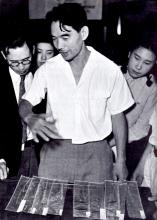
Hitoshi Kihara (1893 – 1986) was one of the most famous Japanese geneticists of the 20th century. One of his most significant contributions was identifying sex chromosomes (X and Y) in flowering plants.
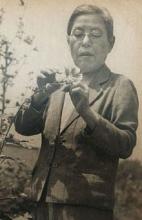
Kono Yasui (16 February 1880 – 24 March 1971) was a Japanese botanist who researched the genetics of poppies, corn and spiderworts and surveyed the plants that had been affected by the nuclear fallout after the atomic bombings of Hiroshima and Nagasaki.
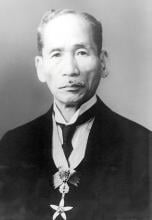
Umetaro Suzuki (7 April 1874 – 20 September 1943) was a Japanese scientist best remembered for his research on beriberi, a disease caused by vitamin B1 deficiency, characterized by limb stiffness, paralysis and pain.
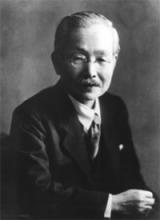
Kikunae Ikeda (8 October 1864 – 3 May 1936) was a Japanese chemist who discovered the fifth basic taste, umami.
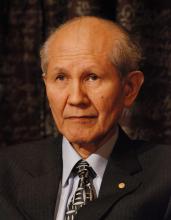
Osamu Shimomura (27 August 1928 – 19 October 2018) was a Japanese organic chemist and marine biologist who dedicated his career to understanding how organisms emitted light.
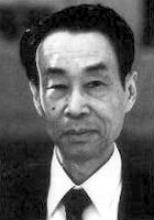
Motoo Kimura (13 November 1924 – 13 November 1994) was a Japanese theoretical population geneticist who is best remembered for developing the neutral theory of molecular evolution.

Chika Kuroda (24 March 1884 – 8 November 1968) was a Japanese chemist whose research focussed on the structures of natural pigments.
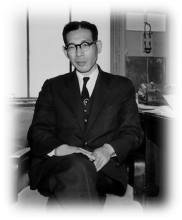
The field of solid-state ionics originated in Europe, but Takehiko Takahashi of Nagoya University in Japan was the first to coin the term ‘solid ionics’ in 1967. ‘Solid-state ionics’ first appeared in 1971 in another of his papers, and was likely a play on ‘solid-state electronics’, another rapidly growing field at the time.
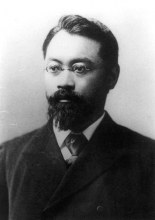
The techniques that make industrial pearl culturing possible were developed over a century ago at the Misaki Marine Biological Station in Japan. The station’s first director, Professor Kakichi Mitsukuri, emphasized to Kokichi Mikimoto in 1890 that stimulating pearl sac formation was important for pearl growth, and they went on to successfully develop methods for culturing pearls.
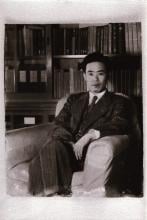
Japanese physicist Ukichiro Nakaya (1900-1962) made the world’s first artificial snowflakes. He started his research on snow crystals in the early 1930s at Hokkaido University, where there is an unlimited supply of natural snow in winter. By taking over 3,000 photographs, he established a classification of natural snow crystals and described their relationship with weather conditions.
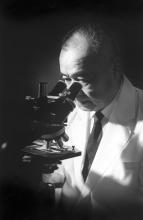
Minoru Shirota (April 23, 1899 – March 10, 1982) was a Japanese microbiologist who invented the popular fermented drink Yakult.
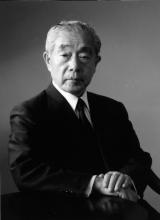
Japanese chemist Kenichi Fukui (4 October 1918 – 9 January 1998) was the first Asian scientist to be awarded the Nobel Prize in Chemistry. Together with Roald Hoffman, he received this honour in 1981 for his independent research into the mechanisms of chemical reactions.
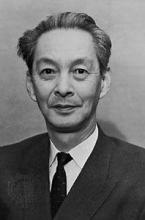
Shinichiro Tomonaga (31 March 1906 – 8 July 1979), together with Richard Feynman and Julian Schwinger, was awarded the Nobel Prize in Physics in 1965, for their contributions to advance the field of quantum electrodynamics. Tomonaga was also a strong proponent of peace, who actively campaigned against the proliferation of nuclear weapons and promoted the peaceful use of nuclear energy.
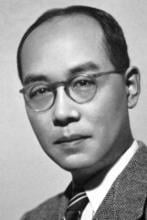
Hideki Yukawa (23 January 1907 – 8 September 1981) was awarded the Nobel Prize in Physics in 1949 for predicting the existence of the pi meson subatomic particle. Japan’s first Nobel laureate, Yakawa also expressed his support for nuclear disarmament by signing the Russell–Einstein Manifesto in 1955.
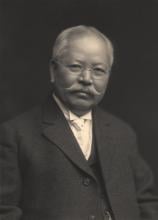
Japanese chemist Takamine Jokichi (3 November 1854 – 22 July 1922) founded the Tokyo Artificial Fertilizer Company, where he isolated a starch-digesting enzyme (named takadiastase) from the fungus Aspergillus oryzae.
Tsuneko (7 June 1933) and Reiji Okazaki (8 October 1930 – 1 August 1975) were a Japanese couple who discovered Okazaki fragments – short sequences of DNA that are synthesized during DNA replication and linked together to form a continuous strand.
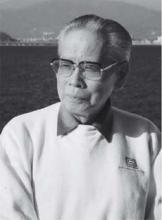
A Japanese surgeon, Tetsuzo Akutsu (20 August 1922 – 9 August 2007) built the first artificial heart capable of keeping an animal alive.
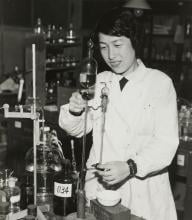
Japanese geochemist Katsuko Saruhashi developed the first method and tools for measuring carbon dioxide in seawater