

Japan
News

07 Aug 2024
Ehime University
Velocities of aluminum enriched superhydrous phase B suggest the presence of hydrated mantle regions beneath subduction zones

07 Aug 2024
Tohoku University
We are constantly surrounded by electromagnetic waves such as Wi-Fi. Researchers at Tohoku University tested a device to convert this ambient energy into energy for electronic devices.

06 Aug 2024
The University of Osaka
Researchers from Osaka University found that how well light-converting molecules stack together in a solid is important for how well they convert light into electric current. A rigid molecule that stacked well showed excellent electricity generation in an organic solar cell and photocatalyst, easily outperforming a similar flexible molecule that did not stack well. This new way of improving the design of molecules could be used to pioneer the next generation of light-converting devices.

05 Aug 2024
Ehime University
An experimental approach based on universal multi-branch general-purpose convolutional neural network

05 Aug 2024
Kanazawa University
Researchers at Nano Life Science Institute (WPI-NanoLSI), Kanazawa University, IMDEA Nanoscience (Madrid, Spain) and CNB-CSIC (Madrid, Spain) report in ACS Nano experiments that reveal a cycle of conformational stages that recombinant Influenza A genomes pass through during RNA synthesis.

05 Aug 2024
Osaka Metropolitan University
Ecklonia cava, a brown algae seaweed, is shown to have the ability to protect against neurodegeneration

03 Aug 2024
Hiroshima University
Wild boars and red junglefowl gave rise to common pigs and chickens. These animals’ genes evolved to express themselves differently, leading to signatures of domestication — such as weaker bones and better viral resistance — in pigs and chickens, according to a research team based in Japan.

02 Aug 2024
Osaka Metropolitan University
Growing use of AI reveals the need for global sustainability initiatives

02 Aug 2024
Kanazawa University
A research group led by Associate Professor Katsuya Sakai, Researcher Nichole Marcela Rojas-Chaverra, and Professor Kunio Matsumoto of the Cancer Research Institute and Nano-Life Science (WPI-NanoLSI) at Kanazawa University has developed a long-acting, subcutaneously injectable artificial hepatocyte growth factor (HGF) mimetic molecule using a fusion technology of cyclic peptides and protein engineering. They demonstrated in a mouse model that it improves liver fibrosis, lipid accumulation, and inflammation caused by non-alcoholic steatohepatitis (NASH). This research result provides an option for the development of NASH therapeutics as well as a technology for creating growth factor and cytokine mimetic molecules with improved pharmacokinetics.

01 Aug 2024
Osaka Metropolitan University
Researchers develop method to calculate the probability of a fall for older adults

01 Aug 2024
Hokkaido University
Commercially important marine fish and invertebrate species will likely shift northwards under a warmer climate.

30 Jul 2024
Hiroshima University
The anti-tumor drug indisulam has shown promise both in cell cultures and in animal studies. However, clinical trials have shown fewer clear-cut results. Scientists from Hiroshima University Hospital have been researching the reasons behind this resistance to it.

29 Jul 2024
Osaka Metropolitan University
New scoring model enhances early prognosis prediction using prehospital resuscitation data only

29 Jul 2024
The University of Osaka
Researchers from the HeKKSaGOn Alliance – involved were scientists from Kyoto University, Osaka University and Heidelberg University (Germany) – synthesized a bio-inspired polymer for water purification. The polymer was designed to mimic phytochelatin, a plant protein that selectively captures and neutralizes harmful heavy metal ions. The hyperconfinement of the polymer enabled a flow-through system and effectively removed cadmium ions from contaminated water, making it safe to drink. The system was selective for heavy metals and provides a new way to remove specific contaminants from water.

26 Jul 2024
Osaka Metropolitan University
Distinctive processes could provide hints on how to use next-generation materials

25 Jul 2024
Osaka Metropolitan University
Using optical vortex enhances printing technology, shows promise in creating well-formed single ferrite crystals

24 Jul 2024
Tohoku University
Sometimes less is more. Researchers at Tohoku University accurately modeled dynamic fish schooling by incorporating the tendency of fish to focus on a single visual target instead of the whole school.

23 Jul 2024
Osaka Metropolitan University
Detailed analysis of bone density changes and stem-femur contact after total hip replacement

21 Jul 2024
The University of Osaka
Researchers from Osaka University interviewed Japanese women using oral contraceptives (OC) in Korea, revealing clinical and ethical issues faced by transnational patients. The study identified new health care types and highlighted differing perceptions of OC between patients and doctors upon returning to Japan, creating dilemmas. Ethical implications were proposed, and future access to patient-centered medicine and drug reclassification was investigated to improve SRHR issues in Japan.

19 Jul 2024
Osaka Metropolitan University
A 100-year-old physics mystery may be close to being solved as a new study reveals structural changes in titanium-48’s nucleus

18 Jul 2024
Ehime University
Elucidation of the substrate recognition mechanism of ArcS, the second-step enzyme for archaeosine synthesis in tRNA

18 Jul 2024
Osaka Metropolitan University
Combination of venetoclax and azacitidine helps patients with AML who relapse after hematopoietic cell transplant

17 Jul 2024
Ehime University
Mechanics and thermodynamics of (Mg,Fe)O grain boundaries under extreme pressure

17 Jul 2024
Kanazawa University
Researchers at Nano Life Science Institute (WPI-NanoLSI), Kanazawa University report in Biosensors and Bioelectronics: X a novel approach for detecting a particular biomolecule associated with several diseases. The results show good sensitivity and selectivity, and may lead to the development of a low-cost, rapid detection device useful in cancer prognosis.

16 Jul 2024
Ehime University
Evaluation of developmental toxicity of early chicken embryos exposed to chlorinated paraffins

16 Jul 2024
Osaka Metropolitan University
Inexperienced users of voice-controlled smart speakers face challenges due to lack of system feedback

12 Jul 2024
The University of Osaka
This study presents a method to record the temperature of materials with exceptional temporal resolution, using a Doppler broadening effect in neutron resonance absorption. Using a high-powered laser to generate pulses of neutrons 100 nanoseconds long, a test on samples of silver and tantalum successfully returned characteristic information for both materials and their temperatures.

12 Jul 2024
Hiroshima University
A case study in post-siege Marawi City, Philippines

12 Jul 2024
Hokkaido University
A method to screen a wide variety of drug candidates without laborious purification steps could advance the fight against drug-resistant bacteria.

11 Jul 2024
Tohoku University
Researchers at Tohoku University and the UK developed a model showing the ability of reconfigurable intelligent surfaces to redirect the propagation of radio waves, which could improve the signal.
Researchers
Sorry, no researchers coming up for this topic.
Giants in history

Japanese biochemist Akira Endo (1933 – 2024) discovered the first statin, called mevastatin, which lowered cholesterol levels in the blood by inhibiting a key enzyme in the cholesterol biosynthesis pathway. His work laid the foundation for the development of statins to help patients lower their blood cholesterol levels and reduce their risk of heart disease or stroke.
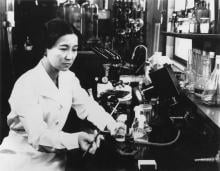
Ruby Sakae Hirose (1904 – 1960) was a Japanese-American scientist whose research contributed significantly to our understanding of blood clotting, allergies and cancer.
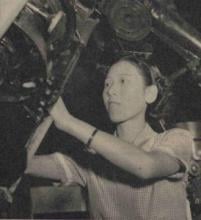
Haisako Koyama (1916 – 1997) was a Japanese solar observer whose dedication to recording sunspots – cooler parts of the sun’s surface that appear dark – produced a sunspot record of historic importance.
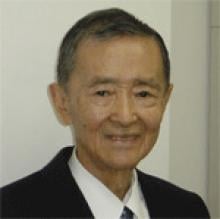
Michiaki Takahashi (17 February 1928 – 16 December 2013) was a Japanese virologist who developed the first chickenpox vaccine.
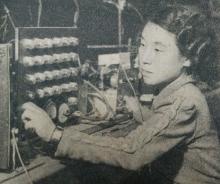
Toshiko Yuasa (11 December 1909 – 1 February 1980) was the first Japanese female physicist whose research on radioactivity shed light on beta decay – the process in which an atom emits a beta particle (electron) and turns into a different element.
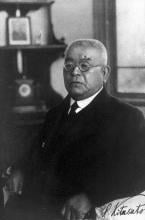
Baron Kitasato Shibasaburo (29 January 1856 – 13 June 1931) was a Japanese physician and bacteriologist whose work led to a new understanding of preventing and treating tetanus, diphtheria and anthrax.
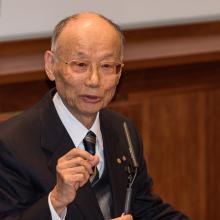
By isolating soil microorganisms and studying the compounds they produce, Satoshi Omura (born 1935) discovered almost 500 organic compounds with unique properties that were produced by these microorganisms, including many new antibiotics.
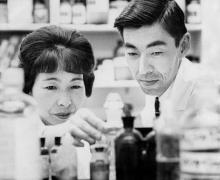
Husband and wife team, Kimishige (3 December 1925 – 6 July 2018) and Teruko Ishizaka (28 September 1926 – 4 June 2019) discovered the antibody class Immunoglobulin E (IgE) that triggers allergic reactions. They also discovered that IgE antibodies attach to white blood cells, known as mast cells, releasing histamine, which causes allergic reactions.
Husband and wife team, Kimishige (3 December 1925 – 6 July 2018) and Teruko Ishizaka (28 September 1926 – 4 June 2019) discovered the antibody class Immunoglobulin E (IgE) that triggers allergic reactions. They also discovered that IgE antibodies attach to white blood cells, known as mast cells, releasing histamine, which causes allergic reactions.
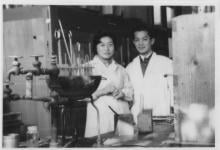
Reiji Okazaki (8 October 1930 – 1 August 1975) and Tsuneko (7 June 1933) were a Japanese couple who discovered Okazaki fragments – short sequences of DNA that are synthesized during DNA replication and linked together to form a continuous strand.
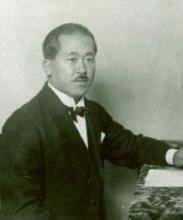
In 1915, Koichi Ichikawa along with pathologist Katsusaburo Yamagiwa became the first to prove that chronic exposure to chemicals can cause cancer.
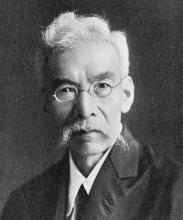
In 1915, pathologist Katsusaburo Yamagiwa and his research assistant Koichi Ichikawa became the first to prove that chronic exposure to chemicals can cause cancer.
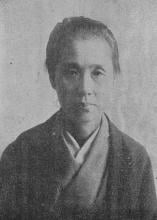
Ogino Ginko (3 March 1851 – 23 June 1913) was the first registered female doctor to practise modern medicine in Japan.
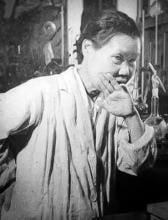
Michiyo Tsujimura (17 September 1888 – 1 June 1969) was a Japanese agricultural scientist and biochemist recognized for her research of green tea components.
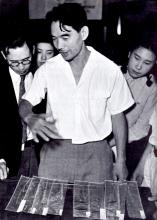
Hitoshi Kihara (1893 – 1986) was one of the most famous Japanese geneticists of the 20th century. One of his most significant contributions was identifying sex chromosomes (X and Y) in flowering plants.
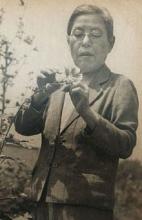
Kono Yasui (16 February 1880 – 24 March 1971) was a Japanese botanist who researched the genetics of poppies, corn and spiderworts and surveyed the plants that had been affected by the nuclear fallout after the atomic bombings of Hiroshima and Nagasaki.
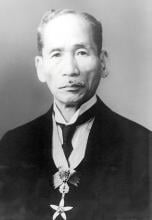
Umetaro Suzuki (7 April 1874 – 20 September 1943) was a Japanese scientist best remembered for his research on beriberi, a disease caused by vitamin B1 deficiency, characterized by limb stiffness, paralysis and pain.
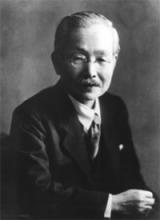
Kikunae Ikeda (8 October 1864 – 3 May 1936) was a Japanese chemist who discovered the fifth basic taste, umami.
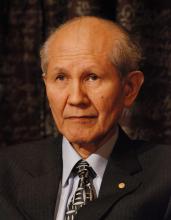
Osamu Shimomura (27 August 1928 – 19 October 2018) was a Japanese organic chemist and marine biologist who dedicated his career to understanding how organisms emitted light.
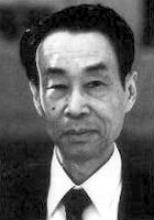
Motoo Kimura (13 November 1924 – 13 November 1994) was a Japanese theoretical population geneticist who is best remembered for developing the neutral theory of molecular evolution.

Chika Kuroda (24 March 1884 – 8 November 1968) was a Japanese chemist whose research focussed on the structures of natural pigments.
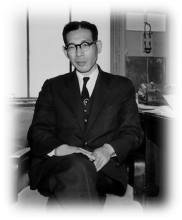
The field of solid-state ionics originated in Europe, but Takehiko Takahashi of Nagoya University in Japan was the first to coin the term ‘solid ionics’ in 1967. ‘Solid-state ionics’ first appeared in 1971 in another of his papers, and was likely a play on ‘solid-state electronics’, another rapidly growing field at the time.
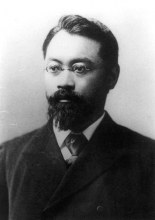
The techniques that make industrial pearl culturing possible were developed over a century ago at the Misaki Marine Biological Station in Japan. The station’s first director, Professor Kakichi Mitsukuri, emphasized to Kokichi Mikimoto in 1890 that stimulating pearl sac formation was important for pearl growth, and they went on to successfully develop methods for culturing pearls.
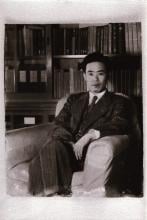
Japanese physicist Ukichiro Nakaya (1900-1962) made the world’s first artificial snowflakes. He started his research on snow crystals in the early 1930s at Hokkaido University, where there is an unlimited supply of natural snow in winter. By taking over 3,000 photographs, he established a classification of natural snow crystals and described their relationship with weather conditions.
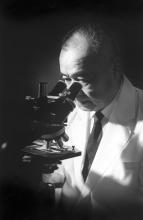
Minoru Shirota (April 23, 1899 – March 10, 1982) was a Japanese microbiologist who invented the popular fermented drink Yakult.
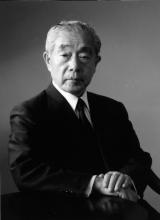
Japanese chemist Kenichi Fukui (4 October 1918 – 9 January 1998) was the first Asian scientist to be awarded the Nobel Prize in Chemistry. Together with Roald Hoffman, he received this honour in 1981 for his independent research into the mechanisms of chemical reactions.
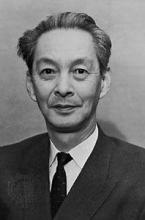
Shinichiro Tomonaga (31 March 1906 – 8 July 1979), together with Richard Feynman and Julian Schwinger, was awarded the Nobel Prize in Physics in 1965, for their contributions to advance the field of quantum electrodynamics. Tomonaga was also a strong proponent of peace, who actively campaigned against the proliferation of nuclear weapons and promoted the peaceful use of nuclear energy.
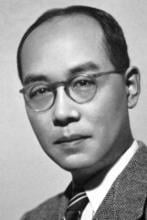
Hideki Yukawa (23 January 1907 – 8 September 1981) was awarded the Nobel Prize in Physics in 1949 for predicting the existence of the pi meson subatomic particle. Japan’s first Nobel laureate, Yakawa also expressed his support for nuclear disarmament by signing the Russell–Einstein Manifesto in 1955.
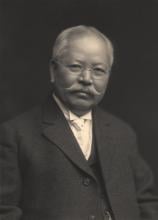
Japanese chemist Takamine Jokichi (3 November 1854 – 22 July 1922) founded the Tokyo Artificial Fertilizer Company, where he isolated a starch-digesting enzyme (named takadiastase) from the fungus Aspergillus oryzae.
Tsuneko (7 June 1933) and Reiji Okazaki (8 October 1930 – 1 August 1975) were a Japanese couple who discovered Okazaki fragments – short sequences of DNA that are synthesized during DNA replication and linked together to form a continuous strand.
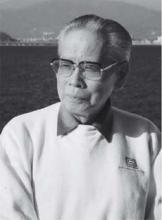
A Japanese surgeon, Tetsuzo Akutsu (20 August 1922 – 9 August 2007) built the first artificial heart capable of keeping an animal alive.
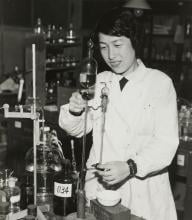
Japanese geochemist Katsuko Saruhashi developed the first method and tools for measuring carbon dioxide in seawater