
Japan
News
15 May 2024
Hokkaido University
New research employs shutter speed analogies to validate 55-year-old theory about chemical reaction rates.
14 May 2024
Osaka Metropolitan University
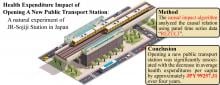
Time series data and causal impact algorithm reveal the effectiveness of a new transit station over a four-year period
13 May 2024
Kanazawa University
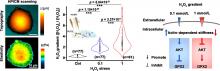
In a recent study published in the multidisciplinary academic journal Science Bulletin, a semi-monthly high-caliber peer-reviewed research outlet covering a broad range of natural sciences and high-tech fields, researchers from the Nano Life Science Institute (WPI-NanoLSI) at Kanazawa University utilized hopping probe scanning ion conductance microscopy (HPICM) and highly sensitive platinum-functionalized nanoelectrodes to conduct an in-depth investigation of the dynamic response of individual living colorectal cancer Caco-2 cells to changes in intracellular and extracellular hydrogen peroxide (H2O2) gradients, specifically focusing on eustress, at the single-cell level and in real-time. Their findings hold promise for innovative therapies against cancer and H2O2-related inflammatory diseases.

13 May 2024
The University of Osaka
Researchers from Osaka University have used a novel combination of short-read and long-read RNA sequencing to identify the different isoforms of genes expressed in the crustacean Daphnia magna. Males and females are genetically identical, but using this technique the team revealed genes that switch the predominant isoform in a sex-dependent manner. This study contributes to our understanding of Daphnia’s sexual dimorphism and helps further advance technologies in crustacean aquaculture.

10 May 2024
Kanazawa University
Researchers at Nano Life Science Institute (WPI-NanoLSI), Kanazawa University report in Nano Letters how the use of high-speed atomic force microscopy helps to understand the crucial role played by certain biomolecules in DNA wrapping dynamics.
09 May 2024
Institute of Industrial Science, The University of Tokyo (UTokyo-IIS)
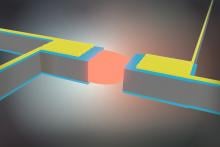
Researchers at The University of Tokyo demonstrate enhanced radiative heat transfer across a gap between two micro-sized silicon plates by coating them with a layer of silicon dioxide, which may significantly improve heat management of computers.
07 May 2024
The University of Osaka
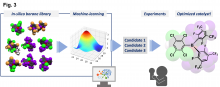
Researchers from Osaka University developed an in silico library comprising 54 potential triarylborane catalysts for the functionalization of amino acids and peptides with molecular hydrogen as a reductant. This library, together with chemometric machine learning, was used to identify the best candidates. Based on this process, an optimal catalyst was identified and found to promote the alkylation of aniline derivatives with exceptional functional group tolerance and produce only water as a coproduct.
02 May 2024
Hokkaido University
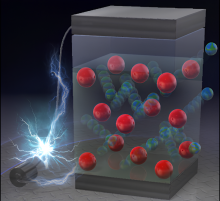
Charge-recharge cycling of lithium-superrich iron oxide, a cost-effective and high-capacity cathode for new-generation lithium-ion batteries, can be greatly improved by doping with readily available mineral elements.
02 May 2024
The University of Osaka
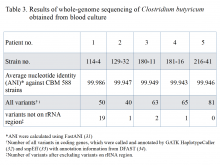
Osaka University researchers discovered a concerning association between bacteremia and probiotic use, particularly with Clostridium butyricum (C. butyricum) MIYAIRI 588. Whole-genome sequencing revealed that all C. butyricum bacteremia strains were probiotic derivatives. Out of 6,576 cases of positive blood cultures, C. butyricum was detected in only five cases, all derived from probiotics. The study underscores rare but serious adverse events linked to probiotics, advocating cautious prescribing practices, especially for hospitalized patients.
01 May 2024
The University of Osaka
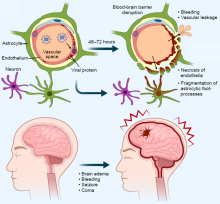
Researchers from Osaka University have found that a brain disorder associated with flu (influenza-associated encephalopathy, or IAE) can be caused by the influenza virus entering the brain from the blood via endothelial cells. In these cells, the researchers observed viral protein accumulation, suggesting that antivirals targeting viral transcription/translation may be useful treatments for some patients. Given the lack of effective treatments for IAE, this finding will likely improve patient care and reduce IAE-related deaths worldwide.
01 May 2024
Osaka Metropolitan University
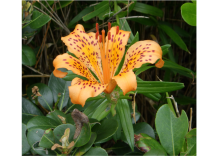
Classification of these plants bloom to double the number of taxonomic groups through morphological study, DNA analysis
29 Apr 2024
Hokkaido University
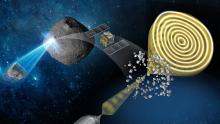
Samples reveal evidence of changes experienced by the surface of asteroid Ryugu, some probably due to micrometeoroid bombardment.
26 Apr 2024
Hokkaido University
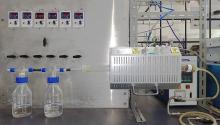
Chemical and heat treatment of sewage sludge can recover phosphorus in a process that could help address the problem of diminishing supplies of phosphorus ores.
25 Apr 2024
The University of Osaka
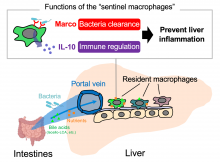
Osaka University researchers discovered liver resident macrophages' pivotal role in defending against gut bacteria and related substances entering via the portal vein, particularly under compromised intestinal barrier conditions. Identified as "sentinel macrophages," they are activated by isoallo-lithocholic acid. This finding holds promise for developing preventive and therapeutic strategies for liver chronic inflammatory diseases, such as metabolic dysfunction-associated steatohepatitis (MASH), by enhancing the function of these macrophages to mitigate inflammation and improve treatment efficacy.
24 Apr 2024
Hokkaido University
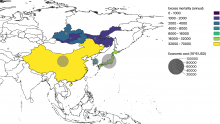
As wildfires in Siberia become more common, global climate modeling estimates significant impacts on climate, air quality, health, and economies in East Asia and across the northern hemisphere.
24 Apr 2024
The University of Osaka
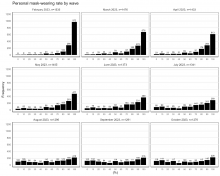
Researchers from Osaka University examined how specific types of contextual changes, such as government recommendations and perceived behavior of others, influenced mask-wearing behavior during the COVID-19 pandemic. They found a complex relationship between societal norms and individual behavior during the pandemic, indicating that future strategies for public health crises interventions should consider various factors and contexts, including cultural predispositions.
23 Apr 2024
Tohoku University
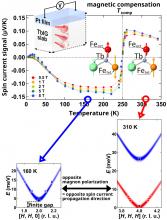
Using neutron scattering and voltage measurements, a group of researchers have discovered that a material's magnetic properties can predict spin current changes with temperature. The finding is a major breakthrough in the field of spintronics.

23 Apr 2024
Osaka Metropolitan University
Bacteriophage therapy could be developed based on study’s results
22 Apr 2024
Osaka Metropolitan University
Watching and waiting with minimal intervention forms educational philosophy guided by balance
22 Apr 2024
The University of Osaka
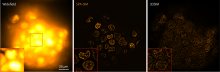
Researchers from Osaka University used structured light and switchable fluorescent molecules to reduce the background light from the out-of-plane regions of microscope samples. This method allowed for the acquisition of images that surpassed the conventional resolution limit, and it may be useful for further study of cell clusters and other biological systems.

18 Apr 2024
Osaka Metropolitan University
Skilled players show stronger inhibition processes when electing not to pass the ball

17 Apr 2024
National Institute for Materials Science (NIMS)
Electron spin states can now be probed at much higher resolution and more efficiently, opening new opportunities in materials analysis and data processing technologies.
16 Apr 2024
Osaka Metropolitan University
Aiming to reduce fracture recovery times, an Osaka Metropolitan University-led research group is focusing on plasma irradiation as a treatment method
16 Apr 2024
The University of Osaka
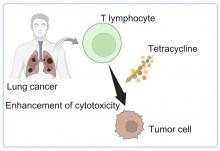
Researchers from Osaka University found that tetracycline antibiotics stimulate T lymphocytes in the body’s immune system to attack and destroy cancer cells. The antibiotics work by blocking the action of galactin-1, a protein made by cancer cells that suppresses the immune system. Identification of this new target may lead to the development of novel cancer immunotherapies.
16 Apr 2024
The University of Osaka
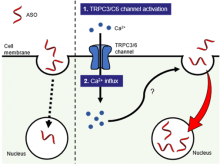
Researchers from Osaka University found that a new activator called L687 induces cancer cells to accept delivery of antisense oligonucleotide (ASO) drugs. These drugs can treat cancer by blocking the transfer of messages from genes that encourage cancer growth. Previous methods to deliver ASOs into cells had only limited success. This research will help accelerate the development and delivery of novel ASO cancer therapies.
14 Apr 2024
The University of Osaka
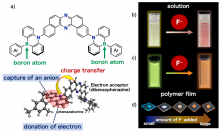
Researchers from Osaka University and collaborating partners have synthesized triarylborane (TAB) compounds that exhibit unusual optical responses upon binding to certain anions. They also synthesized thin polymer films that incorporate the TAB and retain the sensing as well as the light emission properties of the TAB. This work is an important advance in plastic research and has applications in analyte sensing as well as electronic display technologies.

11 Apr 2024
Hokkaido University
Meandering ocean currents play an important role in the melting of Antarctic ice shelves, threatening a significant rise in sea levels.

11 Apr 2024
Institute of Industrial Science, The University of Tokyo (UTokyo-IIS)
Researchers from the Institute of Industrial Science, The University of Tokyo, find that providing lab-grown ‘cerebral organoids’ with connections similar to those in real brains enhances their development and activity
11 Apr 2024
Osaka Metropolitan University
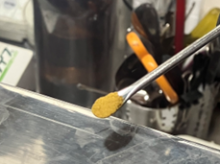
Process that can lead to mass synthesis yields solid sulfide electrolyte with world’s highest reported sodium ion conductivity and glass electrolyte

11 Apr 2024
Hiroshima University
Researchers have identified 14 genes that thale cress express more when responding to five specific stressors, as well as eight genes that the plant suppresses.
Researchers
Sorry, no researchers coming up for this topic.
Giants in history

Japanese biochemist Akira Endo (1933 – 2024) discovered the first statin, called mevastatin, which lowered cholesterol levels in the blood by inhibiting a key enzyme in the cholesterol biosynthesis pathway. His work laid the foundation for the development of statins to help patients lower their blood cholesterol levels and reduce their risk of heart disease or stroke.
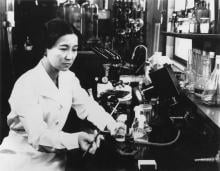
Ruby Sakae Hirose (1904 – 1960) was a Japanese-American scientist whose research contributed significantly to our understanding of blood clotting, allergies and cancer.
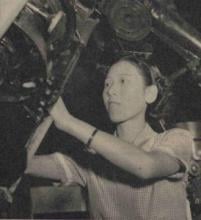
Haisako Koyama (1916 – 1997) was a Japanese solar observer whose dedication to recording sunspots – cooler parts of the sun’s surface that appear dark – produced a sunspot record of historic importance.
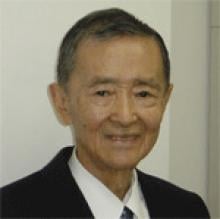
Michiaki Takahashi (17 February 1928 – 16 December 2013) was a Japanese virologist who developed the first chickenpox vaccine.
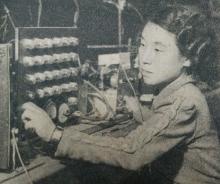
Toshiko Yuasa (11 December 1909 – 1 February 1980) was the first Japanese female physicist whose research on radioactivity shed light on beta decay – the process in which an atom emits a beta particle (electron) and turns into a different element.
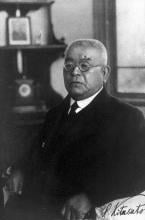
Baron Kitasato Shibasaburo (29 January 1856 – 13 June 1931) was a Japanese physician and bacteriologist whose work led to a new understanding of preventing and treating tetanus, diphtheria and anthrax.
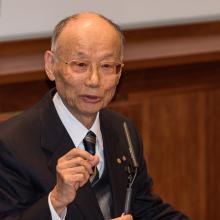
By isolating soil microorganisms and studying the compounds they produce, Satoshi Omura (born 1935) discovered almost 500 organic compounds with unique properties that were produced by these microorganisms, including many new antibiotics.
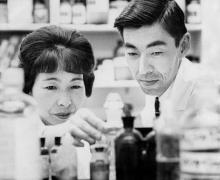
Husband and wife team, Kimishige (3 December 1925 – 6 July 2018) and Teruko Ishizaka (28 September 1926 – 4 June 2019) discovered the antibody class Immunoglobulin E (IgE) that triggers allergic reactions. They also discovered that IgE antibodies attach to white blood cells, known as mast cells, releasing histamine, which causes allergic reactions.
Husband and wife team, Kimishige (3 December 1925 – 6 July 2018) and Teruko Ishizaka (28 September 1926 – 4 June 2019) discovered the antibody class Immunoglobulin E (IgE) that triggers allergic reactions. They also discovered that IgE antibodies attach to white blood cells, known as mast cells, releasing histamine, which causes allergic reactions.
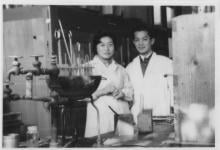
Reiji Okazaki (8 October 1930 – 1 August 1975) and Tsuneko (7 June 1933) were a Japanese couple who discovered Okazaki fragments – short sequences of DNA that are synthesized during DNA replication and linked together to form a continuous strand.
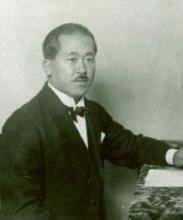
In 1915, Koichi Ichikawa along with pathologist Katsusaburo Yamagiwa became the first to prove that chronic exposure to chemicals can cause cancer.
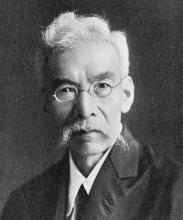
In 1915, pathologist Katsusaburo Yamagiwa and his research assistant Koichi Ichikawa became the first to prove that chronic exposure to chemicals can cause cancer.
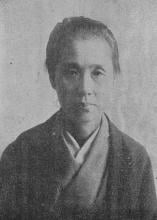
Ogino Ginko (3 March 1851 – 23 June 1913) was the first registered female doctor to practise modern medicine in Japan.
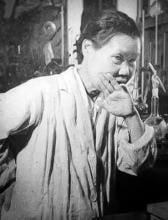
Michiyo Tsujimura (17 September 1888 – 1 June 1969) was a Japanese agricultural scientist and biochemist recognized for her research of green tea components.
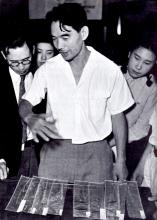
Hitoshi Kihara (1893 – 1986) was one of the most famous Japanese geneticists of the 20th century. One of his most significant contributions was identifying sex chromosomes (X and Y) in flowering plants.
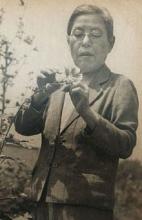
Kono Yasui (16 February 1880 – 24 March 1971) was a Japanese botanist who researched the genetics of poppies, corn and spiderworts and surveyed the plants that had been affected by the nuclear fallout after the atomic bombings of Hiroshima and Nagasaki.
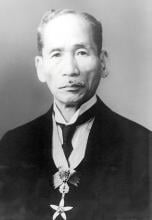
Umetaro Suzuki (7 April 1874 – 20 September 1943) was a Japanese scientist best remembered for his research on beriberi, a disease caused by vitamin B1 deficiency, characterized by limb stiffness, paralysis and pain.
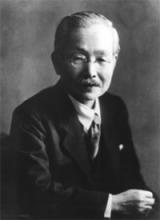
Kikunae Ikeda (8 October 1864 – 3 May 1936) was a Japanese chemist who discovered the fifth basic taste, umami.
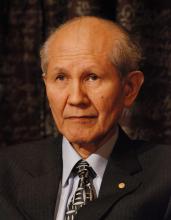
Osamu Shimomura (27 August 1928 – 19 October 2018) was a Japanese organic chemist and marine biologist who dedicated his career to understanding how organisms emitted light.
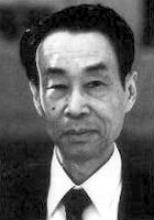
Motoo Kimura (13 November 1924 – 13 November 1994) was a Japanese theoretical population geneticist who is best remembered for developing the neutral theory of molecular evolution.

Chika Kuroda (24 March 1884 – 8 November 1968) was a Japanese chemist whose research focussed on the structures of natural pigments.
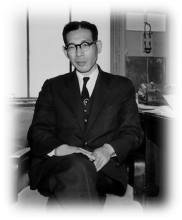
The field of solid-state ionics originated in Europe, but Takehiko Takahashi of Nagoya University in Japan was the first to coin the term ‘solid ionics’ in 1967. ‘Solid-state ionics’ first appeared in 1971 in another of his papers, and was likely a play on ‘solid-state electronics’, another rapidly growing field at the time.
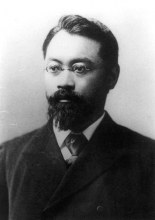
The techniques that make industrial pearl culturing possible were developed over a century ago at the Misaki Marine Biological Station in Japan. The station’s first director, Professor Kakichi Mitsukuri, emphasized to Kokichi Mikimoto in 1890 that stimulating pearl sac formation was important for pearl growth, and they went on to successfully develop methods for culturing pearls.
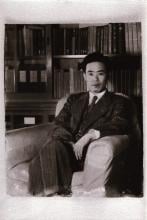
Japanese physicist Ukichiro Nakaya (1900-1962) made the world’s first artificial snowflakes. He started his research on snow crystals in the early 1930s at Hokkaido University, where there is an unlimited supply of natural snow in winter. By taking over 3,000 photographs, he established a classification of natural snow crystals and described their relationship with weather conditions.
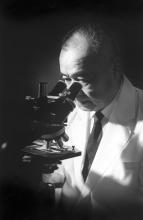
Minoru Shirota (April 23, 1899 – March 10, 1982) was a Japanese microbiologist who invented the popular fermented drink Yakult.
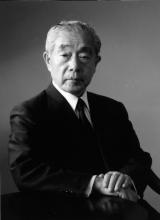
Japanese chemist Kenichi Fukui (4 October 1918 – 9 January 1998) was the first Asian scientist to be awarded the Nobel Prize in Chemistry. Together with Roald Hoffman, he received this honour in 1981 for his independent research into the mechanisms of chemical reactions.
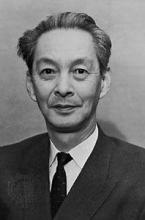
Shinichiro Tomonaga (31 March 1906 – 8 July 1979), together with Richard Feynman and Julian Schwinger, was awarded the Nobel Prize in Physics in 1965, for their contributions to advance the field of quantum electrodynamics. Tomonaga was also a strong proponent of peace, who actively campaigned against the proliferation of nuclear weapons and promoted the peaceful use of nuclear energy.
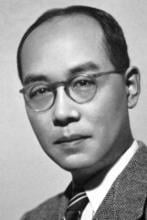
Hideki Yukawa (23 January 1907 – 8 September 1981) was awarded the Nobel Prize in Physics in 1949 for predicting the existence of the pi meson subatomic particle. Japan’s first Nobel laureate, Yakawa also expressed his support for nuclear disarmament by signing the Russell–Einstein Manifesto in 1955.
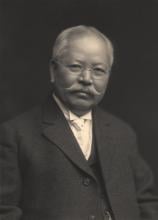
Japanese chemist Takamine Jokichi (3 November 1854 – 22 July 1922) founded the Tokyo Artificial Fertilizer Company, where he isolated a starch-digesting enzyme (named takadiastase) from the fungus Aspergillus oryzae.
Tsuneko (7 June 1933) and Reiji Okazaki (8 October 1930 – 1 August 1975) were a Japanese couple who discovered Okazaki fragments – short sequences of DNA that are synthesized during DNA replication and linked together to form a continuous strand.
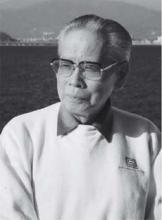
A Japanese surgeon, Tetsuzo Akutsu (20 August 1922 – 9 August 2007) built the first artificial heart capable of keeping an animal alive.
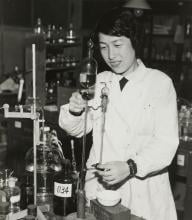
Japanese geochemist Katsuko Saruhashi developed the first method and tools for measuring carbon dioxide in seawater