

Japan
News

10 Jul 2024
Osaka Metropolitan University
Researchers from Japan discover a new enzyme with promising antibacterial activity

10 Jul 2024
Osaka Metropolitan University
First epidemiological study on incidence of EoE in Japan

08 Jul 2024
Osaka Metropolitan University
Potential benefits of method include subjecting patients to fewer exams and reducing health care costs

05 Jul 2024
Kanazawa University
Researchers at Nano Life Science Institute (WPI-NanoLSI), Kanazawa University report in Small Methods the 3D imaging of a suspended nanostructure. The technique used is an extension of atomic force microscopy and is a promising approach for visualizing various 3D biological systems.

04 Jul 2024
The University of Osaka
A team led by Osaka University discovered that the new organic molecule thienyl diketone exhibits high-efficiency phosphorescence, achieving a rate over ten times faster than traditional materials. This breakthrough provides new guidelines for developing rare metal-free organic phosphorescent materials, promising advancements in applications like organic EL displays, lighting, and cancer diagnostics.

04 Jul 2024
Ehime University
In this study, the crystal structure of serpentine (antigorite) was investigated using first-principles calculations under pressure. The results showed that the structure and chemical composition of antigorite changed gradually under high pressure, and it is highly likely that water was released by these structural changes during the subduction process. It was shown that the changes in the modulated structure (polysome) reported in this study may explain the distribution of intermediate-depth earthquakes reported by observations.

04 Jul 2024
Institute of Industrial Science, The University of Tokyo (UTokyo-IIS)
Researchers at the Institute of Industrial Science, The University of Tokyo implement a genetic algorithm to automatically design phononic crystals with desired vibrational properties, which may help with future computer and communication devices

04 Jul 2024
Ehime University
Sound velocities in lunar mantle aggregates at simultaneous high pressures and temperatures suggests the presence of garnet in the deep lunar interior

02 Jul 2024
The University of Osaka
Osaka University researchers developed molecules, called splice-switching oligonucleotides (SSOs) that bind to the RNA molecules encoding a protein known as REST. In neuroendocrine tumors, these RNAs are incorrectly spliced together, which supports the cancerous phenotype. When injected into tumors in laboratory mice, SSOs could help restore normal REST function, leading to reduced tumor size. This novel approach is a promising new tool for treating neuroendocrine tumors that do not respond to conventional therapies.

02 Jul 2024
Osaka Metropolitan University
Results compare favorably with conventional microscopic method, with added benefit of shorter operative times, less blood loss

30 Jun 2024
The University of Osaka
Researchers from Osaka University have identified that the loss of the Men1 gene is key in the development of osteoporosis, fragile bones occurring with age. They developed a mouse model of age-related cellular aging, or ‘senescence’, in the bone for the first time. This showed that cellular senescence of bone-forming osteoblasts leads to osteoporosis due to an imbalance between the activities of bone formation and bone resorption, opening avenues for drug intervention and novel treatments.

28 Jun 2024
Tohoku University
Bringing us one step closer to solving the “missing satellites problem,” researchers at Tohoku University and abroad have discovered two new satellite galaxies.

26 Jun 2024
Ehime University
We performed in situ X-ray observations of the unit-cell volume of SiO2 stishovite in a water-saturated system using a multi-anvil apparatus. The results revealed that the unit-cell volume expanded excessively at temperatures lower than 600°C, but it decreased with increasing temperature and time. Therefore, water dissolution into SiO2 stishovite is likely a metastable phenomenon and stishovite is unlikely to be a major water carrier, at least up to uppermost lower mantle conditions.

26 Jun 2024
Hiroshima University
Stars blinking code in Netflix’s “3 Body Problem” may be sci-fi, but by deciphering neutron stars’ erratic flickers, a new study has revealed the twisted origin of their mysterious “heartbeats.”

25 Jun 2024
Osaka Metropolitan University
Scientists show the interplays in late emerging adulthood between employment status, identity development and life satisfaction

24 Jun 2024
Osaka Metropolitan University
Approach could have applications for microchemistry, quantum dots

21 Jun 2024
Institute of Industrial Science, The University of Tokyo (UTokyo-IIS)
Researchers from France, Japan, and Italy have developed BiœmuS, a low-cost, flexible, and real-time biomimetic tool designed for biohybrid experiments. This system enables closed-loop interactions between artificial and living neural networks. Moreover, BiœmuS offers accessibility and ease of use, facilitating real-time emulation of neural network dynamics both in vitro and in vivo. This interdisciplinary collaboration aims to enhance bioelectrical therapeutics and neuroprosthetic development.

20 Jun 2024
Tohoku University
A special magnetic material was found to create terahertz waves four times more intense than conventional ones. This technology is expected to be used in a variety of industrial fields, including imaging, medical diagnostics, security inspection, and biotechnology.

19 Jun 2024
Ehime University
・In situ deformation experiments on olivine were performed using a high-flux synchrotron X-ray and a “mobile” multianvil apparatus at BL05XU, SPring-8.
・Transient creep of olivine aggregates follows the Burgers creep function at upper mantle pressures and temperatures.
・Time-dependent rheology of the shallow mantle observed in the late post-seismic deformation is explained by the Burgers model.

19 Jun 2024
Osaka Metropolitan University
Study suggests mycoviral infections affect the ecology of host oomycete

19 Jun 2024
Hiroshima University
Researchers have proposed using the levels of caffeine, a common household pollutant that isn’t otherwise found in the environment, to find likely sources of leaks in wastewater systems.

18 Jun 2024
Osaka Metropolitan University
Study shows fish may use punishment to promote help from their offspring

17 Jun 2024
Hiroshima University
Eye-contact has a significant impact on interpersonal evaluation, and online job interviews are no exception. In addition to the quality of a resume, the direction of the interviewee’s gaze might help (or hinder) their chances of securing the job.

17 Jun 2024
The University of Osaka
Researchers from Osaka University used theoretical calculations assessing electron orbital symmetry to synthesize new molecule designed to be both transparent and colorless while absorbing near-infrared light. This compound demonstrates the first systematic approach to producing such materials and have applications in advanced electronics. This compound also shows semiconducting properties.

17 Jun 2024
Institute of Industrial Science, The University of Tokyo (UTokyo-IIS)
Researchers from the Institute of Industrial Science, The University of Tokyo, have efficiently removed oxygen from high-oxygen-concentration titanium, which might help reduce the production cost of an otherwise versatile metal.

17 Jun 2024
Hokkaido University
A research paper titled ‘Disaster, survival and recovery: the resettlement of Tanegashima Island following the Kikai-Akahoya ‘super-eruption’, 7.3ka cal BP’ co-written by Hokkaido University GSI’s Professor Peter Jordan has been awarded the prestigious Ben Cullen Prize 2024 for making an “outstanding contribution” to World Archaeology.

14 Jun 2024
Osaka Metropolitan University
Theoretical simulations and synchrotron experiments reveal the hidden fingerprint of new magnets

12 Jun 2024
The University of Osaka
Researchers from Osaka University found that germ cells, which develop into eggs and sperm, drive sex-dependent differences in lifespan in vertebrates. Female and male germ cells increase and reduce lifespan, respectively. These effects are controlled via estrogen and growth factor hormones in females and vitamin D in males. Vitamin D supplementation extends lifespan in both males and females. The results clarify the link between reproduction and aging and show that vitamin D may improve longevity in vertebrates.

12 Jun 2024
Hokkaido University
The NSF Center for Molecularly Optimized Networks team, of which Professor Jian Ping Gong of the Faculty of Advanced Life Science and the Institute for Chemical Reaction Design and Discovery (WPI-ICReDD) at Hokkaido University is a member, has won a Horizon Prize from the Royal Society of Chemistry.

11 Jun 2024
Hokkaido University
The selective bond-breaking powers of enzymes bring new versatility for building nanoparticles with a wide range of technical and medical potential.
Researchers
Sorry, no researchers coming up for this topic.
Giants in history

Japanese biochemist Akira Endo (1933 – 2024) discovered the first statin, called mevastatin, which lowered cholesterol levels in the blood by inhibiting a key enzyme in the cholesterol biosynthesis pathway. His work laid the foundation for the development of statins to help patients lower their blood cholesterol levels and reduce their risk of heart disease or stroke.
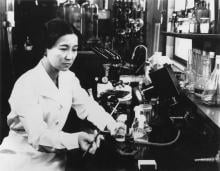
Ruby Sakae Hirose (1904 – 1960) was a Japanese-American scientist whose research contributed significantly to our understanding of blood clotting, allergies and cancer.

Haisako Koyama (1916 – 1997) was a Japanese solar observer whose dedication to recording sunspots – cooler parts of the sun’s surface that appear dark – produced a sunspot record of historic importance.
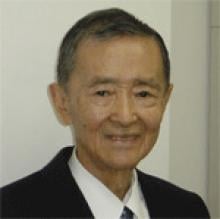
Michiaki Takahashi (17 February 1928 – 16 December 2013) was a Japanese virologist who developed the first chickenpox vaccine.

Toshiko Yuasa (11 December 1909 – 1 February 1980) was the first Japanese female physicist whose research on radioactivity shed light on beta decay – the process in which an atom emits a beta particle (electron) and turns into a different element.
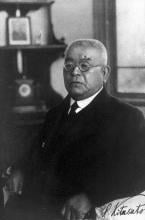
Baron Kitasato Shibasaburo (29 January 1856 – 13 June 1931) was a Japanese physician and bacteriologist whose work led to a new understanding of preventing and treating tetanus, diphtheria and anthrax.
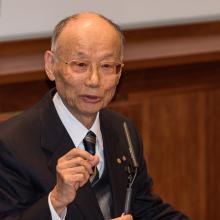
By isolating soil microorganisms and studying the compounds they produce, Satoshi Omura (born 1935) discovered almost 500 organic compounds with unique properties that were produced by these microorganisms, including many new antibiotics.
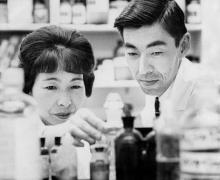
Husband and wife team, Kimishige (3 December 1925 – 6 July 2018) and Teruko Ishizaka (28 September 1926 – 4 June 2019) discovered the antibody class Immunoglobulin E (IgE) that triggers allergic reactions. They also discovered that IgE antibodies attach to white blood cells, known as mast cells, releasing histamine, which causes allergic reactions.
Husband and wife team, Kimishige (3 December 1925 – 6 July 2018) and Teruko Ishizaka (28 September 1926 – 4 June 2019) discovered the antibody class Immunoglobulin E (IgE) that triggers allergic reactions. They also discovered that IgE antibodies attach to white blood cells, known as mast cells, releasing histamine, which causes allergic reactions.
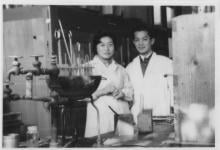
Reiji Okazaki (8 October 1930 – 1 August 1975) and Tsuneko (7 June 1933) were a Japanese couple who discovered Okazaki fragments – short sequences of DNA that are synthesized during DNA replication and linked together to form a continuous strand.
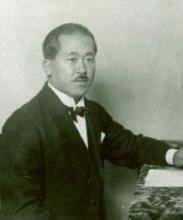
In 1915, Koichi Ichikawa along with pathologist Katsusaburo Yamagiwa became the first to prove that chronic exposure to chemicals can cause cancer.
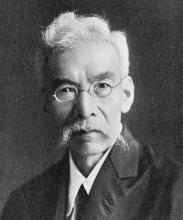
In 1915, pathologist Katsusaburo Yamagiwa and his research assistant Koichi Ichikawa became the first to prove that chronic exposure to chemicals can cause cancer.
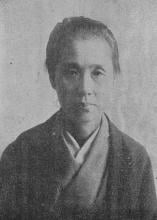
Ogino Ginko (3 March 1851 – 23 June 1913) was the first registered female doctor to practise modern medicine in Japan.

Michiyo Tsujimura (17 September 1888 – 1 June 1969) was a Japanese agricultural scientist and biochemist recognized for her research of green tea components.
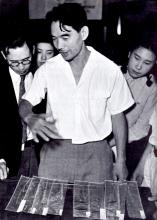
Hitoshi Kihara (1893 – 1986) was one of the most famous Japanese geneticists of the 20th century. One of his most significant contributions was identifying sex chromosomes (X and Y) in flowering plants.
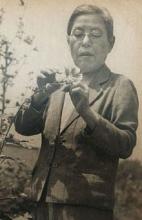
Kono Yasui (16 February 1880 – 24 March 1971) was a Japanese botanist who researched the genetics of poppies, corn and spiderworts and surveyed the plants that had been affected by the nuclear fallout after the atomic bombings of Hiroshima and Nagasaki.
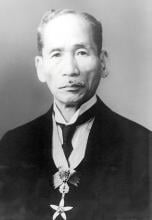
Umetaro Suzuki (7 April 1874 – 20 September 1943) was a Japanese scientist best remembered for his research on beriberi, a disease caused by vitamin B1 deficiency, characterized by limb stiffness, paralysis and pain.
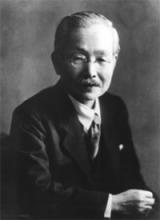
Kikunae Ikeda (8 October 1864 – 3 May 1936) was a Japanese chemist who discovered the fifth basic taste, umami.
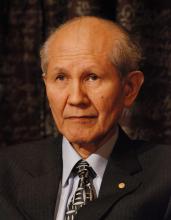
Osamu Shimomura (27 August 1928 – 19 October 2018) was a Japanese organic chemist and marine biologist who dedicated his career to understanding how organisms emitted light.
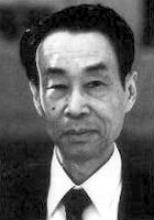
Motoo Kimura (13 November 1924 – 13 November 1994) was a Japanese theoretical population geneticist who is best remembered for developing the neutral theory of molecular evolution.

Chika Kuroda (24 March 1884 – 8 November 1968) was a Japanese chemist whose research focussed on the structures of natural pigments.
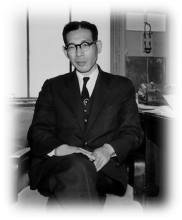
The field of solid-state ionics originated in Europe, but Takehiko Takahashi of Nagoya University in Japan was the first to coin the term ‘solid ionics’ in 1967. ‘Solid-state ionics’ first appeared in 1971 in another of his papers, and was likely a play on ‘solid-state electronics’, another rapidly growing field at the time.
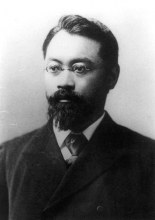
The techniques that make industrial pearl culturing possible were developed over a century ago at the Misaki Marine Biological Station in Japan. The station’s first director, Professor Kakichi Mitsukuri, emphasized to Kokichi Mikimoto in 1890 that stimulating pearl sac formation was important for pearl growth, and they went on to successfully develop methods for culturing pearls.

Japanese physicist Ukichiro Nakaya (1900-1962) made the world’s first artificial snowflakes. He started his research on snow crystals in the early 1930s at Hokkaido University, where there is an unlimited supply of natural snow in winter. By taking over 3,000 photographs, he established a classification of natural snow crystals and described their relationship with weather conditions.
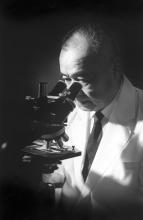
Minoru Shirota (April 23, 1899 – March 10, 1982) was a Japanese microbiologist who invented the popular fermented drink Yakult.
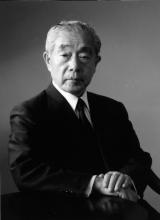
Japanese chemist Kenichi Fukui (4 October 1918 – 9 January 1998) was the first Asian scientist to be awarded the Nobel Prize in Chemistry. Together with Roald Hoffman, he received this honour in 1981 for his independent research into the mechanisms of chemical reactions.
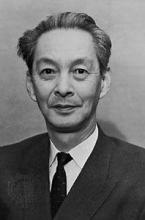
Shinichiro Tomonaga (31 March 1906 – 8 July 1979), together with Richard Feynman and Julian Schwinger, was awarded the Nobel Prize in Physics in 1965, for their contributions to advance the field of quantum electrodynamics. Tomonaga was also a strong proponent of peace, who actively campaigned against the proliferation of nuclear weapons and promoted the peaceful use of nuclear energy.
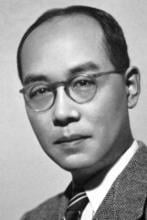
Hideki Yukawa (23 January 1907 – 8 September 1981) was awarded the Nobel Prize in Physics in 1949 for predicting the existence of the pi meson subatomic particle. Japan’s first Nobel laureate, Yakawa also expressed his support for nuclear disarmament by signing the Russell–Einstein Manifesto in 1955.
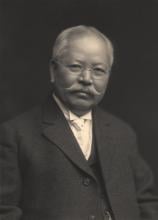
Japanese chemist Takamine Jokichi (3 November 1854 – 22 July 1922) founded the Tokyo Artificial Fertilizer Company, where he isolated a starch-digesting enzyme (named takadiastase) from the fungus Aspergillus oryzae.
Tsuneko (7 June 1933) and Reiji Okazaki (8 October 1930 – 1 August 1975) were a Japanese couple who discovered Okazaki fragments – short sequences of DNA that are synthesized during DNA replication and linked together to form a continuous strand.
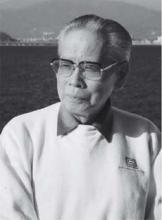
A Japanese surgeon, Tetsuzo Akutsu (20 August 1922 – 9 August 2007) built the first artificial heart capable of keeping an animal alive.
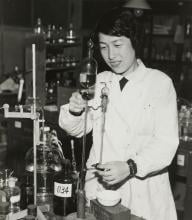
Japanese geochemist Katsuko Saruhashi developed the first method and tools for measuring carbon dioxide in seawater