

Japan
News

11 Jun 2024
Osaka Metropolitan University
Conversion to health care facilities shows correlation to population change

10 Jun 2024
The University of Osaka
In interpersonal relationships, people sometimes perceive that the other person understands them. When people feel this way, they are more willing to engage with the other person, but the reasons for this were not well understood. This study reveals that the psychological process for this feeling largely depends on a reduction in prejudice towards the other person. The results of this study may help us understand the psychological process behind reducing discrimination.

10 Jun 2024
The University of Osaka
Researchers from Osaka University used omnidirectional photoluminescence measurements to study the effect of carbon impurities in pure gallium nitride crystals. They found that the type of energy losses depends can switch at a critical value, which can help in the manufacture of more efficient devices.

07 Jun 2024
Osaka Metropolitan University
Machine learning helps find advantageous combination of salts and organic solvents

06 Jun 2024
Tohoku University
A new material developed by researchers at Tohoku University may be the key to quickly flag damaged infrastructure. This material offers a way to reduce the manpower required to regularly monitor structures that undergo daily use such as bridges. Compared to previous methods, this environmentally friendly material boasts the ability to operate without a power supply, and store information about previous incidents of mechanical stress. The application of this mechanoluminescent material is expected to make it easier and less costly to assess the safety of structures we may use in our everyday lives.

06 Jun 2024
Hokkaido University
Rapidus and Hokkaido University Sign Comprehensive Collaboration Agreement aiming to enhance scientific and technological capabilities and develop human resources through the semiconductor industry.

05 Jun 2024
The University of Osaka
Osaka University researchers discovered a correlation between high GDF15 levels in steatotic liver patients and increased liver cancer risk. Steatotic liver disease cases, fueled by lifestyle-related issues, have surged globally, with Japan reporting a significant prevalence. Elevated GDF15 levels also signify complication risks associated with liver cirrhosis. Combining GDF15 levels and FIB-4 index aids efficient liver cancer detection, potentially improving prognosis through early intervention.

05 Jun 2024
Ehime University
Experimental investigations on partition coefficients of first-transition row elements between olivine and silicate melt

05 Jun 2024
Hiroshima University
Fifteen years after Japan initiated efforts to attract younger people to rural areas, researchers assess its impact and the lessons it offers for global rural revitalization policies.

04 Jun 2024
Osaka Metropolitan University
Online group discussions, active learning help sustain healthy habits among countryside residents

04 Jun 2024
The University of Osaka
A research group at Osaka University developed a mixed reality (MR) system to intuitively share flooding forecasts, which can be visualized on mobile devices via server rendering. This system addresses the challenge of displaying detailed flood risks, enhancing understanding among both experts and the public. By offloading computational tasks to servers, the system allows for real-time MR visualization over large city areas, potentially integrating advanced features like deep learning to improve disaster resilience and public safety.

03 Jun 2024
The University of Osaka
A research group at Osaka University has developed an innovative positioning system that enhances the versatility and accuracy of drone-viewpoint mixed reality (MR) applications by aligning real and virtual world coordinates without predefined routes. By integrating visual positioning systems and natural feature-based tracking, this technology is expected to be applied to urban landscape simulation, maintenance, and inspection work.

30 May 2024
The University of Osaka
Research collaboration between Osaka University and Otsuka Pharmaceutical Co., Ltd. revealed that deletion of mRNA endonuclease Regnase-1 promoted NK cell anti-tumor activity via OCT2-dependent transcriptional up-regulation of Ifng mRNA. Associated with the deletion of Regnase-1 in NK cells, NK cells showed a high expression of OCT2 and CXCR6 in those that escaped from mRNA decay from Regnase-1, and they contributed to the transcriptional regulation of Ifng and NK cell persistence inside the tumor microenvironment, respectively. The loss-of-function strategy targeting Regnase-1 potentially enhances the production of cytotoxic proteins such as IFN-γ, granzymes, and perforin. This approach also promotes NK cell infiltration and persistence within the tumor, thereby facilitating the development of effective anti-tumor immunotherapy against solid tumors.

30 May 2024
The University of Osaka
Researchers from Osaka University probed the transit of cations across a nanopore membrane for the generation of osmotic energy. The team controlled the passage of cations across the membrane using a voltage applied to a gate electrode. This control allowed the cation-selective transport to be tuned from essentially zero to complete cation selectivity. The findings are expected to support the application of blue energy solutions for sustainable energy alternatives worldwide.

30 May 2024
The University of Osaka
Researchers from Osaka University combined computer simulations and transmission electron microscopy experiments to better understand the ordering mobility and formation of microstructure domains in Fe3Al alloy. They were able to correlate structural changes with heat treatment to understand how particular mechanical behavior can be achieved. This is expected to allow the superelastic properties of Fe3Al to harnessed for the 3D printing of construction materials for absorbing seismic activity.

27 May 2024
The University of Osaka
Osaka University is starting a Phase I clinical trial (first in human) for refractory prostate cancer using an astatine-labeled drug ([At-211]PSMA-5). This trial aims to evaluate the safety, pharmacokinetics, and efficacy of the new alpha therapy. Previous trials for thyroid cancer have been successful. The trial addresses the high unmet needs of prostate cancer patients and leverages Japan's ability to manufacture astatine. This innovative therapy promises fewer side effects and no need for hospitalization, potentially benefiting patients globally.

27 May 2024
Springer Nature’s latest survey, focused on Japan, shows a high proportion of Japanese researchers have access to research integrity training and builds on results from previous surveys that highlight data training as the greatest unmet need.
23 May 2024
Osaka Metropolitan University
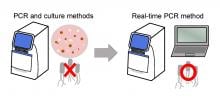
Novel real-time PCR method might become diagnostic tool targeting emerging bacterium responsible for food poisoning outbreaks

22 May 2024
The University of Osaka
Researchers from Osaka University have found that a specific pattern of brain activity, known as “sharp-wave ripples,” is associated with thoughts that wander from the present situation. This activity begins in the hippocampus, a crucial brain region for memory formation and recall, and is linked to more vivid and less desirable thoughts. A better understanding of the relationship between sharp-wave ripples and these kinds of thoughts might be helpful for treating related conditions.

21 May 2024
The University of Osaka
Researchers at Osaka University analyzed data from the Japan Gerontological Evaluation Study and found that socioeconomic status (SES) transitions affect dementia risk. Specifically, upward SES mobility is greater associated with reduced dementia risk and extended healthy aging with dementia-free lifespan, while downward mobility increases risk. The study of 9,186 participants found that lifestyle, comorbidities, and social factors mediate this relationship, highlighting the importance of SES in cognitive health and preventing dementia.
21 May 2024
Ehime University
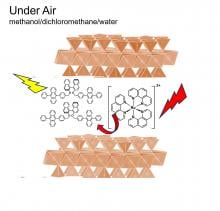
Achievement of stereoselective up-conversion processes using a chiral donor/acceptor pair in the presence of synthetic saponite
21 May 2024
Osaka Metropolitan University
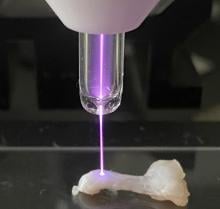
Promising results of helium plasma jet therapy on rats after surgery widen scope of method’s medical applications
20 May 2024
Osaka Metropolitan University
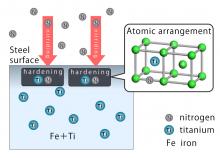
Calculations consider how a dozen metals such as titanium combine with nitrogen or carbon to form bonds

20 May 2024
The University of Osaka
Researchers from Osaka University found that the tyrosine kinase Csk plays a crucial role in regulating germinal center B cell signaling. Csk deletion in a mouse model led to increased ROS production and apoptosis, thereby inhibiting B cell affinity maturation.
16 May 2024
Hiroshima University
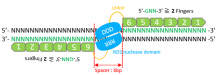
Genome editing is making inroads into biomedical research and medicine. By employing biomolecule modeling tools, a Japanese research team is accelerating the pace and cutting the cost of zinc finger nuclease (ZFN) technology, a primary gene editing tool.
16 May 2024
Osaka Metropolitan University
Naturally derived antioxidants improve growth of yeast strain in presence of ethanol

16 May 2024
Institute of Industrial Science, The University of Tokyo (UTokyo-IIS)
Researchers at the Institute of Industrial Science, The University of Tokyo, enhance land surface maps to identify sloping landscapes in which vegetation changes are associated with slight elevation and water gradients.
15 May 2024
Hokkaido University
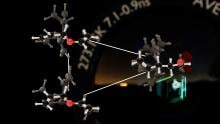
New research employs shutter speed analogies to validate 55-year-old theory about chemical reaction rates.
14 May 2024
Osaka Metropolitan University
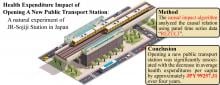
Time series data and causal impact algorithm reveal the effectiveness of a new transit station over a four-year period
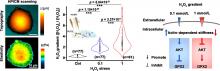
13 May 2024
Kanazawa University
In a recent study published in the multidisciplinary academic journal Science Bulletin, a semi-monthly high-caliber peer-reviewed research outlet covering a broad range of natural sciences and high-tech fields, researchers from the Nano Life Science Institute (WPI-NanoLSI) at Kanazawa University utilized hopping probe scanning ion conductance microscopy (HPICM) and highly sensitive platinum-functionalized nanoelectrodes to conduct an in-depth investigation of the dynamic response of individual living colorectal cancer Caco-2 cells to changes in intracellular and extracellular hydrogen peroxide (H2O2) gradients, specifically focusing on eustress, at the single-cell level and in real-time. Their findings hold promise for innovative therapies against cancer and H2O2-related inflammatory diseases.
Researchers
Sorry, no researchers coming up for this topic.
Giants in history

Japanese biochemist Akira Endo (1933 – 2024) discovered the first statin, called mevastatin, which lowered cholesterol levels in the blood by inhibiting a key enzyme in the cholesterol biosynthesis pathway. His work laid the foundation for the development of statins to help patients lower their blood cholesterol levels and reduce their risk of heart disease or stroke.
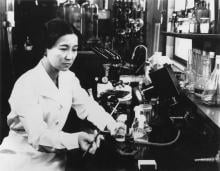
Ruby Sakae Hirose (1904 – 1960) was a Japanese-American scientist whose research contributed significantly to our understanding of blood clotting, allergies and cancer.
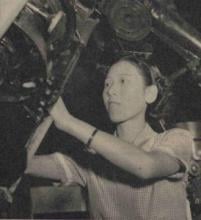
Haisako Koyama (1916 – 1997) was a Japanese solar observer whose dedication to recording sunspots – cooler parts of the sun’s surface that appear dark – produced a sunspot record of historic importance.
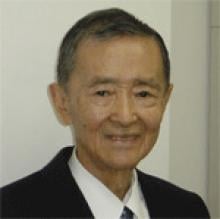
Michiaki Takahashi (17 February 1928 – 16 December 2013) was a Japanese virologist who developed the first chickenpox vaccine.
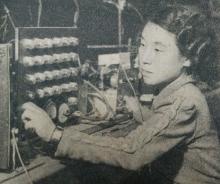
Toshiko Yuasa (11 December 1909 – 1 February 1980) was the first Japanese female physicist whose research on radioactivity shed light on beta decay – the process in which an atom emits a beta particle (electron) and turns into a different element.
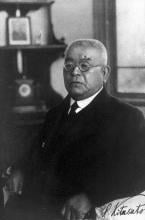
Baron Kitasato Shibasaburo (29 January 1856 – 13 June 1931) was a Japanese physician and bacteriologist whose work led to a new understanding of preventing and treating tetanus, diphtheria and anthrax.
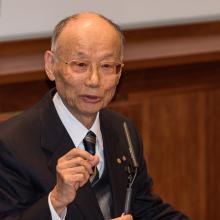
By isolating soil microorganisms and studying the compounds they produce, Satoshi Omura (born 1935) discovered almost 500 organic compounds with unique properties that were produced by these microorganisms, including many new antibiotics.
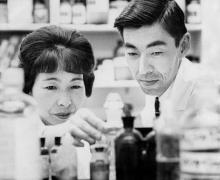
Husband and wife team, Kimishige (3 December 1925 – 6 July 2018) and Teruko Ishizaka (28 September 1926 – 4 June 2019) discovered the antibody class Immunoglobulin E (IgE) that triggers allergic reactions. They also discovered that IgE antibodies attach to white blood cells, known as mast cells, releasing histamine, which causes allergic reactions.
Husband and wife team, Kimishige (3 December 1925 – 6 July 2018) and Teruko Ishizaka (28 September 1926 – 4 June 2019) discovered the antibody class Immunoglobulin E (IgE) that triggers allergic reactions. They also discovered that IgE antibodies attach to white blood cells, known as mast cells, releasing histamine, which causes allergic reactions.
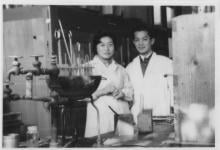
Reiji Okazaki (8 October 1930 – 1 August 1975) and Tsuneko (7 June 1933) were a Japanese couple who discovered Okazaki fragments – short sequences of DNA that are synthesized during DNA replication and linked together to form a continuous strand.
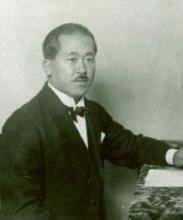
In 1915, Koichi Ichikawa along with pathologist Katsusaburo Yamagiwa became the first to prove that chronic exposure to chemicals can cause cancer.
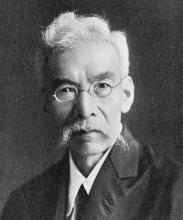
In 1915, pathologist Katsusaburo Yamagiwa and his research assistant Koichi Ichikawa became the first to prove that chronic exposure to chemicals can cause cancer.
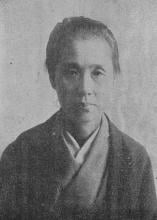
Ogino Ginko (3 March 1851 – 23 June 1913) was the first registered female doctor to practise modern medicine in Japan.
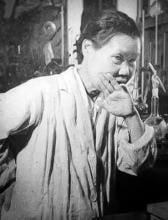
Michiyo Tsujimura (17 September 1888 – 1 June 1969) was a Japanese agricultural scientist and biochemist recognized for her research of green tea components.
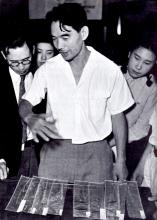
Hitoshi Kihara (1893 – 1986) was one of the most famous Japanese geneticists of the 20th century. One of his most significant contributions was identifying sex chromosomes (X and Y) in flowering plants.
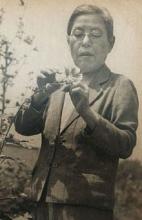
Kono Yasui (16 February 1880 – 24 March 1971) was a Japanese botanist who researched the genetics of poppies, corn and spiderworts and surveyed the plants that had been affected by the nuclear fallout after the atomic bombings of Hiroshima and Nagasaki.
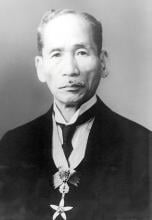
Umetaro Suzuki (7 April 1874 – 20 September 1943) was a Japanese scientist best remembered for his research on beriberi, a disease caused by vitamin B1 deficiency, characterized by limb stiffness, paralysis and pain.
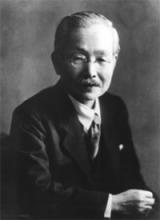
Kikunae Ikeda (8 October 1864 – 3 May 1936) was a Japanese chemist who discovered the fifth basic taste, umami.
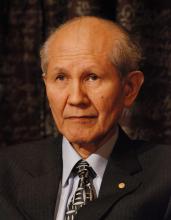
Osamu Shimomura (27 August 1928 – 19 October 2018) was a Japanese organic chemist and marine biologist who dedicated his career to understanding how organisms emitted light.
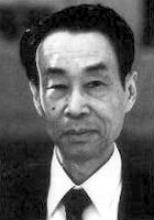
Motoo Kimura (13 November 1924 – 13 November 1994) was a Japanese theoretical population geneticist who is best remembered for developing the neutral theory of molecular evolution.

Chika Kuroda (24 March 1884 – 8 November 1968) was a Japanese chemist whose research focussed on the structures of natural pigments.
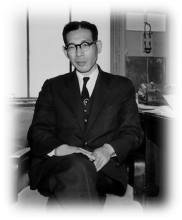
The field of solid-state ionics originated in Europe, but Takehiko Takahashi of Nagoya University in Japan was the first to coin the term ‘solid ionics’ in 1967. ‘Solid-state ionics’ first appeared in 1971 in another of his papers, and was likely a play on ‘solid-state electronics’, another rapidly growing field at the time.
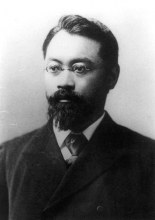
The techniques that make industrial pearl culturing possible were developed over a century ago at the Misaki Marine Biological Station in Japan. The station’s first director, Professor Kakichi Mitsukuri, emphasized to Kokichi Mikimoto in 1890 that stimulating pearl sac formation was important for pearl growth, and they went on to successfully develop methods for culturing pearls.
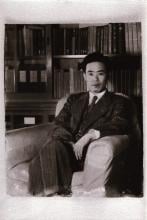
Japanese physicist Ukichiro Nakaya (1900-1962) made the world’s first artificial snowflakes. He started his research on snow crystals in the early 1930s at Hokkaido University, where there is an unlimited supply of natural snow in winter. By taking over 3,000 photographs, he established a classification of natural snow crystals and described their relationship with weather conditions.
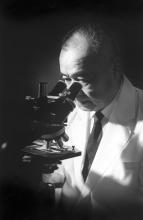
Minoru Shirota (April 23, 1899 – March 10, 1982) was a Japanese microbiologist who invented the popular fermented drink Yakult.
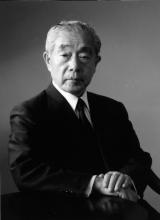
Japanese chemist Kenichi Fukui (4 October 1918 – 9 January 1998) was the first Asian scientist to be awarded the Nobel Prize in Chemistry. Together with Roald Hoffman, he received this honour in 1981 for his independent research into the mechanisms of chemical reactions.
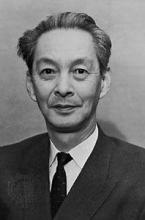
Shinichiro Tomonaga (31 March 1906 – 8 July 1979), together with Richard Feynman and Julian Schwinger, was awarded the Nobel Prize in Physics in 1965, for their contributions to advance the field of quantum electrodynamics. Tomonaga was also a strong proponent of peace, who actively campaigned against the proliferation of nuclear weapons and promoted the peaceful use of nuclear energy.
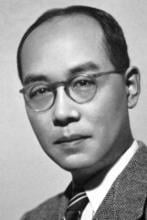
Hideki Yukawa (23 January 1907 – 8 September 1981) was awarded the Nobel Prize in Physics in 1949 for predicting the existence of the pi meson subatomic particle. Japan’s first Nobel laureate, Yakawa also expressed his support for nuclear disarmament by signing the Russell–Einstein Manifesto in 1955.
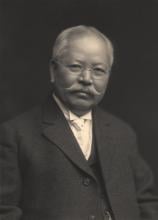
Japanese chemist Takamine Jokichi (3 November 1854 – 22 July 1922) founded the Tokyo Artificial Fertilizer Company, where he isolated a starch-digesting enzyme (named takadiastase) from the fungus Aspergillus oryzae.
Tsuneko (7 June 1933) and Reiji Okazaki (8 October 1930 – 1 August 1975) were a Japanese couple who discovered Okazaki fragments – short sequences of DNA that are synthesized during DNA replication and linked together to form a continuous strand.
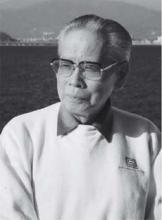
A Japanese surgeon, Tetsuzo Akutsu (20 August 1922 – 9 August 2007) built the first artificial heart capable of keeping an animal alive.
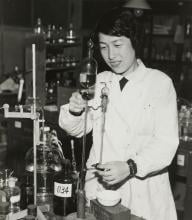
Japanese geochemist Katsuko Saruhashi developed the first method and tools for measuring carbon dioxide in seawater