

Chemistry
News
14 Nov 2022
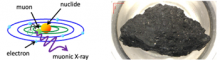
Muon non-destructive analysis of Asteroid Ryugu revealed the raw materials of solid matter at the outer regions of the early solar system. The samples contain less oxygen relative to silicon than typical CI chondrites, indicating that previous CI chondrite samples may have been contaminated by terrestrial materials, thus redefining the standard elemental composition of solid materials in the solar system.
09 Nov 2022
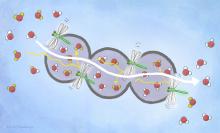
A flipping action in a porous material facilitates the passage of normal water to separate it out from heavy water.
08 Nov 2022
Comprehensive characterization of halogenated flame retardants and organophosphate esters in settled dust from informal e-waste and end-of-life vehicle processing sites
08 Nov 2022
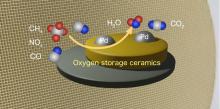
With the shift to electric cars a cumbersome process, improvements to exhaust gas purification in petrol or diesel cars are crucial in the fight to reduce emissions. A research group at Tohoku University’s Graduate School of Engineering has developed a Cerium-Zirconium-based oxide that boosts the purifying qualities of ceramics inside catalytic converters - a device attached to conventional cars that converts harmful gases to less-toxic pollutants.
03 Nov 2022
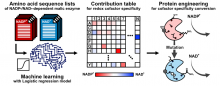
Researchers from Osaka University have demonstrated a proof-of-concept for a novel use of artificial intelligence for enzyme engineering that does not require an enzyme’s crystal structure. By analyzing the amino acid sequences of malic enzymes from various living organisms, the researchers identified the amino acids that are pertinent to using different redox cofactors. The results of this work will facilitate retooling enzymes in research laboratories and the biotech industry.
01 Nov 2022
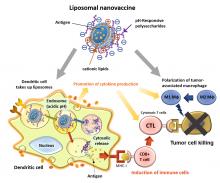
A research group at Osaka Metropolitan University has developed a drug delivery system that activates a strong cellular immune response to attack cancer cells, using one-tenth of the amount of antigen needed in the group’s previous work. By incorporating positively charged cationic lipids into liposomes and adding negatively charged pH-responsive polysaccharides to the surface, the research group increased the uptake efficiency of liposomes encapsulating cancer antigens by dendritic cells by approximately five times, which increased cytokine production by about 100 times. This increased M1-type macrophages, which activate cancer immunity, and decreased M2-type macrophages, which promote cancer growth.
26 Oct 2022
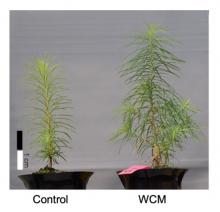
Plastic sheets coated with an Eu3+ film that converts UV light to red light were able to accelerate growth of vegetal plants and trees.
25 Oct 2022
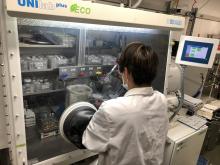
Making complex polymers with precisely controlled structures becomes much simpler thanks to a new ‘one-pot-and-one-step’ synthesis procedure.
19 Oct 2022
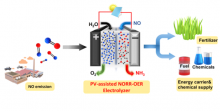
- Design and development of a hybrid core–shell electrocatalyst that converts air pollutants nitric oxide (NO) into ammonia (NH3).
- A strategy to ensure the stability of an electrocatalyst during the NO gas reduction process.
18 Oct 2022
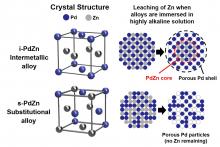
Osaka Metropolitan University researchers have created intermetallic alloy nanoparticles of palladium and zinc with an alternating arrangement of zinc and palladium atoms. The intermetallic alloy is more corrosion-resistant than substitutional alloys while retaining the electrocatalytic properties of both metals, which could be useful for developing new non-precious metal electrocatalysts.
18 Oct 2022
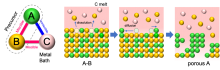
Hydrogen, a clean fuel, is incredibly dense in energy—three times more than diesel or gasoline. Its ability to power a sustainable future has been hindered by a lack of high performing catalysts. Now, a collaborative research group has developed nanoporous molybdenum-based intermetallic compounds that could address this conundrum.
14 Oct 2022
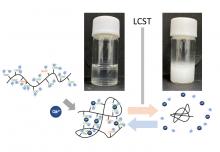
Osaka Metropolitan University scientists have created a novel thermoresponsive polymer by adding divalent cations to polymers and water solvents. They also succeeded in controlling thermoresponsive properties by changing the type and mixing ratio of ionic species. This new polymer type is expected to be applied as an analytical reagent for ion-sensing devices and as a material for drug delivery systems.

13 Oct 2022
The project will apply Indonesia’s Institut Teknologi Bandung's (ITB) specialized expertise in chemical reaction engineering to probe optimization of ammonia firing. Target set on achieving cleaner power generation in Indonesia, based on demonstration testing with H-25 gas turbine.

13 Oct 2022
Giants in History: Japanese chemist Takamine Jokichi (3 November 1854 – 22 July 1922) founded the Tokyo Artificial Fertilizer Company, where he isolated a starch-digesting enzyme (named takadiastase) from the fungus Aspergillus oryzae.
12 Oct 2022
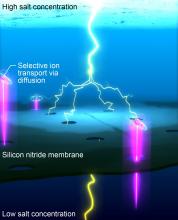
Osaka University researchers developed a power generation system based on osmotic flow of ions through a membrane riddled with tiny nanopores. By optimizing the size and distribution of the pores, the team demonstrated a way to obtain clean energy from the oceans.
11 Oct 2022
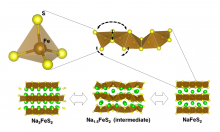
Osaka Metropolitan University scientists have successfully developed a new positive electrode material Na2FeS2, consisting of sodium, iron, and sulfur. During testing, batteries using the Na2FeS2 positive electrode had a high energy storage capacity and could be charged and discharged for more than 300 cycles. Because the Na2FeS2 is made of abundant inexpensive elements, it is expected to be used in all-solid-state sodium batteries with higher capacity and lower costs.
10 Oct 2022
A study led by Hong Kong Baptist University (HKBU) has revealed the association between rapidly fading antibody levels in some recovered COVID-19 patients and a high plasma concentration of a metabolite called glycylproline (gly-pro) and its producing enzyme.
03 Oct 2022
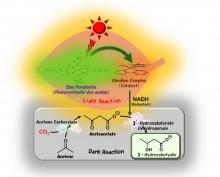
Osaka Metropolitan University scientists have successfully synthesized 3-hydroxybutyrate, a raw material for poly-3-hydroxybutyrate (PHB)—a strong, water-insoluble, biodegradable plastic used for packaging materials—from acetone and CO2. With a visible light-driven catalytic system utilizing sunlight and two biocatalysts, the researchers achieved a high conversion yield of about 80%. Mimicking natural photosynthesis, this study artificially reproduced a light reaction involving sunlight and a dark reaction fixing CO2 to synthesize the raw material for PHB. The finding is expected to contribute to solving the plastic waste problem and to reducing CO2.

29 Sep 2022
Linked lanthanides shine light on crystal engineering, New technique reveals hidden genome, Red, white and blue alerts for dangerous bacteria & Windows gain competitive edge over global warming. Read all in the September's Editor's Choice plus this month's Asia Research News 2022 magazine pick - Floating sensors to gather ocean data.
![[Figure 1] Comparison of the lithium-sulfur battery incorporating the porous silica/sulfur interlayer developed here with a lithium-sulfur battery prepared using a conventional conductive interlayer or polar interlayer.](https://www.asiaresearchnews.com/sites/default/files/styles/medium/public/articles_images/3.%20Photographic%20data%20related%20to%20research%20results.png?itok=SVnYo7fI)
27 Sep 2022
- The low-cost, high-energy, long-life lithium-sulfur battery is based on a novel silica/sulfur interlayer.
- The battery is expected to be used in next-generation mobile phones, drones, and electric vehicles owing to its high energy density and improved lifespan.

26 Sep 2022
Hokkaido University researchers find a new way of producing the industrially important propylene that is more energy efficient than existing approaches—and in the process turns carbon dioxide into another usable resource. Their pioneering catalyst design thus contributes to the carbon neutralization of the petrochemical industry.
22 Sep 2022
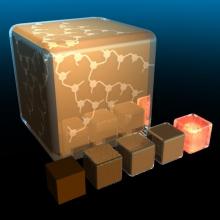
Researchers found a new way to reduce carbon dioxide (CO2) emissions by wrapping copper nanocubes with an organic layer, solving instability and selectivity problems with copper nanocubes in catalysis, and improving how this electrocatalyst converts CO2 into organic molecules.
12 Sep 2022
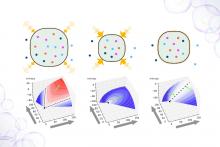
Researchers at The University of Tokyo create a geometric representation of thermodynamic systems and apply it to self-replicating processes, which may help improve our understanding of the physical constraints of living organisms
05 Sep 2022
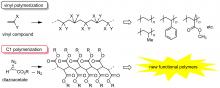
The research team directed by H. Shimomoto and E. Ihara in Ehime University successfully developed a new Pd-based initiating system affording carbon–carbon main-chain polymers bearing end-functional groups. This achievement will contribute to progress in the field of polymer chemistry and will allow us to develop new types of functional polymers.
29 Aug 2022
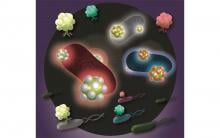
Osaka Metropolitan University scientists developed a simple, rapid method for identifying food poisoning-inducing bacteria based on color differences in the scattered light of composite structures consisting of gold, silver, and copper nanoparticles and polymer particles. Using these composites as test labels bound to specific bacteria, the researchers detected food poisoning bacteria E. coli O26, E. coli O157, and S. aureus as white, red, and blue scattered light, respectively, under the microscope. This new method enables simultaneous identification of multiple bacterial species within one hour, significantly shortening the usual 48-hour time requirement for conventional bacterial tests.
29 Aug 2022
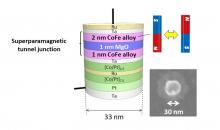
Tohoku University scientists in Japan have developed a mathematical description of what happens within tiny magnets as they fluctuate between states when an electric current and magnetic field are applied. Their findings, published in the journal Nature Communications, could act as the foundation for engineering more advanced computers that can quantify uncertainty while interpreting complex data.

26 Aug 2022
Researchers have made perovskite solar cells more efficient and stable, A new cause of Parkinson's related cell death, Hibernating superpower is in the blood, Common mechanism for cancer and atherosclerosis, COVID-19 antibody skin-based test. Read all in the August's Editor's Choice plus an Interview with Prof Sutee Yoksan on The story behind the new dengue vaccine & this month's Asia Research News 2022 magazine pick - The evolutionary history of puddle frogs.

23 Aug 2022
Two new approaches could help scientists use existing sequencing technology to better-distinguish RNA changes that affect how their genetic code is read.
22 Aug 2022
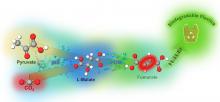
Osaka Metropolitan University researchers have successfully synthesized fumarate (fumaric acid), a raw material for unsaturated polyester resin, by combining carbon dioxide (CO2) with pyruvate (derived from biomass), using two biocatalysts: malate dehydrogenase and fumarase. Fumarate is currently used to make biodegradable plastic like polybutylene succinate from petroleum. However, this research has enabled the synthesis of fumarate without petroleum, consuming only CO2 and biomass-derived pyruvate.
19 Aug 2022
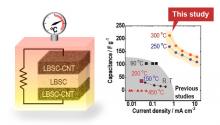
A research group led by Professor Akitoshi Hayashi at the Osaka Metropolitan University Graduate School of Engineering has successfully developed a high-capacity capacitor, an energy storage device—using a solid electrolyte with high deformability—that can operate at high temperatures. With this discovery, high-capacity capacitors can now be made which do not require cooling, this increases their efficiency and allows for new suitable applications.
Events
Sorry, nothing coming up for this discipline
Researchers
Sorry, nothing coming up for this discipline
Giants in history
Sorry, nothing coming up for this discipline