

Chemistry
News
16 Feb 2023
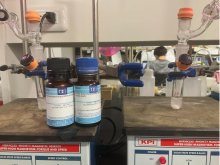
Amide bonds are important functional groups in medicinal chemistry and account for roughly 16% of all reactions performed in drug-discovery research. Some amide bond reactions using pharmaceutically important nitrogen-containing heterocyclic compounds, such as indole, carbazole and pyrrole, rather than amines are not efficient using conventional production methods. In a recent study, a team of leading chemists developed a novel one-pot reaction to efficiently form amide bonds using low-reactivity, nitrogen-containing heterocyclic compounds and carboxylic acid without special equipment or heat.
14 Feb 2023
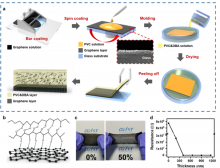
- Elastic Triboelectric Tactile Sensor Development Using Graphene Electrode Unaffected by Elasticity
- Published in 'Nano Energy' as a Technology to Produce Precise Sensors by Supplementing the Output Change Problem of Sensors Deformed by Human Activity

08 Feb 2023
Hokkaido University researchers have developed a novel method to design and develop peptide antibiotics in large numbers, which will prove critical to controlling antibiotic resistance.
07 Feb 2023
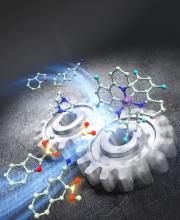
Two catalysts working in tandem enable inexpensive formate salts to perform difficult dearomative reactions, giving products potentially useful for drug development.
06 Feb 2023
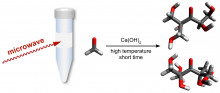
Researchers from Osaka University expanded the synthetic toolkit for preparing valuable chemical precursors from renewable feedstocks. They used microwave irradiation to dramatically improve the selectivity of the formose reaction, forming a simple six- and seven-carbon mixture that can be readily purified. These findings will help the chemicals industry minimize the use of fossil resources and improve the sustainability of manufacturing processes.
03 Feb 2023
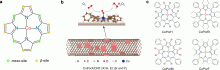
Traditional hydrogen peroxide production is energy and emission intensive, and so scientists have sought to synthesize it electrochemically. But tailoring the cobalt-nitrogen-carbon (Co-N-C) catalyst has been challenging. Using a theoretical prediction, which was then experimentally verified, an international research group has designed a Co-N-C catalyst that alleviates this problem.
03 Feb 2023
Researchers used a chemical synthesis robot and computationally cost effective A.I. model to successfully predict and validate highly selective catalysts.
02 Feb 2023
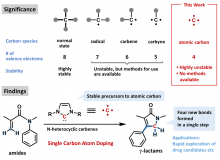
Researchers from Osaka University have used single carbon atom doping to form four chemical bonds in one step. Gamma-lactams (cyclic molecules that are common in antibiotics) were easily synthetically accessible from alpha, beta-unsaturated amides (an important molecule in cancer progression). The team chemically modified an anti-seizure medication in 96% yield, highlighting the work's utility to otherwise synthetically complex aspects of pharmaceutical development. The results of this work could become foundational to drug discovery and development.
31 Jan 2023
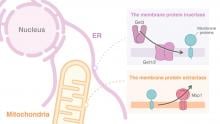
Researchers from Osaka University have shown that a system known as the GET pathway is essential for efficient mitophagy, the process by which mitochondria are removed from cells. The GET pathway targets a protein assembly called the Ppg1–Far complex, which inhibits mitophagy, to the membrane of a part of the cell called the endoplasmic reticulum. When the GET pathway is defective, this complex instead becomes targeted to mitochondria, where it acts to suppress mitophagy.

30 Jan 2023
Everyday electronics, such as our phones, employ surface acoustic wave devices for frequency filtering and sensing. But this consumes a lot of energy, serving as a drain on battery life. Now, a team of researchers has developed a new acoustic waveguide based on the mathematical concept of topology, which will help alleviate this problem.
25 Jan 2023
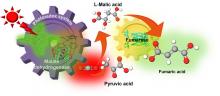
Osaka Metropolitan University scientists have succeeded in synthesizing fumaric acid, a raw material for plastics, from CO2 powered by solar energy—for the first time. Typically, fumaric acid is synthesized from petroleum as a raw material to make polybutylene succinate, a biodegradable plastic, but this research shows that it can be synthesized from CO2 and biomass-derived compounds using renewable energy.
24 Jan 2023
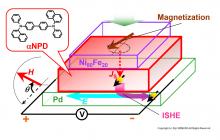
A research group, at the Osaka Metropolitan University Graduate School of Engineering, has succeeded in measuring spin transport in a thin film of αNPD molecules—a material well-known in organic light emitting diodes—at room temperature. They found that this thin molecular film has a spin diffusion length of approximately 62 nm, a length that could have practical applications in developing spintronics technology. In addition, while electricity has been used to control spin transport in the past, the thin molecular film used in this study is photoconductive, allowing spin transport control using visible light.
20 Jan 2023
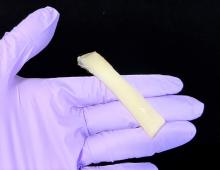
The natural abilities of squid tissues and the creativity of chemists combine to take hydrogel research in new directions.
19 Jan 2023
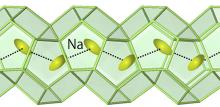
Controlling a material’s thermal conductivity can help insulate our homes, improve the performance of electronic devices, conserve power consumption in cars, and generate greater power efficiency. Now, a group of researchers has unveiled a novel mechanism that leads to further suppression of thermal conductivity in thermoelectric materials, something that will help develop new guidelines for producing high-performance thermoelectric materials.
13 Jan 2023
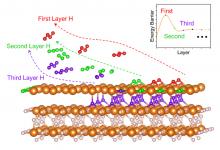
Magnesium hydride has long been touted for its potential to store large amounts of hydrogen, something essential if hydrogen is to play a role in powering a sustainable future. Yet, sluggish dehydrogenation kinetics and the high temperature required to decompose and produce hydrogen from the material have stymied its use. Now, researchers have identified why this is so, paving the way for future design guidelines and widespread commercial use.
06 Jan 2023
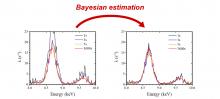
A research group at Osaka Metropolitan University has succeeded in significantly reducing the measurement time of a glass standard sample by applying Bayesian estimation to X-ray fluorescence analysis. The ability to perform rapid non-contact elemental analysis in a nondestructive manner could lead to the widespread use of this technique in many fields, including the analysis of moving industrial products and waste materials while being carried on conveyor belts.
29 Dec 2022
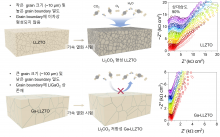
- DGIST Department of Energy Science and Engineering Professor Lee Jong-won's team developed oxide-based solid electrolyte technology with enhanced atmospheric stability
- Anticipating the development of high-performance/high-safety all-solid-state batteries... Published in ‘Energy Storage Materials’
16 Dec 2022
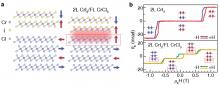
An international team of researchers has studied the heterostructures of layered antiferromagnets, painting a better picture of what happens when two different magnetic orders are combined.
16 Dec 2022
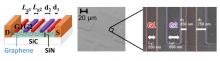
There is a small area on the electromagnetic spectrum occupied by terahertz waves, where conventional electronic devices struggle to operate. Still, engineering devices that can take advantage of terahertz waves are crucial for the development of future wireless technology such as 6G and 7G. Using a graphene transistor, a research team has successfully detected terahertz waves with a fast response and high sensitivity at room temperature.

15 Dec 2022
Understanding how bats tolerate viral infections, Material separates water from...water, The virtual sense of touch polished to next level and COVID-19 negatively impacted early-careers and female researchers. Read all in the December's Editor's Choice.

14 Dec 2022
- Time Energy Solution Co., Ltd. develops a general consumer-friendly hydrogen fuel generator (Eco-Friendly Hydrogen Fuel Cell Generator)
- Wins CES 2023 Award for Innovation in ‘Sustainability, Eco Design & Smart Energy’ with ‘Eco-friendly Hydrogen Fuel Cell Generator’
14 Dec 2022
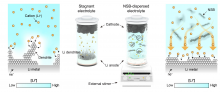
- DGIST Professor Lee Hong-Kyung's joint research team develops convection-induced new concept electrolyte through magnetic nanoparticles, dramatically improving the lifespan of next-generation lithium metal batteries
- Recognized for its excellence, selected as the cover study in the prestigious international journal ‘Advanced Functional Materials’
13 Dec 2022
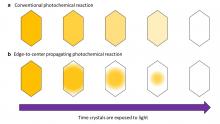
A research group at Osaka Metropolitan University has discovered that 2,5-distyrylpyrazine (DSP) crystals undergo a unique photoreaction. Normally, photoreactive color changes proceed uniformly throughout photomechanical molecular crystals, so that all parts of each crystal change color at the same time. However, when light shines evenly on a DSP crystal, the photoreaction propagates from edge to center, deviating from conventional photochemistry models. The group found that this phenomenon was caused by a surface effect and a cooperative effect, which make reactivity extremely high for molecules at the crystal’s edge and those adjacent to molecules that have already changed color.
12 Dec 2022
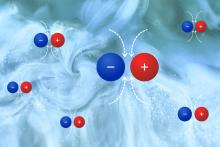
Researchers at The University of Tokyo show how including the effects of the surrounding water during the aggregation of charged particles can improve the accuracy of simulations, which may help elucidate biological self-assembly
01 Dec 2022
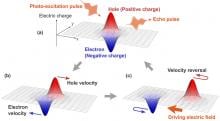
Precise control of quantum systems, such as quantum computers, is of great importance for modern quantum science. One way this has been done is via spin echoes. A research group has discovered a new type of echo, labelling them “energy-band echoes.”
01 Dec 2022
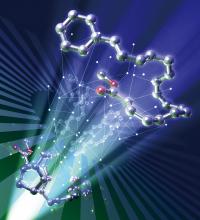
Automated reaction path search method predicts accurate stereochemistry of pericyclic reactions using only target molecule structure.
29 Nov 2022
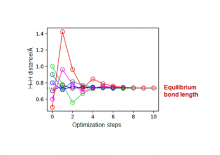
Using a quantum computer, Osaka Metropolitan University researchers utilized quantum logic circuits to directly calculate, in a single calculation, the energy difference between two molecular geometries. The developed method was then applied to execute the molecular geometry optimization of typical molecular systems. On a classical computer, calculations based on the finite difference method require at least two evaluations of the energy for one-dimensional systems, but previous research has shown that a quantum computer can be used to calculate the energy derivatives based on this method in a single calculation. However, quantum circuits relevant to quantum algorithms capable of performing the energy derivative calculations had not been implemented. The research group has successfully created a quantum circuit to calculate the energy derivatives by modifying the quantum circuit used in the previously developed quantum phase difference estimation algorithm.
28 Nov 2022
A Hong Kong Baptist University (HKBU) collaborative research team has synthesised a nanoparticle named TRZD that can perform the dual function of diagnosing and treating glioma in the brain. It emits persistent luminescence for the diagnostic imaging of glioma tissues in vivo and inhibits the growth of tumour cells by aiding the targeted delivery of chemotherapy drugs. The nanoparticle offers hope for the early diagnosis and treatment of glioma, especially cerebellar glioma, which is even harder to detect and cure with existing methods.

18 Nov 2022
Exploring virtual human-agent relationships, A fly protein gives clue for human cancers, Rare earth elements formed in neutron star mergers 💥, One-stop process for hydrogen production. Read all in the November's Editor's Choice plus Upcoming event K4DM KNOWLEDGE MARKETPLACE – Bangkok 2022: Exchanging Ideas for a Democratic Myanmar.
17 Nov 2022
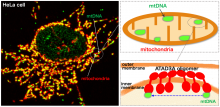
Researchers led by Osaka University have shown that a molecule known as ATAD3A is essential for the movement of genetic material inside cellular substructures called mitochondria. Appropriate distribution of this DNA, organized into “nucleoid” structures, is key for the generation of energy by the “respiratory chain” protein complex. This study opens up opportunities for developing new methods to alter nucleoid movement and affect mitochondrial function, thereby providing potential therapies against mitochondrial diseases.
Events
Sorry, nothing coming up for this discipline
Researchers
Sorry, nothing coming up for this discipline
Giants in history
Sorry, nothing coming up for this discipline