

Computer Science
News
27 Oct 2023
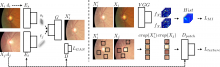
- Professor Park’s research team at DGIST has successfully developed domain-adaptive AI specialized in medical images
- Contributes to saving cost and time in developing deep learning models for multi-center medical image analysis
27 Oct 2023
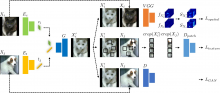
- The developed image translation model can yield accurate classification results despite the use of biased data for the training of a deep learning model.
- This solution is expected to be applied in various fields, such as self-driving, content creation, and medicine.
20 Oct 2023
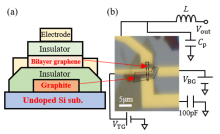
Graphene is often referred to as a wonder material for its advantageous qualities. But its application in quantum computers, while promising, is stymied by the challenge of getting accurate measurements of quantum bit states with existing techniques. Now, Tohoku University researchers have developed design guidelines that enable radio-frequency reflectometry to achieve high-speed electrical readouts of graphene nanodevices.
16 Oct 2023
The latest ‘large language model’ artificial intelligence system, GPT-4, could aid chemistry researchers, but limitations reveal the need for improvements.
05 Oct 2023
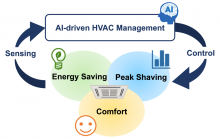
Researchers from Osaka University have developed a data-driven AI algorithm for controlling the heating and cooling of an office building. The system does not require ambient sensors or specific knowledge of the building’s rooms. During heating operations, the system was able to achieve energy savings of up to 30%, which can represent significant reductions to cost and environmental impact.
20 Sep 2023
Scientists have revealed that the outer part of our brain (the cortex) is skilled at managing all the info it gets from the outside world thanks to special groups of nerve connections called modules, which work together but also independently.
20 Sep 2023
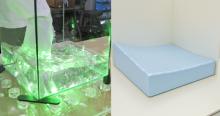
The physical laws of everyday water flow were established two centuries ago. However, scientists today struggle to simulate disrupted water flow virtually, e.g., when a hand or object alters its flow.
A research team from Tohoku University has harnessed the power of deep reinforcement learning to replicate the flow of water when disturbed. The replication allowed for recreating water flow in real time based on only a small amount of data, opening up the possibility for virtual reality interactions involving water.

15 Sep 2023
- Research team led by Professor Sanghyun Park at DGIST developed a deep-learning technology capable of accurately classifying the brain waves of a subject using only a small amount of data
- Contributes significantly to improving the utilization of deep-learning models, which require a large amount of data from subjects to classify brain waves
- Research findings have been published in IEEE Transactions on Neural Networks and Learning Systems, a world-renowned academic journal in the AI field
14 Sep 2023
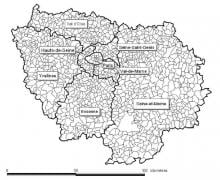
Researchers have explored the efficacy of combining solar panels on rooftops with electric vehicles acting as storage batteries in Paris and its surrounding areas, finding some encouraging results.
14 Sep 2023
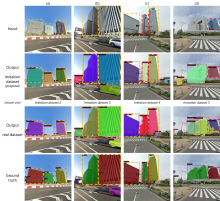
To address the lack of suitable training data for deep-learning semantic segmentation models in urban landscaping, researchers from Osaka University developed a method that generates a training dataset without the need for real images or a model of an existing city. The method, which is based on procedural modelling and image-to-image techniques, enables segmentation models to achieve comparable performance under some conditions at a fraction of the cost of real dataset generation.
13 Sep 2023
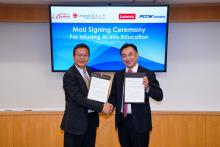
Lingnan University’s Faculty of Business signed a Memorandum of Understanding (MoU) with Lenovo PCCW Solutions (LPS), announcing a shared commitment to cultivating the next generation of tech talents. The partnership aims to capitalize on LPS’ experience as a leading technology solutions powerhouse to provide students with additional experience in AI and digital technologies, connecting the dots from academia to technology field adoption.

06 Sep 2023
Precisive real-time prediction of the movement of nearby vehicles or the future trajectory of pedestrians is essential for safe autonomous driving. A research team led by City University of Hong Kong (CityU) recently developed a novel AI system that improves predictive accuracy amid dense traffic and increases computational efficiency by over 85%, offering great potential for enhancing the safety of autonomous vehicles.
23 Aug 2023
The search for innovative materials will be greatly assisted by software that can suggest new experimental possibilities and also control the robotic systems that check them out.

17 Aug 2023
Japanese fossil forest found, AI finds a way to people’s hearts, Language diversity and child social development & Supplement for kidney disease. Plus Submissions open for Asia Research News 2024. Read all in the latest Editor's Choice.
16 Aug 2023
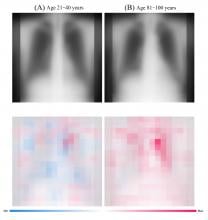
Osaka Metropolitan University scientists have developed an AI model that accurately estimates a patient’s age, using chest radiographs of healthy individuals collected from multiple facilities. Furthermore, they found a positive relationship between differences in the AI-estimated and chronological ages and a variety of chronic diseases, such as hypertension, hyperuricemia, and chronic obstructive pulmonary disease. In the future, it is expected that AI biomarkers will be developed to predict life expectancy, estimate the severity of chronic diseases, and forecast surgery-related risks.
09 Aug 2023
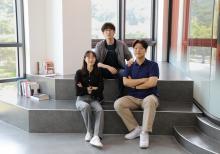
- Student startup Quester is selected for the Tech Incubator Program for Startup (TIPS), expecting to bring technological innovation in hand-tracking gloves
- DGIST rises as a leading college startup incubator by producing excellent student startups for several years
01 Aug 2023
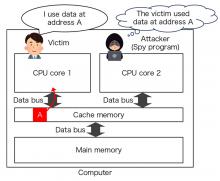
Cache side-channel attacks exploit vulnerabilities in computer operating systems and are notoriously difficult to counter. Now, a group of international researchers has a new and highly efficient cipher for cache randomization that helps strengthen computer security against these attacks
31 Jul 2023
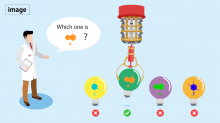
Researchers from Osaka University have demonstrated a proof-of-concept for identifying single nucleotides by using quantum computing. Molecular rotation patterns—and the corresponding variations in conductance—within the nanoscale gap between two electrodes enabled the development of a quantum gate for the nucleotide adenosine monophosphate. Developing quantum gates for the other three nucleotides, and incorporating this technology into DNA sequencing workflows, could revolutionize genome analysis.
06 Jul 2023
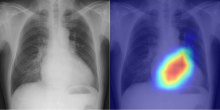
Osaka Metropolitan University scientists have successfully developed a model that utilizes AI to accurately classify cardiac functions and valvular heart diseases from chest radiographs. The Area Under the Curve, or AUC, of the AI classification showed a high level of accuracy, exceeding 0.85 for almost all indicators and reaching 0.92 for detecting left ventricular ejection fraction—an important measure for monitoring cardiac function.
04 Jul 2023
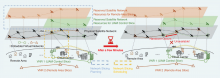
- Joint research team of DGIST Professor JeongHo Kwak and KAIST Professor Jihwan Choi develops a network slicing planning and handover technique for next-generation 6G low LEO satellite networks
- This work is expected to contribute to various services using satellite networks in the era of 6G satellite networks in the future such as Starlink and OneWeb
29 Jun 2023
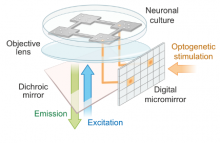
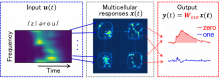
The brain is a highly efficient, sophisticated information processing system. To achieve maximum efficiency, it can store reservoirs of interconnected nodes that transform input signals into a more complex representation. This has inspired a theoretical computational model known as reservoir computing. A research team has recently harnessed this model to analyze the computational capabilities of an artificially cultured brain composed of neurons derived from the cerebral cortex of rats.
23 May 2023
Two key challenges in chemistry innovation are solved simultaneously by exploring chemical opportunities with artificial intelligence.
17 May 2023
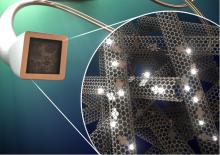
To improve the therapeutic techniques to treat those with brain disorders, researchers have developed microscopic, thermally-drawn microelectronic fiber-based neural probes as a means to manipulate both electrical and chemical signals in the brain. Now, a researcher from Tohoku University’s Frontier Research Institute for Interdisciplinary Sciences has led a group that increased the functionality of these fibers by equipping them with neurochemical sensing aptamers.
02 May 2023
Philip M. Parker, INSEAD Chaired Professor of Management Science and founder of the INSEAD AI lab called TotoGEO, has developed TotoPoetry – a poetry generator trained on a rule-oriented approach to AI.

10 Apr 2023
AI finds the first stars ✨were not alone, Auto-switch for large electronic devices, A metabolite against autoimmune diseases, & Converting fruit waste 🍊🍉into solar stills. Plus in our blog: A career worth doing, a life worth living. Read all in the latest Editor's Choice.

16 Mar 2023
Annual innovation event brings together global innovators, entrepreneurs, researchers and scientists, and experts from various fields and industries to showcase their latest innovations, share ideas, and collaborate with industries to develop better technologies and solutions to shape our future. This is also a platform for innovators to meet potential investors and partners.
10 Mar 2023
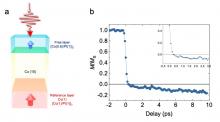
Researchers from the Université de Lorraine and Tohoku University have demonstrated sub-picosecond magnetization reversal in rare-earth-free spin valves. To date, ultra-fast magnetization control without using magnetic fields was only seen in material systems using rare-earth materials. But the recent breakthrough is expected to open up new pathways for developing ultra-fast and energy efficient applications.
10 Mar 2023
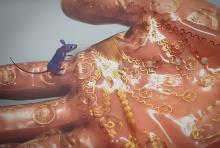
Tactile sensations could soon be coming to virtual reality, surgical robotics and prosthetic sensing.

10 Mar 2023
Machine learning algorithms allow analysis and characterization of the atomic arrangement of silicon surface superstructures without the need for human expertise.
03 Mar 2023
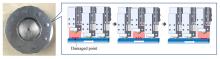
Moving parts in mechanical come into regular contact, leading to wear and tear. Now, researchers at Tohoku University have developed a contact control system, driven by artificial intelligence, to greatly reduce contact between damaged parts.
Events
Sorry, nothing coming up for this discipline
Researchers
Sorry, nothing coming up for this discipline
Giants in history
Sorry, nothing coming up for this discipline