

Computer Science
News

16 Sep 2024
A dedicated team of researchers from City University of Hong Kong (CityUHK) is pioneering cutting-edge generative artificial intelligence (GenAI) technologies on a collaborative innovation network platform, aimed at transforming science, technology and innovation (STI) services to empower research and innovation. This innovative project is set to revolutionise the related service delivery by creating a secure GenAI model and digitally transforming processes, thereby facilitating research development and technology innovation, while enhancing data security and service efficiency.

12 Sep 2024
To help freshmen acclimatise to their new environment and make the most of university, Lingnan University organised the Campus Life Carnival on 11 September being a part of the New Student Orientation. The carnival featured over 40 promotional booths set up by student societies, university teams, and various units, all aiming to help freshmen adjust to university life and foster mutual support network. Freshmen watched wonderful performances by student groups, such as the Lion Dance & Martial Arts Team, Judo Team, and the Music Society. More than 1,000 students participated in this joyful event. Prof S. Joe Qin, President and Wai Kee Kau Chair Professor of Data Science of Lingnan University, attended the event and visited the activity booths to meet students.

09 Sep 2024
SUTD researchers developed SGHateCheck, the first functional test specifically tailored to evaluate hate speech in the multilingual environments of Singapore and the broader Southeast Asia.

28 Aug 2024
Fujitsu and Osaka University accelerate progress toward practical quantum computing by significantly increasing computing scale through error impact reduction in quantum computing architecture

23 Aug 2024
A machine learning algorithm can use X-ray diffraction data from polymers to predict the behaviour of new materials.

22 Aug 2024
ChatGPT’s diagnostic capabilities evaluated in comparison to radiologists

07 Aug 2024
We are constantly surrounded by electromagnetic waves such as Wi-Fi. Researchers at Tohoku University tested a device to convert this ambient energy into energy for electronic devices.

06 Aug 2024
The competition in managing short video content on social media platforms and executing online marketing has intensified in recent years. Crafting eye-catching video titles and thumbnails to increase viewer engagement has become a crucial marketing strategy. A recent study by the Department of Marketing and International Business at Lingnan University titled “Clicks for money: Predicting video views through a sentiment analysis of titles and thumbnails” used artificial intelligence (AI) to show that thumbnails expressing strong sentiments tend to attract more views, while strong sentiments conveyed in video titles may have the opposite effect. Additionally, videos with punctuation, capital letters, and emojis in their titles tend to receive more clicks. The Lingnan research team suggests these findings indicate that specific strategies in producing video content can fully leverage their videos’ potential to boost viewership and enhance online marketing efforts.

02 Aug 2024
Growing use of AI reveals the need for global sustainability initiatives

16 Jul 2024
Inexperienced users of voice-controlled smart speakers face challenges due to lack of system feedback

11 Jul 2024
Researchers at Tohoku University and the UK developed a model showing the ability of reconfigurable intelligent surfaces to redirect the propagation of radio waves, which could improve the signal.

09 Jul 2024
Decoding dead stars’ “heartbeats”, Why do females live longer? DNA controller for molecular robots, Earliest twin quasars found. Read all in the latest Editor's Choice. Plus July's SciCom Coffee with A*STAR's Lisa Chong and get the early bird price to be in Asia Research News 2025.

08 Jul 2024
Potential benefits of method include subjecting patients to fewer exams and reducing health care costs

27 Jun 2024
The first-ever Lingnan-Yuanpei STEM Summer Academy, organised jointly by Lingnan University in Hong Kong and Yuanpei College of Peking University (PKU), held a seven-day Innovation and Entrepreneurship Training Camp-cum-STEM Competition from 22 to 28 June. Thirty of the best students from both universities formed five teams to compete on various innovative and entrepreneurial smart green technological projects. After a tight race, the project “Sustainable Green Building” team won the championship prize, and the chance to be nominated for the Lingnan University Entrepreneurship Fund, and will be put up for an application for seed or incubation funds.

17 Jun 2024
Eye-contact has a significant impact on interpersonal evaluation, and online job interviews are no exception. In addition to the quality of a resume, the direction of the interviewee’s gaze might help (or hinder) their chances of securing the job.

14 Jun 2024
Researchers from Tohoku University and Kyoto University have succeeded in developing a DNA–based molecular controller. Crucially, this controller enables the autonomous assembly and disassembly of molecular robots, as opposed to manually directing it.

07 Jun 2024
Machine learning helps find advantageous combination of salts and organic solvents

07 Jun 2024
Blue energy future, Off switch for brain cells, New Japanese lily species, Generative AI in motion, Economies take off with new airports and Braille-shaped electrodes for retinal implants. Read all in the latest Editor's Choice. Plus SciCom Coffee with Catriona Child.

06 Jun 2024
Rapidus and Hokkaido University Sign Comprehensive Collaboration Agreement aiming to enhance scientific and technological capabilities and develop human resources through the semiconductor industry.

02 Jun 2024
Expected to enable rapid and accurate verification of videos collected and distributed online.
- Professor In-kyu Moon’s research team received about 4.8 billion KRW over 2 years and 9 months from the Ministry of Science and ICT, and the project commenced in April 2024.

29 May 2024
An SUTD professor and his collaborators propose a new tree-inspired one-time password scheme that provides security and privacy while supporting changing user environments.
21 May 2024
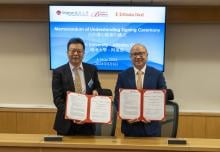
To improve innovation and technology education, Lingnan University and Alibaba Cloud, the digital technology and intelligence backbone of Alibaba Group, have announced a partnership and recently held a Memorandum of Understanding (MoU) signing ceremony at Lingnan University. The MoU, a milestone in their collaboration, was signed by Prof Leng Mingming, Dean of the Faculty of Business and Chair Professor of Operations and Risk Management of Lingnan University, and Mr Leo Liu, Vice-President of International Business and General Manager of North APAC Region at Alibaba Cloud.
20 May 2024
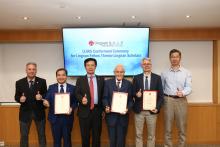
Lingnan University held the Lingnan University Institute for Advanced Study (LUIAS) conferment ceremony today (20 May). Prof Alain Bensoussan, Lars Magnus Ericsson Chair and the Director of International Centre for Decision and Risk Analysis (ICDRiA) at the University of Texas at Dallas, had the title of Lingnan Fellow conferred upon him, and Prof Joshua Mok Ka-ho, Vice-President and Lam Man Tsan Chair Professor of Comparative Policy of Lingnan University, and Prof Tsui Kwok-leung, Professor of the Grado Industrial and Systems Engineering of Virginia Polytechnic Institute and State University (Virginia Tech), were named Senior Lingnan Scholars in recognition of their important achievements in scholarly accomplishments.
20 May 2024
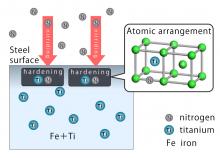
Calculations consider how a dozen metals such as titanium combine with nitrogen or carbon to form bonds

19 May 2024
- Professor Sanghyun Park’s research team in the Department of Robotics and Mechatronics Engineering successfully developed a novel AI model that can effectively utilize medical images from multiple healthcare institutions with the knowledge distillation technique based on federated learning
- Findings were published in Medical Image Analysis (MedIA), one of the top journals in medical AI
14 May 2024
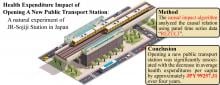
Time series data and causal impact algorithm reveal the effectiveness of a new transit station over a four-year period
09 May 2024
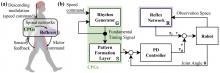
Walking and running is notoriously difficult to recreate in robots. Now, a group of researchers has overcome some of these challenges by creating an innovative method that employs central pattern generators - neural circuits located in the spinal cord that generate rhythmic patterns of muscle activity - with deep reinforcement learning. The method not only imitates walking and running motions but also generates movements for frequencies where motion data is absent, enables smooth transition movements from walking to running, and allows for adapting to environments with unstable surfaces.
19 Apr 2024
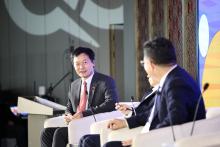
Lingnan University in Hong Kong has participated in the two-day QS China Summit 2024 from 17 to 18 April in Shanghai to explore how universities can contribute to China’s global leadership in higher education. The main theme of the summit is “Remaining Distinct in Global Higher Ed: China’s Place in the New World of Education”. As part of efforts to strengthen Lingnan’s international visibility, the University hosted a President Panel Discussion titled "Fostering Distinction in Chinese Higher Education Through Digital Innovation". The Panel provided an exceptional platform for discussions on Chinese higher education within the rapidly evolving field of digital innovation.
17 Apr 2024
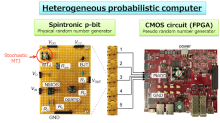
Researchers at Tohoku University and the University of California, Santa Barbara have unveiled a probabilistic computer prototype. Manufacturable with a near-future technology, the prototype combines a complementary metal-oxide semiconductor (CMOS) circuit with a limited number of stochastic nanomagnets, creating a heterogeneous probabilistic computer.
16 Apr 2024
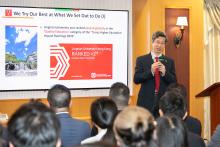
Lingnan University’s Teaching and Learning Centre held its annual “Inno-GBA: Empowering education with Generative Artificial Intelligence tools” from 16 to 19 April. The four-day event examined the latest Generative AI (GAI) tools for teaching and learning in higher education, and sophisticated state-of-the-art GAI tools to facilitate academic research and student learning, and assist jobseekers. The first day of the event, which was conducted in hybrid mode, over 200 people came to hear leading professors from the main universities in the Greater Bay Area (GBA) and industry experts from high-tech companies speak.
Events
Sorry, nothing coming up for this discipline
Researchers
Sorry, nothing coming up for this discipline
Giants in history
Sorry, nothing coming up for this discipline