

Medicine & Healthcare Internal medicine
News

10 Jul 2025
Researchers from The University of Osaka have identified key genetic mutations linked to extracranial arteriovenous malformations (AVMs), a rare and potentially serious vascular disorder. They have revealed that these mutations activate the RAS/RAF/MEK signaling pathway and that the MAP4K4 gene may drive pathological angiogenesis. This may mean that existing cancer drugs that target the same pathway could be effective for AVM treatment, potentially paving the way for novel therapies.

09 Jul 2025
Researchers from The University of Osaka found that a one-time genome editing treatment introducing a gene encoding the glucagon-like peptide-1 receptor agonist Exendin-4, marketed as the weight-loss drug Exenatide, results in sustained secretion of the drug, reduced food intake, and enhanced weight loss in mice. This in vivo genome editing approach provides a potential strategy for treating complex diseases without defined genetic causes, such as heart disease and autoimmune disorders, without the need for frequent medication.

27 Jun 2025
Lifesaving deep learning model developed using standard radiographs

24 Jun 2025
Researchers from The University of Osaka found that both inhibitory and activating killer immunoglobulin-like receptors on natural killer (NK) cells were able to bind repetitive interspersed family proteins expressed on the surface of malaria-infected red blood cells. The role of these proteins in triggering both inhibitory and stimulatory responses from NK cells makes them extremely promising targets for the development of therapies and vaccines for malaria.

19 Jun 2025
A research team from The University of Osaka and Institute of Science Tokyo has developed a groundbreaking class of mRNA medicines that can sense changes in the body and autonomously adjust their therapeutic effect. This innovation paves the way for precision treatments that are not only more effective, but also safer—by producing just the right amount of medicine based on real-time biological signals.

18 Jun 2025
Researchers at the Nano Life Science Institute (WPI-NanoLSI), Kanazawa University observe and model how the enzyme ADAR1 interacts with double-stranded RNA, which may be useful for future cancer treatment strategies.

17 Jun 2025
Researchers from The University of Osaka found that EGR1-expressing CD14+ monocytes and CD8+ T cells with a type II interferon signature are associated with scleroderma renal crisis and interstitial lung disease, respectively, in patients with systemic sclerosis. Understanding the specific immune cell abnormalities underlying different clinical manifestations of the disease could help predict and prevent serious complications.

12 Jun 2025
A surgeon can excise breast cancer from the body, but even the most skilled scalpel may not be able to remove every cell — especially when the cells have spread from the original disease site elsewhere in the body. This proliferation and migration of breast cancer cells involves many still unknown molecular means, but researchers at Hiroshima University have elucidated at least one mechanism, involving protein receptors that bind to one another. With the discovery, they may have also uncovered how short chains of protein building blocks could serve as a novel anticancer drug.

12 Jun 2025
A new study reveals striking international differences in how doctors approach the sensitive issue of tracheostomy invasive ventilation (TIV) for patients with amyotrophic lateral sclerosis (ALS). Cultural norms and healthcare systems appear to significantly influence physician attitudes and, consequently, patient choices regarding this life-sustaining treatment.

03 Jun 2025
Researchers from The University of Osaka found that PM2.5 air pollutants negatively affect mucociliary clearance, a protective mechanism of the respiratory tract. Air pollution led to the formation of lipid peroxide-derived aldehydes, known to damage protective cells in the airway and increase the risk of infections. ALDH1A1 was found to play an important role in protection against aldehydes, making it a potential therapeutic target to diminish the negative effects of air pollution.

21 May 2025
Researchers from The University of Osaka found that the Wnt5a protein, secreted by inflammatory fibroblasts within cancerous tumors, inhibits angiogenesis and consequently promotes hypoxia within tumors. Hypoxic conditions help sustain the inflammatory fibroblasts, which also secrete the growth factor epiregulin, thereby promoting tumor growth. This newly proposed mechanism for tumor growth offers a promising new target for cancer therapies and possibly other conditions linked to inflammation, such as inflammatory bowel disease.

20 May 2025
A research team at The University of Osaka has identified a crucial brain region involved in motor learning during reaching movements. The parvocellular division of the red nucleus, a small but specialized structure in the midbrain, was found to generate and transmit “error signals” necessary for adapting hand movements. This discovery clarifies a long-standing question in neuroscience about how the brain detects and corrects motion inaccuracies, with potential applications in developing new rehabilitation methods.

09 May 2025
New research shows that the gum disease bacterium P. gingivalis can slip into the bloodstream and infiltrate the heart. There, it quietly drives scar tissue buildup—distorting the heart’s architecture, disrupting electrical signals, and raising the risk of atrial fibrillation.

15 Apr 2025
Researchers discover that inflammation and aging contribute to non-viral liver cancer development. Green tea's role in reversing some of the pathway dysregulation that may contribute to the cancer development and other therapies explored.

18 Mar 2025
Effective treatment of gastric cancer-bacterial infections begins with understanding differing clinical methods

25 Feb 2025
Verifying the Esophageal Hypervigilance and Anxiety Scale for clinical use

13 Jan 2025
Crossing the uncanny valley, Batteries that don’t explode, Tiny climate change fighters, Liver-friendly mushroom & Foetal defence. Read all in the latest Editor's Choice.

06 Jan 2025
New formula for hyperfiltration and glomerular filtration rate takes natural decline into account

19 Dec 2024
Early administration of AHCC at the stage of hepatitis might hold possibility of preventing onset of cirrhosis

03 Sep 2024
Survey of 10,000 Japanese adults reveal leading causes of burp-related disorders

02 Aug 2024
A research group led by Associate Professor Katsuya Sakai, Researcher Nichole Marcela Rojas-Chaverra, and Professor Kunio Matsumoto of the Cancer Research Institute and Nano-Life Science (WPI-NanoLSI) at Kanazawa University has developed a long-acting, subcutaneously injectable artificial hepatocyte growth factor (HGF) mimetic molecule using a fusion technology of cyclic peptides and protein engineering. They demonstrated in a mouse model that it improves liver fibrosis, lipid accumulation, and inflammation caused by non-alcoholic steatohepatitis (NASH). This research result provides an option for the development of NASH therapeutics as well as a technology for creating growth factor and cytokine mimetic molecules with improved pharmacokinetics.

10 Jul 2024
First epidemiological study on incidence of EoE in Japan

13 Dec 2023
"Amaterasu" particle: a new cosmic mystery, Geckos inspire robotic device, Targeting cancer while protecting healthy cells, Honey, I shrunk the bear, Two species lost to science spotted again. Plus New Science Communication Resources. Read all in the latest Editor's Choice.
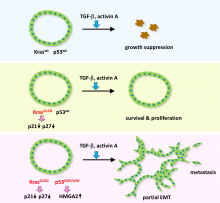
29 Nov 2023
Researchers at Kanazawa University report in Cancer Research how Kras and p53 mutations influence the tumor suppressor and promoter functions of a TGF- ß pathway. The findings may lead to a new approach for colorectal cancer therapy.

16 Oct 2023
A research team led by Osaka University developed a theranostics approach to both diagnose and treat certain pancreatic cancer cases. They radioactively labeled a monoclonal antibody targeting glypican-1, which is highly expressed in pancreatic cancer, then administered it to disease model mice. One label, 89Zr, showed high uptake in tumors, which would allow early detection of pancreatic cancer with PET scans. Another label, 211At, was used with alpha therapy to significantly slow tumor growth.
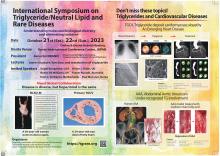
11 Oct 2023
The International Symposium on Triglyceride/Neutral Lipid and Rare Diseases will be held at the Kyoto International Conference Center on October 21 and 22, 2023. The symposium is organized by the International Symposium on Triglyceride/Neutral Lipid and Rare Diseases Conference Committee, which is led by Dr. Ken-ichi Hirano (Graduate School of Medicine, Osaka University) and the Japan Intractable Diseases (Nanbyo) Research Foundation.
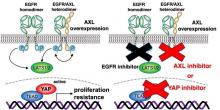
12 Sep 2023
AXL and EGFR inhibitors combined hold promise in fighting certain head, neck, and lung cancers
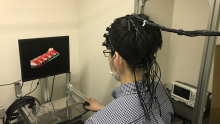
12 Sep 2023
Patients with a specific form of chronic indigestion react differently to images of food, compared to healthy control subjects or patients with irritable bowel syndrome.
07 Sep 2023
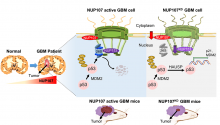
Researchers at Kanazawa University report in Cell Reports how alterations in the nuclear pores lead to the degradation of anti-tumor proteins.

05 Sep 2023
Researchers from Osaka University have revealed that the expression of a specific isoform of GREB1 Is4 is induced in malignant melanoma cells by the melanocyte-specific transcription factor, MITF. They revealed that GREB1 Is4 stimulates pyrimidine biosynthesis and promotes cancer cell proliferation. Furthermore, the anti-tumor effect of antisense nucleic acids against GREB1 showed a potential new modality for malignant melanoma.
Events
Sorry, nothing coming up for this discipline
Researchers
Sorry, nothing coming up for this discipline
Giants in history
Sorry, nothing coming up for this discipline