

Physics
News
03 Oct 2023
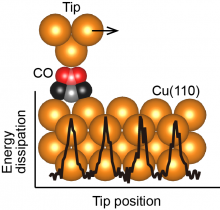
Friction, an everyday phenomenon, has perplexed scientists for centuries. Though extensively researched, our understanding remains fragmented, primarily due to the multifaceted interactions that span across varying scales. Achieving an accurate grasp of the precise contact conditions between objects has been a longstanding challenge, a
feat recently made possible through advancements in scanning probe microscopy.

02 Oct 2023
Researchers at Osaka Metropolitan University have succeeded in printing uniformly sized droplets with a diameter of approximately 100 µm using a liquid film of fluorescent ink. This ink, with a viscosity roughly 100 times that of water, was irradiated with an optical vortex, resulting in prints of exceptional positional accuracy at the micrometer scale.

28 Sep 2023
A pivotal breakthrough in battery technology that has profound implications for our energy future has been achieved by a joint-research team led by City University of Hong Kong (CityU).
26 Sep 2023
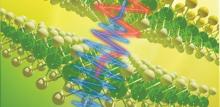
An international group of researchers have proposed a new mechanism to enhance short-wavelength light (100-300 nm) by second harmonic generation (SHG) in a two-dimensional, thin material composed entirely of commonplace elements.
21 Sep 2023
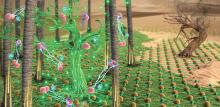
A group of researchers have unraveled the mysteries behind a recently identified material—zirconium nitride (ZrN) —that helps power clean energy reactions. Their proposed framework will help future designs for transition metal nitrides, paving a path for generating cleaner energy.
21 Sep 2023
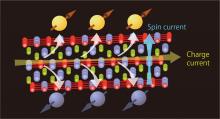
A recent discovery in spintronics could potentially transform future electronics. A group of researchers have revealed the key role of cobalt-tin-sulfur in reducing energy consumption, unlocking new possibilities for high-speed, low-power spintronic devices.
14 Sep 2023
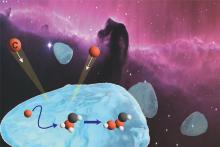
Lab-based studies reveal how carbon atoms diffuse on the surface of interstellar ice grains to form complex organic compounds, crucial to reveal the chemical complexity in the universe.
11 Sep 2023
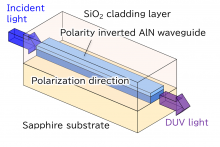
A research team led by researchers from Osaka University created an aluminum-nitride device that can convert visible light into deep-ultraviolet light through the process of second harmonic generation. This work can lead to the development of practical devices that can sterilize surfaces with ultraviolet radiation while using less energy.

11 Sep 2023
Elusive fundamental particles called neutrinos are predicted to interact unexpectedly with photons under extreme conditions.

08 Sep 2023
Capturing carbon dioxide, Shells go nuclear, Worms surf electric fields, Brain repair & Creating matter from light. Plus from our blog: Monitoring research for further impact. Read all in the latest Editor's Choice.
06 Sep 2023
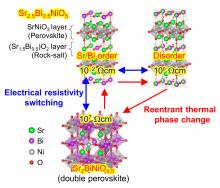
Researchers scientists have unlocked a new realm of possibilities for non-volatile phase change memory, a type of electronic memory capable of retaining data even without power. Traditionally, researchers have relied on chalcogenides, materials with reversible electrical properties during transitions between crystalline and amorphous states. But an exciting alternative has emerged in the form of layered nickelates, complex oxide materials composed of nickel ions. These nickelates, with their unique layered structure and thermally reversible switching of room-temperature electrical resistivity, offer superior performance and sustainability potential.

01 Sep 2023
Survey observations with the Subaru Telescope have led to the discovery of 22 quasars in the very distant universe. Their space density indicates the rapid emergence of supermassive black holes soon after the Big Bang, providing strong constraints on models of when, where, and how they formed and grew in cosmic space-time. The results also indicate a small quasar contribution to cosmic reionization, a major phase transition of the early universe.
28 Aug 2023
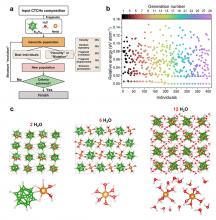
Solid-state batteries are a safer option that can hold even more energy than current go-to lithium-ion versions, but effectively harnessing their structure-performance relationship has remained a complex barrier to better batteries. Now, however, researchers at Tohoku University’s Advanced Institute for Materials Research in Japan have developed a framework to predict how the structure of solid-state electrolytes can affect the performance of a battery.
24 Aug 2023
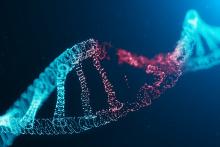
DNA and RNA, the two main types of nucleic acid and the building blocks of life, are susceptible to environmental stimuli, which can cause them to deform, bend or twist. These deformations can significantly affect gene regulation and protein functions, but they are extremely difficult to measure using traditional techniques. Recently, a research team co-led by a physicist from City University of Hong Kong (CityU) accurately measured the change in a nucleic acid induced by salt, temperature change and stretching force. Their findings help reveal the underlying universal deformation mechanisms of DNA and RNA.
23 Aug 2023
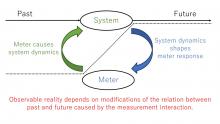
Quantum physicists have found that the outcomes of measurements are shaped by the complex dynamics of measurement interactions, questioning our usual understanding of observable reality.

22 Aug 2023
Researchers from SANKEN (The Institute of Scientific and Industrial Research) at Osaka University and two other universities used topological data analysis to improve the predictions of physical properties of amorphous materials by machine-learning algorithms. This may allow for cheaper and faster calculations of material properties.

10 Aug 2023
A team led by researchers at Osaka University and University of California, San Diego has conducted simulations of creating matter solely from collisions of light particles. Their method circumvents what would otherwise be the intensity limitations of modern lasers and can be readily implemented by using presently available technology. This work might help experimentally test long-standing theories such as the Standard Model of particle physics, and possibly the need to revise them.
09 Aug 2023
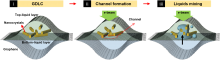
- Led by DGIST's Jiwoong Yang and Seoul National University's Jungwon Park, the team has determined the moisture-induced degradation mechanism of semiconductor nanocrystal quantum dots using in-situ liquid-phase transmission electron microscopy (TEM).
- The research findings have been published in the online edition of the prestigious nanoscience journal "ACS Nano."
07 Aug 2023
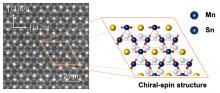
Researchers at Tohoku University and Massachusetts Institute of Technology (MIT) have unveiled new information about the anomalous dynamics at play when an electric current is applied to a new class of magnetic materials called non-collinear antiferromagnets.
02 Aug 2023
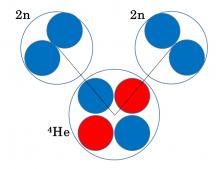
Osaka Metropolitan University researchers have shown that within the helium-8 nucleus (with two protons and six neutrons), there are two clusters of two neutrons each, existing around the helium-4 core. Furthermore, they demonstrated the shape these clusters take. Nuclei with an imbalance of protons and neutrons, such as in helium-8, do not naturally exist on Earth but are believed to be abundantly generated in cosmic environments like the interiors of stars through the process of nucleosynthesis. This study’s findings provide new insights into the still largely unknown binding forms of neutrons and deepen our understanding of the origins of the elements that surround us.

31 Jul 2023
Enantioselection with neither chiral catalysis nor chiral ingredients (absolute enantioselection) has been one of the most active topics of interest but its experimental realizations have been challenging. A team led by researchers at the Institute for Molecular Science (IMS) demonstrated the enantioselectivity of helical supramolecules consisting only of achiral molecules solely by exploiting chiral-induced spin selectivity (CISS) effect. The helicity of the supramolecules is created not by microscopic molecular arrangements but by mesoscopically introduced dislocations. Now CISS effect has been revealed to be relevant for the wider class of chirality ranging from microscopic to mesoscopic length scales.
26 Jul 2023
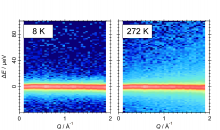
Researchers from Osaka University use quasi-elastic neutron scattering to get a close look at the behavior of water molecules in a semiclathrate hydrate crystal. They found that the molecules showed fast reorientation with an activation energy similar to that of cleaving a hydrogen bound. This rapid relaxation time in the solid electrolyte is expected to lead to efficient, cost-effective, and safe applications for semiclathrate hydrates in batteries and thermal storage materials.
26 Jul 2023
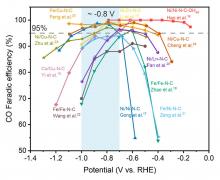
Researchers at Tohoku University have unraveled the reasons behind the underperformance of a promising field of catalysis known as dual atom catalysts (DACs). Their findings shed light on the challenges faced by DACs in converting carbon dioxide into valuable multicarbon products.

25 Jul 2023
Illuminating the molecular ballet in living cells, Charting the voyage of marine plastics, A glimpse into the origins of life & Earliest human journeys to Asia. Plus Submissions open for Asia Research News 2024. Read all in the latest Editor's Choice.

21 Jul 2023
Researchers from the Institute of Industrial Science, The University of Tokyo, provide physical insights into porous soft materials, which will facilitate the design of many energy, medical, and other technologies.
10 Jul 2023
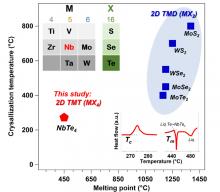
Tohoku University researchers have engineered a new material that overcomes some of the barriers to furthering phase change memory – a potentially revolutionary form of data storage that is still in its infancy. Using sputtering, they created a 2D Van Der Waals Chalcogenide that possesses an ultra-low melting point.
30 Jun 2023
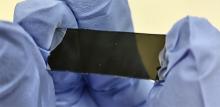
Topological materials’ unique properties make them a great choice for making next-generation devices. In order to exploit them, it was thought that crystalline materials, where atoms are highly ordered, were needed. But now, a research group has verified that even amorphous materials, where atoms are loosely arranged, can have these special properties.

19 Jun 2023
A key protein for sperm maturation identified, Understanding gel formation, Urine test predicts organ diseases, A laser drills holes in a graphene film. Plus in our blog - The frogs of Borneo: more than just a race. Read all in the latest Editor's Choice.
19 Jun 2023
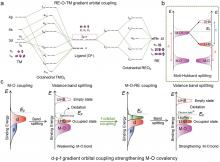
Finding lost-cost and efficient means of accelerating the oxygen evolution reaction could lead to the proliferation of water-splitting electrolyzes. Rather than adopting a time-consuming trial and error approach, an international research group has used theoretical predictions to identify and then successfully fabricate a new electrocatalyst.
15 Jun 2023
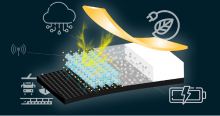
An international research group has engineered a new energy-generating device by combining piezoelectric composites with carbon fiber-reinforced polymer (CFRP), a commonly used material that is both light and strong. The new device transforms vibrations from the surrounding environment into electricity, providing an efficient and reliable means for self-powered sensors.
Events
Sorry, nothing coming up for this discipline
Researchers
Sorry, nothing coming up for this discipline
Giants in history
Sorry, nothing coming up for this discipline