
Physics
News

17 Feb 2023
Tree rings forecast extreme weather in central Asia, Squid 🦑and chemistry make versatile hydrogels, James Webb telescope reveals the earliest galaxies & Reducing negative effects of screen time. Read all in the latest Editor's Choice. Plus our latest journalist resource "Experts for Media: Antimicrobial Resistance "🦠.
16 Feb 2023
Amide bonds are important functional groups in medicinal chemistry and account for roughly 16% of all reactions performed in drug-discovery research. Some amide bond reactions using pharmaceutically important nitrogen-containing heterocyclic compounds, such as indole, carbazole and pyrrole, rather than amines are not efficient using conventional production methods. In a recent study, a team of leading chemists developed a novel one-pot reaction to efficiently form amide bonds using low-reactivity, nitrogen-containing heterocyclic compounds and carboxylic acid without special equipment or heat.
06 Feb 2023
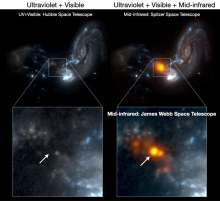
Researchers used the James Webb Space Telescope to identify the precise location of a powerful energy source hidden by cosmic dust in the luminous merging galaxy IIZw096.
03 Feb 2023
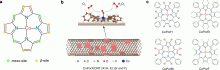
Traditional hydrogen peroxide production is energy and emission intensive, and so scientists have sought to synthesize it electrochemically. But tailoring the cobalt-nitrogen-carbon (Co-N-C) catalyst has been challenging. Using a theoretical prediction, which was then experimentally verified, an international research group has designed a Co-N-C catalyst that alleviates this problem.
01 Feb 2023
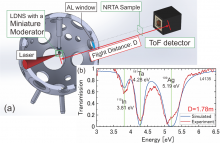
Osaka University researchers investigated the physics of laser-driven neutron sources, and found the relationship between the power and the neutrons generated. They were able to decrease the exposure time needed for neutron absorption experiments, which may be employed in biomedical research.
30 Jan 2023
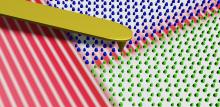
Everyday electronics, such as our phones, employ surface acoustic wave devices for frequency filtering and sensing. But this consumes a lot of energy, serving as a drain on battery life. Now, a team of researchers has developed a new acoustic waveguide based on the mathematical concept of topology, which will help alleviate this problem.
26 Jan 2023
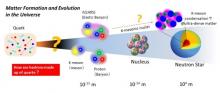
Researchers from Osaka University created a bound state of a proton and a K- meson known as Λ(1405), and measured its mass. The data implied that it consisted of five quarks. This work may help scientists develop a theory of exotic matter that existed in the early Universe or in neutron stars.
24 Jan 2023
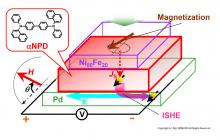
A research group, at the Osaka Metropolitan University Graduate School of Engineering, has succeeded in measuring spin transport in a thin film of αNPD molecules—a material well-known in organic light emitting diodes—at room temperature. They found that this thin molecular film has a spin diffusion length of approximately 62 nm, a length that could have practical applications in developing spintronics technology. In addition, while electricity has been used to control spin transport in the past, the thin molecular film used in this study is photoconductive, allowing spin transport control using visible light.

20 Jan 2023
Overeating mechanism: why "eating just one chip"🍟 is impossible, Measuring hidden energy of gamma-ray bursts, Marine species that can adapt to ocean acidification & A rough start can lead to a strong bond, Read all in our first Editor's Choice of 2023. Plus our interview on what dengue vaccine approval in EU💉means for global dengue protection.
19 Jan 2023
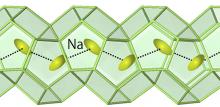
Controlling a material’s thermal conductivity can help insulate our homes, improve the performance of electronic devices, conserve power consumption in cars, and generate greater power efficiency. Now, a group of researchers has unveiled a novel mechanism that leads to further suppression of thermal conductivity in thermoelectric materials, something that will help develop new guidelines for producing high-performance thermoelectric materials.
06 Jan 2023
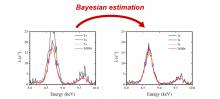
A research group at Osaka Metropolitan University has succeeded in significantly reducing the measurement time of a glass standard sample by applying Bayesian estimation to X-ray fluorescence analysis. The ability to perform rapid non-contact elemental analysis in a nondestructive manner could lead to the widespread use of this technique in many fields, including the analysis of moving industrial products and waste materials while being carried on conveyor belts.
22 Dec 2022
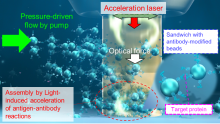
Osaka Metropolitan University scientists discovered the principle of light-induced acceleration of antigen–antibody reaction, allowing for simple, ultrafast, and highly sensitive detection of proteins. The researchers introduced target proteins and probe particles with modified antibodies selectively binding to the target proteins into a small channel and applied irradiation with infrared laser light. They achieved, for the first time, the rapid measurement of trace amounts of attogram-level target proteins after only 3 minutes of laser irradiation. These findings will potentially contribute to breakthroughs in the development of systems for ultra-early diagnosis of various diseases.
13 Dec 2022
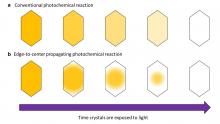
A research group at Osaka Metropolitan University has discovered that 2,5-distyrylpyrazine (DSP) crystals undergo a unique photoreaction. Normally, photoreactive color changes proceed uniformly throughout photomechanical molecular crystals, so that all parts of each crystal change color at the same time. However, when light shines evenly on a DSP crystal, the photoreaction propagates from edge to center, deviating from conventional photochemistry models. The group found that this phenomenon was caused by a surface effect and a cooperative effect, which make reactivity extremely high for molecules at the crystal’s edge and those adjacent to molecules that have already changed color.
12 Dec 2022
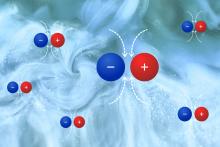
Researchers at The University of Tokyo show how including the effects of the surrounding water during the aggregation of charged particles can improve the accuracy of simulations, which may help elucidate biological self-assembly
01 Dec 2022
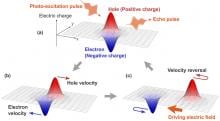
Precise control of quantum systems, such as quantum computers, is of great importance for modern quantum science. One way this has been done is via spin echoes. A research group has discovered a new type of echo, labelling them “energy-band echoes.”
29 Nov 2022
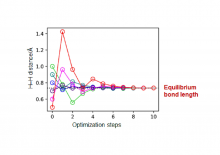
Using a quantum computer, Osaka Metropolitan University researchers utilized quantum logic circuits to directly calculate, in a single calculation, the energy difference between two molecular geometries. The developed method was then applied to execute the molecular geometry optimization of typical molecular systems. On a classical computer, calculations based on the finite difference method require at least two evaluations of the energy for one-dimensional systems, but previous research has shown that a quantum computer can be used to calculate the energy derivatives based on this method in a single calculation. However, quantum circuits relevant to quantum algorithms capable of performing the energy derivative calculations had not been implemented. The research group has successfully created a quantum circuit to calculate the energy derivatives by modifying the quantum circuit used in the previously developed quantum phase difference estimation algorithm.

18 Nov 2022
Exploring virtual human-agent relationships, A fly protein gives clue for human cancers, Rare earth elements formed in neutron star mergers 💥, One-stop process for hydrogen production. Read all in the November's Editor's Choice plus Upcoming event K4DM KNOWLEDGE MARKETPLACE – Bangkok 2022: Exchanging Ideas for a Democratic Myanmar.
08 Nov 2022
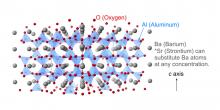
Osaka Metropolitan University scientists have discovered that, in the crystalline solid Ba1-xSrxAl2O4, a highly disordered atomic arrangement is formed in the AlO4 network at chemical compositions near the structural quantum critical point, resulting in characteristics of both crystalline and amorphous materials. This hybrid state, which the research team was the first to discover, can be created simply by mixing raw materials uniformly and heating them. These findings are expected to help with the development of hybrid materials for use in harsh environments, such as outer space, by applying the technique to a variety of materials.

27 Oct 2022
Giants in History: Shinichiro Tomonaga (31 March 1906 – 8 July 1979), together with Richard Feynman and Julian Schwinger, was awarded the Nobel Prize in Physics in 1965, for their contributions to advance the field of quantum electrodynamics.

25 Oct 2022
Researchers from The Institute of Scientific and Industrial Research (SANKEN) at Osaka University and collaborating partners prepared hierarchical hydrogels and moldings that consisted of anisotropic, ecofriendly cellulose nanofibers. By simply tailoring the applied voltage during fabrication, complex architectures—such as microneedles and multilayer hydrogels—were easy to prepare. The results of this work will reduce the need for petroleum-based plastics, and in so doing minimize a long-standing source of environmentally persistent waste.

20 Oct 2022
Osaka University researchers showed that the predictions of Einstein’s theory of special relativity in electromagnetism could be detected in the contraction of the electric field created by ultrafast electrons. By achieving femtosecond resolution, they were able to visualize the contracted electric field for the first time. This work can be applicable to particle accelerators and high-energy physics.
18 Oct 2022
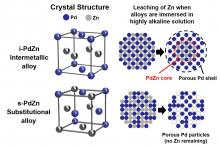
Osaka Metropolitan University researchers have created intermetallic alloy nanoparticles of palladium and zinc with an alternating arrangement of zinc and palladium atoms. The intermetallic alloy is more corrosion-resistant than substitutional alloys while retaining the electrocatalytic properties of both metals, which could be useful for developing new non-precious metal electrocatalysts.
05 Oct 2022
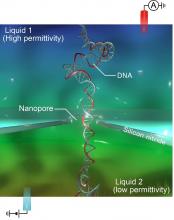
Researchers from Osaka University and collaborating partners enhanced DNA detection in silicon nitride nanopores by means of a water–glycerol viscosity gradient. Use of common chemistry under electrochemical flow enabled straightforward detection of individual DNA molecules. With further development, the results of this work could dramatically speed up and lower the cost of genomic sequencing, and facilitate unprecedented integration with compact electronics.
03 Oct 2022
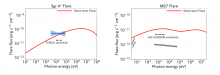
Supermassive black holes can launch fast-moving plasma, which emit strong radio signals known as radio jets. Despite being discovered over 40 years ago, much remains unknown about how radio jets are produced. Now, a research team, led by Tohoku University astrophysicists, has attempted to clarify how plasma gets loaded into radio jets.
03 Oct 2022
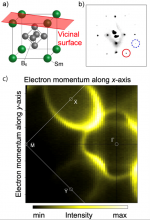
Researchers from Osaka University revealed that the surface electronic structure of topological insulators varies according to its surface atomic structure, even though it was believed to have been protected by the symmetry of the electronic structure inside the crystal and is therefore unaffected by differences in surface atomic structure. This work offers a new means of minimizing the power consumption and increasing the speed of next-generation technology.

29 Sep 2022
Linked lanthanides shine light on crystal engineering, New technique reveals hidden genome, Red, white and blue alerts for dangerous bacteria & Windows gain competitive edge over global warming. Read all in the September's Editor's Choice plus this month's Asia Research News 2022 magazine pick - Floating sensors to gather ocean data.

22 Sep 2022
Giants in History: Malaysia’s first astrophysicist, Mazlan binti Othman (born 11 December 1951) was instrumental in launching the country’s first microsatellite, and in sending Malaysia’s first astronaut, Sheikh Muszaphar Shukor, into space.
16 Sep 2022
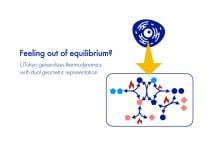
Scientists from The University of Tokyo formulated nonlinear, nonequilibrium energy dissipation relationships using methods from geometry to better understand the kinetics of irreversible chemical processes
12 Sep 2022
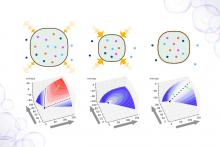
Researchers at The University of Tokyo create a geometric representation of thermodynamic systems and apply it to self-replicating processes, which may help improve our understanding of the physical constraints of living organisms
01 Sep 2022
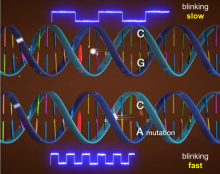
Researchers from Osaka University and collaborating partners detected unique fluorescence blinking patterns in experiments of electron transfer to single DNA molecules. They used these patterns to identify mRNA glioma point mutations in cell culture. The results of this work could help simplify surgical biopsies, enable real-time targeted therapy, and advance scientific understanding of cancer progression.
Events
Sorry, nothing coming up for this discipline
Researchers
Sorry, nothing coming up for this discipline
Giants in history
Sorry, nothing coming up for this discipline