
Physics
News
22 Mar 2024
A team of researchers has proposed a new concept for magnet-based memory devices, which might revolutionize information storage devices owing to their potential for large-scale integration, non-volatility, and high durability.
19 Mar 2024
Understanding electron behavior and surface structure of triphenylene thin film molecules deposited on graphite substrates under light irradiation
15 Mar 2024
The “scope of action” and the velocity of Dirac electrons in an organic material

14 Mar 2024
Ancient Mars biomolecules, Gargling away bad bacteria, Molecule glasses magnify life-chemical observations, Cholesterol and cancer link, Quantum electronics leap, Plus our updated Experts for Media: Women list & Asia Research News 2024 is here. Read all in the latest Editor's Choice.
08 Mar 2024
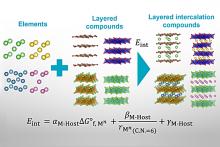
Researchers from the Institute of Industrial Science, The University of Tokyo and collaborating partners have created guidelines for the design of intercalated materials, which will accelerate research on energy storage, electronics, and more.
21 Feb 2024
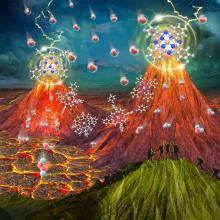
Metal-nitrogen-carbon (M-N-C) single-atom catalysts are a promising type of catalyst that could help provide cost-effective alternatives to platinum-based ones. However, there are still some aspects of their behavior that are misunderstood. To rectify this, a group of researchers delved into the intricacies of M-N-C catalysts, yielding promising results.
13 Feb 2024
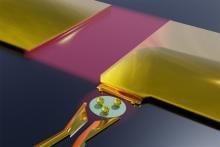
Researchers from the Institute of Industrial Science, The University of Tokyo have solved a foundational problem in transmitting quantum information, which could dramatically enhance the utility of integrated circuits and quantum computing.

13 Feb 2024
AI records rare bird footage, Lighting up IoT and smart cities, Crystal language designs new materials, Detecting toxins with mobile phones, and Dragonfly wings for better aerodynamics. Plus join us for SciCom coffee. Read all in the latest Editor's Choice.
01 Feb 2024
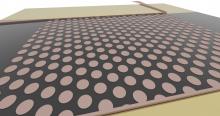
A collaborative group of researchers has potentially developed a means of controlling spin waves by creating a hexagonal pattern of copper disks on a magnetic insulator. The breakthrough is expected to lead to greater efficiency and miniaturization of communication devices in fields such as artificial intelligence and automation technology.
31 Jan 2024
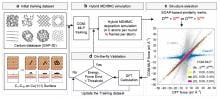
Carbon nanostructures could become easier to design and synthesize thanks to a machine learning method that predicts how they grow on metal surfaces. The new approach, developed by researchers at Japan’s Tohoku University and China’s Shanghai Jiao Tong University, will make it easier to exploit the unique chemical versatility of carbon nanotechnology.

30 Jan 2024
A theoretical framework for measuring the Reynolds similitude in superfluids could help demonstrate the existence of quantum viscosity

26 Jan 2024
Corrugated wings exhibit larger lift than flat wings
23 Jan 2024
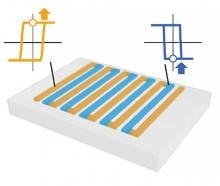
Scientists are eager to harness the unique electrical properties of topological magnets for advancing thermoelectric materials. A collaborative research group has successfully induced positive and negative polarities, unlocking the potential for generating thermoelectric energy from materials with topological magnet properties.
18 Jan 2024
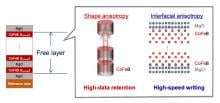
Researchers at Tohoku University have developed guidelines for a single-nanometer magnetic tunnel junction (MTJ), allowing for performance tailoring to meet the requirements of diverse applications, ranging from AI/IoT to automobiles and space technologies.
18 Jan 2024
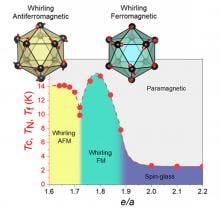
Non-Heisenberg-type approximant crystals have many interesting properties and are intriguing for researchers of condensed matter physics. However, their magnetic phase diagrams, which are crucial for realizing their potential, remain completely unknown. Now, for the first time, a team of researchers has constructed the magnetic phase diagram of a non-Heisenberg Tsai-type 1/1 gold-gallium-terbium approximant crystal. This development marks a significant step forward for quasicrystal research and for the realization of magnetic refrigerators and spintronic devices.
15 Jan 2024
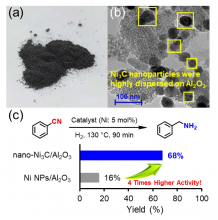
Researchers from Osaka University and collaborating partners have helped minimize the cost of an important class of chemical transformations: converting nitriles into primary amines. Their experimental protocol uses a cheap nickel catalyst instead of an expensive noble metal, is convenient to conduct, and works for a broad range of starting materials. This work is an important advance in sustainable chemistry that might help lower the cost of producing nylon and many other everyday products.
11 Jan 2024
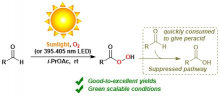
Researchers from SANKEN (The Institute of Scientific and Industrial Research), at Osaka University, Shizuoka Institute of Science & Technology, and collaborating partners have resolved a problem that has limited the environmental sustainability of peracid synthesis. By judicious choice of the solvent and light input, approximately room-temperature autoxidation of aldehydes proceeds in a manner that results in industrially useful peracids or carboxylic acids. This work is an important advance in green chemistry that will help minimize the carbon footprint of the chemical industry.
09 Jan 2024
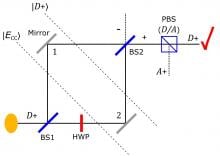
What actually happens is much weirder, and may help us understand more about quantum mechanics
21 Dec 2023
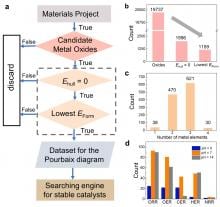
Identifying low-cost metal oxide electrocatalysts is essential to help us wean ourselves off fossil fuels. Yet doing so is a time-consuming process, with lots of trial and error required. A group of researchers has explored how data mining can be employed to help speed up this process.

13 Dec 2023
"Amaterasu" particle: a new cosmic mystery, Geckos inspire robotic device, Targeting cancer while protecting healthy cells, Honey, I shrunk the bear, Two species lost to science spotted again. Plus New Science Communication Resources. Read all in the latest Editor's Choice.
22 Nov 2023
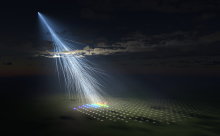
Osaka Metropolitan University researchers and their colleagues have successfully detected an ultra-high-energy cosmic ray with an energy level comparable to the most energetic cosmic ray ever observed. The cosmic ray is set to be named after the Japanese sun goddess, Amaterasu. No promising astronomical object has been identified in the direction from which this cosmic ray originated, implying the potential existence of unknown astronomical phenomena and novel physical origins beyond the Standard Model.
21 Nov 2023
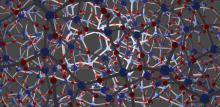
Glass is a fundamental material. Yet its atomic structure still baffles scientists to this day. Researchers have developed a new way to quantify ring shapes in chemically bonded networks of glass, chipping away at some of the mysteries behind glass’s atomic structure.
16 Nov 2023
… all while discovering how the Universe evolved, how galaxies form and where the elements come from.
14 Nov 2023
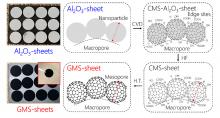
Lithium-oxygen batteries utilize oxygen in the surrounding air to generate energy. They have shown a high degree of theoretical potential, but the technology has stymied due to the specially designed carbon cathodes lacking certain characteristics. Researchers have made a breakthrough in this regard, developing a special type of porous carbon sheet called graphene mesoponge sheets.

09 Nov 2023
New shrimp species in ancient hot spring, Super sprouts, How "warm-ups" work, New antiviral candidate, Solving voltage decay and from our blog: A sustainable future shines in TIE 2023. Read all in the latest Editor's Choice.
16 Oct 2023
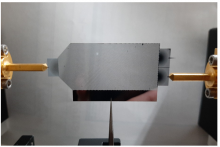
Scientists have theoretically predicted that light can be bent under pseudogravity. A recent study by researchers using photonic crystals has demonstrated this phenomenon. This breakthrough has significant implications for optics, materials science, and the development of 6G communications.

12 Oct 2023
Osaka Metropolitan University scientists, in cooperation with researchers from the National Astronomical Observatory of Japan, have captured cosmic-ray extensive air showers with unprecedented precision using the prime-focus wide field camera mounted on the Subaru Telescope, situated atop Mauna Kea in Hawaii. Analyzing approximately 17,000 images captured between 2014 and 2020, they pinpointed 13 images containing extensive air showers, with a number of particle tracks far exceeding the usual count.
11 Oct 2023
In a recent publication in EPJ Quantum Technology, Le Bin Ho from Tohoku University’s Frontier Institute for Interdisciplinary Sciences has developed a technique called "Time-dependent Stochastic Parameter Shift" in the realm of quantum computing and quantum machine learning. This breakthrough method revolutionizes the estimation of gradients or derivatives of functions, a crucial step in many computational tasks.
06 Oct 2023
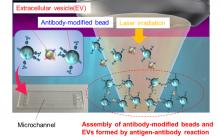
Osaka Metropolitan University researchers have used the power of laser light to accelerate the reaction between cancer cell-derived extracellular vesicles—a kind of nanoparticle—and antibody-modified microparticles. The three-dimensional structure of the resulting aggregates was then analyzed using a confocal optical system. The results demonstrated the ability to measure, within 5 minutes, approximately 1,000 to 10,000 nanoscale EVs contained in a 500 nL sample.

05 Oct 2023
Hunting for supermassive black holes, Coastal survival at risk, Calcium and dead cell clean-up, Two naps are better than one & Pineapple leaf prosthetics. Read all in the latest Editor's Choice.
Events
Sorry, nothing coming up for this discipline
Researchers
Sorry, nothing coming up for this discipline
Giants in history
Sorry, nothing coming up for this discipline