

Physics
News

14 Jun 2023
A physicist from the University of the Philippines – Diliman College of Science National Institute of Physics (UPD-CS NIP) led a team of researchers in pioneering a way to make a special kind of “dark” matter that can’t be observed using standard laboratory methods.

13 Jun 2023
Metamagnetic shape memory alloys (MMSMA) have negated some of the common problems associated with shape memory alloys thanks to their ability to undergo phase transformation when exposed to an external magnetic field. Yet they still lose a large amount of energy when phase transforming. Now, a research group from Tohoku University has made a significant breakthrough, developing a palladium-based MMSMA that exhibits low energy loss.

09 Jun 2023
With the need for hardware to process large amounts of digital information ever growing, researchers are working hard to improve magnetoresistive devices. The magnetoresistance ratio indicates the efficiency of these devices, the higher the better. Most magnetoresistive devices comprise magnesium oxide and iron-based magnetic alloys. But a group of researchers from Tohoku University has unveiled a new material that also exhibits enormous magnetoresistance.

09 Jun 2023
Researchers from Institute of Industrial Science, The University of Tokyo develop a nanosheet oxide semiconductor for electronic devices

06 Jun 2023
Ultrafast fluorescent imaging technology brings the molecular dynamics of living cells into clear view.

01 Jun 2023
Osaka Metropolitan University scientists investigated numerically the interaction between a quantized vortex and a normal-fluid. Based on the experimental results, researchers decided the most consistent of several theoretical models. They found that a model that accounts for changes in the normal-fluid and incorporates more theoretically accurate mutual friction is the most compatible with the experimental results.
26 May 2023
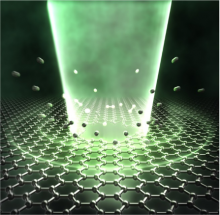
Graphene has revolutionized materials science since its discovery in 2004, with its high electron mobility, mechanical strength, and thermal conductivity. But processing graphene at the micro/nanoscale is a challenging process that often involves large-scale equipment and complex operations. Now, Tohoku University researchers have applied their simple femtosecond laser technique to ultra-thin atomic layers of graphene, resulting in multi-point hole drilling without damaging the graphene film.

23 May 2023
Researchers from the Institute of Industrial Science, The University of Tokyo, discover how certain colloids can form a solid-like gel and reveal how the mechanism differs from glasses.
15 May 2023
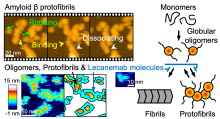
Researchers at Kanazawa University report in Nano Letters how high-speed atomic force microscopy leads to insights into processes relevant to Alzheimer’s disease. Moreover, the technique is shown to be an excellent tool for studying the effect of drugs against the disease.
12 May 2023
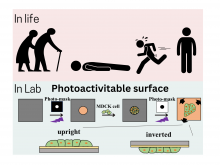
Specially coated surfaces help scientists investigate what happens when cell clusters are turned upside down.
12 May 2023
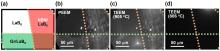
An international research group has developed a new surface coating technology that is capable of significantly increasing electron emission in materials. Their breakthrough is expected to improve the production of high-efficiency electron sources, and lead to increased performances in electron microscopes, electron beam lithography systems, and synchrotron radiation facilities.
09 May 2023
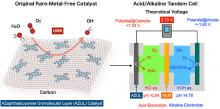
Zinc-air batteries may power the future thanks to their high density, low cost, and nature-friendly makeup. Yet, their low voltage has stymied their widespread application. Now, a research group has realized a zinc-air battery with an open circuit voltage of over 2 V.
02 May 2023
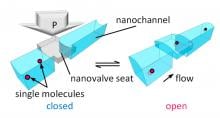
A joint research group at Osaka Metropolitan University has succeeded in regulating the flow of single molecules in solution by opening and closing the nanovalve mounted on the nanofluidic device by applying external pressure. The research group fabricated a device with a ribbon-like, thin, soft glass sheet on the top, and at the bottom a hard glass substrate having nanochannels and nanovalve seats. By applying external pressure to the soft glass sheet to open and close the valve, they succeeded in directly manipulating and controlling the flow of individual molecules in solution. They also observed an effect of fluorescence signal amplification when single fluorescent molecules are confined in the tiny nanospace inside the valve. The effect can be ascribed to the nanoconfinement, which suppresses the random motion of the molecules.

26 Apr 2023
Researchers at the Institute of Industrial Science, The University of Tokyo, have developed a desktop charger with voltages high enough to replenish the electric charge on N95 and surgical masks, which is required for effective use

20 Apr 2023
Researchers at the Institute of Industrial Science, The University of Tokyo use isotopically purified graphite to study the phenomenon of heat flowing like a fluid, which can lead to new heat-sink devices for electronics.
19 Apr 2023
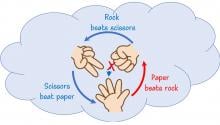
In the quantum world particles can instantaneously know about each other’s state, even when separated by large distances. This is known as nonlocality. Now, A research group has produced some interesting findings on the Hardy nonlocality that have important ramifications for understanding quantum mechanics and its potential applications in communications.
14 Apr 2023
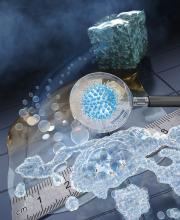
We typically think of robots as metal objects, filled with motors and circuits. But the field of molecular robotics is starting to change that. Like the formation of complex living organisms, molecular robots derive their form and functionality from assembled molecules stored in a single unit, i.e., a body. Yet manufacturing this body at the microscopic level is an engineering nightmare. Now, a Tohoku University team has created a simple workaround.
14 Apr 2023
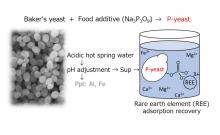
A research group at Osaka Metropolitan University has succeeded in selectively recovering trace rare earth elements in synthetic seawater and environmental water, such as hot spring water, using baker’s yeast with a phosphate group added. The phosphorylated yeast is expected to be utilized as a material for recovering useful metals and removing toxic metals, thereby contributing to the realization of a metal resource-circulating society.

13 Apr 2023
Osaka Metropolitan University scientists have developed a theory to experimentally determine differences in nuclear structure. Using this method to assess carbon and oxygen nuclei revealed that they contain more components in their cluster structure than in their shell structure. This enables visualization of nuclear structures without large-scale numerical calculations, which are expected to be applied to heavier nuclei in the future. This suggests that the method could be used to solve the ultimate question in nuclear physics: where did the elements we see around us come from?”

06 Apr 2023
Osaka Metropolitan University scientists analyzed each element of the neutrino mass matrix belonging to leptons and showed theoretically that the intergenerational mixing of lepton flavors is large. Furthermore, by using the mathematics of random matrix theory, the research team was able to prove, as much as is possible at this stage, why the calculation of the squared difference of the neutrino masses are in close agreement with the experimental results in the case of the seesaw model with the random Dirac and Majorana matrices. The results of this research are expected to contribute to the further development of particle theory research, which largely remains a mystery.
29 Mar 2023
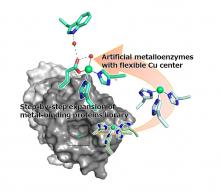
A research group at Osaka Metropolitan University has succeeded in simply creating an artificial metalloenzyme with the common metal-binding motif 2-his-1-carboxylate, which is found in natural non-heme metalloenzymes. They created a library of 12 different proteins and screened the library and found that the H52A/H58E variant had the best stereoselectivity. It is expected that this research can be expanded to produce a variety of biocatalysts that work under mild conditions.
27 Mar 2023
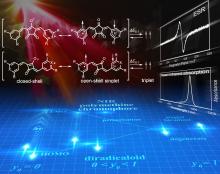
An Osaka Metropolitan University joint research group has discovered that near-infrared absorbing dyes, which had previously been considered to have closed-shell electronic structures, have an intermediate electronic structure, between closed- and open-shell structures. They also found that as the wavelength of near-infrared light that can be absorbed becomes longer the contribution of open-shell forms increases within the dye. These newly discovered characteristics are expected to be utilized to develop new near-infrared absorbing dyes that can absorb longer wavelength near-infrared light.
22 Mar 2023
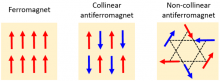
A research team has highlighted recent achievements in antiferromagnetic spintronics in a review article, unearthing a new frontier in the field.

14 Mar 2023
Osaka Metropolitan University scientists succeeded in directly observing how LECs—which are attracting attention as one of the post-organic LEDs—change their electronic state over time during field emission by measuring their optical absorption via lamp light irradiation for the first time. This research method can be applied to all light-emitting devices, including not only LECs but also organic LEDs. This method is expected to reveal detailed electroluminescence processes and lead to the early detection of factors that reduce the efficiency of electroluminescence.
10 Mar 2023
Asia Research News met five female researchers to learn about their research, what drew them to Kavli IPMU, and their experiences there. These women, from diverse backgrounds, excel in their fields and show what can be achieved when women are not held back.

10 Mar 2023
Asia Research Newsは同所の女性研究者5名に、彼女らの研究について、そしてなぜKavli IPMUを選んだのか、これまでの同所での経験について話しを聞いた。それぞれ様々な背景を持ち、各分野で卓越している研究者らに、足かせのない女性がいかに飛躍できるかをみせてもらった。
06 Mar 2023
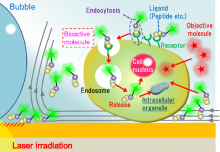
Osaka Metropolitan University researchers have used 100 seconds of laser irradiation to generate convection currents that selectively accelerate biochemical reactions—due to the photothermal effect—by concentrating biofunctional molecules at the cell surface. Using this method, useful molecules can be transported into cells at concentrations a hundred to a thousand times lower than with conventional methods. Furthermore, they also succeeded in selectively introducing small molecules into intracellular organelles usually impossible at low concentrations (hundreds of pmol/L) as well as inducing cell death in targeted cells by concentrating anticancer active peptides into them at concentrations so low that they would not be conventionally effective (several tens of nmol/L).

02 Mar 2023
An international research team has discovered the first example of a supernova, known as SN 2018ivc, showing an unprecedented rebrightening at millimeter wavelengths about one year after the explosion.
With the help of the Atacama Large Millimeter/submillimeter Array -- or ALMA -- the analysis revealed that the dying massive star ejected a large amount of its envelope due to a strong binary interaction with a companion star that took place about 1500 years before the explosion.
In a paper published in The Astrophysical Journal Letters, the team posits that this rebrightening event in SN 2018ivc provides a missing link between supernovae -- or SN -- that occur in binary star systems and those that involve solitary massive stars.
27 Feb 2023
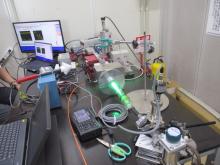
A collaborative research group from Tohoku University and the Toyohashi University of Technology has invented a new and efficient method to create metallic plasmas from solid metals under a strong magnetic field in a microwave resonator.
22 Feb 2023
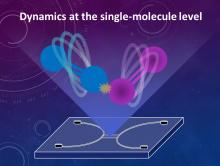
Researchers from Osaka Metropolitan University have developed principles and technologies of nanofluidic devices to freely manipulate nanomaterials, biomaterials, and molecules at the single-molecule level using fundamental technologies such as nanofluidic processing, functional integration, and fluidic control and measurement, which has pioneered the way to integrate various fields under nanofluidics.
Events
Sorry, nothing coming up for this discipline
Researchers
Sorry, nothing coming up for this discipline
Giants in history
Sorry, nothing coming up for this discipline