
Diseases
News
24 Oct 2019
Duke-NUS Medical School
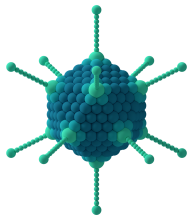
Large-scale study to identify human adenovirus genotypes in Singapore leads to discovery of four new adenovirus strains and increase in strains linked to severe diseases. Researchers suggest use of antiviral therapies and adenovirus vaccines, and routine monitoring of adenovirus strains.
23 Oct 2019
Korea Advanced Institute of Science and Technology (KAIST)
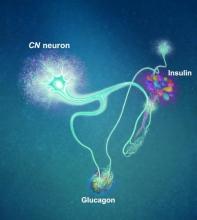
When a fly eats sugar, a single brain cell sends simultaneous messages to stimulate one hormone and inhibit another to control glucose levels in the body. Further research into this control system with remarkable precision could shed light on the neural mechanisms of diabetes and obesity in humans.
23 Oct 2019
Hong Kong Baptist University (HKBU)
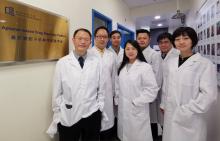
A research team from the School of Chinese Medicine at Hong Kong Baptist University (HKBU) has successfully developed a novel aptamer, i.e. a single-stranded piece of DNA, for the treatment of osteogenesis imperfecta (OI) with the aid of artificial intelligence (AI) technology. It is the first time a drug in Hong Kong has been granted orphan drug designation by the US Food and Drug Administration (FDA).
18 Oct 2019
Hokkaido University
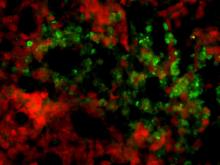
A compound effective in killing chemotherapy-resistant glioblastoma-initiating cells (GICs) has been identified, raising hopes of producing drugs capable of eradicating refractory tumors with low toxicity.
17 Oct 2019
Duke-NUS Medical School
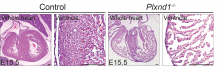
Faulty signalling pathway causes the heart to develop unnaturally while in the embryo stage, according to Duke-NUS Medical School researchers.
30 Sep 2019
Institute for Integrated Cell-Material Sciences (iCeMS) at Kyoto University
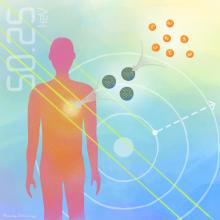
X-rays could be tuned to deliver a more effective punch that destroys cancer cells and not harm the body.
20 Sep 2019
Duke-NUS Medical School
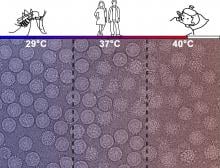
Researchers from Duke-NUS Medical School, in collaboration with the Agency for Science, Technology and Research’s Bioinformatics Institute, and the University of Texas Medical Branch, USA, have discovered that the dengue virus changes its shape through mutations in Envelope protein to evade vaccines and therapeutics. The study also gives insights on the types of treatment strategies to use at different stages of infection. This could give rise to new approaches in vaccine development and treatment for dengue disease.
17 Sep 2019
Duke-NUS Medical School
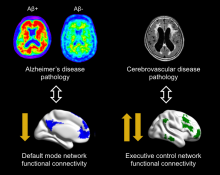
Differential changes in brain functional network connectivity in people with mild cognitive impairment may aid early tracking of Alzheimer’s disease and cerebrovascular disease.
12 Sep 2019
Duke-NUS Medical School
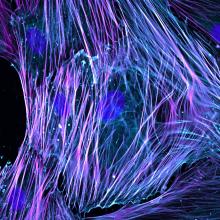
The formation of excess fibrous tissue in the heart, which underlies several heart diseases, could be prevented by inhibiting specific proteins that bind to RNA while its code is being translated.
29 Aug 2019
Daegu Gyeongbuk Institute of Science and Technology (DGIST)
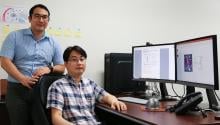
Successfully identified the existence of two types of 'gastric isthmus stem cells' with different roles and characteristics using a multi-color identification technology. Expects to clarify and treat causes of gastric diseases such as cancer.
27 Aug 2019
Duke-NUS Medical School
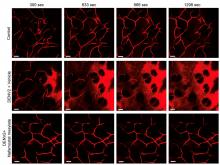
New study reveals enzyme plays key role in potentially fatal dengue haemorrhagic fever and shock; suggests clinically approved tryptase inhibitor could be key in future targeted treatment.
13 Aug 2019
UK Research and Innovation and its partners are funding 13 research programs, building collaborations across 10 countries, including Japan, China, Singapore and India.
02 Aug 2019
Hokkaido University
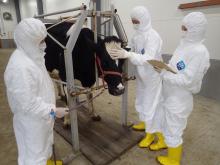
Scientists have succeeded in reducing levels of the bovine leukemia virus (BLV) in cows with severe infections by combining an immune checkpoint inhibitor and an enzyme inhibitor. The finding could be utilized to control other diseases in cattle, and perhaps in humans someday.
29 Jul 2019
Hokkaido University
New insight into a protein’s role in regulating tight DNA packing could have implications for combating tumor cell resistance to anti-cancer treatments.
15 Apr 2019
Hong Kong Baptist University (HKBU)
A delegation from Hong Kong Baptist University (HKBU) (HKBU) won a Gold Medal with the Congratulations of Jury, a Gold Medal and a Silver Medal at the 47th International Exhibition of Inventions of Geneva held in Switzerland from 10 to 14 April 2019.

27 Mar 2019
Universiti Teknologi MARA (UiTM)
A new model may help clinicians predict the possibility of death from severe dengue infection.
21 Mar 2019
Universiti Teknologi MARA (UiTM)
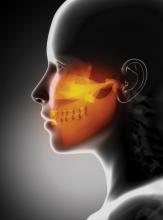
Researchers at Universiti Teknologi MARA reported in the journal Medicine a rare case of hepatocellular carcinoma cells migrating from the liver and settling in the jawbone and shoulder blade of a 61-year-old man.
14 Mar 2019
Tohoku University
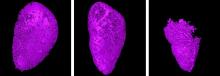
A new method to diagnose cancer cells inside lymph nodes could allow doctors to treat cancers before they spread around the body.
11 Mar 2019
Hokkaido University
An annual influenza season forecasting challenge issued by the US Centers for Disease Control provides unique insight into epidemic forecasting, according to a study published in the journal Scientific Reports.
11 Mar 2019
Asia Research News
Secure your place today with 20% code ARN20 off the standard rate and join the discussion.
07 Mar 2019
Universiti Malaysia Sarawak
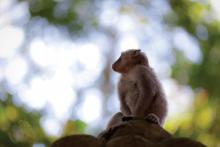
Molecular analysis reveals that long-tailed macaques from Malaysian Borneo host a previously unidentified species of Plasmodium malaria parasite.
07 Mar 2019
The Hong Kong University of Science and Technology (HKUST)
Researchers from The Hong Kong University of Science and Technology (HKUST) (HKUST) credited with important translational science and early discovery work
Significant opportunity to replicate collaborative model to develop pipeline of extracellular tRNA synthetase therapeutics
06 Mar 2019
The Hong Kong University of Science and Technology (HKUST)
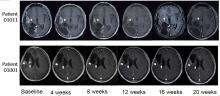
A research team consisting of scientists from The Hong Kong University of Science and Technology (HKUST) (HKUST) and Beijing Tiantan Hospital have uncovered the mutational mechanism of how a rare and deadly brain cancer –secondary glioblastoma (sGBM) – progresses from its less lethal type.
06 Mar 2019
The Hong Kong University of Science and Technology (HKUST)
A research team has discovered a new mechanism that could delay the degeneration of injured nerves, bringing new hope to the treatment of nerve damage and neurodegenerative diseases such as Parkinson and Amyotrophic Lateral Sclerosis (ALS).
05 Mar 2019
Daegu Gyeongbuk Institute of Science and Technology (DGIST)
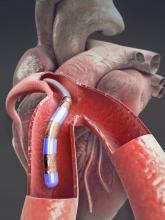
An international team has developed an attachable guidewire that can move and steer towards a desired direction inside complicated blood vessels. The technology will contribute to increasing the success rate of heart disease treatment with a shorter cardiovascular disease surgery time and higher accuracy.
26 Feb 2019
Hokkaido University
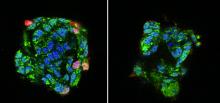
A key cell receptor that facilitates influenza A virus infection has been identified following decades of research.
19 Feb 2019
Ulsan National Institute of Science and Technology (UNIST)
Hepatocellular carcinoma diagnosis, prognosis and treatment could improve by identifying a closely associated protein.
15 Feb 2019
Hokkaido University
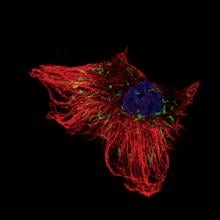
Uncovered details of a molecular pathway in cancer cells could lead to improved treatment.
01 Feb 2019
Hokkaido University
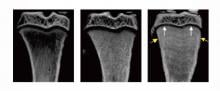
Turning off a bone receptor protein could potentially treat osteoporosis in children without affecting bone growth.
29 Jan 2019
Hokkaido University
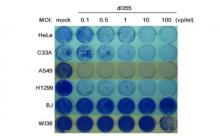
An engineered virus kills cancer cells more effectively than another virus currently used in treatments, according to Hokkaido University researchers.
Events
Sorry, no events coming up for this topic.
Researchers
Sorry, no researchers coming up for this topic.
- « first
- ‹ previous
- 1
- 2
- 3
Giants in history

Tu Youyou (born 30 December 1930) is a Chinese pharmaceutical scientist who was awarded the 2015 Nobel Prize in Physiology or Medicine for her work on extracting artemisin from sweet wormwood to treat malaria.

Filipina paediatrician and scientist Perla Santos-Ocampo (25 July 1931 – 29 June 2012) made important contributions to treatments and policies that curbed debilitating and sometimes deadly diarrhoea-related diseases and malnutrition in children.

Singaporean physician Oon Chiew Seng (1916 – 31 March 2022) advanced dementia care and research in Singapore, and co-founded the Apex Harmony Lodge, the nation’s first nursing home for residents with dementia.

Vietnamese surgeon Tôn Thất Tùng (10 May 1912 – 7 May 1982) developed a pioneering technique that reduced the risks and mortality rate of liver operations.
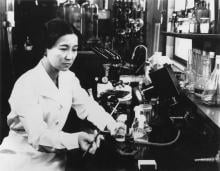
Ruby Sakae Hirose (1904 – 1960) was a Japanese-American scientist whose research contributed significantly to our understanding of blood clotting, allergies and cancer.

Iranian physician and bacteriologist Azar Andami (8 December 1926 – 19 August 1984) developed a cholera vaccine to combat an outbreak that swept through the Middle East, India, Southeast Asia, and Africa in 1937.
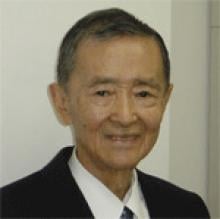
Michiaki Takahashi (17 February 1928 – 16 December 2013) was a Japanese virologist who developed the first chickenpox vaccine.

Irene Ayako Uchida’s (8 April 1917 – 30 July 2013) strides to understand genetic diseases such as Down syndrome paved the way for early screening of chromosomal abnormalities in foetuses.
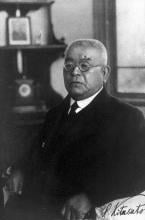
Baron Kitasato Shibasaburo (29 January 1856 – 13 June 1931) was a Japanese physician and bacteriologist whose work led to a new understanding of preventing and treating tetanus, diphtheria and anthrax.
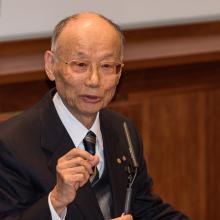
By isolating soil microorganisms and studying the compounds they produce, Satoshi Omura (born 1935) discovered almost 500 organic compounds with unique properties that were produced by these microorganisms, including many new antibiotics.
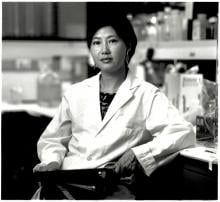
Chinese-American virologist and molecular biologist Flossie Wong-Staal (27 August 1946 – 8 July 2020) was the first scientist to clone HIV and determine the function of its genes.

Maharani Chakravorty (1937 – 2015) was one of India’s earliest molecular biologists whose research paved the way for advances in the treatment of bacterial and viral infections.
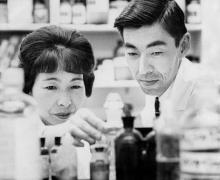
Husband and wife team, Kimishige (3 December 1925 – 6 July 2018) and Teruko Ishizaka (28 September 1926 – 4 June 2019) discovered the antibody class Immunoglobulin E (IgE) that triggers allergic reactions. They also discovered that IgE antibodies attach to white blood cells, known as mast cells, releasing histamine, which causes allergic reactions.
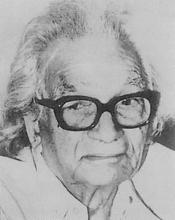
Salimuzzaman Siddiqui (19 October 1897 – 14 April 1994) was an artist and chemist from Pakistan whose research focused on natural products from plants.
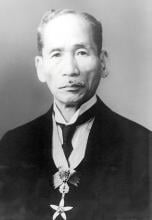
Umetaro Suzuki (7 April 1874 – 20 September 1943) was a Japanese scientist best remembered for his research on beriberi, a disease caused by vitamin B1 deficiency, characterized by limb stiffness, paralysis and pain.
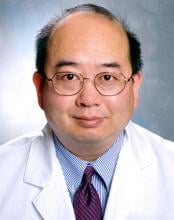
Barry Paw (29 August 1962 – 28 December 2017) was a biologist and oncologist who discovered several novel genes and their functions in red blood cells.

Indian organic chemist Asima Chatterjee (1917 to 2006) studied the medicinal properties of plant products, especially compounds known as vinca alkaloids.

Filipino chemist and pharmacist Manuel A. Zamora (29 March 1870 – 9 July 1929) is best remembered for his discovery of the tiki-tiki formula to combat beriberi, a disease caused by Vitamin B1 deficiency.
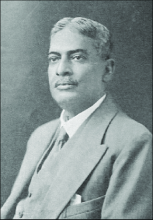
Indian scientist and physician Upendranath Brahmachari (19 December 1873–6 February 1946) is best known for creating a drug called Urea Stibamine, used to safely and reliably treat visceral leishmaniasis (or Kala-azar), a severe infection caused by the Leishmania parasite.
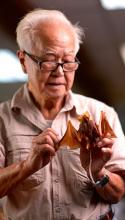
Lim Boo Liat (21 August 1926 – 11 July 2020), a leading authority in the conservation of Malaysia’s biological diversity, had his initial interest in the outdoors piqued by nature lessons in school. Lim, who helped found the National Zoo of Malaysia and re-establish the Malaysian Nature Society, had a particular interest in researching zoonotic diseases associated with small animals.
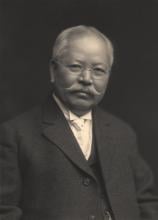
Japanese chemist Takamine Jokichi (3 November 1854 – 22 July 1922) founded the Tokyo Artificial Fertilizer Company, where he isolated a starch-digesting enzyme (named takadiastase) from the fungus Aspergillus oryzae.
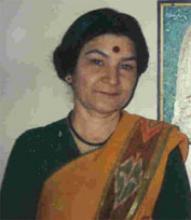
A pioneer of bio-organic chemistry, Darshan Ranganathan (4 June 1941 – 4 June 2001) is remembered for developing a protocol for synthesising imidazole, a compound used to make antifungal drugs and antibiotics. Widely considered India’s most prolific researcher in chemistry, she also published dozens of papers in renowned journals on protein folding, molecular design, chemical simulation of key biological processes, and the synthesis of functional hybrid peptides and nanotubes.