

Diseases
News
06 Sep 2021
Osaka City University
Using data from 1,107 patients dating back over 30 years, researchers have connected prognostic impact to poorly differentiated tumor size in hepatocellular carcinoma. Data confirmed previous findings that after resection, <2 cm sized tumors had excellent long-term outcomes. However, ≥2 cm and ≥5 cm sizes shared a risk of early recurrence with the latter size also at risk of early extrahepatic recurrence.
25 Aug 2021
Hokkaido University
A novel CT scan-based approach has revealed significant changes in a parameter indicating lung destruction in some asthmatics. This finding could lead to more personalized treatments for asthma accompanied by persistent airflow limitation.
23 Aug 2021
Tohoku University
Sjögren's syndrome is an autoimmune disease that attacks the tear duct and salivary glands, leading to patients suffering unbearable dry eyes and mouth. To date, treatment options have been limited. But this may change thanks to a recently developed mouse model that will help explain the pathogenic mechanisms behind the disease.
10 Aug 2021
Daegu Gyeongbuk Institute of Science and Technology (DGIST)
A new, energy-efficient method of electrical brain stimulation developed by researchers from the Daegu Gyeongbuk Institute of Science and Technology could aid stroke rehabilitation and has few side effects.
19 Jul 2021
Nagoya University
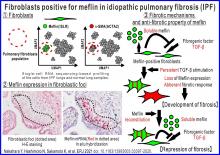
A subset of fibroblasts located in small foci of tissue on the edges of extensive scarring produce a protein that protects against cell aging.
14 Jul 2021
Institute for Integrated Cell-Material Sciences (iCeMS) at Kyoto University
Researchers have found a way to enhance radiation therapy using novel iodine nanoparticles.

28 Jun 2021
International Islamic University Malaysia (IIUM)
Researchers at The International Islamic University Malaysia (IIUM) have developed an algorithmic approach to predict progression of a condition called pterygium, which involves abnormal tissue growth across the eye.

28 Jun 2021
International Islamic University Malaysia (IIUM)
A new mouthwash developed in Malaysia, called Microencapsulated OroSYNTM, is expected to protect against oral diseases.
The mouthwash made from banana skin and a bacterium promotes a healthy microbiome in the oral cavity to protect against diseases
21 May 2021
Duke-NUS Medical School
Single-cell gene studies are clarifying the roles of the brain’s specialised immune cell in Alzheimer’s disease and offer new avenues for treatment of this incurable condition.
20 May 2021
Hokkaido University
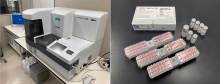
Scientists from Hokkaido University have shown that an antigen-based test for quantifying SARS-CoV-2 in saliva samples is simple, rapid, and more conducive for mass-screening.

13 May 2021
Universiti Malaysia Sarawak
A simple tool allows researchers to track how different subpopulations of the Plasmodium knowlesi parasite are changing over time.

22 Apr 2021
Duke-NUS Medical School
A mitochondrial peptide called MOCCI has a surprising sidekick, and they work together to regulate inflammation and immunity, Singapore researchers reveal.
15 Apr 2021
Tohoku University
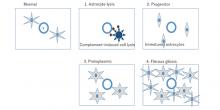
Researchers from the Department of Neurology at Tohoku University have developed a new taxonomy for a rare autoimmune disease known as neuromyelitis optica spectrum disorder. The disease was previously thought to be a form of multiple sclerosis (MS) and had, until now, borrowed its taxonomy from MS.
15 Apr 2021
City University of Hong Kong (CityUHK)
Triple-negative breast cancer (TNBC) is an aggressive type of breast cancer with a high fatality rate. Currently, chemotherapy is the major treatment option, but the clinical result is unsatisfactory. A research team led by biologists at City University of Hong Kong (CityU) has identified and characterised a set of specific super-enhancers that stimulate the activity of the related critical cancer genes. The research has also discovered that the deletion of certain specific super-enhancers could reduce tumour cell growth. The latest findings may help discover new effective drug targets for TNBC patients to improve their survival chance.
14 Apr 2021
Hokkaido University
On April 15, 2021, Hokkaido University and Shionogi & Co., Ltd. will start to monitor COVID-19 in Osaka Prefecture based on wastewater-based epidemiology (WBE), with the cooperation of the Prefectural Government.
13 Apr 2021
Hokkaido University
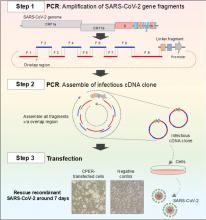
Researchers from Osaka University and Hokkaido University develop a system for analyzing mutations in SARS-CoV-2 that is much simpler and faster than existing methods.
29 Mar 2021
Hokkaido University
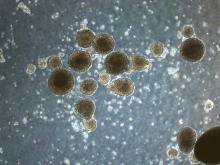
A hydrogel, a type of soft matter, developed at Hokkaido University successfully reverted cancer cells back to cancer stem cells within 24 hours, in six different human cancer types. This could lead to the development of anti-cancer stem cell drugs and personalized medicines.
29 Mar 2021
Duke-NUS Medical School
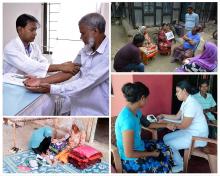
Multi-country trial finds low-cost intervention to improve hypertension management in rural communities is cost-effective. Consisting of home visits by community healthcare workers, physician training and coordination with public health care infrastructure, the intervention can be scaled up in low- and middle-income countries.
26 Mar 2021
Institute for Integrated Cell-Material Sciences (iCeMS) at Kyoto University
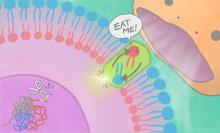
An ‘eat-me’ signal displayed on cell surfaces requires activation of a lipid-scrambling protein by a nuclear protein fragment.

25 Mar 2021
Osaka City University
Through a series of experiments using nasal polyp organ culture and mouse models of restraint stress, researchers unveil relationship between presence of corticotropin-releasing stress hormone and increase in and degranulation of allergy-causing mast cells.
24 Mar 2021
Duke-NUS Medical School
Study shows that antibody longevity varies widely from 40 days to as long as several decades and not everyone who has recovered from COVID-19 is immune from reinfection. Individuals with low levels of neutralising antibodies may still be protected if they have robust T-cell immunity. Blood tests and a computer algorithm suggest annual vaccinations might be needed for some individuals to prevent future outbreaks of COVID-19.

11 Mar 2021
Hokkaido University
Scientists have discovered a route of introduction for High Pathogenicity Avian Influenza Virus (HPAIV) H5N8 into Japan and, in parallel, have investigated the potential of two human anti-influenza drugs for the control of HPAI in birds.
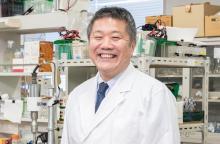
04 Mar 2021
Hokkaido University
This article is an excerpt from the Hokkaido University research magazine “Tackling Global Issues vol.3 Fighting the menace of zoonosis" (link below).
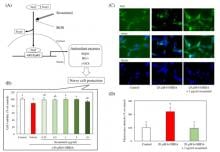
03 Mar 2021
Osaka City University
Osaka City University finds that the chemical sesaminol, naturally occurring in sesame seeds, protects against Parkinson’s disease by preventing neuronal damage that decreases the production of dopamine. In vitro experiments show sesaminol handle oxidative stress in cells by regulating the production of reactive oxygen species and the movement of antioxidants. In vivo experiments reveal that a diet of sesaminol increases production of dopamine and significantly improve motor functions in mice.
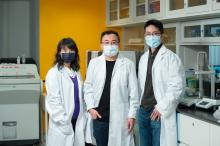
02 Mar 2021
Hong Kong Baptist University (HKBU)
A Hong Kong Baptist University-led (HKBU) research team has developed a novel drug which has the potential to become a next-generation treatment for cancers associated with Epstein–Barr virus (EBV).
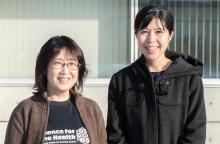
25 Feb 2021
Hokkaido University
This article is an excerpt from the Hokkaido University research magazine “Tackling Global Issues vol.3 Fighting the menace of zoonosis" (link below).
25 Feb 2021
Daegu Gyeongbuk Institute of Science and Technology (DGIST)
New study shows that uneven accumulation of amyloid β is linked to olfactory dysfunction or partial loss of smell, an early symptom of Alzheimer’s disease

24 Feb 2021
Springer Nature
Springer Nature and the University of Tokyo to hold SDGs Symposium 2021, “Interdisciplinary science solutions for food, water, climate and ecosystems Sustainable Development Goals”
24 Feb 2021
City University of Hong Kong (CityUHK)
Many genetic variants have been found to have a linkage with genetic diseases, but the understanding of their functional roles in causing diseases are still limited. An international research team, including a biomedical scientist from City University of Hong Kong (CityU), has developed a high-throughput biological assay technique which enabled them to conduct a systematic analysis on the impact of nearly 100,000 genetic variants on the binding of transcription factors to DNA. Their findings provided valuable data for finding key biomarkers of type 2 diabetes for diagnostics and treatments. And they believe that the new technique can be applied to studies of variants associated with other genetic diseases.
24 Feb 2021
The Chinese University of Hong Kong (CUHK)
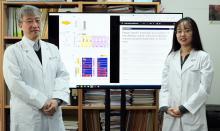
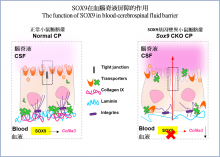
A research team from the School of Life Sciences at The Chinese University of Hong Kong (CUHK) has recently discovered that SOX9 protein is an essential regulatory factor of choroid plexus function that ensures the correct composition of cerebrospinal fluid (CSF). The finding, recently published in the prestigious scientific journal Proceedings of the National Academy of Sciences of the United States of America (PNAS), has provided the scientific community a novel understanding to the molecular regulatory mechanisms behind the function of the blood-CSF barrier and lays the groundwork for developing novel therapeutic strategies for preventing and treating neurodevelopmental disorders.
Events
Sorry, no events coming up for this topic.
Researchers
Sorry, no researchers coming up for this topic.
- « first
- ‹ previous
- 1
- 2
- 3
Giants in history

Tu Youyou (born 30 December 1930) is a Chinese pharmaceutical scientist who was awarded the 2015 Nobel Prize in Physiology or Medicine for her work on extracting artemisin from sweet wormwood to treat malaria.

Filipina paediatrician and scientist Perla Santos-Ocampo (25 July 1931 – 29 June 2012) made important contributions to treatments and policies that curbed debilitating and sometimes deadly diarrhoea-related diseases and malnutrition in children.

Singaporean physician Oon Chiew Seng (1916 – 31 March 2022) advanced dementia care and research in Singapore, and co-founded the Apex Harmony Lodge, the nation’s first nursing home for residents with dementia.

Vietnamese surgeon Tôn Thất Tùng (10 May 1912 – 7 May 1982) developed a pioneering technique that reduced the risks and mortality rate of liver operations.
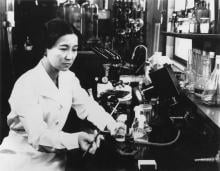
Ruby Sakae Hirose (1904 – 1960) was a Japanese-American scientist whose research contributed significantly to our understanding of blood clotting, allergies and cancer.

Iranian physician and bacteriologist Azar Andami (8 December 1926 – 19 August 1984) developed a cholera vaccine to combat an outbreak that swept through the Middle East, India, Southeast Asia, and Africa in 1937.
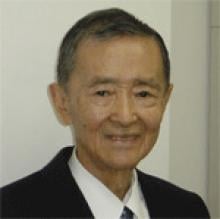
Michiaki Takahashi (17 February 1928 – 16 December 2013) was a Japanese virologist who developed the first chickenpox vaccine.

Irene Ayako Uchida’s (8 April 1917 – 30 July 2013) strides to understand genetic diseases such as Down syndrome paved the way for early screening of chromosomal abnormalities in foetuses.
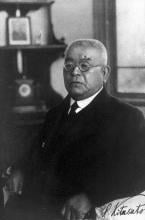
Baron Kitasato Shibasaburo (29 January 1856 – 13 June 1931) was a Japanese physician and bacteriologist whose work led to a new understanding of preventing and treating tetanus, diphtheria and anthrax.
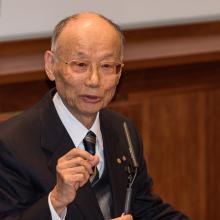
By isolating soil microorganisms and studying the compounds they produce, Satoshi Omura (born 1935) discovered almost 500 organic compounds with unique properties that were produced by these microorganisms, including many new antibiotics.
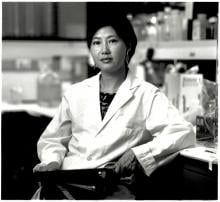
Chinese-American virologist and molecular biologist Flossie Wong-Staal (27 August 1946 – 8 July 2020) was the first scientist to clone HIV and determine the function of its genes.

Maharani Chakravorty (1937 – 2015) was one of India’s earliest molecular biologists whose research paved the way for advances in the treatment of bacterial and viral infections.
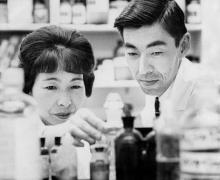
Husband and wife team, Kimishige (3 December 1925 – 6 July 2018) and Teruko Ishizaka (28 September 1926 – 4 June 2019) discovered the antibody class Immunoglobulin E (IgE) that triggers allergic reactions. They also discovered that IgE antibodies attach to white blood cells, known as mast cells, releasing histamine, which causes allergic reactions.
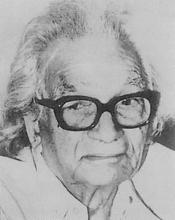
Salimuzzaman Siddiqui (19 October 1897 – 14 April 1994) was an artist and chemist from Pakistan whose research focused on natural products from plants.
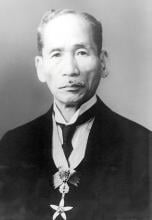
Umetaro Suzuki (7 April 1874 – 20 September 1943) was a Japanese scientist best remembered for his research on beriberi, a disease caused by vitamin B1 deficiency, characterized by limb stiffness, paralysis and pain.
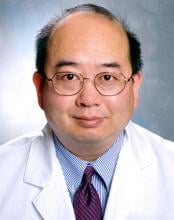
Barry Paw (29 August 1962 – 28 December 2017) was a biologist and oncologist who discovered several novel genes and their functions in red blood cells.

Indian organic chemist Asima Chatterjee (1917 to 2006) studied the medicinal properties of plant products, especially compounds known as vinca alkaloids.

Filipino chemist and pharmacist Manuel A. Zamora (29 March 1870 – 9 July 1929) is best remembered for his discovery of the tiki-tiki formula to combat beriberi, a disease caused by Vitamin B1 deficiency.
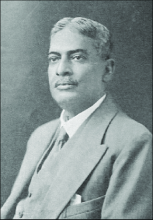
Indian scientist and physician Upendranath Brahmachari (19 December 1873–6 February 1946) is best known for creating a drug called Urea Stibamine, used to safely and reliably treat visceral leishmaniasis (or Kala-azar), a severe infection caused by the Leishmania parasite.
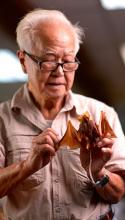
Lim Boo Liat (21 August 1926 – 11 July 2020), a leading authority in the conservation of Malaysia’s biological diversity, had his initial interest in the outdoors piqued by nature lessons in school. Lim, who helped found the National Zoo of Malaysia and re-establish the Malaysian Nature Society, had a particular interest in researching zoonotic diseases associated with small animals.
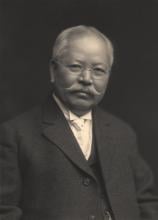
Japanese chemist Takamine Jokichi (3 November 1854 – 22 July 1922) founded the Tokyo Artificial Fertilizer Company, where he isolated a starch-digesting enzyme (named takadiastase) from the fungus Aspergillus oryzae.
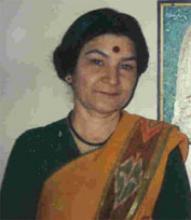
A pioneer of bio-organic chemistry, Darshan Ranganathan (4 June 1941 – 4 June 2001) is remembered for developing a protocol for synthesising imidazole, a compound used to make antifungal drugs and antibiotics. Widely considered India’s most prolific researcher in chemistry, she also published dozens of papers in renowned journals on protein folding, molecular design, chemical simulation of key biological processes, and the synthesis of functional hybrid peptides and nanotubes.