
Science
News
02 Apr 2015
Waseda University
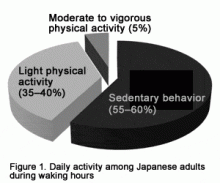
An opinion article by Professor Koichiro Oka of Waseda University, Japan
02 Apr 2015
Waseda University
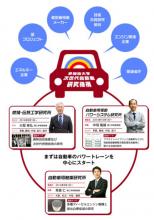
- A leading precompetitive research collaboration center
- Research organization for next generation automobiles
02 Apr 2015
Asia Research News
The International Development Research Centre launches its Strategic Plan 2015-2020.
01 Apr 2015
Asia Research News
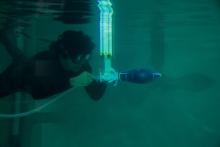
Ability to morph (change shape), propel itself and turn quickly in water (i.e. super-manoeuvrability) efficiently and silently, lending itself to future possibilities in surveillance and inspection
01 Apr 2015
Asia Research News
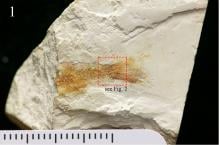
A ~147 million-year-old Jurassic-aged osteoglossoid osteoglossomorph fish Paralycoptera from outcrops at Lai Chi Chong has been described. This fossil represents the first dinosaur-era fish - as well as vertebrate - from Hong Kong to be identified.
30 Mar 2015
National Institute for Materials Science (NIMS)
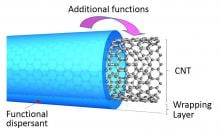
Scientists at Japan’s Kyushu University say polymer-wrapped carbon nanotubes hold much promise in biotechnology and energy applications. The paper was recently published in Science and Technology of Advanced Materials.
27 Mar 2015
Korea Advanced Institute of Science and Technology (KAIST)
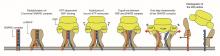
KAIST researchers discovered that the protein N-ethylmaleimide-sensitive factor (NSF) unravels a single SNARE complex using one round ATP turnover by tearing the complex with a single burst, contradicting a previous theory that it unwinds in a processive manner.

26 Mar 2015
Zelinsky Institute of Organic Chemistry, Russian Academy of Sciences
Replacement of toxic chemical components by non-toxic natural analogs is a popular approach in sustainable projects. The study carried out at Zelinsky Institute of Organic Chemistry (Moscow) has shown that partial replacement of chemical compounds by their natural analogs may surprisingly lead to even more toxic products.
23 Mar 2015
Korea Advanced Institute of Science and Technology (KAIST)
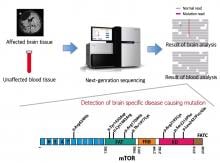
KAIST researchers have discovered that brain somatic mutations in the MTOR gene induce intractable epilepsy and suggest a precision medicine to treat epileptic seizures.
23 Mar 2015
National Institute for Materials Science (NIMS)
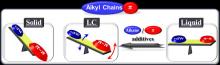
Molecules used to make optoelectronic devices can be engineered to have specific properties, making the production of high-performance optoelectronic devices more efficient, according to a paper in Science and Technology of Advanced Materials.
20 Mar 2015
Asia Research News
TATAA Biocenter, Sweden, the world’s largest provider of hands-on training in qPCR and Europe's leading provider of nucleic acid analysis services by qPCR, team up with Select Biosciences South East Asia to present this Full Day Training Course on Wednesday 20th May 2015.
19 Mar 2015
Asia Research News
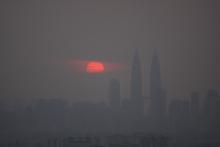
Research has shown a significant association between haze events in South-East Asia and mortality rates caused by respiratory illness on the west coast of peninsular Malaysia.
19 Mar 2015
National Institute for Materials Science (NIMS)
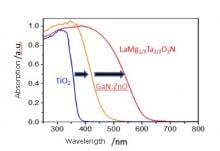
A research group led by Chengsi Pan and Tsuyoshi Takata at NIMS Global Research Center for Environment and Energy Based on Nanomaterials Science (GREEN), and Kazunari Domen at The University of Tokyo newly developed a water-splitting photocatalyst that is operable over a wider range of the visible light spectrum than before.

19 Mar 2015
The Agency for Science, Technology and Research (A*STAR)
An oxide/carbon composite outperforms expensive platinum composites in oxygen chemical reactions for green energy devices
19 Mar 2015
The Agency for Science, Technology and Research (A*STAR)
A theoretical and experimental study could lead to improved catalysts for producing hydrogen fuel from waste biomass
19 Mar 2015
The Agency for Science, Technology and Research (A*STAR)
Singapore, March 18, 2015 – A new drug delivery system from the Institute of Bioengineering and Nanotechnology (IBN) of A*STAR that uses green tea to fight cancer has won the Grand Prize at The Crown Prince Creative, Innovative Product and Technological Advancement (CIPTA) Award 2015.
18 Mar 2015
IOP Publishing
This year’s IOP-STFC Physics Journalism Prize has been awarded to Lisa Grossman for her article ‘Quasicrystal quest: The unreal rock that nature made’, published in New Scientist.
17 Mar 2015
Asia Research News
The Singapore Bioimaging Consortium and Select Biosciences South East Asia are pleased to report on the success of The Clinical Applications of Stem Cells, which took place at The Academia, Singapore General Hospital Campus, Singapore on the 26-27 February 2015.
17 Mar 2015
Asia Research News
Published in PNAS, the first of its kind probe can rapidly trace tens of thousands of tagged proteins inside cells. With a response time within two minutes and at a quarter of the cost, the new fluorescent probe provides an inexpensive and effective tool for real-time monitoring of cell activities.
16 Mar 2015
The Hong Kong Polytechnic University (PolyU)
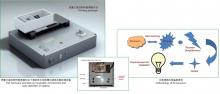
Enabling instant automatic identification of the presence of microorganism
16 Mar 2015
Asia Research News
Smaller and lighter electrical devices which convert electric power into radio waves and vice versa, or antennae is the key to the future of high-speed data transfer especially for three-dimensional imaging.
16 Mar 2015
Universiti Teknologi MARA (UiTM)
The International Plant Nutrition Institute (IPNI) Scholar Award Program has once again expanded its reach by awarding Scholarships to 30 graduate students in 2014.

16 Mar 2015
The World Academy of Sciences (TWAS)
IAP, the global network of science academies, announces the publication of ‘Working with Big Ideas of Science Education’. The book expresses the goals of science education in terms of a small number of ‘big ideas’ – that help build an understanding of key ideas across the years from the start of primary to the end of secondary school.
13 Mar 2015
Asia Research News
2015 Advanced Research in Material Sciences, Manufacturing, Mechanical and Mechatronics Engineering Technology International Conference (AR4MET'2015)
2015 International Conference on Education (ICOED'2015)
2015 Renewable Energy and Green Technology International Conference (REEGETECH'2015)
13 Mar 2015
Asia Research News
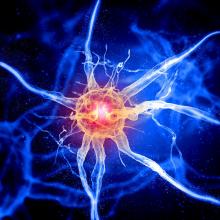
Researchers have demonstrated the potential of a “synthetic protein mimic” to promote the adhesion of brain cells in a laboratory setting. This feat could help overcome a major challenge in nerve tissue engineering.
12 Mar 2015
The Hong Kong Polytechnic University (PolyU)
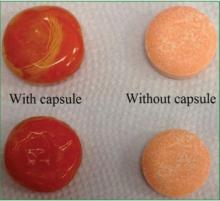
Researchers at Hong Kong Polytechnic University have developed a novel capsule with zein and pectin by taking the advantage of the substances' unique physicochemical properties.
12 Mar 2015
Asia Research News
An engineering project from The University of Nottingham Malaysia Campus (UNMC) was awarded with the Food and Drink Undergraduate Prize under the highly commended category by the Institution of Chemical Engineers (UK) Food and Drink Special Interest Group.
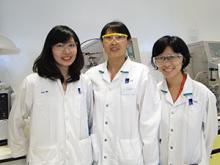
12 Mar 2015
The Agency for Science, Technology and Research (A*STAR)
A cost-effective method uses fungi to convert palm oil waste to green products
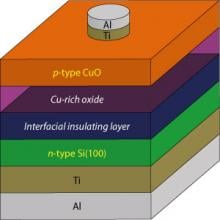
12 Mar 2015
The Agency for Science, Technology and Research (A*STAR)
Cheap, environmentally friendly solar cells are produced by minimizing disruptive surface layers
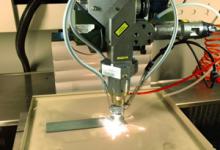
12 Mar 2015
The Agency for Science, Technology and Research (A*STAR)
A laser-assisted fabrication process enables the processing of heat-resistant and crack-free materials
Giants in history

Chinese-American physicist Tsung-Dao Lee (24 November 1926 – 4 August 2024) was awarded the Nobel Prize for Physics in 1957 together with Chen-Ning Yang for their work challenging the symmetry law in subatomic particles. They were the first Chinese Nobel prize winners, with Lee becoming the second-youngest laureate. Born in Shanghai, he went to the United States on scholarship and studied under another Nobel winner, Enrico Fermi.

Turkish astrophysicist Dilhan Eryurt (29 November 1926 – 13 September 2012) conducted research on how the sun affects environmental conditions on the moon.
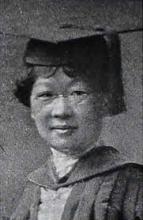
Chinese biochemist Chi Che Wang (1894 - 1979), one of the first Chinese women to study abroad, advanced to prominent research positions at American institutions including the University of Chicago and the Northwestern University Medical School.
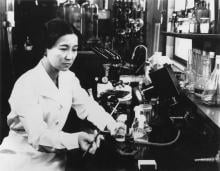
Ruby Sakae Hirose (1904 – 1960) was a Japanese-American scientist whose research contributed significantly to our understanding of blood clotting, allergies and cancer.
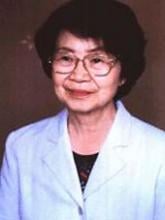
Chinese electron microscopy specialist Li Fanghua (6 January 1932 – 24 January 2020) facilitated the high-resolution imaging of crystal structures by eliminating interference.
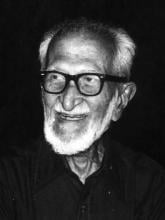
Sálim Moizuddin Abdul Ali (12 November 1896 – 20 June 1987), commonly referred to as the Birdman of India, was the first person to conduct systematic surveys of birds from across India.
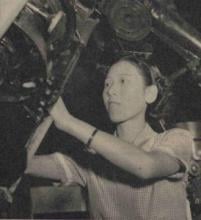
Haisako Koyama (1916 – 1997) was a Japanese solar observer whose dedication to recording sunspots – cooler parts of the sun’s surface that appear dark – produced a sunspot record of historic importance.
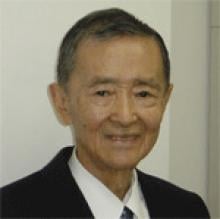
Michiaki Takahashi (17 February 1928 – 16 December 2013) was a Japanese virologist who developed the first chickenpox vaccine.
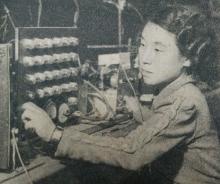
Toshiko Yuasa (11 December 1909 – 1 February 1980) was the first Japanese female physicist whose research on radioactivity shed light on beta decay – the process in which an atom emits a beta particle (electron) and turns into a different element.

Angelita Castro Kelly (1942-2015) was the first female Mission Operations Manager (MOM) of NASA. She spearheaded and supervised the Earth Observing System missions during its developmental stage.
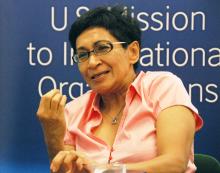
Malaysia’s first astrophysicist, Mazlan binti Othman (born 11 December 1951) was instrumental in launching the country’s first microsatellite, and in sending Malaysia’s first astronaut, Sheikh Muszaphar Shukor, into space.

Bibha Chowdhuri (1913 – 2 June 1991) was an Indian physicist who researched on particle physics and cosmic rays. In 1936, she was the only female to complete a M.Sc. degree at the University of Calcutta.

Meemann Chang (born 17 April 1936) is a Chinese palaeontologist who studied the fossils of ancient fish to understand the evolution of life. By examining fossils, she uncovered new insights on how vertebrates, animals with a backbone, migrated from the sea and became adapted to live on land.
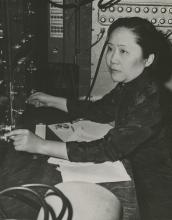
Chien-Shiung Wu (31 May 1912 – 16 February 1997) was an experimental physicist who made several important contributions to nuclear physics. Wu worked on the Manhattan Project – a top-secret program for the production of nuclear weapons during World War II and helped to develop a process for separating uranium into U235 and U238.
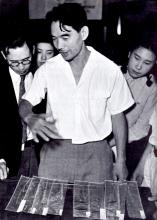
Hitoshi Kihara (1893 – 1986) was one of the most famous Japanese geneticists of the 20th century. One of his most significant contributions was identifying sex chromosomes (X and Y) in flowering plants.
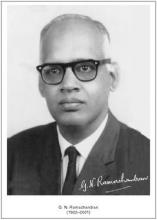
Gopalasamudram Narayanan Ramachandran (8 October 1922 – 7 April 2001) is best known for developing the Ramachandran plot to understand the structure of short chains of amino acids, known as peptides.
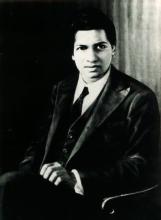
Srinivasa Ramanujan (22 December 1887 – 26 April 1920) was a math prodigy and widely considered one of India’s greatest mathematicians. Despite having almost no formal training in mathematics, he made substantial contributions to mathematical analysis, number theory, infinite series and continued fractions.
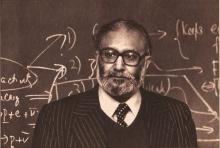
Mohammad Abdus Salam (29 January 1926 – 21 November 1996) was a theoretical physicist and the first Pakistani to receive a Nobel Prize in science.
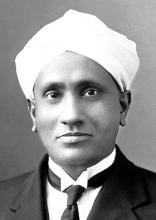
Sir Chandrasekhara Venkata Raman (7 November 1888 – 21 November 1970) was an Indian physicist who performed ground-breaking research in the field of light-scattering.
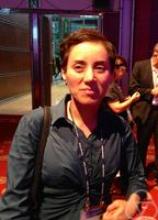
Mathematician Maryam Mirzakhani (12 May 1977 – 14 July 2017) was the first and only woman and Iranian to date to win the Fields Medal in 2014 for her work on curved surfaces.
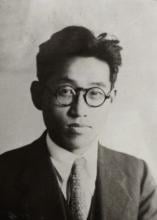
Joo-myung Seok (November 13, 1908 – October 6, 1950) was a Korean butterfly entomologist who made important contributions to the taxonomy of the native butterfly species in Korea.
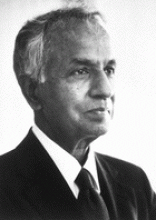
Subrahmanyan Chandrasekhar (19 October 1910 – 21 August 1995) was an Indian astrophysicist who studied the structure and evolution of stars.
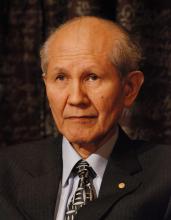
Osamu Shimomura (27 August 1928 – 19 October 2018) was a Japanese organic chemist and marine biologist who dedicated his career to understanding how organisms emitted light.
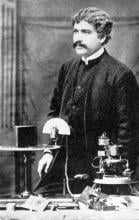
Sir Jagadish Chandra Bose (30 November 1858 – 23 November 1937) was a scientist and inventor who contributed to a wide range of scientific fields such as physics, botany and biology.
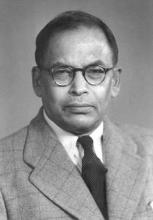
Meghnad Saha (6 October 1893 – 16 February 1956) was an Indian astrophysicist best known for formulating the Saha ionization equation which describes the chemical and physical properties of stars.
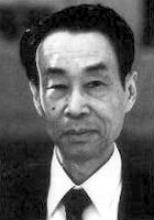
Motoo Kimura (13 November 1924 – 13 November 1994) was a Japanese theoretical population geneticist who is best remembered for developing the neutral theory of molecular evolution.

Chika Kuroda (24 March 1884 – 8 November 1968) was a Japanese chemist whose research focussed on the structures of natural pigments.
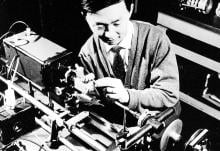
Charles Kuen Kao (Nov. 4, 1933 to Sept. 23, 2018) was an engineer who is regarded as the father of fibre optics. His work in the 1960s on long distance signal transmission using very pure glass fibres revolutionized telecommunications, enabling innovations such as the Internet.
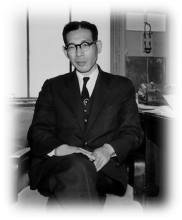
The field of solid-state ionics originated in Europe, but Takehiko Takahashi of Nagoya University in Japan was the first to coin the term ‘solid ionics’ in 1967. ‘Solid-state ionics’ first appeared in 1971 in another of his papers, and was likely a play on ‘solid-state electronics’, another rapidly growing field at the time.
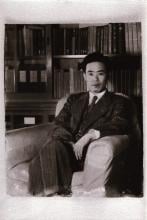
Japanese physicist Ukichiro Nakaya (1900-1962) made the world’s first artificial snowflakes. He started his research on snow crystals in the early 1930s at Hokkaido University, where there is an unlimited supply of natural snow in winter. By taking over 3,000 photographs, he established a classification of natural snow crystals and described their relationship with weather conditions.
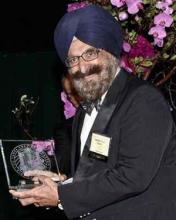
Physicist Narinder Singh Kapany (31 October 1926 – 4 December 2020) pioneered the use of optical fibres to transmit images, and founded several optical technology companies. Born in Punjab, India, he worked at a local optical instruments factory before moving to London for PhD studies at Imperial College. There, he devised a flexible fibrescope to convey images along bundles of glass fibres.
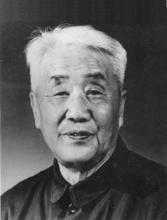
Chinese palaeontologist, archaeologist and anthropologist Pei Wenzhong (January 19, 1904 – September 18, 1982) is regarded as a founder of Chinese anthropology.
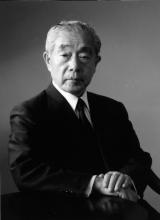
Japanese chemist Kenichi Fukui (4 October 1918 – 9 January 1998) was the first Asian scientist to be awarded the Nobel Prize in Chemistry. Together with Roald Hoffman, he received this honour in 1981 for his independent research into the mechanisms of chemical reactions.
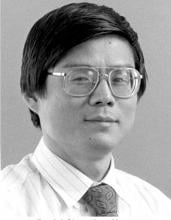
South Korean theoretical physicist Daniel Chonghan Hong (3 March 1956 – 6 July 2002) achieved fame in the public sphere through his research into the physics of popcorn.
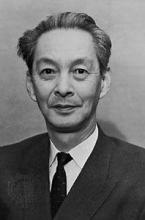
Shinichiro Tomonaga (31 March 1906 – 8 July 1979), together with Richard Feynman and Julian Schwinger, was awarded the Nobel Prize in Physics in 1965, for their contributions to advance the field of quantum electrodynamics. Tomonaga was also a strong proponent of peace, who actively campaigned against the proliferation of nuclear weapons and promoted the peaceful use of nuclear energy.
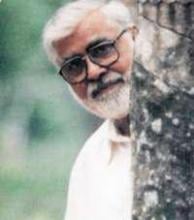
Known as Mr. Natural Rubber, chemist and researcher B. C. Shekhar (17 November 1929 – 6 September 2006) introduced a number of technical innovations that helped put Malaysia’s natural rubber industry on the world map.

Lin Lanying (7 February 1918 – 4 March 2003) was a Chinese material engineer remembered for her contributions to the field of semiconductor and aerospace materials. Lanying was born into a family who did not believe in educating girls and she was not allowed to go to school.
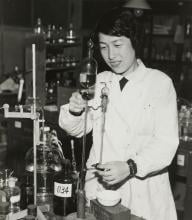
Japanese geochemist Katsuko Saruhashi developed the first method and tools for measuring carbon dioxide in seawater