
Science
News

01 Nov 2006
Nature Publishing Group
An unprecedented look at the prospects for science and technology in the Muslim world is offered in Nature's News section this week.
01 Nov 2006
Nature Publishing Group
Having your cake and eating it too, ‘Silver bullet’ strategies due a rethink, Rock-solid support for ‘Snowball Earth’ theory, The benefits of sleeping around, Tiny mirrors chill out, New sonic hedgehog receptor, Maize fungal genome deciphered, ‘Export’ protein structure unveiled, Policing every egg you lay
31 Oct 2006
Tokyo University of Science
The research team from a joint research program of Tokyo University of Science (TUS)and the Japan Science and Technology Agency have succeeded in producing hydrogen from water through the use of gallium nitride (GaN) crystals for the first time.
29 Oct 2006
Palestine Academy for Science and Technology
The focus of this paper is on two activities that are related to the management of international river basins. The first of these is a scientific report, which is now more than five years old and focuses on the management of the waters of this region of the Middle East. The second is the Rosenberg International Forum on water policy
29 Oct 2006
Nature Publishing Group
Magnetic cooling demonstrated in a gas, A step towards quantum networks, Seeing the benefits of nanoceria, A potential male contraceptive, Towards a complete human ‘epigenome’, Small RNAs drive evolution, Genetic risk for schizophrenia and brain function, Knocking out false positives in interaction proteomics
26 Oct 2006
Nature Publishing Group
Should willing individuals be allowed to sell their kidneys? Yes, according to a Viewpoint article in Nature Clinical Practice Nephrology, which argues that failure to regulate kidney sales could be unethical. Abdallah S Daar asserts that the traditional moral arguments against payment for organs are difficult to sustain under close scrutiny.

25 Oct 2006
Universiti Malaysia Sarawak
The compilation of a list of mammals of Borneo has come a very long way. This on-line checklist owed to many previous European travelers, traders, colonial officers, museum collectors, curators and biologists describing those species that are known to us today.
25 Oct 2006
Nature Publishing Group
Nuclear forensics, Global cooling preceded life on Earth, DNA degradation link to rheumatoid arthritis, Lampreys, the supreme survival specialists, The conductivity of mantle minerals, Largest avian skull runs rings around agility theory
22 Oct 2006
Nature Publishing Group
Summaries of other newsworthy papers from Nature include Inducing connections between brain sites alters motor function - Nature, The bottom line for silk - Nature Materials, Bittersweet news for neural stem cell grafts - Nature Medicine, TAPping into mammalian interaction proteomics - Nature Methods
20 Oct 2006
Asia Research News
People around the world can access information about harmful introduced species easier than ever thanks to the September 2006 launch of a new website for the Global Invasive Species Database (GISD).
19 Oct 2006
Universiti Sains Malaysia
This innovation offers versatility and is applicable on virtually all types of materials regardless of it nature or origin such as semi-metals like silicon, silicates, glasses, ceramics as well as non-metals like plastics, woods and shells.
19 Oct 2006
Nature Publishing Group
The culture conditions under which human embryonic stem cells can be converted into cells that produce all five hormones made by the pancreas, including insulin, are reported online in Nature Biotechnology this week.
18 Oct 2006
Nature Publishing Group
Science issues could play a key role in the US mid-term elections, says a news feature in this week’s Nature. Reporters have teamed up to scrutinize races across the country and report how two topics in particular – stem cells and energy – are being used on the campaign trail.
18 Oct 2006
Nature Publishing Group
‘Linguistics’ spawns new antimicrobial drugs, Stop picking on the big guys, Moon's south pole unlikely to have thick ice deposits, Bang on in the Andromeda galaxy, Cancer stem cells resist radiotherapy, Primitive fish surprisingly advanced, Neurodegeneration, Two pores colliding, Getting to the roots of the fungal family tree.......
18 Oct 2006
Malaysian Biotechnology Information Centre
The Asia Pacific Conference on Plant Tissue Culture and Agribiotechnology (APaCPA) 2007 will be a comprehensive professional platform to promote research in all aspects of basic and applied biotechnology, especially in the areas of plant tissue culture and agribiotechnology.
16 Oct 2006
Forest Research Institute Malaysia (FRIM)
Their expertise include Bamboo Management, Silviculture, Non-Wood Forest Produce Furniture, Mangrove, Forestry, Tissue Culture Horticulture, Seed Science, Microbiology Pharmaceutical, Drug Discovery, Natural Products Chemistry, Herbal Product Essential Oils, Wood Composite, Biomass Utilisation, Manufacturing Mechanisation and Automation
15 Oct 2006
International Journal of Surgery
LONDON – The International Journal of Surgery proudly announces the launch of its new open access website www.theijs.com.
15 Oct 2006
Nature Publishing Group
Summaries of newsworthy papers from Nature Journals include New sex determination gene identified - Nature Genetics, Towards better anti-epileptic drugs - Nature Neuroscience, We have no blue bananas - Nature Neuroscience

12 Oct 2006
International Center for Agricultural Research in the Dry Areas (ICARDA)
The International Center for Agricultural Research in the Dry Areas (ICARDA) is seeking an Executive Assistant to the Director General, who will be reporting to the Director General (DG), as well as the Board Chair on matters related to the Board of Trustees.
12 Oct 2006
International Center for Agricultural Research in the Dry Areas (ICARDA)
The International Center for Agricultural Research in the Dry Areas (ICARDA) has an immediate vacancy for the position of an Agricultural Policy Specialist (P-level). The post holder will be based at ICARDA’s headquarters in Aleppo, Syria.
11 Oct 2006
Nature Publishing Group
Vaccinating the Ethiopian wolf, Titan's ocean lost forever?, Oxygen puzzle solved?, Modelling the early Universe, Controlling the insulin-degrading enzyme may relieve Alzheimer’s disease, Towards a quantum network and finally… Salamanders see red

09 Oct 2006
International Rice Research Institute
Los Baños, Philippines – The International Rice Research Institute (IRRI) continues to repair extensive damage caused last Thursday (September 28) by the worst typhoon in more than a decade to hit the world-famous agricultural research center.
09 Oct 2006
International Rice Research Institute
New Delhi, India – More income for the world’s millions of poor rice farmers and consumers is the first goal of a major new revamp to the agenda of the International Rice Research Institute (IRRI) – the largest and most successful international agricultural research institute in Asia.
04 Oct 2006
Universiti Sains Malaysia
The electronic nose is an array of gas sensors which measure the frequency changes of volatile vapors on its surfaces. The 'electronic tongue' consists of lipid polymer membrane electrodes (to mimic human tongue) for the analysis of liquid samples.
04 Oct 2006
Nature Publishing Group
Summaries of newsworthy papers from Nature include Quantum physics: Quantum teleportation between light and matter, Geology: How does the Earth recycle? and finally… Whiskers bristle with news
04 Oct 2006
Nature Publishing Group
The last thing most people want in their computer's memory is a virus. But now a team of scientists has used a virus to make a memory device, according to research in this month's Nature Nanotechnology.
03 Oct 2006
NAM S&T Centre
International conference on S&T Policy Research and Statistics, International Roundtable on Lessons from Natural Disasters, Policy Issues and Mitigation Strategies, International Roundtable on Lightning Protection, International workshop on Medicinal Plants and Herbal Medicine
01 Oct 2006
Nature Publishing Group
A molecule that makes mammals feel full up has been identified, and drugs that target it may help to treat obesity. Other newsworthy papers include Vision: Bug eyes get a makeover - Nature, One step toward more efficient cloning - Nature Genetics, New strategy for controlling inflammation - Nature Immunology
01 Oct 2006
Islamic University of Gaza
Abstract submission deadline is October 15, 2006. The conference will be held at the Islamic University of Gaza (IUG) from 18-19 June 2007. It will focus on important engineering issues relevant to construction and development, which will stimulate construction efforts and development.
29 Sep 2006
Nature Publishing Group
Recommendations published in the October issue of Nature Clinical Practice Gastroenterology & Hepatology should help physicians to identify quickly whether or not a patient is suitable for treatment with nonsteroidal anti-inflammatory drugs (NSAIDs).
Giants in history

Chinese-American physicist Tsung-Dao Lee (24 November 1926 – 4 August 2024) was awarded the Nobel Prize for Physics in 1957 together with Chen-Ning Yang for their work challenging the symmetry law in subatomic particles. They were the first Chinese Nobel prize winners, with Lee becoming the second-youngest laureate. Born in Shanghai, he went to the United States on scholarship and studied under another Nobel winner, Enrico Fermi.

Turkish astrophysicist Dilhan Eryurt (29 November 1926 – 13 September 2012) conducted research on how the sun affects environmental conditions on the moon.
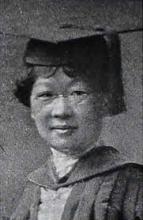
Chinese biochemist Chi Che Wang (1894 - 1979), one of the first Chinese women to study abroad, advanced to prominent research positions at American institutions including the University of Chicago and the Northwestern University Medical School.
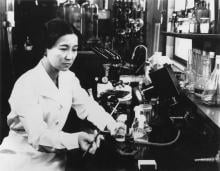
Ruby Sakae Hirose (1904 – 1960) was a Japanese-American scientist whose research contributed significantly to our understanding of blood clotting, allergies and cancer.

Chinese electron microscopy specialist Li Fanghua (6 January 1932 – 24 January 2020) facilitated the high-resolution imaging of crystal structures by eliminating interference.
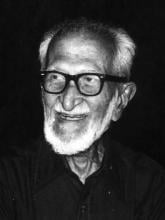
Sálim Moizuddin Abdul Ali (12 November 1896 – 20 June 1987), commonly referred to as the Birdman of India, was the first person to conduct systematic surveys of birds from across India.
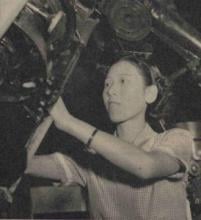
Haisako Koyama (1916 – 1997) was a Japanese solar observer whose dedication to recording sunspots – cooler parts of the sun’s surface that appear dark – produced a sunspot record of historic importance.
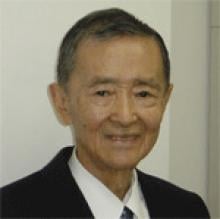
Michiaki Takahashi (17 February 1928 – 16 December 2013) was a Japanese virologist who developed the first chickenpox vaccine.
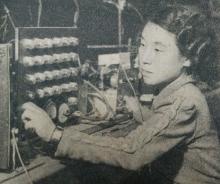
Toshiko Yuasa (11 December 1909 – 1 February 1980) was the first Japanese female physicist whose research on radioactivity shed light on beta decay – the process in which an atom emits a beta particle (electron) and turns into a different element.

Angelita Castro Kelly (1942-2015) was the first female Mission Operations Manager (MOM) of NASA. She spearheaded and supervised the Earth Observing System missions during its developmental stage.
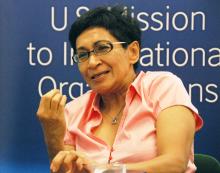
Malaysia’s first astrophysicist, Mazlan binti Othman (born 11 December 1951) was instrumental in launching the country’s first microsatellite, and in sending Malaysia’s first astronaut, Sheikh Muszaphar Shukor, into space.

Bibha Chowdhuri (1913 – 2 June 1991) was an Indian physicist who researched on particle physics and cosmic rays. In 1936, she was the only female to complete a M.Sc. degree at the University of Calcutta.
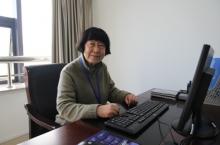
Meemann Chang (born 17 April 1936) is a Chinese palaeontologist who studied the fossils of ancient fish to understand the evolution of life. By examining fossils, she uncovered new insights on how vertebrates, animals with a backbone, migrated from the sea and became adapted to live on land.
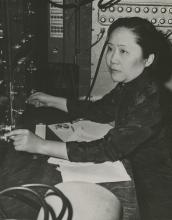
Chien-Shiung Wu (31 May 1912 – 16 February 1997) was an experimental physicist who made several important contributions to nuclear physics. Wu worked on the Manhattan Project – a top-secret program for the production of nuclear weapons during World War II and helped to develop a process for separating uranium into U235 and U238.
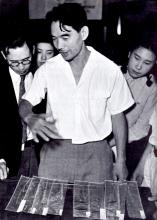
Hitoshi Kihara (1893 – 1986) was one of the most famous Japanese geneticists of the 20th century. One of his most significant contributions was identifying sex chromosomes (X and Y) in flowering plants.
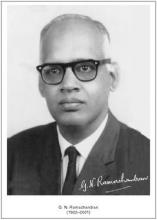
Gopalasamudram Narayanan Ramachandran (8 October 1922 – 7 April 2001) is best known for developing the Ramachandran plot to understand the structure of short chains of amino acids, known as peptides.
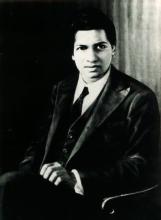
Srinivasa Ramanujan (22 December 1887 – 26 April 1920) was a math prodigy and widely considered one of India’s greatest mathematicians. Despite having almost no formal training in mathematics, he made substantial contributions to mathematical analysis, number theory, infinite series and continued fractions.
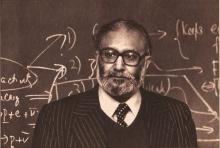
Mohammad Abdus Salam (29 January 1926 – 21 November 1996) was a theoretical physicist and the first Pakistani to receive a Nobel Prize in science.
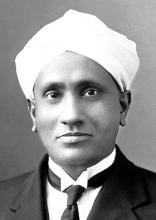
Sir Chandrasekhara Venkata Raman (7 November 1888 – 21 November 1970) was an Indian physicist who performed ground-breaking research in the field of light-scattering.
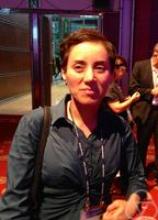
Mathematician Maryam Mirzakhani (12 May 1977 – 14 July 2017) was the first and only woman and Iranian to date to win the Fields Medal in 2014 for her work on curved surfaces.
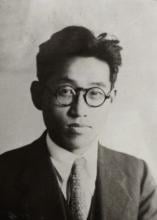
Joo-myung Seok (November 13, 1908 – October 6, 1950) was a Korean butterfly entomologist who made important contributions to the taxonomy of the native butterfly species in Korea.
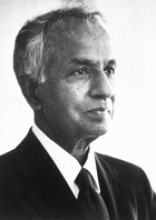
Subrahmanyan Chandrasekhar (19 October 1910 – 21 August 1995) was an Indian astrophysicist who studied the structure and evolution of stars.
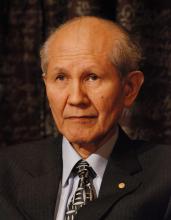
Osamu Shimomura (27 August 1928 – 19 October 2018) was a Japanese organic chemist and marine biologist who dedicated his career to understanding how organisms emitted light.
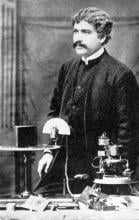
Sir Jagadish Chandra Bose (30 November 1858 – 23 November 1937) was a scientist and inventor who contributed to a wide range of scientific fields such as physics, botany and biology.
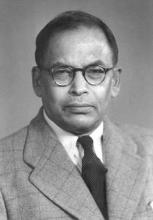
Meghnad Saha (6 October 1893 – 16 February 1956) was an Indian astrophysicist best known for formulating the Saha ionization equation which describes the chemical and physical properties of stars.
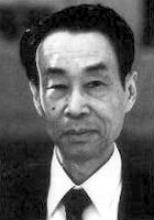
Motoo Kimura (13 November 1924 – 13 November 1994) was a Japanese theoretical population geneticist who is best remembered for developing the neutral theory of molecular evolution.

Chika Kuroda (24 March 1884 – 8 November 1968) was a Japanese chemist whose research focussed on the structures of natural pigments.
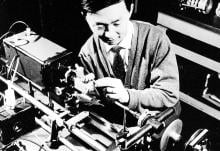
Charles Kuen Kao (Nov. 4, 1933 to Sept. 23, 2018) was an engineer who is regarded as the father of fibre optics. His work in the 1960s on long distance signal transmission using very pure glass fibres revolutionized telecommunications, enabling innovations such as the Internet.
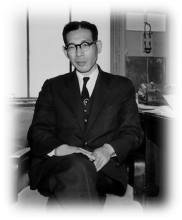
The field of solid-state ionics originated in Europe, but Takehiko Takahashi of Nagoya University in Japan was the first to coin the term ‘solid ionics’ in 1967. ‘Solid-state ionics’ first appeared in 1971 in another of his papers, and was likely a play on ‘solid-state electronics’, another rapidly growing field at the time.
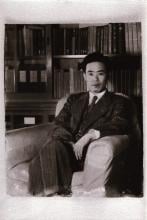
Japanese physicist Ukichiro Nakaya (1900-1962) made the world’s first artificial snowflakes. He started his research on snow crystals in the early 1930s at Hokkaido University, where there is an unlimited supply of natural snow in winter. By taking over 3,000 photographs, he established a classification of natural snow crystals and described their relationship with weather conditions.
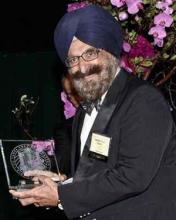
Physicist Narinder Singh Kapany (31 October 1926 – 4 December 2020) pioneered the use of optical fibres to transmit images, and founded several optical technology companies. Born in Punjab, India, he worked at a local optical instruments factory before moving to London for PhD studies at Imperial College. There, he devised a flexible fibrescope to convey images along bundles of glass fibres.
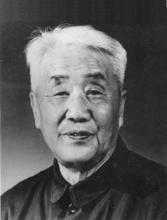
Chinese palaeontologist, archaeologist and anthropologist Pei Wenzhong (January 19, 1904 – September 18, 1982) is regarded as a founder of Chinese anthropology.
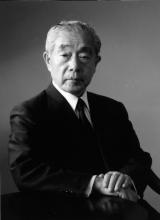
Japanese chemist Kenichi Fukui (4 October 1918 – 9 January 1998) was the first Asian scientist to be awarded the Nobel Prize in Chemistry. Together with Roald Hoffman, he received this honour in 1981 for his independent research into the mechanisms of chemical reactions.
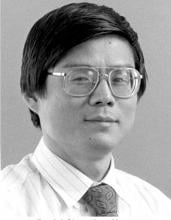
South Korean theoretical physicist Daniel Chonghan Hong (3 March 1956 – 6 July 2002) achieved fame in the public sphere through his research into the physics of popcorn.
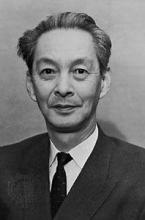
Shinichiro Tomonaga (31 March 1906 – 8 July 1979), together with Richard Feynman and Julian Schwinger, was awarded the Nobel Prize in Physics in 1965, for their contributions to advance the field of quantum electrodynamics. Tomonaga was also a strong proponent of peace, who actively campaigned against the proliferation of nuclear weapons and promoted the peaceful use of nuclear energy.
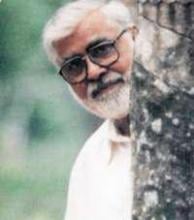
Known as Mr. Natural Rubber, chemist and researcher B. C. Shekhar (17 November 1929 – 6 September 2006) introduced a number of technical innovations that helped put Malaysia’s natural rubber industry on the world map.

Lin Lanying (7 February 1918 – 4 March 2003) was a Chinese material engineer remembered for her contributions to the field of semiconductor and aerospace materials. Lanying was born into a family who did not believe in educating girls and she was not allowed to go to school.
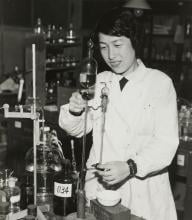
Japanese geochemist Katsuko Saruhashi developed the first method and tools for measuring carbon dioxide in seawater