
Science
News
18 Sep 2018
Asia Research News
Partnership signed at TechInnovation 2018, Singapore
18 Sep 2018
Ulsan National Institute of Science and Technology (UNIST)
A graduate student from South Korea's Ulsan National Institute of Science and Technology (UNIST) has been selected for GRA-NRF Program in Canada.
18 Sep 2018
Asia Research News
Launch of Singapore’s first certified Blockchain Developer Programme and investments into deep tech startups announced
17 Sep 2018
King Abdullah University of Science and Technology (KAUST)
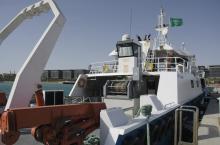
A carbon source stemming from daily fish migrations is implicated in the global carbon cycle.
17 Sep 2018
King Abdullah University of Science and Technology (KAUST)
Nanoparticles with a shell structure improve the performance of zinc-oxide photodetectors.
14 Sep 2018
Asia Research News
Green Economy & Industry 4.0: Achieving Sustainable Development Goals
12 Sep 2018
Hokkaido University
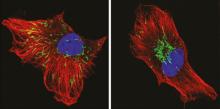
Uncovered details of a molecular pathway in cancer cells could lead to improved treatment.
11 Sep 2018
Nagoya University
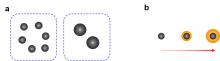
Collaboration between Nagoya University and Cornell University develops improved model to assess the ability of black carbon to warm the Earth's atmosphere.
11 Sep 2018
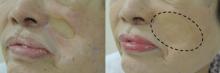
A novel cosmetic product, designed to fill small to moderate facial scars, has shown promise in covering such deformities in a small group of patients.
10 Sep 2018
Hokkaido University
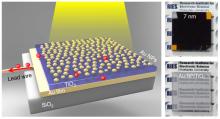
Scientists have developed a photoelectrode that can harvest 85 percent of visible light in a 30 nanometers-thin semiconductor layer between gold layers, converting light energy 11 times more efficiently than previous methods.
10 Sep 2018
Institute for Integrated Cell-Material Sciences (iCeMS) at Kyoto University
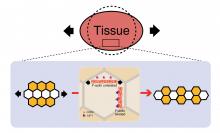
How cells arrange themselves into precise tissue structures like wings is a response, and a resistance, to global mechanical patterning in a tissue.
07 Sep 2018
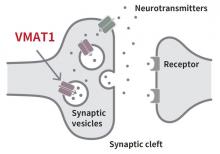
How and why human-unique characteristics such as highly social behavior, languages and complex culture have evolved is a long-standing question. A research team led by Tohoku University in Japan has revealed the evolution of a gene related to such human-unique psychiatric traits.
07 Sep 2018
Daegu Gyeongbuk Institute of Science and Technology (DGIST)
Korean researchers have developed a high-reliability artificial electronic synaptic device that simulates neurons and synapses. The finding is expected to be utilized in the development of Artificial Intelligence (AI) and brain-like semiconductors.
07 Sep 2018
Nagoya University
Researchers at Nagoya University, Japan, have developed a spontaneous polymer network synthesis that allowed for the preparation of gels containing narrow molecular weight distribution polymers. The gel networks showed swelling properties that were responsive to temperature and solvent concentration.
07 Sep 2018
Asia Research News
Converging the latest cancer discoveries around the world, FCS 2018 promises ground-breaking and innovative insights into cancer research. Join us and learn from the foremost cancer experts as they share their newest findings.
06 Sep 2018
Springer Nature
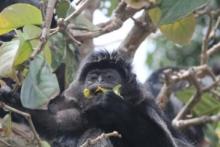
Genetic study shows that Javan lutung monkeys have a poor sense of taste.
05 Sep 2018
Universiti Putra Malaysia (UPM)
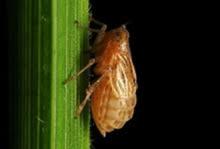
An analysis of the chemical signals sent out by rice plants under attack by the brown planthopper could help in natural control of this insect pest.

05 Sep 2018
King Abdullah University of Science and Technology (KAUST)
Simultaneously modeling of air pollutants and weather under extreme conditions highlights the potential for serious health risks.
05 Sep 2018
King Abdullah University of Science and Technology (KAUST)
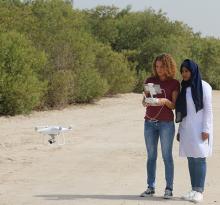
While drones scan beaches to assess plastic litter, microplastics are found in the digestive tracts of one in every six Red Sea fish.
05 Sep 2018
Hokkaido University
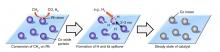
An improvement to the catalyst that converts methane to syngas could lead to a more economical process.
04 Sep 2018
Asia Research News
~ British Heart Foundation to tackle the suffering and devastation caused by heart and circulatory diseases with historic research award ~
04 Sep 2018
The Agency for Science, Technology and Research (A*STAR)
Better understanding of the wetting characteristics of phosphorene could pave the way for new applications in biological engineering.
03 Sep 2018
Ulsan National Institute of Science and Technology (UNIST)
The 2018 Genome Expo was held at South Korea's Ulsan National Institute of Science and Technology (UNIST) from August 31 to September 1, 2018.
30 Aug 2018
Asia Research News
ASEAN and China’s partnership in the areas of innovation and technology is set to deepen when the Singapore Week of Innovation & Technology (SWITCH) returns for its third edition this year.
30 Aug 2018
Ulsan National Institute of Science and Technology (UNIST)
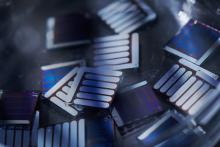
An team of researchers, affiliated with South Korea's Ulsan National Institute of Science and Technology (UNIST) has introduced a novel method that can solve issues associated with the thickness of the photoactive layers in OSCs.
30 Aug 2018
A team of researchers have discovered that terahertz (THz) wave irradiation activates the filamentation of actin protein.
29 Aug 2018
Hokkaido University
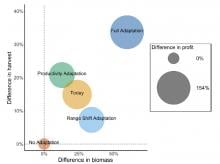
Global commercial fish stocks could provide more food and profits in the future, despite warming seas, if adaptive management practices are implemented. Even so, yields for nearly half of the species analyzed are projected to fall below today’s levels.
29 Aug 2018
Asia Research News
Hiroshima University, Japan, has announced its fellowship opening for a junior science communicator.

29 Aug 2018
IOP Publishing
Multifunctional Materials, a journal serving an emerging field at the convergence of materials science, physics, chemistry, bioscience, and engineering, publishes its first issue this week.
Giants in history

Chinese-American physicist Tsung-Dao Lee (24 November 1926 – 4 August 2024) was awarded the Nobel Prize for Physics in 1957 together with Chen-Ning Yang for their work challenging the symmetry law in subatomic particles. They were the first Chinese Nobel prize winners, with Lee becoming the second-youngest laureate. Born in Shanghai, he went to the United States on scholarship and studied under another Nobel winner, Enrico Fermi.

Turkish astrophysicist Dilhan Eryurt (29 November 1926 – 13 September 2012) conducted research on how the sun affects environmental conditions on the moon.
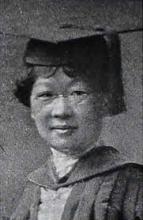
Chinese biochemist Chi Che Wang (1894 - 1979), one of the first Chinese women to study abroad, advanced to prominent research positions at American institutions including the University of Chicago and the Northwestern University Medical School.
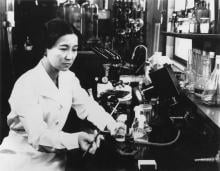
Ruby Sakae Hirose (1904 – 1960) was a Japanese-American scientist whose research contributed significantly to our understanding of blood clotting, allergies and cancer.
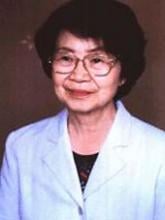
Chinese electron microscopy specialist Li Fanghua (6 January 1932 – 24 January 2020) facilitated the high-resolution imaging of crystal structures by eliminating interference.
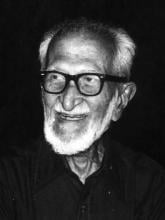
Sálim Moizuddin Abdul Ali (12 November 1896 – 20 June 1987), commonly referred to as the Birdman of India, was the first person to conduct systematic surveys of birds from across India.
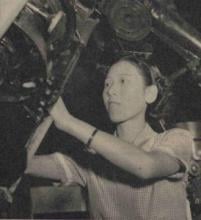
Haisako Koyama (1916 – 1997) was a Japanese solar observer whose dedication to recording sunspots – cooler parts of the sun’s surface that appear dark – produced a sunspot record of historic importance.
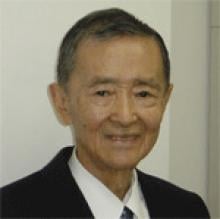
Michiaki Takahashi (17 February 1928 – 16 December 2013) was a Japanese virologist who developed the first chickenpox vaccine.
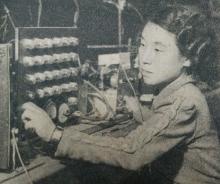
Toshiko Yuasa (11 December 1909 – 1 February 1980) was the first Japanese female physicist whose research on radioactivity shed light on beta decay – the process in which an atom emits a beta particle (electron) and turns into a different element.

Angelita Castro Kelly (1942-2015) was the first female Mission Operations Manager (MOM) of NASA. She spearheaded and supervised the Earth Observing System missions during its developmental stage.
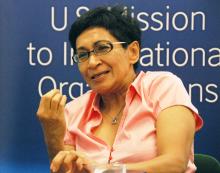
Malaysia’s first astrophysicist, Mazlan binti Othman (born 11 December 1951) was instrumental in launching the country’s first microsatellite, and in sending Malaysia’s first astronaut, Sheikh Muszaphar Shukor, into space.

Bibha Chowdhuri (1913 – 2 June 1991) was an Indian physicist who researched on particle physics and cosmic rays. In 1936, she was the only female to complete a M.Sc. degree at the University of Calcutta.
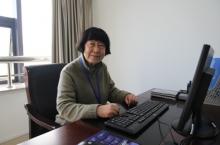
Meemann Chang (born 17 April 1936) is a Chinese palaeontologist who studied the fossils of ancient fish to understand the evolution of life. By examining fossils, she uncovered new insights on how vertebrates, animals with a backbone, migrated from the sea and became adapted to live on land.
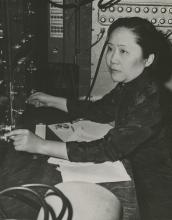
Chien-Shiung Wu (31 May 1912 – 16 February 1997) was an experimental physicist who made several important contributions to nuclear physics. Wu worked on the Manhattan Project – a top-secret program for the production of nuclear weapons during World War II and helped to develop a process for separating uranium into U235 and U238.
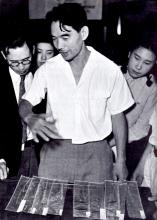
Hitoshi Kihara (1893 – 1986) was one of the most famous Japanese geneticists of the 20th century. One of his most significant contributions was identifying sex chromosomes (X and Y) in flowering plants.
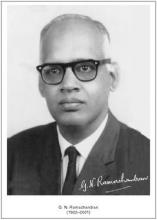
Gopalasamudram Narayanan Ramachandran (8 October 1922 – 7 April 2001) is best known for developing the Ramachandran plot to understand the structure of short chains of amino acids, known as peptides.
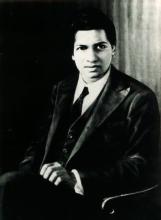
Srinivasa Ramanujan (22 December 1887 – 26 April 1920) was a math prodigy and widely considered one of India’s greatest mathematicians. Despite having almost no formal training in mathematics, he made substantial contributions to mathematical analysis, number theory, infinite series and continued fractions.
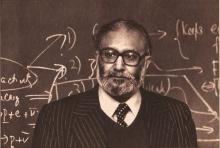
Mohammad Abdus Salam (29 January 1926 – 21 November 1996) was a theoretical physicist and the first Pakistani to receive a Nobel Prize in science.
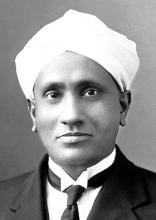
Sir Chandrasekhara Venkata Raman (7 November 1888 – 21 November 1970) was an Indian physicist who performed ground-breaking research in the field of light-scattering.
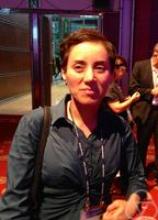
Mathematician Maryam Mirzakhani (12 May 1977 – 14 July 2017) was the first and only woman and Iranian to date to win the Fields Medal in 2014 for her work on curved surfaces.
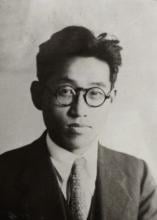
Joo-myung Seok (November 13, 1908 – October 6, 1950) was a Korean butterfly entomologist who made important contributions to the taxonomy of the native butterfly species in Korea.
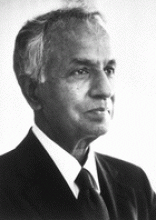
Subrahmanyan Chandrasekhar (19 October 1910 – 21 August 1995) was an Indian astrophysicist who studied the structure and evolution of stars.
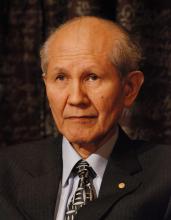
Osamu Shimomura (27 August 1928 – 19 October 2018) was a Japanese organic chemist and marine biologist who dedicated his career to understanding how organisms emitted light.
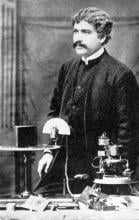
Sir Jagadish Chandra Bose (30 November 1858 – 23 November 1937) was a scientist and inventor who contributed to a wide range of scientific fields such as physics, botany and biology.
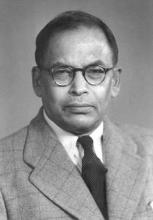
Meghnad Saha (6 October 1893 – 16 February 1956) was an Indian astrophysicist best known for formulating the Saha ionization equation which describes the chemical and physical properties of stars.
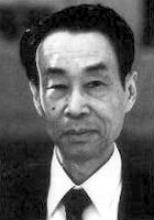
Motoo Kimura (13 November 1924 – 13 November 1994) was a Japanese theoretical population geneticist who is best remembered for developing the neutral theory of molecular evolution.

Chika Kuroda (24 March 1884 – 8 November 1968) was a Japanese chemist whose research focussed on the structures of natural pigments.
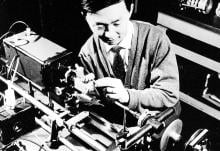
Charles Kuen Kao (Nov. 4, 1933 to Sept. 23, 2018) was an engineer who is regarded as the father of fibre optics. His work in the 1960s on long distance signal transmission using very pure glass fibres revolutionized telecommunications, enabling innovations such as the Internet.
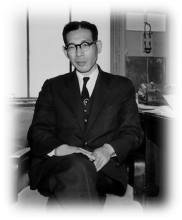
The field of solid-state ionics originated in Europe, but Takehiko Takahashi of Nagoya University in Japan was the first to coin the term ‘solid ionics’ in 1967. ‘Solid-state ionics’ first appeared in 1971 in another of his papers, and was likely a play on ‘solid-state electronics’, another rapidly growing field at the time.
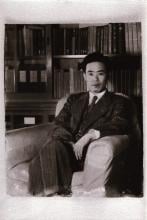
Japanese physicist Ukichiro Nakaya (1900-1962) made the world’s first artificial snowflakes. He started his research on snow crystals in the early 1930s at Hokkaido University, where there is an unlimited supply of natural snow in winter. By taking over 3,000 photographs, he established a classification of natural snow crystals and described their relationship with weather conditions.
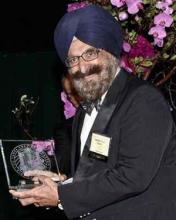
Physicist Narinder Singh Kapany (31 October 1926 – 4 December 2020) pioneered the use of optical fibres to transmit images, and founded several optical technology companies. Born in Punjab, India, he worked at a local optical instruments factory before moving to London for PhD studies at Imperial College. There, he devised a flexible fibrescope to convey images along bundles of glass fibres.
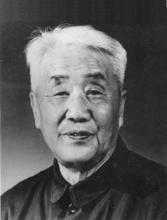
Chinese palaeontologist, archaeologist and anthropologist Pei Wenzhong (January 19, 1904 – September 18, 1982) is regarded as a founder of Chinese anthropology.
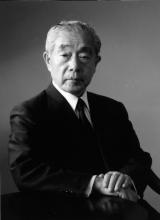
Japanese chemist Kenichi Fukui (4 October 1918 – 9 January 1998) was the first Asian scientist to be awarded the Nobel Prize in Chemistry. Together with Roald Hoffman, he received this honour in 1981 for his independent research into the mechanisms of chemical reactions.
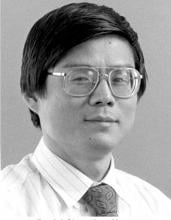
South Korean theoretical physicist Daniel Chonghan Hong (3 March 1956 – 6 July 2002) achieved fame in the public sphere through his research into the physics of popcorn.
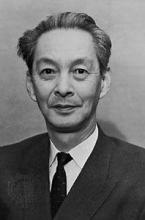
Shinichiro Tomonaga (31 March 1906 – 8 July 1979), together with Richard Feynman and Julian Schwinger, was awarded the Nobel Prize in Physics in 1965, for their contributions to advance the field of quantum electrodynamics. Tomonaga was also a strong proponent of peace, who actively campaigned against the proliferation of nuclear weapons and promoted the peaceful use of nuclear energy.
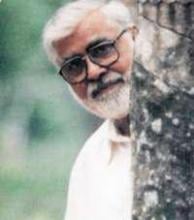
Known as Mr. Natural Rubber, chemist and researcher B. C. Shekhar (17 November 1929 – 6 September 2006) introduced a number of technical innovations that helped put Malaysia’s natural rubber industry on the world map.

Lin Lanying (7 February 1918 – 4 March 2003) was a Chinese material engineer remembered for her contributions to the field of semiconductor and aerospace materials. Lanying was born into a family who did not believe in educating girls and she was not allowed to go to school.
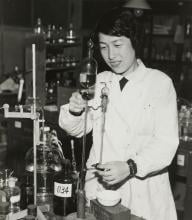
Japanese geochemist Katsuko Saruhashi developed the first method and tools for measuring carbon dioxide in seawater