Asia Research News monitors the latest research news in Asia. Some highlights that caught our attention this week are ice-free Arctic summers, how monkey malaria gets transmitted, and over 300 new species discovered in the lower Mekong.
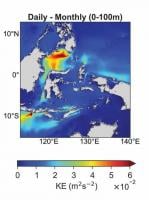
Water from the Pacific Ocean flows into the Indian Ocean via the Indonesia Archipelago thanks to a vast network of currents that act as a conveyor belt, transporting warmth and nutrients. Currents can sometimes form circular motions and these are known as eddies. An international group of researchers has modeled the impacts of eddies on the currents that carry water from the Pacific Ocean to the Indian Ocean.
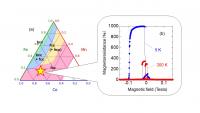
With the need for hardware to process large amounts of digital information ever growing, researchers are working hard to improve magnetoresistive devices. The magnetoresistance ratio indicates the efficiency of these devices, the higher the better. Most magnetoresistive devices comprise magnesium oxide and iron-based magnetic alloys. But a group of researchers from Tohoku University has unveiled a new material that also exhibits enormous magnetoresistance.
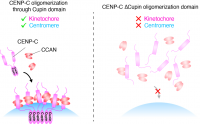
A team led by researchers from Osaka University elucidated a molecular mechanism that is crucial for separating genetic material into daughter cells during cell division. A protein called CENP-C is part of a complex called the kinetochore, which supports the movement of chromosomes. Two portions of CENP-C, the CCAN-binding domain and Cupin domain, are needed for CENP-C to function. The Cupin domain repeats itself through oligomerization, which is essential for proper CENP-C function.
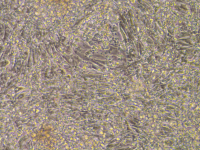
A stem cell therapy treatment developed by Duke-NUS Medical School researchers for heart failure has shown promising results in preclinical trials. These cells, when transplanted into an injured heart, are able to repair damaged tissue and improve heart function.
The peer-reviewed journal Letters in Applied Microbiology is recruiting its first intake of Junior Editors as part of its new drive to nurture early careers talent.
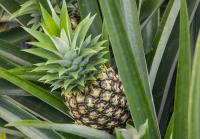
Scientists from Thailand, France and Singapore have conducted groundbreaking research using both tiny cellulose nanofibers (CNF) and long pineapple leaf fibers (PALF) to create stronger materials. They added varying amounts of CNF to epoxy and found that 1% CNF greatly increased impact strength. PALF-epoxy composites showed significant flexibility and strength improvements. Combining CNF and PALF resulted in a remarkable increase in impact strength.
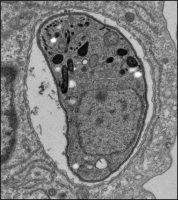
Researchers from Osaka University developed an in vivo CRISPR screen to analyze factors affecting Toxoplasma gondii fitness in healthy and immunodeficient mice. Mice were infected with Toxoplasma containing CRISPR libraries that targeted specific genes; genetic sequencing was then performed to identify which genes are important to fitness.
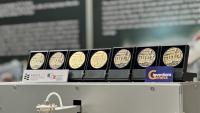
The Education University of Hong Kong (EdUHK) garnered seven awards – a Gold Medal with Congratulations of the Jury, a Gold Medal and five Bronze Medals – at the 48th International Exhibition of Inventions Geneva. The award-winning inventions covered a wide range of areas, including green technology, healthcare, educational technology, food safety, acoustic novelty, metaverse and sport innovation.
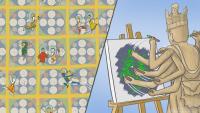
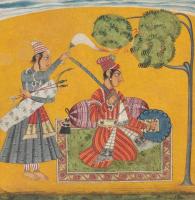
Beginning in the fifteenth century, until the nineteenth century, artists turned to classical music for inspiration, combining painting, allegory and music to create a genre known as Ragamala painting. Ragas — melodic frameworks central to Indian classical music — date back to nearly the fifth century, and each major raga is meant to evoke a particular mood or atmosphere, a season and a time of day.
Asia Research News monitors the latest research news in Asia. Some highlights that caught our attention this week are a species of eel that is slowly losing its eyes, a new space mission to give astronauts aboard the Tiangong space station a break, and how having more muscular legs can help avoid heart failure.
Researchers at Tohoku University and Tsinghua University have introduced a next-generation model membrane electrode that promises to revolutionize fundamental electrochemical research.
Osaka Metropolitan University scientists investigated numerically the interaction between a quantized vortex and a normal-fluid. Based on the experimental results, researchers decided the most consistent of several theoretical models. They found that a model that accounts for changes in the normal-fluid and incorporates more theoretically accurate mutual friction is the most compatible with the experimental results.
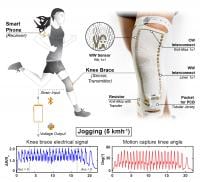
SUTD researchers developed a fully knitted, circuit-embedded knee wearable for wireless sensing of joint motion in real-time. Compared to other knitted electronics, this model has fewer externally integrated components and a more sensitive sensor, making it less error-prone.
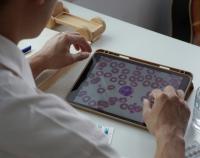
Tests could soon identify patients who will respond well to the available treatment for chronic myeloid leukaemia and those who will be resistant to it—which could improve their chances of survival.
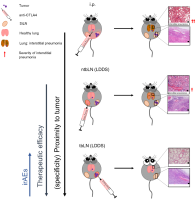
Scientists at Tohoku University have discovered a novel approach that improves the efficacy of immune checkpoint blockade - a novel form of cancer treatment utilizing immune checkpoint inhibitors - and minimizes the associated side effects. Using immune checkpoint blockades to target tumor-positive lymph nodes, they generated a robust anti-tumor response against both local and systemic metastases.
Truck drivers unintentionally taking ‘microsleeps’ of a few seconds can cause terrible traffic accidents, but efforts and technologies aiming to prevent the problem have focused mainly on monitoring driver eye activity while missing a host of other key indicators of the problem.
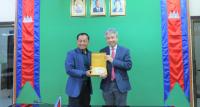
A delegation led by President Professor Stephen Cheung Yan-leung of The Education University of Hong Kong (EdUHK) met with officials of Cambodia’s Directorate General of Higher Education (DGHE) of the Ministry of Education, Youth and Sport, in Phnom Penh, last month. The purpose of the visit was to follow up on discussions held during DGHE representatives’ visit to EdUHK in February 2023, and to strengthen educational collaboration between the University and the Cambodian Government.
Osaka Metropolitan University scientists found that Japanese and Chinese, who are considered to have high-context cultures with a high degree of reliance on information shared by the speaker and listener, are code-switching from high-context cultures to low-context cultures when communicating with people from each other’s country. Furthermore, the scientists found that the Japanese do not engage in much code-switching with Chinese students in Japan.
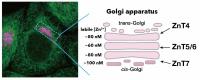
Zinc is essential for our health. Our bodies must constantly regulate its zinc levels, otherwise fatal diseases such as cancers, growth failures, ad immunodeficiency can occur. Now, a research group has unearthed how zinc transporter complexes regulate zinc ion concentrations in different areas of the Golgi apparatus.
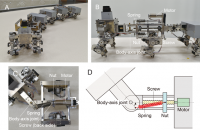
Researchers from Osaka University show how their multilegged walking robot can be steered by inducing a dynamic instability. By making the couplings between segments more flexible, the robot changes from walking straight to moving in a curved path. This work can lead to more energy-efficient and reliable robotic navigation of terrain.
Asia Research News monitors the latest research news in Asia. Some highlights that caught our attention this week are a new sense added to VR, huge solar flares that may have helped spark life, and a volcanic eruption so big that it disrupted satellites.
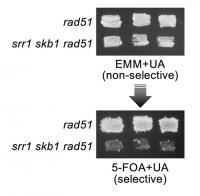
A research team, led by researchers from Osaka University, performed genetic screening of fission yeast lacking DNA repair gene Rad51 to identify genes that play a role in gross chromosomal rearrangement (GCR), a type of mutation that occurs at the centromere. Cells lacking Srr1 or Skb1 exhibited reduced GCR, indicating that these genes are important to the occurrence of GCR. These findings advance our understanding of the mechanisms underlying centromeric GCR.
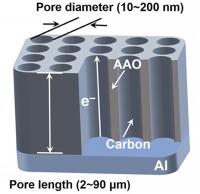
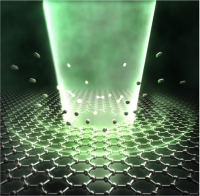
Graphene has revolutionized materials science since its discovery in 2004, with its high electron mobility, mechanical strength, and thermal conductivity. But processing graphene at the micro/nanoscale is a challenging process that often involves large-scale equipment and complex operations. Now, Tohoku University researchers have applied their simple femtosecond laser technique to ultra-thin atomic layers of graphene, resulting in multi-point hole drilling without damaging the graphene film.
A group of researchers from universities in Thailand and Malaysia have collaborated to develop a unique kind of film that is good for the environment and can decompose naturally. They made this film using leftover pineapple stems, which helps reduce the use of harmful plastic films. This new film has the potential to be used as packaging material, contributing to a more sustainable way of doing business and promoting a circular economy.