


Neutrophil RAGE drives cerebral vasospasm and impaired cortical circulation after subarachnoid hemorrhage, revealing a new therapeutic target.
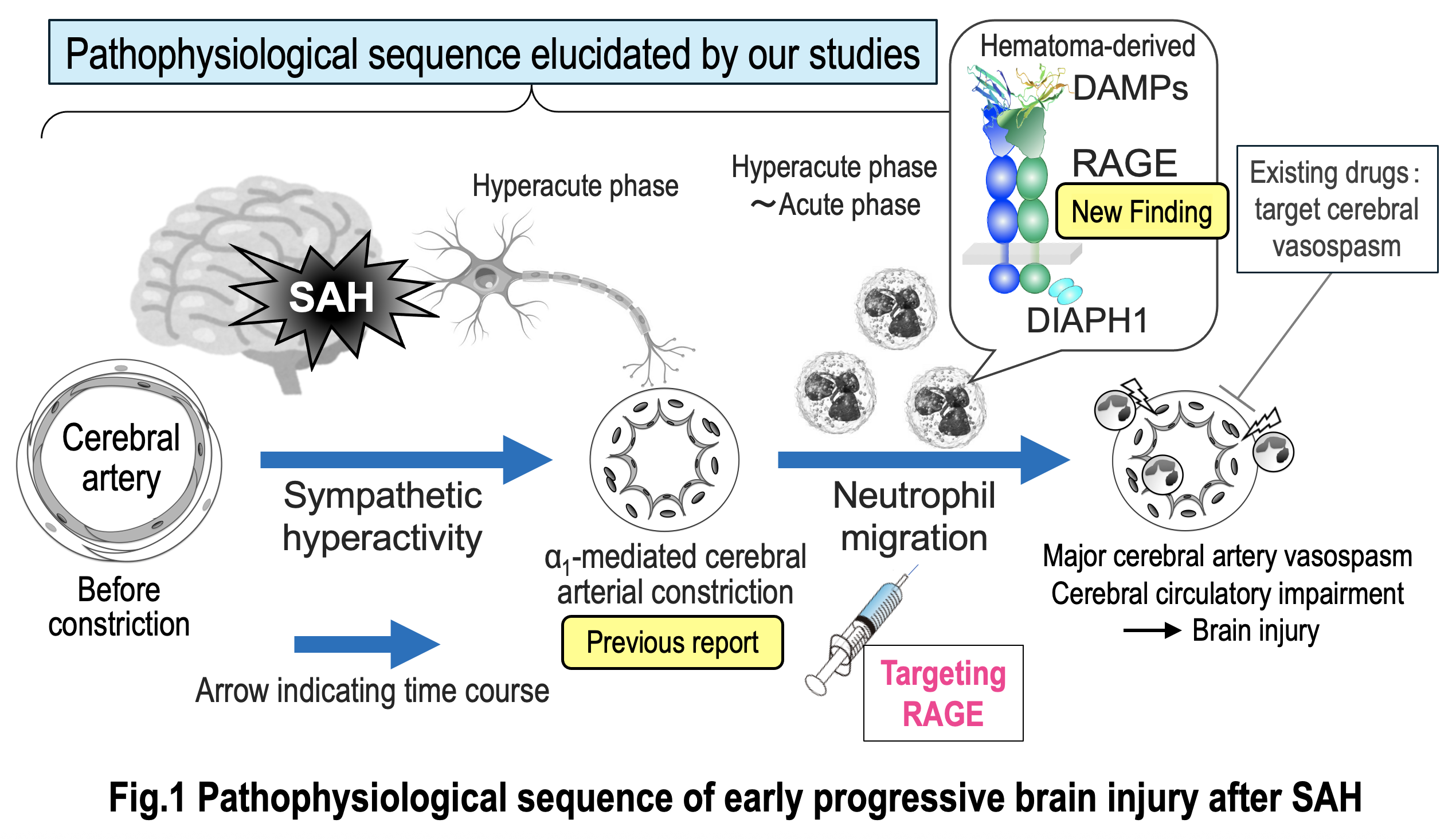
Figure1. Pathophysiological sequence of early progressive brain injury after SAH.
The group’s studies suggest a temporal sequence in which sympathetic stimulation and alpha1-mediated cerebral arterial constriction occur immediately after SAH, followed by neutrophil RAGE-dependent inflammatory cerebrovascular injury during the hyperacute-to-acute phase.
Kanazawa University
An international research team from Japan and the United States, led by Assistant Professor Hiroshi Ishii and Professor Osamu Hori, together with Professors Yasuhiko Yamamoto and Mitsutoshi Nakada of Kanazawa University, has identified neutrophil RAGE (receptor for advanced glycation end products) as a key driver of early cerebrovascular injury after subarachnoid hemorrhage (SAH). The study shows that neutrophil RAGE promotes neutrophil accumulation around cerebral arteries, cerebral vasospasm, impaired cortical circulation, and neurological dysfunction.
SAH is a severe form of stroke most often caused by rupture of a cerebral aneurysm. Even after the bleeding source is secured, reductions in cerebral blood flow, vasospasm, inflammation, and brain edema can continue to worsen neurological outcome. The mechanisms linking these early events to later brain injury, however, remain incompletely understood.
In 2023, the group reported in Stroke that sympathetic hyperactivity immediately after SAH impairs cerebral circulation and worsens neurological outcome. The new study, published in the Journal of Cerebral Blood Flow & Metabolism, extends this work by identifying a subsequent inflammatory cerebrovascular phase driven by neutrophil RAGE.
Key findings
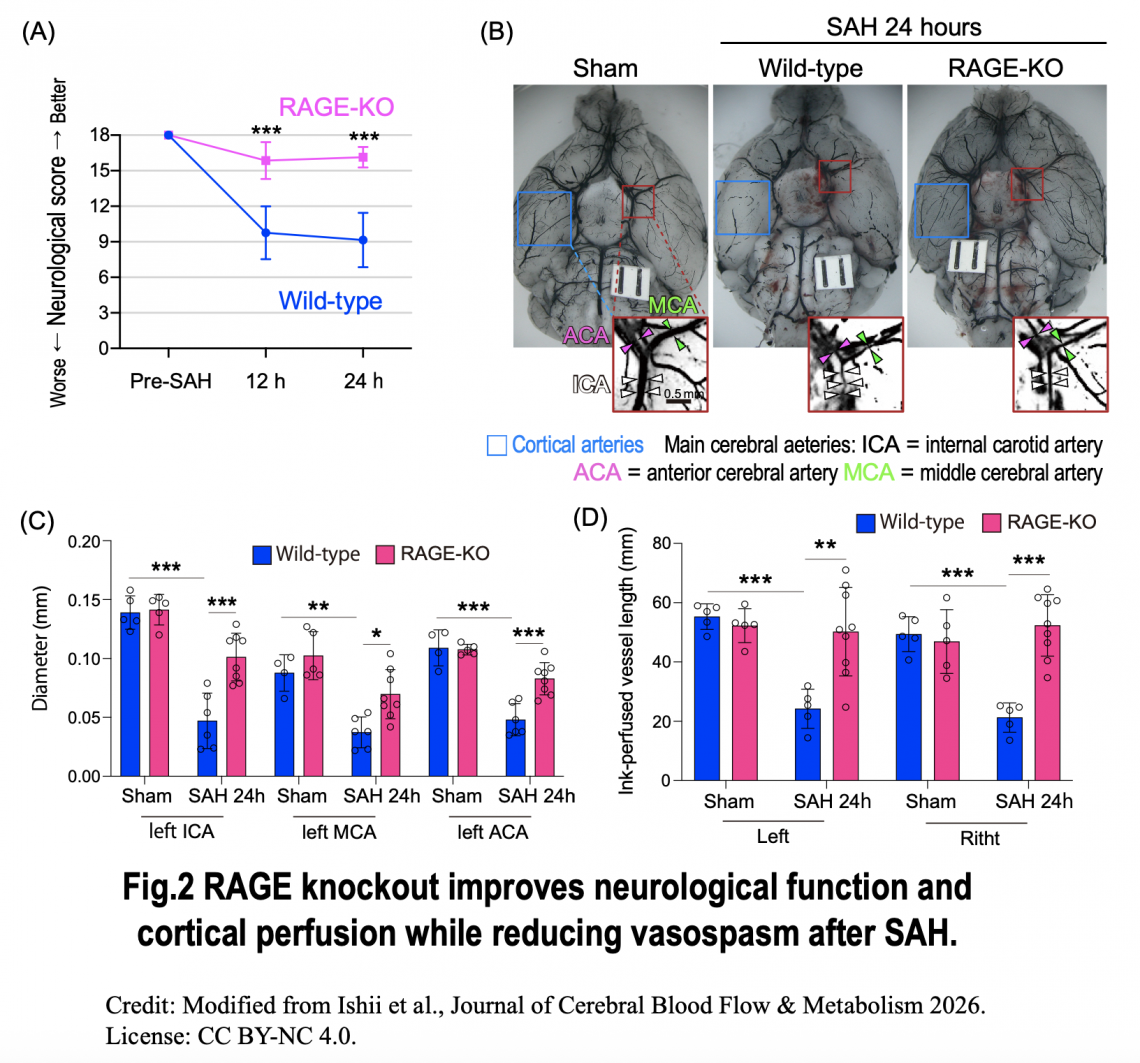
In wild-type mice, SAH caused neurological deterioration, marked vasospasm of major cerebral arteries, and a substantial loss of cortical vascular perfusion. In RAGE-knockout mice, neurological function and cortical perfusion were markedly improved, while vasospasm was reduced.
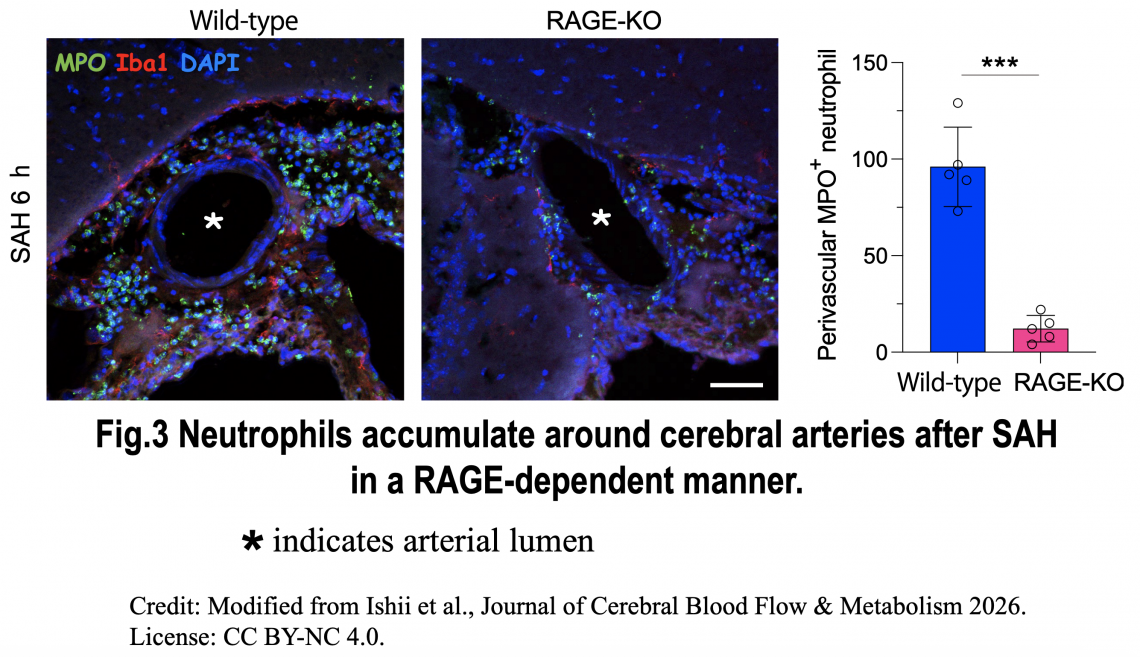
The researchers also found that MPO-positive neutrophils accumulated around cerebral arteries early after SAH, with a prominent increase by 6 hours. This perivascular neutrophil accumulation was strongly suppressed in RAGE-knockout mice. Analyses using bone-marrow-derived cells and myeloid-cell-specific RAGE deletion further supported a central role for neutrophil RAGE in the development of cerebrovascular injury.
Mechanistically, damage-associated molecular patterns (DAMPs), including HMGB1 released from the hematoma and injured tissue, activated RAGE-dependent inflammatory responses in neutrophils and promoted their migration. Pharmacological suppression of RAGE signaling or neutrophil-derived inflammatory responses also improved vasospasm and neurological deficits.
Researcher quote
“Subarachnoid hemorrhage is not a single event that ends when the bleeding is controlled,” said Hiroshi Ishii, the corresponding author. “Our studies suggest that an immediate sympathetic vascular response is followed by a neutrophil RAGE-dependent inflammatory phase. Understanding how these responses evolve in space and time may help us identify earlier, mechanism-based therapeutic strategies for SAH.”
A time-dependent sequence of brain injury
Taken together with the group’s 2023 findings, the results support a time-dependent pathophysiological sequence after SAH: an immediate sympathetic response with alpha1 receptor-mediated cerebral arterial constriction and circulatory impairment, followed during the hyperacute-to-acute phase by neutrophil RAGE-dependent inflammatory cerebrovascular injury. How the sympathetic response and the neutrophil RAGE response interact mechanistically remains to be determined.
Why it matters
Current SAH treatment focuses on preventing rebleeding and limiting downstream complications such as cerebral vasospasm and impaired cerebral blood flow. The present study identifies neutrophil RAGE as an upstream pathological mechanism that may provide a new point of therapeutic intervention. Future work will examine how neural, vascular, and immune responses evolve spatially and temporally after SAH and how they collectively lead to brain injury.
GLOSSARY
RAGE: A cell-surface receptor that recognizes inflammatory mediators such as HMGB1 and transduces intracellular inflammatory signals.
Neutrophils: A type of white blood cell that rapidly accumulates at sites of infection or tissue injury and contributes to inflammatory responses.
DAMPs: Damage-associated molecular patterns; molecules released from damaged cells or tissues that activate immune responses. HMGB1 is one example.
Cerebral vasospasm: Abnormal narrowing of cerebral arteries after SAH that can reduce blood flow to the brain and contribute to ischemia and neurological injury.
Compared with wild-type mice, RAGE-knockout mice show improved neurological function, reduced vasospasm of major cerebral arteries, and restoration of cortical perfusion after SAH.
Modified from Ishii et al., Journal of Cerebral Blood Flow & Metabolism, 2026, DOI: 10.1177/0271678X261454113. License: CC BY-NC 4.0.
MPO-positive neutrophils accumulate around cerebral arteries early after SAH in wild-type mice, whereas this perivascular accumulation is markedly reduced in RAGE-knockout mice.
Modified from Ishii et al., Journal of Cerebral Blood Flow & Metabolism, 2026, DOI: 10.1177/0271678X261454113. License: CC BY-NC 4.0.
Advertisement