

Advanced Science
About Advanced Science
Advanced Science is a premier interdisciplinary open access journal covering fundamental and applied research across a broad range of fields, including materials science and chemistry, physics and engineering, life and health sciences, earth and environmental sciences, as well as social sciences and humanities.
News
21 Aug 2026
Tohoku University
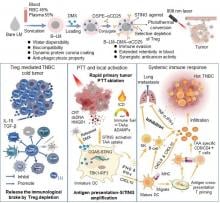
Triple-negative breast cancer (TNBC) accounts for roughly 15–20% of all breast cancer cases and is difficult to treat. Patients are often left with chemotherapy as their only treatment option. This is because TNBC tumors contain a large number of T cells that suppress the immune system. Yet researchers from Tohoku University have come up with a three-pronged approach to overcome this problem.

16 Jun 2026
Tohoku University
Mechanoluminescent materials, which convert mechanical energy into light, are great for self-powered sensors. However, they have traditionally been made using rare earth materials or complex material compositions, making them relatively expensive to manufacture. Now, a research team has developed a zinc oxide material that not only possesses highly sensitive mechanoluminescence but is made from cheap, earth-abundant materials.

12 Jun 2026
Lingnan University
Pomacea canaliculata, commonly known as the apple snail, a pest commonly found in Hong Kong’s wetlands and farmlands, feeds on aquatic plants and deposits its eggs on terrestrial plants or stone bunds. It is listed by the International Union for Conservation of Nature (IUCN) as one of the “100 of the World's Worst Invasive Alien Species”. The Division of Science of Lingnan University and its collaborative research team analysed the genomes of the Pomacea canaliculata and its close relatives, and discovered that despite being aquatic animals, they possess the trait of terrestrial reproduction, and their egg masses also exhibit desiccation resistance, UV screening, and predator deterrence. This capability may originate from an infection by a virus during the Jurassic period, where their ancestors integrated the viral gene to evolve in their own genome, and scholars point out that this could not only provide foundational insight into how land invasion occurred, but also suggest potential avenues for developing inhibitors to eradicate the snail pest from the root. These research findings were recently published in the top international academic journal Advanced Science.
08 Jun 2026
Osaka Metropolitan University
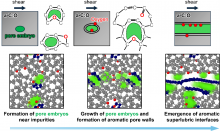
Scientists found that certain chemical impurities, such as hydrogen and oxygen, help amorphous carbon form graphite-like, ultralow-friction interfaces under mechanical stress. The findings reveal how impurities can enable self-forming lubricating surfaces, offering a new strategy for designing durable, energy-efficient materials.
08 Jun 2026
Sungkyunkwan University
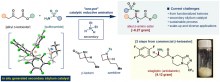
- Reductive sulfonamidation of ketones, previously impossible, was achieved using new 'diethylsilylium ion’
02 Jun 2026
The University of Osaka
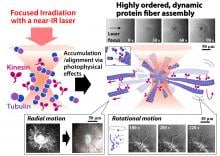
Researchers at The University of Osaka used a focused laser beam to make in vitro models of cytoskeletal networks that exhibit dynamic cell-like motions. This technique provides spatiotemporal control of the network structure, unlike conventional methods based on self-organization and photochemical reactions. The models could be used to determine the structure–motion relationship of cytoskeletal networks, which has applications for understanding cell division, migration, and adhesion and the creation of protein-based robots and synthetic cells.
30 Mar 2026
Daegu Gyeongbuk Institute of Science and Technology (DGIST)
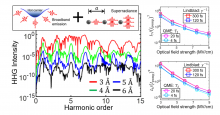
- Professor JaeDong Lee’s team discovers the cause of “ultrafast electronic decoherence” in open quantum environments
- Provides a decisive breakthrough, bridging ideal quantum theory and real-world quantum technologies
- Published in the leading interdisciplinary science journal Advanced Science

24 Mar 2026
Xi'an Jiaotong-Liverpool University
A new method that uses nanoparticles could help overcome a manufacturing challenge that has slowed the development of advanced cell-based treatments
16 Mar 2026
Daegu Gyeongbuk Institute of Science and Technology (DGIST)
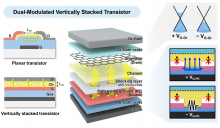
- Research team led by Jae Eun Jang and Goeun Pyo demonstrates stable “dual-modulated vertically stacked transistors” even with two-dimensional nanochannels
- Enables large-area and multilayer scalability without costly ultra-precision fabrication processes, which is promising for high-density 3D chips and flexible devices
- Published in the leading international journal Advanced Science
19 Feb 2026
Daegu Gyeongbuk Institute of Science and Technology (DGIST)
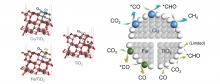
- Selective production of CO and CH₄ achieved by tuning Fe·Cu single-atom–TiO₂ interactions
- CO₂ reduction activity enhanced by 55 times (CO) and 44 times (CH₄) compared to conventional TiO₂
- Findings published in Advanced Science

22 Oct 2025
Tohoku University
A research team has broken down walls, or moved magnetic domain walls to be exact, in the field of spintronics. They uncovered a new mechanism that enables faster and more efficient movement of magnetic domain walls in spintronic materials. By harnessing dual spin torques in a cobalt–iridium–platinum multilayer structure, the team demonstrated a unique form of spin-driven motion. The findings could inform the design of next-generation, low-power spintronic memory devices.
23 Sep 2025
National Taiwan University
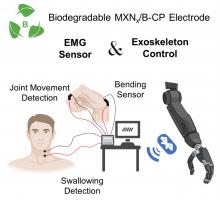
Researchers at National Taiwan University have developed biodegradable MXene–bamboo paper electrodes that combine flexibility, waterproof stability, and tunable conductivity. Encapsulated in a breathable Ecoflex layer, these scalable green electrodes enable wearable sensing, electromyography, and exoskeleton control, offering a sustainable pathway for next-generation assistive technologies.
03 Sep 2025
National Taiwan University
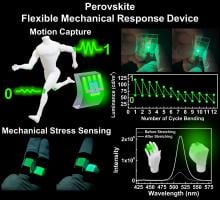
A flexible perovskite light-emitting device integrating ester polymer crystallization enables optical logic signals under bending and stretching, paving the way for motion capture and intelligent sensing applications.

23 Jun 2025
Daegu Gyeongbuk Institute of Science and Technology (DGIST)
- Real-time X-ray scattering analysis reveals the synthesis mechanism of eco-friendly ternary quantum dots
- This eco-friendly PV hydrogen production technology is expected to be implemented and used in various next-generation semiconductor optoelectronic devices
- The research results have been published in Advanced Science, a leading international journal in the field of multidisciplinary convergence

26 May 2025
National Taiwan University
Scientists unlock a new way to boost green energy materials—without rare elements.

14 May 2025
National Taiwan University
Researchers develop energy-efficient spintronic devices with 11 memory states for next-generation neuromorphic computing.

09 Apr 2025
Daegu Gyeongbuk Institute of Science and Technology (DGIST)
- Professor Chang-Hee Cho’s team at DGIST has successfully demonstrated, for the first time in the world, the control of polaritons using ferroelectricity induced by crystallographic phase transition
- The study offers key insights into next-generation quantum light sources and proposes a new direction for the realization of practical quantum devices

08 Apr 2025
Tohoku University
From harmful to helpful; researchers at Tohoku University and Hokkaido University have developed a record-breaking method to efficiently convert carbon dioxide into a fuel source.

28 Mar 2025
Hokkaido University
Researchers develop innovative phospholipids that improve the functional delivery of mRNA via lipid nanoparticles, paving the way for advanced therapeutic applications.

07 Jan 2025
The University of Osaka
Researchers from Osaka University have developed a technology for voltage-controlled magnetization switching, which has the potential to be implemented in next-generation computational memory. This advanced technology enables low-energy data writing operations with non-volatility, making it scalable for future applications that require stable and reliable memory.

02 Sep 2024
Tohoku University
Ammonia plays a vital role in food production, industrial development, and the emerging hydrogen economy. However, efficient synthesis methods are crucial since the conventional process is energy-intensive. An international group of researchers has focused on nitrate reduction, discovering a more efficient way to produce ammonia and unveiling new insights into sustainable catalytic processes.

25 Jul 2024
Daegu Gyeongbuk Institute of Science and Technology (DGIST)
- DGIST Professor Seo Dae-ha’s team has developed a methodology that combines nanoparticles, high-resolution microscopy, and analytical algorithms to observe intracellular cargo transport strategies.
- They observed the three-dimensional movement of endosomes during intracellular transport and discovered the real-time strategy of cells for efficient transport.
- The research findings were published in Advanced Science.

17 Jun 2024
Daegu Gyeongbuk Institute of Science and Technology (DGIST)
DGIST Professors Jang Jae-eun and Kwon Hyuk-jun and the research team develop ferroelectric field-effect transistors suitable for heterojunction following a low-temperature annealing process using laser
- The development of ferroelectric-based memory devices enables next-generation AI semiconductor systems
- The results are published in Advanced Science, a top international journal in the field

17 Jun 2024
The University of Osaka
Researchers from Osaka University used theoretical calculations assessing electron orbital symmetry to synthesize new molecule designed to be both transparent and colorless while absorbing near-infrared light. This compound demonstrates the first systematic approach to producing such materials and have applications in advanced electronics. This compound also shows semiconducting properties.

16 May 2024
Hiroshima University
Genome editing is making inroads into biomedical research and medicine. By employing biomolecule modeling tools, a Japanese research team is accelerating the pace and cutting the cost of zinc finger nuclease (ZFN) technology, a primary gene editing tool.
11 Apr 2024
Daegu Gyeongbuk Institute of Science and Technology (DGIST)
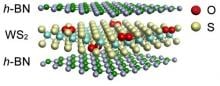
Trapping oxygen molecules adsorbed at defect sites in 2D semiconducting crystals offers greater control over the crystals’ electronic and photonic behaviour.

24 Mar 2024
Daegu Gyeongbuk Institute of Science and Technology (DGIST)
- DGIST Prof. Hyuk-Jun Kwon's team has developed neuromorphic devices using ferroelectrics and two-dimensional channels.
- Similar to the human brain, they perform both computational and memory functions –– but 10,000 times faster than synapses with minimal energy consumption.
- Their application to next-generation AI semiconductor technology is anticipated.
21 Dec 2023
Tohoku University
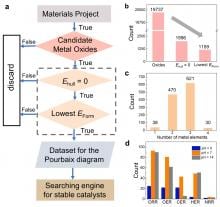
Identifying low-cost metal oxide electrocatalysts is essential to help us wean ourselves off fossil fuels. Yet doing so is a time-consuming process, with lots of trial and error required. A group of researchers has explored how data mining can be employed to help speed up this process.

14 Dec 2023
Duke-NUS Medical School
Scientists from Duke-NUS Medical School and their collaborators have come up with new methods to cultivate brain cells from stem cells to treat and study neurodegenerative diseases.
03 Nov 2023
Daegu Gyeongbuk Institute of Science and Technology (DGIST)
- An enhanced control technology for robotic upper and lower limbs has been developed through the development of a new type of hybrid bionic nerve interface that integrates a regenerative peripheral nerve interface (RPNI) and a peripheral nerve interface (PNI)
- The technology is expected to play an important role in the neuroprosthetic rehabilitation of amputee patients and the peripheral nerve interface
- The study’s results have been published in the esteemed academic journal “Advanced Science”