

Peer Reviewed
News
16 Jul 2026
Hiroshima University
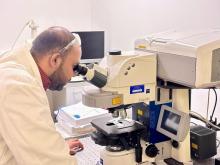
Scientists have found a way to spot early signs of skin aging, discovering that collagen's hidden internal structure begins to unravel before the fibers themselves break apart.
16 Jul 2026
The University of Osaka
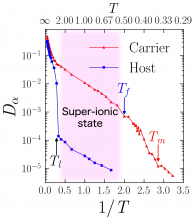
Using a simple physical model, researchers at the University of Osaka, The National Institute of Advanced Industrial Science and Technology (AIST), RIKEN, and the Institute of Science Tokyo revealed how superionic conduction emerges when mobile ions undergo sublattice melting while the surrounding crystal framework remains intact. Near this transition, ions move cooperatively in spatially heterogeneous, string-like patterns, aided by anharmonic lattice motion. The findings identify general physical principles connecting lattice softness and collective transport, potentially guiding more efficient development of solid electrolytes for batteries and energy-conversion technologies.
15 Jul 2026
YOKOHAMA National University
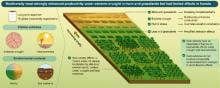
During years of extreme drought, drier grasslands showed the strongest positive effects of biodiversity on productivity.
15 Jul 2026
Institute of Industrial Science, The University of Tokyo (UTokyo-IIS)
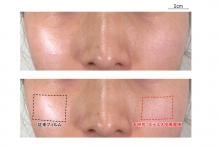
Researchers from the Institute of Industrial Science, The University of Tokyo have developed ultrathin wearable sensors that blend seamlessly into skin, reducing discomfort and distraction
15 Jul 2026
Hiroshima University
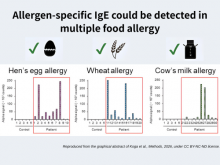
Not every allergy antibody poses the same risk. A Hiroshima University-led research team has developed a more sensitive version of an allergy blood test designed to better detect functional allergen-specific IgE antibodies—the antibodies capable of triggering the immune processes behind allergic reactions.
15 Jul 2026
Institute of Industrial Science, The University of Tokyo (UTokyo-IIS)
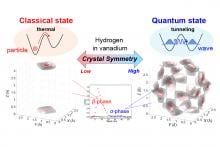
Researchers from the Institute of Industrial Science, The University of Tokyo reveal how crystal symmetry determines whether hydrogen follows the rules of quantum or classical physics
15 Jul 2026
Osaka Metropolitan University
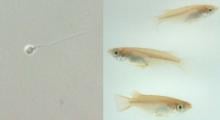
Sperm velocity found to drop in Japanese rice fish that spawn consecutively

15 Jul 2026
Newcastle University in Singapore
A recyclable enzyme catalyst could support cleaner production of flavour esters for food, drink and cosmetics.

15 Jul 2026
Newcastle University in Singapore
A new review charts the future of diacylglycerols for cleaner oil processing, functional foods and medical nutrition.
15 Jul 2026
Sungkyunkwan University
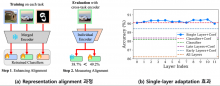
- Solves 'Interference Phenomenon,' a Long-standing Obstacle in AI Model Merging
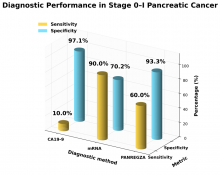
15 Jul 2026
Kanazawa University
Researchers at Kanazawa University report the blood-based gene expression tests may enable early pancreatic cancer screening and improve long-term survival.
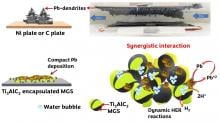
14 Jul 2026
National Taiwan University
Layered carbide-carbon hybrids offer scalable, high-rate SLFB electrode platforms for improved wettability and enhanced electrolyte-electrode interaction and redox kinetics.
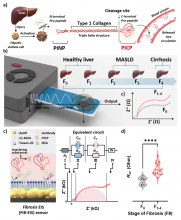
14 Jul 2026
Sungkyunkwan University
Detects minute signals in a small blood sample, paving the way for early diagnosis of the disease that causes the liver to harden
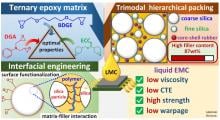
14 Jul 2026
National Taiwan University
Researchers developed a highly filled liquid epoxy for chip packaging that remains easy to process despite its exceptionally high silica content. By optimizing particle packing, surface treatment, and rubber nanoparticle reinforcement, the material minimizes wafer warpage while maintaining excellent toughness and reliability during packaging.
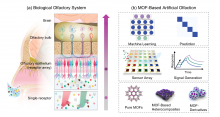
13 Jul 2026
Daegu Gyeongbuk Institute of Science and Technology (DGIST)
- Prof. Hyuk-Jun Kwon’s research team presents a roadmap for an intelligent artificial olfactory system that combines the novel material metal-organic frameworks with AI
- Overcomes existing limitations by mimicking the principles of the human olfactory system, poised to drive innovation across future industries such as disease diagnosis and environmental monitoring
- Published in Progress in Materials Science, one of the world’s leading journals in materials science (top 0.7% in JCR)

10 Jul 2026
Newcastle University in Singapore
Research comparing Dunlop and Talalay processing offers practical guidance for better natural latex foam products.

10 Jul 2026
Newcastle University in Singapore
Fly ash waste could partly replace zinc oxide in tyre tread rubber, reducing zinc release while maintaining key performance.
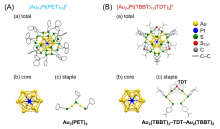
10 Jul 2026
Tohoku University
Catalysts are everywhere—from fertilizer production to clean energy—but making them more active without sacrificing stability has remained a major challenge. Researchers have now engineered a gold-platinum nanocluster catalyst that can be activated at lower temperatures while maintaining its precise atomic structure, boosting low-temperature carbon monoxide oxidation performance. Yet a clever ligand design could pave the way for more efficient and durable catalysts.
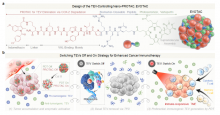
10 Jul 2026
Sungkyunkwan University
Complete tumor remission and suppression of recurrence/metastasis demonstrated in animal models of triple-negative breast cancer and colorectal cancer

09 Jul 2026
Newcastle University in Singapore
A study shows palm oil can replace aromatic oil in natural rubber composites while supporting greener rubber products.
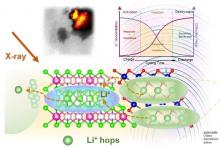
09 Jul 2026
National Taiwan University
This work reveals how lithium migrates in solid-state batteries and shows that fast charging can cause irreversible lithium migration.

09 Jul 2026
Newcastle University in Singapore
A mild enzymatic method helps refine algae oil for nutrition products while preserving its valuable nutritional components

09 Jul 2026
Singapore University of Technology and Design
Research led by the Singapore University of Technology and Design finds that comfort in Singapore homes depends not only on air-conditioning and building design, but also on airflow, daily routines and how families share their living spaces.
08 Jul 2026
National Taiwan University
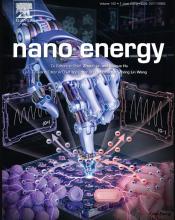
Researchers have developed a robotic platform that identifies Gram-positive and Gram-negative bacteria through touch-based electrical signals, without staining or chemical labels. Selected as a cover article in Nano Energy, the study achieved rapid classification within 0.62 seconds and 90.93% accuracy.
08 Jul 2026
Tohoku University
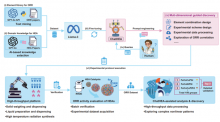
An AI assistant for high-entropy alloy (HEA) electrocatalysis named ChatHEA provided a helping hand not just to extract data from the literature, but provide suggestions for promising catalysts, design experiments, and analyze data.

08 Jul 2026
Newcastle University in Singapore
Pineapple leaf fibres gain strength through alkali treatment, supporting stronger and more sustainable biobased composites.
08 Jul 2026
The University of Osaka
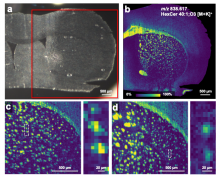
Researchers at The University of Osaka have developed an improved technique called “tapping-mode scanning probe electrospray ionization” (t-SPESI), allowing the analysis of regions within individual cells with greater sensitivity and stability. Through device miniaturization and molecular modification of the probe surface, the team achieved higher sensitivity and long-term stability, successfully visualizing lipid distributions in mouse brain tissue at a pixel size of 5 µm.
07 Jul 2026
Kanazawa University
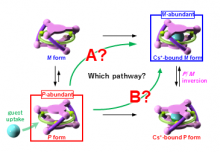
Researchers at the Nano Life Science Institute (WPI-NanoLSI) at Kanazawa University, Institute for Molecular Science and SOKENDAI have uncovered the hidden mechanism behind a molecular switch—a molecule that can change between different structural states in response to a chemical signal. Their study, published in the Journal of the American Chemical Society, reveals how molecules can gradually switch between alternative states, a process that could help scientists design future molecular machines, smart materials, and molecular information technologies.
To make the discovery, Shigehisa Akine and colleagues created a specially designed molecular cage that changes shape unusually slowly. This allowed them to observe, for the first time, the sequence of molecular events that occurs after the molecule receives a chemical input. The study provides one of the clearest views yet of how molecular recognition triggers structural change and demonstrates that the response speed of a molecular system can itself be engineered through molecular design.

07 Jul 2026
Osaka Metropolitan University
Researchers break a fundamental rule to create a new concept: heat that can be directed and “programmed”. In most materials, heat absorption and heat emission are linked, meaning a surface that absorbs thermal radiation well from a particular direction will also emit it in the same way. A team from OMU in Japan has designed a reconfigurable device that breaks this symmetry, enabling heat to be absorbed and emitted differently depending on the direction of absorption. This technology could eventually lead to smarter thermal-management systems and infrared sensors.
07 Jul 2026
The University of Osaka
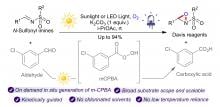
Researchers at the University of Osaka developed a light-driven method for synthesizing Davis reagents that generates the hazardous oxidant mCPBA only on demand and consumes it immediately. Kinetic analysis showed no detectable accumulation of the oxidant, improving process safety. The reaction proceeds at room temperature in non-halogenated solvents and can use sunlight or LEDs, offering a safer, greener, and scalable alternative for pharmaceutical-related synthesis.
Events
Sorry, no events coming up for this topic.
Researchers
Sorry, no researchers coming up for this topic.
Giants in history
Sorry, no researchers coming up for this topic.