

Peer Reviewed
News
01 Apr 2026
The University of Osaka
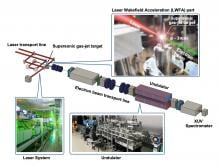
Free-electron lasers can be tuned to operate over a wide range of wavelengths, but they conventionally require large-scale facilities. Researchers from The University of Osaka show that laser wakefield acceleration can dramatically miniaturize this technology by improving plasma stability and electron beam quality. Their study demonstrates such lasers in the extreme ultraviolet, with the ultimate goal of further refining the technology to operate at x-ray wavelengths.
01 Apr 2026
Osaka Metropolitan University
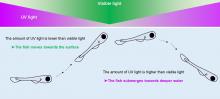
Researchers identified the tegmentum in the midbrain as an ‘integration center’ of fish. The area receives visual information from the eyes that is combined with color information detected by the pineal organ—the ‘third eye.’ These inputs are integrated to control how fish orient themselves in the water.
31 Mar 2026
Hiroshima University
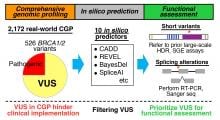
Hiroshima University researchers have developed a practical framework to identify candidate pathogenic variants hidden among the large number of variants of uncertain significance (VUS) detected in comprehensive genomic profiling (CGP) of cancers. This framework could improve the accuracy of precision oncology by more reliable prioritization of VUS.

31 Mar 2026
Springer Nature
A poor diet remains a leading contributor to ischaemic heart disease, according to an analysis from 204 countries over a 30-year period
31 Mar 2026
Institute of Industrial Science, The University of Tokyo (UTokyo-IIS)
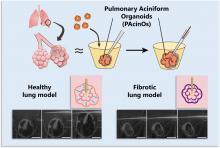
Researchers develop a system that inflates human lung organoids from within to analyze lung mechanics
31 Mar 2026
Hokkaido University
A new platform could improve reproductive toxicity testing by enhancing both efficiency and ethical standards

31 Mar 2026
Hokkaido University
A new international survey reveals clear differences in how veterinarians and animal welfare scientists in Japan and the UK perceive animal welfare, particularly animal behaviour.
31 Mar 2026
Hokkaido University
Loss of habitat along their migratory routes may be driving the recent decline in Japanese chum salmon populations
31 Mar 2026
Hokkaido University
Opening new possibilities for fluorescence-based imaging in extreme environments, from bioimaging to advanced materials
31 Mar 2026
Hiroshima University
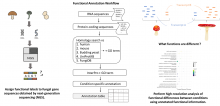
Researchers at Hiroshima University have developed a new tool to quickly and accurately map fungal gene functions, even for species that have never been studied before.

30 Mar 2026
Hiroshima University
Concrete harbors distinct microbial zones whose signatures survive the heat of routine core sampling, a discovery researchers say could one day put structural health diagnostics within reach of general maintenance staff and even residents.
30 Mar 2026
Hokkaido University
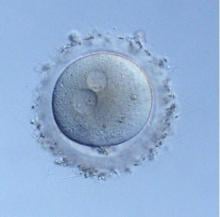
A new global review shows countries taking very different approaches to regulating polygenic embryo testing
30 Mar 2026
Tohoku University
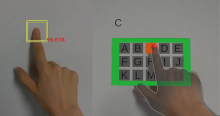
When donning an augmented or mixed reality headset, typing via air gestures can be tiring. To remedy this, researchers at Tohoku University developed an approach that turns everyday surfaces into keyboards.

30 Mar 2026
Ehime University
Assessing the Impact of Chemical Contaminants on Finless Porpoises Using In Vitro Data and Mass Distribution Modeling
30 Mar 2026
City University of Hong Kong (CityUHK)
Scientists at CityUHK achieved a breakthrough in recent months with the discovery a novel compound, named MF-8. The compound and its associated pharmaceuticals demonstrate significant potential to provide safer, more effective treatments for psychiatric and neurological disorders, such as memory impairment, depression and anxiety, while effectively mitigating the side effects associated with existing medications.
30 Mar 2026
National Taiwan University
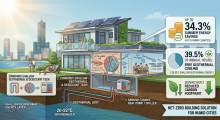
A research team from Taiwan has developed a novel hybrid air-conditioning system integrating shallow geothermal energy and a desiccant wheel. Field tests confirm it significantly reduces energy consumption by up to 34.3% in hot and humid climates, offering a promising solution for net-zero buildings.
30 Mar 2026
Daegu Gyeongbuk Institute of Science and Technology (DGIST)
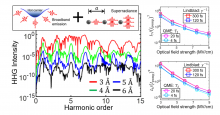
- Professor JaeDong Lee’s team discovers the cause of “ultrafast electronic decoherence” in open quantum environments
- Provides a decisive breakthrough, bridging ideal quantum theory and real-world quantum technologies
- Published in the leading interdisciplinary science journal Advanced Science
30 Mar 2026
Daegu Gyeongbuk Institute of Science and Technology (DGIST)
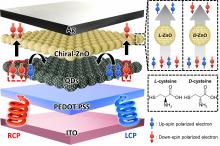
- Professor Jiwoong Yang’s team has developed a quantum-dot-based “circularly polarized light” sensor covering ultraviolet to infrared spectrum.
- Breakthrough design introduces chiral structures into charge transport pathways, overcoming material and wavelength limitations of conventional optical sensors.
- Published in Advanced Materials, a top-tier international journal in the field of materials science.
30 Mar 2026
Daegu Gyeongbuk Institute of Science and Technology (DGIST)
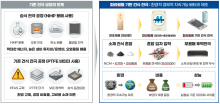
- DGIST Professor Kim Jinsoo’s team has developed dry-electrode technology for batteries using paraffin material
- Achieving a primer-free, solvent-free process… Stable charge-discharge performance for over 1,000 cycles
- 95% reduction in costs compared to conventional fluorine-based binders, with a global warming potential of 0.05%
30 Mar 2026
National Taiwan University
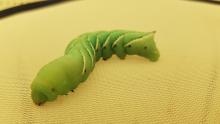
Published in Nature Ecology and Evolution, a novel study led by National Taiwan University connects plant and insect physiology, chemical ecology, molecular function, and evolutionary analysis to offer a new perspective on plant–insect coevolution.
27 Mar 2026
Sungkyunkwan University
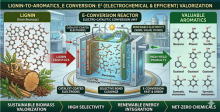
Production of aromatics and cyclohexane-based compounds through an electrochemical process without external hydrogen
26 Mar 2026
Hiroshima University
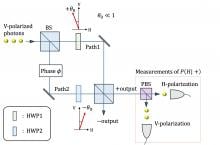
Hiroshima University researchers develop a new experimental method to demonstrate that interference physically delocalizes each photon.
26 Mar 2026
Springer Nature
According to a 20-year study in mice published in Nature Communications, repeated cloning cannot be sustained indefinitely in mammals.
26 Mar 2026
The University of Osaka
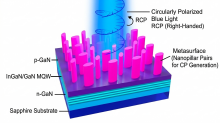
Researchers from The University of Osaka have proposed a compact LED design that directly emits circularly polarized light using a nanoscale GaN metasurface integrated onto the device. This design removes the need for bulky optical components traditionally used to create polarized light and could help enable smaller optical systems for applications such as 3D displays, augmented reality, and photonic technologies.
25 Mar 2026
The University of Osaka
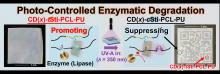
Researchers at The University of Osaka have developed a polymer material that combines high mechanical durability with controllable enzymatic degradation. The material contains movable cross-links formed by cyclodextrin rings that slide along polymer chains. By using light to control the position of these rings, enzymatic degradation can be switched on or off and even spatially patterned.
25 Mar 2026
Sungkyunkwan University
A study by Professor Tae-Youn Park of the SKKU Business School, examining the implications of pay transparency policies for the labor market, has been published online in the Harvard Business Review (HBR).
25 Mar 2026
National Taiwan University
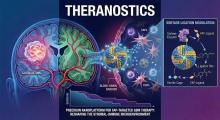
National Taiwan University researchers have engineered a dual-targeting nanocarrier that safely sneaks potent chemotherapy past the blood-brain barrier. By homing in on a specific protein (FAP) expressed by both the glioblastoma cells and their protective “helper” cells, this approach directly shrinks the deadly tumor while reprogramming the immune system to join the fight.
25 Mar 2026
The University of Osaka
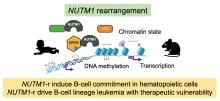
Researchers from The University of Osaka found that leukemia caused by NUTM1 rearrangements is distinguished from other forms of B-cell acute lymphoblastic leukemia (B-ALL) by a unique pattern of gene activity and gene regulation. Unlike the common form of B-ALL caused by KMT2A rearrangement, which is resistant to treatment, leukemic cells with NUTM1 rearrangements are highly sensitivity to chemotherapy.

25 Mar 2026
Ateneo de Manila University
Graffiti are works of literature in themselves, born from from unequal access to space and speech.
25 Mar 2026
National Taiwan University
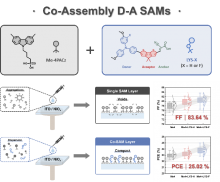
This study introduces a co-assembly strategy using two newly designed donor–acceptor self-assembled materials, LYS-H and fluorinated LYS-F, to overcome aggregation, wettability, interfacial contact, and crystallinity limitations of Me-4PACz in inverted perovskite solar cells. The fluorinated LYS-F delivers a power conversion efficiency of 25.02%, a fill factor of 83.64%, and improved ambient stability, highlighting its strong potential for the future commercialization of high-efficiency perovskite photovoltaic technologies.
Events
Sorry, no events coming up for this topic.
Researchers
Sorry, no researchers coming up for this topic.
Giants in history
Sorry, no researchers coming up for this topic.