

Japan
News
09 Sep 2016
Hokkaido University
A team of researchers from Hokkaido University has developed a versatile method to pattern the structure of “nanowires,” providing a new tool for the development of novel nanodevices.
07 Sep 2016
Nagoya University
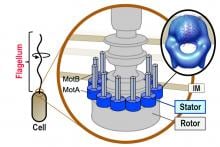
Nagoya University-led Japanese researchers reveal the 3D structure of a bacterial propeller protein.
07 Sep 2016
Nagoya University
Research team led by Nagoya University develop a label-free method for detecting DNA amplification in real time based on refractive index changes in diffracted light.
06 Sep 2016
Hokkaido University
Hokkaido University researchers have found that ants have a particular preference for aphid colonies with certain colours, which could be why these bugs are able to keep their colours across generations.
05 Sep 2016
National Institute for Materials Science (NIMS)
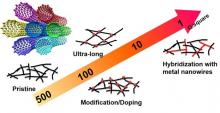
Carbon nanotubes show potential, but also many challenges, for the manufacture of flexible, wearable electronics, according to a research review in Science and Technology of Advanced Materials.

05 Sep 2016
Tohoku University
The use of traditional Chinese medications is common in East Asian countries. Guidelines for their use should be updated based on research evidence.
02 Sep 2016
Institute of Transformative Bio-Molecules (WPI-ITbM), Nagoya University
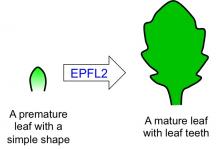
Plant biologists in Japan have discovered the key element, an EPFL2 peptide that is responsible for creating the teeth-like shapes on plant leaves.
02 Sep 2016
Hokkaido University
Hokkaido University’s Global Station for Quantum Medical Science and Engineering (GSQ) has successfully concluded Summer School for Medical Physics 2016.
01 Sep 2016
Tohoku University
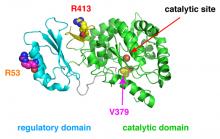
Scientists from Tohoku University's Tohoku Medical Megabank Organization (ToMMo) have published research about genetic diversity and metabolome in Scientific Reports.
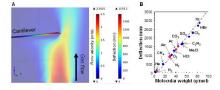
31 Aug 2016
National Institute for Materials Science (NIMS)
Aero-Thermo-Dynamic Mass Analysis (AMA) Operates Based on an Entirely New Principle.
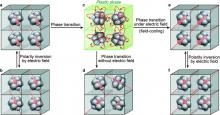
31 Aug 2016
Hokkaido University
A novel “plastic crystal” developed by Hokkaido University researchers has switching properties suitable for memory-related applications.
30 Aug 2016
Hokkaido University
Hokkaido University (HU) will launch three new graduate schools on April 1, 2017: the Graduate School of Biomedical Science and Engineering, the Graduate School of Infectious Diseases, and the Graduate School of Global Food Resources.
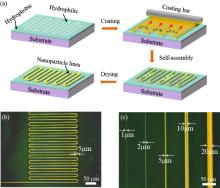
30 Aug 2016
National Institute for Materials Science (NIMS)
Prints Made on Flexible Substrates. Technique May Be Applicable to the Development of Wearable Devices.
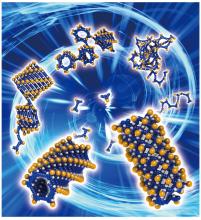
30 Aug 2016
Institute of Transformative Bio-Molecules (WPI-ITbM), Nagoya University
Organic nanotubes (ONTs) are tubular nanostructures
composed of organic molecules that have unique properties and have found various applications, such as electro-conductive materials. A group of scientists at Nagoya University have developed a simple and effective method for the formation of robust covalent ONTs from simple molecules.
25 Aug 2016
National Institute for Materials Science (NIMS)
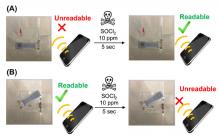
Researchers in Japan and US jointly developed a chemical sensing material whose electrical conductivity dramatically increases when exposed to toxic gases.
25 Aug 2016
National Institute for Materials Science (NIMS)
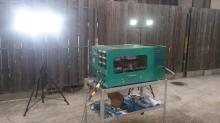
They Reduce Friction by about One-Third. Playing a Vital Role in a Newly Developed Small Jet Engine Generator for Emergency Use
25 Aug 2016
Kyoto University
New research shows that certain primate stem cells have pluripotency superior to some types derived from mice. The study, published in Nature, maps how pluripotency differs among mice, monkeys, and humans, and illustrates for the first time a developmental counterpart of primate stem cells.
24 Aug 2016
Hokkaido University
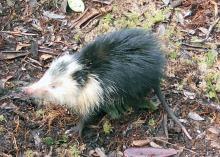
An international research team suggests the endangered Cuban solenodon evolved after the extinction of dinosaurs.
23 Aug 2016
National Institute for Materials Science (NIMS)
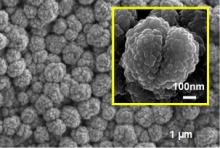
Research groups in Japan and United States jointly developed an anode material for lithium-ion rechargeable batteries by forming nanoparticles made of silicon-metal composites on metal substrates.

23 Aug 2016
Tohoku University
The theory of thermoelectricity for low dimensional semiconductors has recently been updated by Nguyen et al (2016) from Tohoku University, 23 years after it was first published by Hicks and Dresselhaus.
23 Aug 2016
Kyoto University
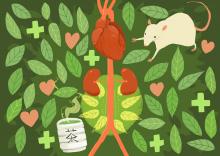
Green tea could prevent a deadly condition in the body's main artery. A Kyoto University team has found that abdominal aortic aneurysm -- a condition in which the main artery becomes overstretched and bloated -- developed less frequently in rats that drank green tea polyphenol, a major component of green tea.

22 Aug 2016
Tohoku University
Researchers at Tohoku University and NEC Corporation have discovered a new technique for compressing the computations of encryption and decryption operations known as Galois field arithmetic operations.
19 Aug 2016
Hokkaido University
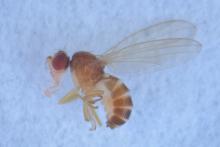
A team from Hokkaido University and Ehime University has discovered that Hawaiian drosophilids (fruit flies) had plural ancestors that hailed from continents, refuting the “single Hawaiian origin” hypothesis.
19 Aug 2016
Kyoto University
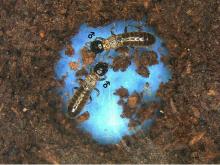
Male Japanese termites form homosexual couples when no females are around -- and when the chance arises, they take over a heterosexual couple's nest and kill the male so that one of them can mate with the now spouseless female. The study supports a theory that homosexual couplings in invertebrates have evolutionary advantages.

18 Aug 2016
Hokkaido University
Researchers from Hokkaido University have discovered familial differences in the earliest vocal babblings of juvenile songbirds, suggesting a possible genetic basis for the variations.

18 Aug 2016
Tohoku University
The Pacific coast of the Tohoku region has been struck by four large tsunamis in just over a century - in 1896, 1933, 1960 and 2011.
10 Aug 2016
Nagoya University
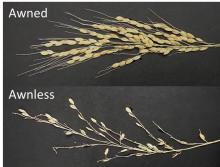
International research team led by Nagoya University identifies peptide required for awn development in wild rice, and shows that human selection caused its dysfunction in cultivated Asian rice.
10 Aug 2016
Hokkaido University
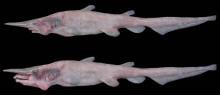
Goblin sharks have revealed a remarkable biting mechanism, named “slingshot feeding,” which involves high-speed manipulation of the species’ highly protrusible jaws.
09 Aug 2016
Tohoku University
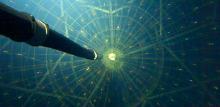
The ultra-low background KamLAND-Zen detector, hosted by research institutes inside and outside Japan demonstrates the best sensitivity in the search for neutrinoless double-beta decay, and sets the best limit on the effective Majorana neutrino mass.

08 Aug 2016
Kyoto University
Japanese baby macaques show spontaneous smiles in their sleep, just like humans and chimpanzee babies. This finding points to an older evolutionary origin of smiling and laughter.
Researchers
Sorry, no researchers coming up for this topic.
Giants in history

Japanese biochemist Akira Endo (1933 – 2024) discovered the first statin, called mevastatin, which lowered cholesterol levels in the blood by inhibiting a key enzyme in the cholesterol biosynthesis pathway. His work laid the foundation for the development of statins to help patients lower their blood cholesterol levels and reduce their risk of heart disease or stroke.
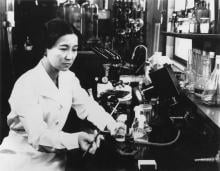
Ruby Sakae Hirose (1904 – 1960) was a Japanese-American scientist whose research contributed significantly to our understanding of blood clotting, allergies and cancer.

Haisako Koyama (1916 – 1997) was a Japanese solar observer whose dedication to recording sunspots – cooler parts of the sun’s surface that appear dark – produced a sunspot record of historic importance.
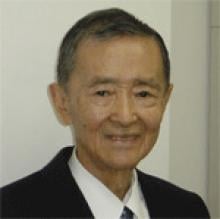
Michiaki Takahashi (17 February 1928 – 16 December 2013) was a Japanese virologist who developed the first chickenpox vaccine.
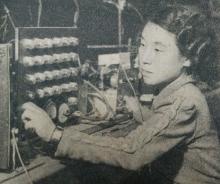
Toshiko Yuasa (11 December 1909 – 1 February 1980) was the first Japanese female physicist whose research on radioactivity shed light on beta decay – the process in which an atom emits a beta particle (electron) and turns into a different element.
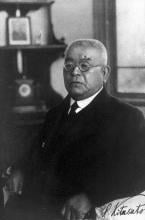
Baron Kitasato Shibasaburo (29 January 1856 – 13 June 1931) was a Japanese physician and bacteriologist whose work led to a new understanding of preventing and treating tetanus, diphtheria and anthrax.
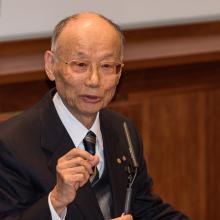
By isolating soil microorganisms and studying the compounds they produce, Satoshi Omura (born 1935) discovered almost 500 organic compounds with unique properties that were produced by these microorganisms, including many new antibiotics.
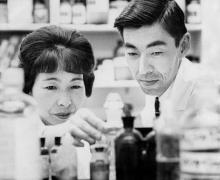
Husband and wife team, Kimishige (3 December 1925 – 6 July 2018) and Teruko Ishizaka (28 September 1926 – 4 June 2019) discovered the antibody class Immunoglobulin E (IgE) that triggers allergic reactions. They also discovered that IgE antibodies attach to white blood cells, known as mast cells, releasing histamine, which causes allergic reactions.
Husband and wife team, Kimishige (3 December 1925 – 6 July 2018) and Teruko Ishizaka (28 September 1926 – 4 June 2019) discovered the antibody class Immunoglobulin E (IgE) that triggers allergic reactions. They also discovered that IgE antibodies attach to white blood cells, known as mast cells, releasing histamine, which causes allergic reactions.
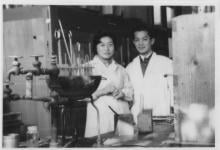
Reiji Okazaki (8 October 1930 – 1 August 1975) and Tsuneko (7 June 1933) were a Japanese couple who discovered Okazaki fragments – short sequences of DNA that are synthesized during DNA replication and linked together to form a continuous strand.
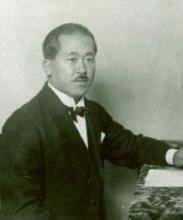
In 1915, Koichi Ichikawa along with pathologist Katsusaburo Yamagiwa became the first to prove that chronic exposure to chemicals can cause cancer.
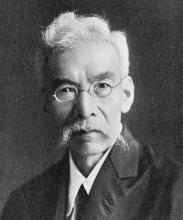
In 1915, pathologist Katsusaburo Yamagiwa and his research assistant Koichi Ichikawa became the first to prove that chronic exposure to chemicals can cause cancer.
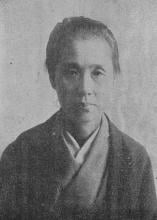
Ogino Ginko (3 March 1851 – 23 June 1913) was the first registered female doctor to practise modern medicine in Japan.
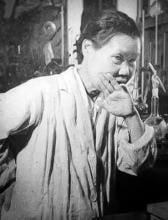
Michiyo Tsujimura (17 September 1888 – 1 June 1969) was a Japanese agricultural scientist and biochemist recognized for her research of green tea components.
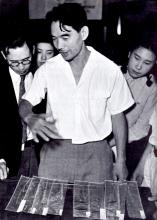
Hitoshi Kihara (1893 – 1986) was one of the most famous Japanese geneticists of the 20th century. One of his most significant contributions was identifying sex chromosomes (X and Y) in flowering plants.
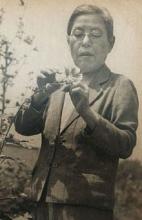
Kono Yasui (16 February 1880 – 24 March 1971) was a Japanese botanist who researched the genetics of poppies, corn and spiderworts and surveyed the plants that had been affected by the nuclear fallout after the atomic bombings of Hiroshima and Nagasaki.
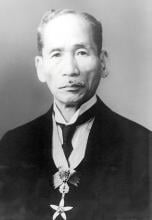
Umetaro Suzuki (7 April 1874 – 20 September 1943) was a Japanese scientist best remembered for his research on beriberi, a disease caused by vitamin B1 deficiency, characterized by limb stiffness, paralysis and pain.
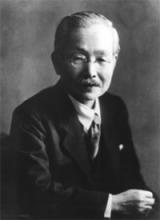
Kikunae Ikeda (8 October 1864 – 3 May 1936) was a Japanese chemist who discovered the fifth basic taste, umami.
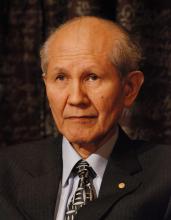
Osamu Shimomura (27 August 1928 – 19 October 2018) was a Japanese organic chemist and marine biologist who dedicated his career to understanding how organisms emitted light.
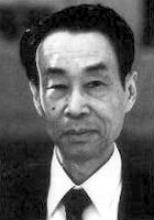
Motoo Kimura (13 November 1924 – 13 November 1994) was a Japanese theoretical population geneticist who is best remembered for developing the neutral theory of molecular evolution.

Chika Kuroda (24 March 1884 – 8 November 1968) was a Japanese chemist whose research focussed on the structures of natural pigments.
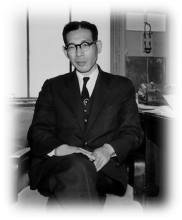
The field of solid-state ionics originated in Europe, but Takehiko Takahashi of Nagoya University in Japan was the first to coin the term ‘solid ionics’ in 1967. ‘Solid-state ionics’ first appeared in 1971 in another of his papers, and was likely a play on ‘solid-state electronics’, another rapidly growing field at the time.
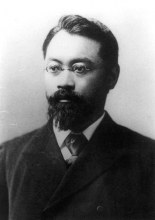
The techniques that make industrial pearl culturing possible were developed over a century ago at the Misaki Marine Biological Station in Japan. The station’s first director, Professor Kakichi Mitsukuri, emphasized to Kokichi Mikimoto in 1890 that stimulating pearl sac formation was important for pearl growth, and they went on to successfully develop methods for culturing pearls.
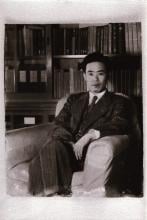
Japanese physicist Ukichiro Nakaya (1900-1962) made the world’s first artificial snowflakes. He started his research on snow crystals in the early 1930s at Hokkaido University, where there is an unlimited supply of natural snow in winter. By taking over 3,000 photographs, he established a classification of natural snow crystals and described their relationship with weather conditions.
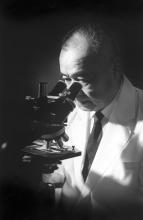
Minoru Shirota (April 23, 1899 – March 10, 1982) was a Japanese microbiologist who invented the popular fermented drink Yakult.
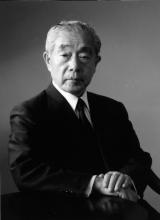
Japanese chemist Kenichi Fukui (4 October 1918 – 9 January 1998) was the first Asian scientist to be awarded the Nobel Prize in Chemistry. Together with Roald Hoffman, he received this honour in 1981 for his independent research into the mechanisms of chemical reactions.
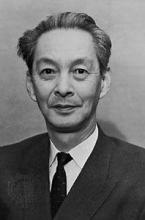
Shinichiro Tomonaga (31 March 1906 – 8 July 1979), together with Richard Feynman and Julian Schwinger, was awarded the Nobel Prize in Physics in 1965, for their contributions to advance the field of quantum electrodynamics. Tomonaga was also a strong proponent of peace, who actively campaigned against the proliferation of nuclear weapons and promoted the peaceful use of nuclear energy.
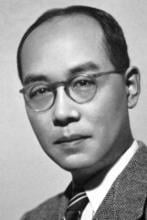
Hideki Yukawa (23 January 1907 – 8 September 1981) was awarded the Nobel Prize in Physics in 1949 for predicting the existence of the pi meson subatomic particle. Japan’s first Nobel laureate, Yakawa also expressed his support for nuclear disarmament by signing the Russell–Einstein Manifesto in 1955.
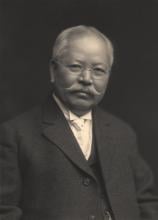
Japanese chemist Takamine Jokichi (3 November 1854 – 22 July 1922) founded the Tokyo Artificial Fertilizer Company, where he isolated a starch-digesting enzyme (named takadiastase) from the fungus Aspergillus oryzae.
Tsuneko (7 June 1933) and Reiji Okazaki (8 October 1930 – 1 August 1975) were a Japanese couple who discovered Okazaki fragments – short sequences of DNA that are synthesized during DNA replication and linked together to form a continuous strand.
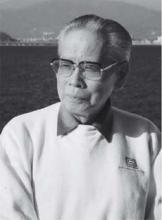
A Japanese surgeon, Tetsuzo Akutsu (20 August 1922 – 9 August 2007) built the first artificial heart capable of keeping an animal alive.
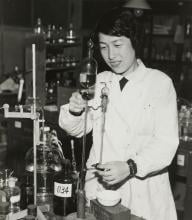
Japanese geochemist Katsuko Saruhashi developed the first method and tools for measuring carbon dioxide in seawater