

Biology
News
26 May 2023
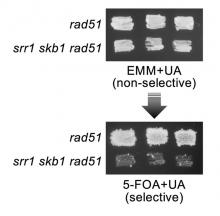
A research team, led by researchers from Osaka University, performed genetic screening of fission yeast lacking DNA repair gene Rad51 to identify genes that play a role in gross chromosomal rearrangement (GCR), a type of mutation that occurs at the centromere. Cells lacking Srr1 or Skb1 exhibited reduced GCR, indicating that these genes are important to the occurrence of GCR. These findings advance our understanding of the mechanisms underlying centromeric GCR.

26 May 2023
Eating fermented foods might be the secret to a healthy and long-lived society

19 May 2023
Mushrooms 🍄get chattier after rainfall 🌧️, Two-organ chip answers fatty liver questions, History maps 🗺️vs future simulations, Restoring vision in blindness. Plus in our blog: Myanmar: Through eyes of leadership. Read all in the latest Editor's Choice.
18 May 2023
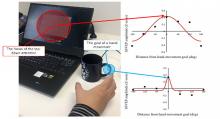
It’s not unusual for many of us to reach for a cup of coffee or cup of tea whilst focusing our attention on a screen. Scientists have long pondered whether our hand movements influence our spotlight attention. And now a group of researchers from Tohoku University have discovered that our spotlight attention and the attention paid to our moving hands operates via independent mechanisms.
17 May 2023
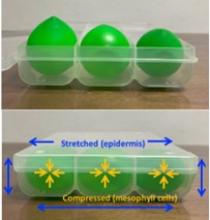
A research group led by Osaka University has found that plant cells may be able to detect mechanical forces to determine their own position within the leaf—whether they are on the surface or in the inner tissues—and therefore differentiate into appropriate cell types after damage. These findings reveal how plants regenerate the correct type of tissues when damaged, and may improve our understanding of the mechanisms underlying the high regeneration potential of plants.
16 May 2023
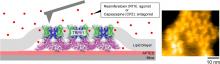
Researchers at Kanazawa University report in the Proceedings of the National Academy of Sciences of the United States of America (PNAS) high-speed atomic force microscopy experiments that show how ligands associated with stimulating and suppressing activation of the TRPV1 protein increase and decrease the molecule’s structural variations. The observations provide insights into how these heat- and chilli-sensing proteins function.
15 May 2023
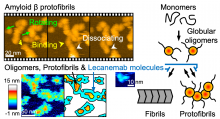
Researchers at Kanazawa University report in Nano Letters how high-speed atomic force microscopy leads to insights into processes relevant to Alzheimer’s disease. Moreover, the technique is shown to be an excellent tool for studying the effect of drugs against the disease.
12 May 2023
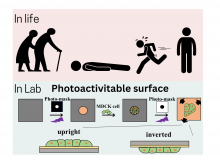
Specially coated surfaces help scientists investigate what happens when cell clusters are turned upside down.

11 May 2023
A protein that helps bats survive viral diseases might offer lessons for developing new anti-inflammatory treatments.
11 May 2023
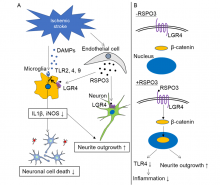
Researchers from Osaka University identified a new protein, R-spondin 3 (RSPO3), that has beneficial effects after ischemic stroke in mice. Specifically, RSPO3 activates the protein LGR4 to trigger a cascade of cellular reactions that decreases inflammation and stimulates the growth of neuronal extensions. Moreover, administrating RSPO3 to mice one day after stroke improved recovery of sensory and motor functions. These findings provide a new target for developing treatments to improve recovery after ischemic stroke.

11 May 2023
DGIST and New Life Group launched a research project on "Functional beauty and health products using the latest nanotechnology."
11 May 2023
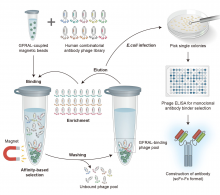
- In a groundbreaking study, Professor Yea’s DGIST research
team verified the effectiveness of the anti-GFRAL human
antibodies in improving chemotherapy-induced cancer cachexia
- The team presents a candidate antibody for managing cancer cachexia, a condition without an approved and effective
therapy worldwide
11 May 2023
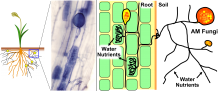
A new group of mitochondrial viruses confined to the arbuscular mycorrhizal fungi Glomeromycotina may represent an ancestral lineage of mitoviruses.
11 May 2023
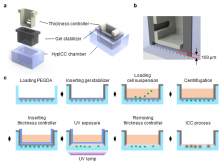
- The DGIST team of Professor Minseok Kim is jointly developing a platform that can analyze rare cells without loss with CTCELLS, Inc.
- A high cell preservation rate and reproducibility have been achieved as well as accurate immunocytochemistry technology implementation.
- Research results have been published in ACS Applied Materials & Interfaces.
11 May 2023
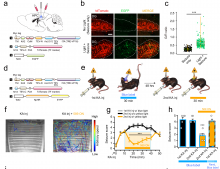
- Prof. Jung Ho Hyun’s research team at DGIST has developed a tool to verify the causal relationship between specific neurons and circuits and behavior
- This will provide new information for the development of treatments using light for neurological ad psychological disorders
11 May 2023
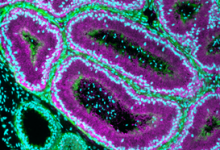
Researchers from Osaka University identified a new protein, NICOL, and described its crucial role in the maturation of sperm, which itself is necessary for male fertility. Mice who lacked this protein were sterile. Such a discovery may have implications for the development of male contraceptives.

10 May 2023
A new drug delivery system delivers an antioxidant directly to mitochondria in the liver, mitigating the effects of oxidative stress.
08 May 2023
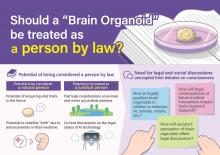
Researchers discuss whether a "brain organoid" should be treated as a person by law, and suggest the need for legal and social discussions uncoupled from debates on consciousness.
05 May 2023
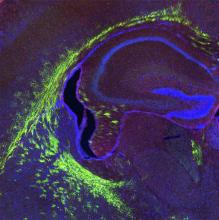
Scientists have found a lipid transporter crucial to regulating the cells that make myelin, the nerve-protecting sheath.
02 May 2023
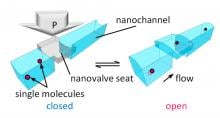
A joint research group at Osaka Metropolitan University has succeeded in regulating the flow of single molecules in solution by opening and closing the nanovalve mounted on the nanofluidic device by applying external pressure. The research group fabricated a device with a ribbon-like, thin, soft glass sheet on the top, and at the bottom a hard glass substrate having nanochannels and nanovalve seats. By applying external pressure to the soft glass sheet to open and close the valve, they succeeded in directly manipulating and controlling the flow of individual molecules in solution. They also observed an effect of fluorescence signal amplification when single fluorescent molecules are confined in the tiny nanospace inside the valve. The effect can be ascribed to the nanoconfinement, which suppresses the random motion of the molecules.
28 Apr 2023
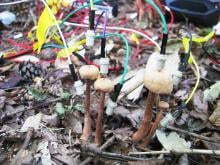
Certain types of fungi can communicate with each other via electrical signals. But much remains unknown about how and when they do so. A group of researchers recently headed to the forest to measure the electrical signals of Laccaria bicolor mushrooms, finding that their electrical signals increased following rainfall.
25 Apr 2023
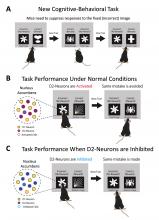
The Nobel prize winning physicist Niels Bohr once said, “An expert is a (person) that has made all the mistakes that can be made in a narrow field.” This idea that to master a skill we must learn from our mistakes and avoid making them in future has long been recognized; however, the brain mechanisms and pathways that control this ability have been poorly understood.
We revealed a specific brain pathway that allows us to identify and learn from our mistakes to guide better decision-making in future.
Our work is an important step towards understanding how the brain controls our daily choices and behavior. The identification of these cells as ‘mistake signalers’ may also help to guide new treatments for mental health conditions associated with impaired decision-making ability.
18 Apr 2023
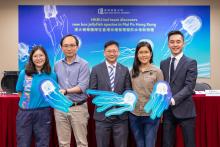
A Hong Kong Baptist University (HKBU)-led team has discovered a new species of box jellyfish in the Mai Po Nature Reserve in Hong Kong. The new jellyfish species, which belongs to the family Tripedaliidae, was named Tripedalia maipoensis by the research team. It is the first discovery of a new box jellyfish species from the waters of China. The discovery also adds a fourth species to the Tripedaliidae family.
14 Apr 2023
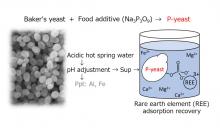
A research group at Osaka Metropolitan University has succeeded in selectively recovering trace rare earth elements in synthetic seawater and environmental water, such as hot spring water, using baker’s yeast with a phosphate group added. The phosphorylated yeast is expected to be utilized as a material for recovering useful metals and removing toxic metals, thereby contributing to the realization of a metal resource-circulating society.
11 Apr 2023
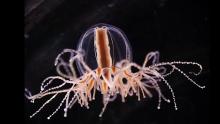
To survive, all organisms must regulate their appetite. Hormones and small proteins called neuropeptides perform this process, stimulating feelings of hunger and fullness. When researchers noted the similarities between GAWamide, a neuropeptide that regulates feeding in the Cladonema jellyfish, and myoinhibitory peptide, a neuropeptide that regulates feeding in fruit flies, they decided to test whether they could exchange the two. Their success in doing so highlights the deep evolutionary origins of feeding regulation.

10 Apr 2023
Nitrogen is such a crucial nutrient for plants that vast quantities of nitrogen-containing fertilizers are spread on farmlands worldwide. However, excess nitrogen in the soil and in drainage run-off into lakes and rivers causes serious ecological imbalances. A recent study has uncovered the regulatory mechanisms at work when plants utilize nitrogenous fertilizers in their roots, a positive step in the quest to generate crops that require less fertilizer while still producing the yields needed to feed the world.

10 Apr 2023
AI finds the first stars ✨were not alone, Auto-switch for large electronic devices, A metabolite against autoimmune diseases, & Converting fruit waste 🍊🍉into solar stills. Plus in our blog: A career worth doing, a life worth living. Read all in the latest Editor's Choice.
07 Apr 2023
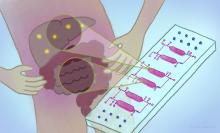
A tiny platform empowers scientists to examine how gut and liver cells interact in health and disease.
05 Apr 2023
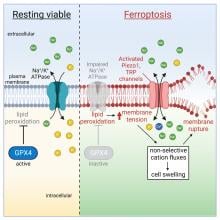
Ferroptosis is a recently discovered type of cell death associated with certain neurodegenerative, cardiovascular and kidney diseases. Whilst scientists have understood that accumulated iron and degenerated lipids trigger ferroptosis, the actual mechanisms at play have remained a mystery. A team of researchers from Tohoku University has identified where in the cells these accumulations take place, and what gets targeted as ferroptosis occurs.
05 Apr 2023
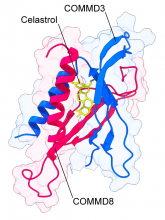
Researchers from Osaka University found that the COMMD3/8 complex is implicated in the progression of the autoimmune response in a mouse model of rheumatoid arthritis. They identified celastrol, the active compound of a medicinal herb, as an inhibitor of the COMMD3/8 complex. Celastrol blocked the progression of rheumatoid arthritis. Thus, celastrol is a potential lead for developing treatments against rheumatoid arthritis.
Events
Sorry, nothing coming up for this discipline
Researchers
Sorry, nothing coming up for this discipline
- « first
- ‹ previous
- 1
- 2
- 3
- 4
Giants in history
Sorry, nothing coming up for this discipline
- « first
- ‹ previous
- 1
- 2
- 3