

Biology
News
16 Feb 2023
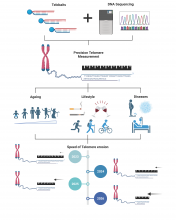
A new approach that ‘baits’ the caps or telomeres protecting the ends of chromosomes could provide information on how rapidly we are ageing and what we need to do to slow it down.

15 Feb 2023
In hepatic steatosis, hepatocytes "die," resulting in liver damage. Severe steatosis increases hepatocellular deaths, thus aggravating liver damage. The mechanism is unclear. Using mice, we show that mild steatosis causes apoptosis whereas severe steatosis predominantly causes necroptosis leading to cell rupture. This induces strong inflammation and new cell death, producing further liver damage. We reveal the transcription factor ATF3 to be involved in this process. Our results are expected to contribute to therapeutic method development.
13 Feb 2023
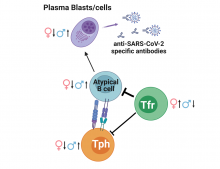
Researchers from Osaka University have shown sex-specific differences in the immune response to COVID-19 infection. By identifying and analyzing the immune cell population in COVID-19 patients, they showed that infection results in a reduced ratio of circulating follicular T regulatory (cTfr) cells to a network of antibody-producing proteins, correlated with dysregulated antibody production. This cTfr cell reduction is more significant in males, providing cellular evidence for the observed association between increased risk and male sex.

10 Feb 2023
Osaka Metropolitan University scientists have demonstrated that fish can recognize “it’s me” when they themselves in a picture for the first time in non-human animals. Further testing made it clear that the fish recognize their own face in the pictures like humans.
06 Feb 2023
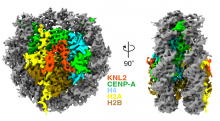
Researchers led by Osaka University used cryogenic electron microscopy to analyze the atomic structure of the centromeric region of the chromosome, essential for cell division. A protein called CENP-A marks the centromere; the researchers showed that during interphase, CENP-A is bound by a protein called KNL2 to maintain the location of the centromere. During mitosis, KNL2 is replaced by CENP-C, allowing correct formation of the kinetochore complex for cell division.
02 Feb 2023
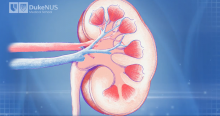
Blocking an immune-regulating protein reverses the damage caused by acute and chronic kidney disease, a preclinical study suggests.
02 Feb 2023
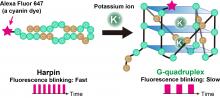
A new microscopic technique allows for the real-time study of RNA G-quadruplexes in living cells, with implications for the fight against amyotrophic lateral sclerosis.
31 Jan 2023
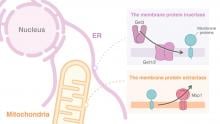
Researchers from Osaka University have shown that a system known as the GET pathway is essential for efficient mitophagy, the process by which mitochondria are removed from cells. The GET pathway targets a protein assembly called the Ppg1–Far complex, which inhibits mitophagy, to the membrane of a part of the cell called the endoplasmic reticulum. When the GET pathway is defective, this complex instead becomes targeted to mitochondria, where it acts to suppress mitophagy.
25 Jan 2023
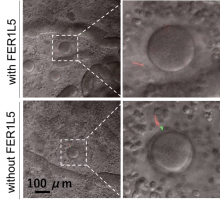
Researchers from Osaka University have identified a protein, FER1L5, that is essential for sperm to acquire fertilizing ability. Sperm from mice lacking this protein were unable to undergo the “acrosome reaction”, which releases molecules that facilitate fertilization, resulting in impaired male fertility. As FER1L5 is also present in human sperm, this work may lead to new diagnostic methods and treatments for male infertility in humans.
20 Jan 2023
Researchers at Kanazawa University report in Nano Letters how high-speed atomic force microscopy can be used to assess the effectivity of spike-neutralizing antibodies for preventing COVID-19. The use of such antibodies offers a promising alternative to vaccines.

20 Jan 2023
Overeating mechanism: why "eating just one chip"🍟 is impossible, Measuring hidden energy of gamma-ray bursts, Marine species that can adapt to ocean acidification & A rough start can lead to a strong bond, Read all in our first Editor's Choice of 2023. Plus our interview on what dengue vaccine approval in EU💉means for global dengue protection.
20 Jan 2023
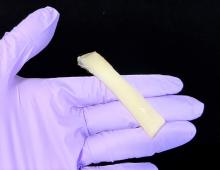
The natural abilities of squid tissues and the creativity of chemists combine to take hydrogel research in new directions.
12 Jan 2023
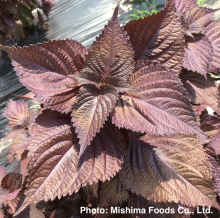
A team of Japanese researchers created a high-quality genome assembly of red perilla, a step toward harnessing the plant’s potentially useful bioactive chemicals — and its medicinal properties.
10 Jan 2023
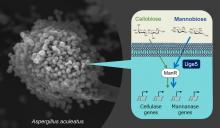
An Osaka Metropolitan University research team analyzed the regulatory mechanisms of carbohydrate-hydrolyzing enzyme production in Aspergillus aculeatus, a filamentous fungus that produces enzymes with an excellent ability to degrade plant biomass. The team found that UDP-glucose 4-epimerase (Uge5), an enzyme known for its involvement in galactose metabolism, also regulates the expression of degrading enzyme genes in A. aculeatus. This is the very first report of Uge5’s roles in selective gene expression in response to different types of inducing sugars in filamentous fungi.
05 Jan 2023
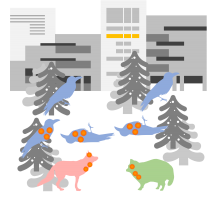
Researchers at Hokkaido University have revealed the effects of high pathogenicity avian influenza virus infection on an Ezo red fox and a Japanese raccoon dog, linking their infection to a recorded die-off of crows.
28 Dec 2022
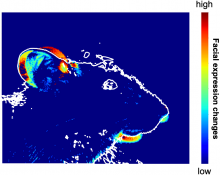
New insights into the opposing actions of serotonin-producing nerve fibres in mice could lead to drugs for treating addictions and major depression.

28 Dec 2022
Taking Hong Kong’s famous Peak Tram up to Victoria Peak offers stunning views of its central business district, Victoria Harbor, and the surrounding islands. But a team of international scientists has recently discovered that the trams winding journey provides a previously unrecognized situation where our vertical perception gets distorted.
27 Dec 2022
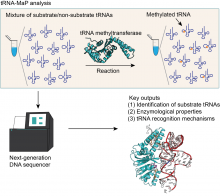
tRNA-MaP can rapidly analyze the specificity of tRNA m1A22 methyltransferase (TrmK) for substrate tRNAs.
23 Dec 2022
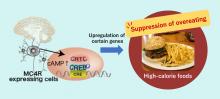
Scientists reveal genetic mechanism associated with high-calorie food-fueled obesity
22 Dec 2022
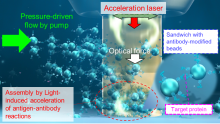
Osaka Metropolitan University scientists discovered the principle of light-induced acceleration of antigen–antibody reaction, allowing for simple, ultrafast, and highly sensitive detection of proteins. The researchers introduced target proteins and probe particles with modified antibodies selectively binding to the target proteins into a small channel and applied irradiation with infrared laser light. They achieved, for the first time, the rapid measurement of trace amounts of attogram-level target proteins after only 3 minutes of laser irradiation. These findings will potentially contribute to breakthroughs in the development of systems for ultra-early diagnosis of various diseases.
20 Dec 2022
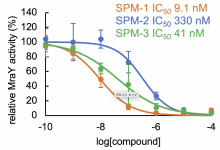
Researchers have designed and synthesized analogs of a new antibiotic that is effective against multidrug-resistant bacteria, opening a new front in the fight against these infections.
19 Dec 2022
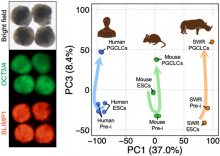
Researchers from Osaka University have developed a culture system using pluripotent cells from southern and northern white rhinos, which was refined to produce primordial germ cell-like cells (PGCLCs). These cells are the equivalent of primordial germ cells, the origin of eggs and sperm. The study marks an important first step in the potential production of northern white rhino gametes, which could be used in breeding programs, and is the first to induce PGCLCs in a wild animal.
15 Dec 2022
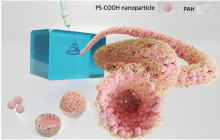
A research team led by the University of Hong Kong (HKU) and Lawrence Berkeley National Laboratory has invented an all-water robotic system that resolves the constraints of bio-inspired robots through revolutionary scientific advances.

15 Dec 2022
Understanding how bats tolerate viral infections, Material separates water from...water, The virtual sense of touch polished to next level and COVID-19 negatively impacted early-careers and female researchers. Read all in the December's Editor's Choice.
15 Dec 2022
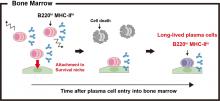
Researchers led by Osaka University generated a time-stamping method to trace the development and survival of plasma cells in the bone marrow and spleen. Using a mouse model in which plasma cells were fluorescently labeled in an inducible manner, they found that plasma cells were continuously replenished by new cells, a small portion of which differentiated into long-lived plasma cells (LLPCs). These findings may aid in the development of new vaccines that efficiently induce LLPCs.

14 Dec 2022
Using cryogenic electron microscopy, a research team from the Research Center for Artificial Photosynthesis (ReCAP) at Osaka Metropolitan University has revealed, for the first time, the structures and binding environments of pigments bound to a protein called a photosynthetic antenna of the marine green macroalga Codium fragile. The team’s results extend our knowledge about the molecular mechanism by which blue-green light—the only light available in deep seawater—is efficiently utilized for photosynthesis.
14 Dec 2022
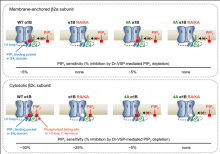
- DGIST Professor Suh Byung-chang's research team identified the regulation mechanism of calcium channels, which are important for signal transmission between nerve cells
- A new clue to the development of substances for treating mental and neurological diseases
14 Dec 2022
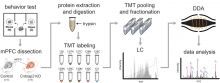
- Discovery of potential treatment target networks for gene dysregulation uniquely found in patients with autism spectrum disorder
- Published in ‘Molecular Psychiatry,’ an international journal of molecular psychiatry
14 Dec 2022
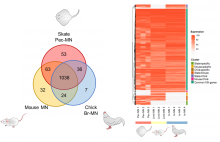
- Identifying the entire genome of the primitive fish, little skate, and proposing the molecular mechanism for the evolution of movement
- Joint Research of DGIST · Seoul National University · New York University Medical School... Published in SCI-level journals

12 Dec 2022
Revelations about the mechanisms of two key proteins which maintain the asymmetric distribution of cholesterol within the cell membrane could help understand and treat diseases linked to its imbalance
Events
Sorry, nothing coming up for this discipline
Researchers
Sorry, nothing coming up for this discipline
- « first
- ‹ previous
- 1
- 2
- 3
- 4
Giants in history
Sorry, nothing coming up for this discipline
- « first
- ‹ previous
- 1
- 2
- 3