

Biology
News
29 Nov 2023
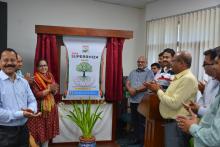
Mycorrhiza biofertilizer Uttam Superrhiza has been named as the winner of the Applied Microbiology International Product of the Year 2023.
The prestigious prize recognizes a commercial product derived from microbiology research, with special consideration given to those products that have addressed the United Nations Sustainable Development Goals.
29 Nov 2023
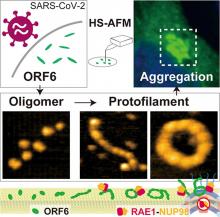
Researchers at Kanazawa University report in the Journal of Physical Chemistry Letters high-speed atomic force microscopy studies that shed light on the possible role of the open reading frame 6 (ORF6) protein COVID19 symptoms.
28 Nov 2023
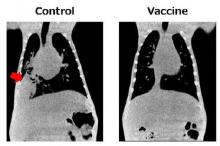
A research team from Osaka Metropolitan University has successfully developed a novel pneumococcal vaccine by combining the team’s proprietary mucosal vaccine technology with pneumococcal surface proteins that can cover a wide range of serotypes. Experiments were conducted using mice and macaques and it was confirmed that pneumonia caused by pneumococcal infection was clearly suppressed in the target groups of animals inoculated with the vaccine.
21 Nov 2023
Out of this living laboratory emerged unexpected insights on coexistence from an “unusual” source.
20 Nov 2023
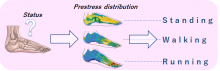
A new technique allows researchers to map how the cellular ‘skeleton’ adapts to external stress.
16 Nov 2023
The winners of the Applied Microbiology International Horizon Awards were announced at the prestigious Environmental Microbiology lecture 2023, held at BMA House in London on November 16.
14 Nov 2023
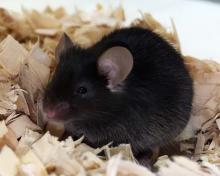
Cancer stem cells cause the aging of macrophages in mice with healthy immune systems, creating conditions for the formation of tumors.

13 Nov 2023
New study finds prior dengue antibodies substantially raise risk of microcephaly, foetal defects with Zika infection.
10 Nov 2023
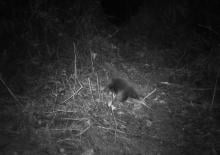
Expedition led by Indonesian NGO YAPPENDA with Cenderawasih University students finds two species lost to science: Attenborough’s long-beaked echidna—one of Re:wild’s most wanted lost species—and Mayr’s honeyeater.

09 Nov 2023
New shrimp species in ancient hot spring, Super sprouts, How "warm-ups" work, New antiviral candidate, Solving voltage decay and from our blog: A sustainable future shines in TIE 2023. Read all in the latest Editor's Choice.
08 Nov 2023
Applied Microbiology International (AMI) has launched its reviewer training scheme for the journal Letters in Applied Microbiology (LAM), building upon its development opportunities for early career scientists in journal publishing.
03 Nov 2023
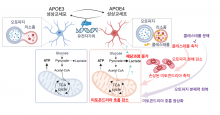
- Confirmed the link between cholesterol accumulated in lysosomes and decreased mitochondrial respiration due to the APOE4 genotype and proposed a possible reason that explains a decline in brain function
- Research results published in Cell Reports

02 Nov 2023
• Duke-NUS scientists’ study shows metabolic elasticity is driven by genes.
• It is also dependent on diet, declining with a high-fat diet, while improving with intermittent fasting.
25 Oct 2023
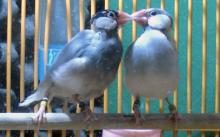
Pair-bonded Java sparrows show enlarged eye rings to signal breeding readiness.
24 Oct 2023
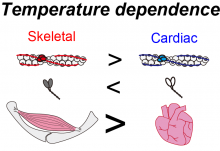
Research out of Osaka University investigated the effect of increased cell temperature on the contractility of skeletal muscle and cardiac muscle by heating the muscle proteins using advanced microscopical techniques. The findings indicated that skeletal muscle is more sensitive to increases in temperature than cardiac muscle, and that heating can rapidly activate the contractile proteins of skeletal muscle, thereby improving muscle performance.
24 Oct 2023
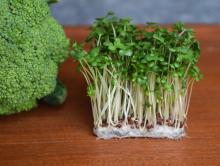
A research team from Osaka Metropolitan University has found that polysulfides are abundant in broccoli sprouts. They found that the amount of polysulfides increased dramatically during growth, by an approximately 20-fold in seeds by the fifth day of germination. Furthermore, a comprehensive analysis of the polysulfides detected a number of polysulfide candidates whose structures have not yet been determined. The identification of these unknown polysulfides and detailed analysis of their pharmacological activities are expected to enable the development of new preventive and therapeutic strategies and medicines for cancer, neurodegenerative diseases, stroke, inflammation, and other diseases.
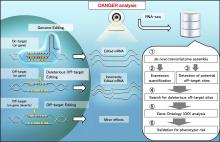
23 Oct 2023
Risk-averse on/off-target assessment for CRISPR editing without reference genome
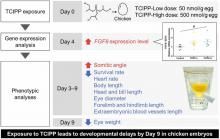
20 Oct 2023
Evaluation of developmental toxicity in early chicken embryos exposed to tris(2-chloroisopropyl) phosphate

20 Oct 2023
This study examined how the origin (wild or hatchery-reared), feeding area (Baltic Sea mainstem, Bosnian Sea, and Gulf of Finland), and organic halogen compound (OHC) concentrations of Baltic Sea Atlantic salmon (Salmo salar) affect the salmon liver proteome, transcriptome, and oxidative stress markers. Results suggest that the Baltic salmon liver proteome, together with the transcriptome, is influenced more by OHC concentrations and oxidative stress levels in the feeding area than by their origin.
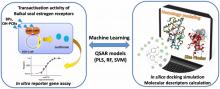
20 Oct 2023
Structural characteristics of environmental pollutants and computer simulations predict effects on the endocrine system of seals
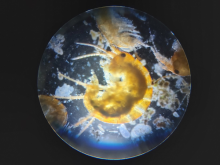
19 Oct 2023
A new amphipod species thrives at record temperatures in nearby hot spring pools of an ancient Inca city, defying norms for these typically cold-dwelling animals. Unraveling its key adaptations can give clues for the survival of other freshwater creatures in our warming world.
16 Oct 2023
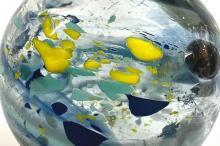
The shortlist for the Applied Microbiology International Awards 2023 has now been announced.
The AMI Awards programme is designed to celebrate the brightest minds in our field and promote the research, group, projects, products and individuals who continue to help shape the future of applied microbiology.
16 Oct 2023
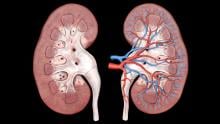
New research reveals how disrupted energy production in the kidneys contributes to progressive kidney disease in diabetes.
06 Oct 2023
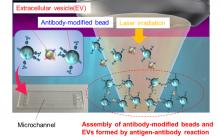
Osaka Metropolitan University researchers have used the power of laser light to accelerate the reaction between cancer cell-derived extracellular vesicles—a kind of nanoparticle—and antibody-modified microparticles. The three-dimensional structure of the resulting aggregates was then analyzed using a confocal optical system. The results demonstrated the ability to measure, within 5 minutes, approximately 1,000 to 10,000 nanoscale EVs contained in a 500 nL sample.

05 Oct 2023
Hunting for supermassive black holes, Coastal survival at risk, Calcium and dead cell clean-up, Two naps are better than one & Pineapple leaf prosthetics. Read all in the latest Editor's Choice.
05 Oct 2023
The finalists in the Applied Microbiology International Product of the Year Award 2023 have been announced. The awards promote the research, groups, projects, products and individuals who are shaping the future of applied microbiology.
05 Oct 2023
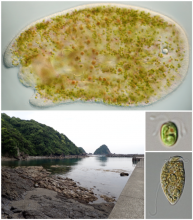
Acoels have been found to host a wide diversity of symbiotic, photosynthetic microalgae.
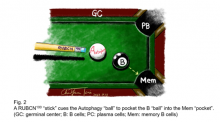
02 Oct 2023
The authors discovered a shorter isoform of Rubicon called RUBCN100, which enhances autophagy in B cells.
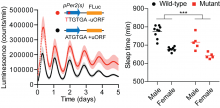
02 Oct 2023
The authors identified a structure in the circadian mRNA Period2 that affects the sleep-wake cycle. The results indicate how translation and post-transcriptional processes influence the body’s internal clock and its impact on sleep patterns.
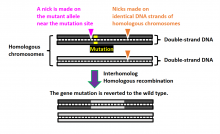
15 Sep 2023
Researchers led by Osaka University developed a novel genome editing technique known as NICER, which results in significantly fewer off-target mutations than CRISPR/Cas9 editing. The technique uses a different type of enzyme that makes single-stranded “nicks” in the DNA. Repair of these nicks is more efficient and accurate than repair of double-strand breaks caused by the current CRISPR/Cas9 editing. This technique represents a novel approach for the treatment of genetic diseases caused by heterozygous mutations.
Events
Sorry, nothing coming up for this discipline
Researchers
Sorry, nothing coming up for this discipline
- « first
- ‹ previous
- 1
- 2
- 3
- 4
Giants in history
Sorry, nothing coming up for this discipline
- « first
- ‹ previous
- 1
- 2
- 3