

Biology
News

02 Aug 2024
- DGIST-Sungkyunkwan University research team successfully develops a next-generation bioelectronic suture that can monitor inflammation around wounds in real time
- Maintains the functionality of traditional surgical sutures while monitoring inflammation... Expected to contribute to advances in wound care and related medical fields

02 Aug 2024
A research group led by Associate Professor Katsuya Sakai, Researcher Nichole Marcela Rojas-Chaverra, and Professor Kunio Matsumoto of the Cancer Research Institute and Nano-Life Science (WPI-NanoLSI) at Kanazawa University has developed a long-acting, subcutaneously injectable artificial hepatocyte growth factor (HGF) mimetic molecule using a fusion technology of cyclic peptides and protein engineering. They demonstrated in a mouse model that it improves liver fibrosis, lipid accumulation, and inflammation caused by non-alcoholic steatohepatitis (NASH). This research result provides an option for the development of NASH therapeutics as well as a technology for creating growth factor and cytokine mimetic molecules with improved pharmacokinetics.

01 Aug 2024
Commercially important marine fish and invertebrate species will likely shift northwards under a warmer climate.
30 Jul 2024
Applied Microbiology International has announced that it has recruited 11 new Global Ambassadors from around the world.

25 Jul 2024
- DGIST Professor Seo Dae-ha’s team has developed a methodology that combines nanoparticles, high-resolution microscopy, and analytical algorithms to observe intracellular cargo transport strategies.
- They observed the three-dimensional movement of endosomes during intracellular transport and discovered the real-time strategy of cells for efficient transport.
- The research findings were published in Advanced Science.

25 Jul 2024
- DGIST Prof. Lee Kwang and team propose new neural law of dopamine that differs from existing theory
- Developed original technology that simultaneously monitors electrical and chemical brain signals, redefining the correlation between changes in dopamine signaling within physiological range and neural signal processing in the brain
- Findings are published in Nature Neuroscience

18 Jul 2024
Elucidation of the substrate recognition mechanism of ArcS, the second-step enzyme for archaeosine synthesis in tRNA

18 Jul 2024
During embryonic development, cells proliferate rapidly and differentiate to form tissues and organs of multicellular organisms. Paradoxically, since the 19th century, scientists have discovered that these processes that foster the creation of life is often accompanied by large-scale cell death. Why? This is a century-old mystery. Dr. Sheng-hong Chen and his team from the Institute of Molecular Biology's Lab for Cell Dynamics discovered that large-scale cell death occurs through Reactive Oxygen Species (ROS)-mediated ferroptosis trigger waves, published online in Nature in July 2024.

18 Jul 2024
Combination of venetoclax and azacitidine helps patients with AML who relapse after hematopoietic cell transplant

16 Jul 2024
Evaluation of developmental toxicity of early chicken embryos exposed to chlorinated paraffins

12 Jul 2024
The European Molecular Biology Organization (EMBO) announced its 2024 Members and Associate Members on July 9, 2024. James Liao, President of Academia Sinica in Taiwan, was elected as an "Associate Member." Liao was one of the 20 scientists outside Europe to receive this prestigious recognition this year.

12 Jul 2024
A method to screen a wide variety of drug candidates without laborious purification steps could advance the fight against drug-resistant bacteria.

10 Jul 2024
Researchers from Japan discover a new enzyme with promising antibacterial activity

06 Jul 2024
- DGIST Professor Ko Jaewon and team identify a single family of synaptic membrane proteins that inhibit excitatory and synaptic properties
- The findings may provide key clues to the development of therapeutics for related brain disorders targeting different synaptic protein complexes inhibited by MDGA proteins
* MDGA: a synaptic adhesion protein that plays an essential role in how nerve cells connect with each other to transmit neural signals.

19 Jun 2024
Study suggests mycoviral infections affect the ecology of host oomycete

18 Jun 2024
Study shows fish may use punishment to promote help from their offspring

17 Jun 2024
- Explaining the roles of various membrane proteins that facilitate interactions between astrocytes and neurons
- Expected to provide critical insights for related R&D in the diagnosis and treatment of brain diseases

11 Jun 2024
The selective bond-breaking powers of enzymes bring new versatility for building nanoparticles with a wide range of technical and medical potential.

07 Jun 2024
Blue energy future, Off switch for brain cells, New Japanese lily species, Generative AI in motion, Economies take off with new airports and Braille-shaped electrodes for retinal implants. Read all in the latest Editor's Choice. Plus SciCom Coffee with Catriona Child.
23 May 2024
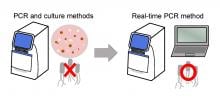
Novel real-time PCR method might become diagnostic tool targeting emerging bacterium responsible for food poisoning outbreaks

20 May 2024
DGIST-Yonsei University-Korea University Collaborative research team has developed a suture-type electronic component that can wirelessly monitor vital signs in the body
This new technology is expected to be easily applicable in orthopedic/medical rehabilitation, including personalized rehabilitation

16 May 2024
Genome editing is making inroads into biomedical research and medicine. By employing biomolecule modeling tools, a Japanese research team is accelerating the pace and cutting the cost of zinc finger nuclease (ZFN) technology, a primary gene editing tool.

16 May 2024
Naturally derived antioxidants improve growth of yeast strain in presence of ethanol

14 May 2024
Paper-based battery for wearable devices, To pass or not to pass? Kirigami hydrogels rise from cellulose, Climate impact on mountains, Effects of space weathering. Read all in the latest Editor's Choice.
13 May 2024
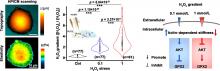
In a recent study published in the multidisciplinary academic journal Science Bulletin, a semi-monthly high-caliber peer-reviewed research outlet covering a broad range of natural sciences and high-tech fields, researchers from the Nano Life Science Institute (WPI-NanoLSI) at Kanazawa University utilized hopping probe scanning ion conductance microscopy (HPICM) and highly sensitive platinum-functionalized nanoelectrodes to conduct an in-depth investigation of the dynamic response of individual living colorectal cancer Caco-2 cells to changes in intracellular and extracellular hydrogen peroxide (H2O2) gradients, specifically focusing on eustress, at the single-cell level and in real-time. Their findings hold promise for innovative therapies against cancer and H2O2-related inflammatory diseases.

13 May 2024
Researchers from Osaka University have used a novel combination of short-read and long-read RNA sequencing to identify the different isoforms of genes expressed in the crustacean Daphnia magna. Males and females are genetically identical, but using this technique the team revealed genes that switch the predominant isoform in a sex-dependent manner. This study contributes to our understanding of Daphnia’s sexual dimorphism and helps further advance technologies in crustacean aquaculture.

10 May 2024
Researchers at Nano Life Science Institute (WPI-NanoLSI), Kanazawa University report in Nano Letters how the use of high-speed atomic force microscopy helps to understand the crucial role played by certain biomolecules in DNA wrapping dynamics.

01 May 2024
Classification of these plants bloom to double the number of taxonomic groups through morphological study, DNA analysis

26 Apr 2024
Our brains are truly miraculous. They can process vast swathes of information with very little energy supply. One of the many ways our brain may do this is through dilation of blood vessels, which enhances energy circulation and clears wasteful materials. A research team has recently developed a method that easily observes and monitors this phenomenon.

24 Apr 2024
The enzyme PI3K plays a critical role in cell migration. Scientists have long understood this function. But researchers have recently unveiled that a subunit of this enzyme also has the ability to slam on the breaks to this process.
Events
Sorry, nothing coming up for this discipline
Researchers
Sorry, nothing coming up for this discipline
- « first
- ‹ previous
- 1
- 2
- 3
- 4
Giants in history
Sorry, nothing coming up for this discipline
- « first
- ‹ previous
- 1
- 2
- 3