

Science
News

24 Feb 2014
Tokyo Institute of Technology
(Tokyo, 24 February 2014) Upgrade of Tokyo Tech’s TSUBAME supercomputer is just one of the cutting edge research projects covered in the February 2014 issue of the Tokyo Institute of Technology Bulletin
24 Feb 2014
Tokyo Institute of Technology
Tokyo Tech announces the development of supercomputer TSUBAME 2.5. TSUBAME, recently upgraded from 2.0 to 2.5. How does TSUBAME 2.5 differ from K and other supercomputers?
23 Feb 2014
National Institute for Materials Science (NIMS)
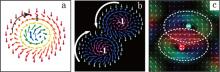
RIKEN, the University of Tokyo, and NIMS succeeded for the first time in generating and visualizing electron spin vortex state "skyrmion molecules" with topological charge 2 within a thin film of "La1+2xSr2-2xMn2O7," a layered manganese oxide which is a ferromagnetic material with uniaxial anisotropy.
20 Feb 2014
Asia Research News
WCS commends Indonesian Government for adopting new law prohibiting fishing and trade of manta rays
17 Feb 2014
Asia Research News
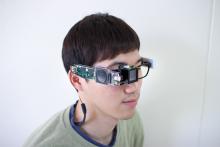
Researchers at the Korea Advanced Institute of Science and Technology (KAIST) developed K-Glass, a wearable, hands-free HMD that enables users to find restaurants while checking out their menus.

13 Feb 2014
The Agency for Science, Technology and Research (A*STAR)
Experiments on tiny gold prisms help to explain the unusual electrodynamics of nanostructures
13 Feb 2014
The Agency for Science, Technology and Research (A*STAR)
Adding carbon gives iron–platinum nanocrystals the ideal optical properties for heat-assisted magnetic recording
13 Feb 2014
The Agency for Science, Technology and Research (A*STAR)
Nanoparticles with a core–shell structure can minimize the overheating of cells during bioimaging experiments
13 Feb 2014
The Agency for Science, Technology and Research (A*STAR)
Simulating the magnetic properties of nanostructures could help to design electronic memories with increased storage capacity
13 Feb 2014
The Agency for Science, Technology and Research (A*STAR)
A*STAR and Nanyang Technological University are partnering to develop critical technologies for the three-dimensional printing of high-performance industrial components
13 Feb 2014
Asia Research News
A paper-based device that mimics the electrochemical signalling in the human brain has been created by a group of researchers from China.
12 Feb 2014
The Agency for Science, Technology and Research (A*STAR)
A*STAR’s exhibition at Singapore Airshow 2014 to highlight its R&D initiatives in aviation

11 Feb 2014
The World Academy of Sciences (TWAS)
Revamped Site Offers New Focus, New Tools for Science in the Developing World
10 Feb 2014
The Agency for Science, Technology and Research (A*STAR)
SINGAPORE, 10 FEBRUARY 2014 – The Agency for Science, Technology and Research (A*STAR) in Singapore inked a Memorandum of Understanding (MoU) with leading aerospace company Airbus at the 3rd Aerospace Technology Leadership Forum today.
07 Feb 2014
The Agency for Science, Technology and Research (A*STAR)
Researchers from A*STAR IME conceptualized a novel strategy to efficiently harness low frequency vibrations as infinite power source for miniature electronic devices.
30 Jan 2014
International Center for Materials Nanoarchitectonics (MANA)
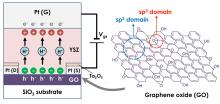
(Tsukuba, 30 January 2013) The ability to modulate the physical properties of graphene oxide within electronic components could have numerous applications in technology.
29 Jan 2014
Nature Publishing Group
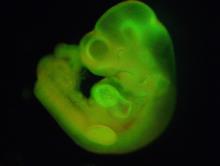
An unusual reprogramming phenomenon by which the fate of somatic cells can be drastically altered through changes to the external environment is described in two papers in this week’s Nature.
29 Jan 2014
The Agency for Science, Technology and Research (A*STAR)
Joint Lab combines A*STAR’s I2R’s Autonomous Vehicle capabilities and BYD’s expertise in electric vehicles to foster clean technology innovations
29 Jan 2014
Waseda University
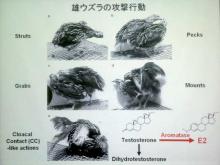
Waseda University researchers have discovered a hormonal mechanism for controlling aggressiveness in male birds. The team hope this may lead to a method of reducing aggressive behavior in humans.
28 Jan 2014
National Institute for Materials Science (NIMS)
28 January 2014: Japan's National Institute for Materials Science (NIMS) and the Swiss Federal Laboratories for Materials Science and Technology (Empa) have signed a 5-year collaborative agreement to co-publish the open access journal Science and Technology of Advanced Materials (STAM).

27 Jan 2014
The Hong Kong Polytechnic University (PolyU)
Groundbreaking passive sensing and energy harvesting technologies safeguard electrical engineering assets
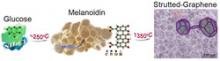
24 Jan 2014
International Center for Materials Nanoarchitectonics (MANA)
(Tsukuba, 23 January 2013) Robust, highly conductive 3D graphene structures for use in super-capacitors, through a method inspired by blown sugar, created.
23 Jan 2014
The World Academy of Sciences (TWAS)
Each year the Academy awards eight prizes of USD15,000 each to individual scientists who have been working and living in a developing country for at least ten years.
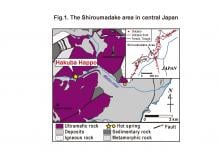
22 Jan 2014
Tokyo Institute of Technology
(Tokyo, 22 Jan 2014) Researchers at Tokyo Institute of Technology reveal mechanisms for the formation of methane, which may have been a crucial stage in the origin of life on Earth.
22 Jan 2014
The Agency for Science, Technology and Research (A*STAR)
Singapore’s Agency for Science, Technology and Research (A*STAR) has entered into a research agreement with Nestlé today to help boost the company’s expansion in R&D in the country.
22 Jan 2014
The Agency for Science, Technology and Research (A*STAR)
An innovative design turns soft hydrogels into ionic conductors with diverse applications, from artificial muscles to transparent audio speakers
22 Jan 2014
The Agency for Science, Technology and Research (A*STAR)
Innovative electrodes allow new computer memory technologies to be compatible with existing circuitry
22 Jan 2014
The Agency for Science, Technology and Research (A*STAR)
A chip-based detection system for minor functional proteins in infant milk formula could assist quality-control testing

21 Jan 2014
The Hong Kong Polytechnic University (PolyU)
According to a research paper in the current issue of Construction and Building Materials, The Hong Kong Polytechnic University (PolyU) tops the world in the publication of articles related to field of construction and building technology.
21 Jan 2014
Universiti Teknologi MARA (UiTM)
Palm oil can be changed to biofuel through several ways, the simplest and most widely used is transesterification.
Giants in history

Chinese-American physicist Tsung-Dao Lee (24 November 1926 – 4 August 2024) was awarded the Nobel Prize for Physics in 1957 together with Chen-Ning Yang for their work challenging the symmetry law in subatomic particles. They were the first Chinese Nobel prize winners, with Lee becoming the second-youngest laureate. Born in Shanghai, he went to the United States on scholarship and studied under another Nobel winner, Enrico Fermi.

Turkish astrophysicist Dilhan Eryurt (29 November 1926 – 13 September 2012) conducted research on how the sun affects environmental conditions on the moon.
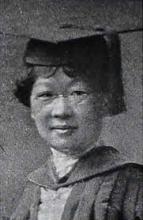
Chinese biochemist Chi Che Wang (1894 - 1979), one of the first Chinese women to study abroad, advanced to prominent research positions at American institutions including the University of Chicago and the Northwestern University Medical School.
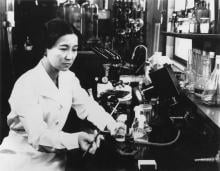
Ruby Sakae Hirose (1904 – 1960) was a Japanese-American scientist whose research contributed significantly to our understanding of blood clotting, allergies and cancer.
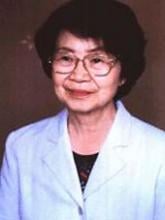
Chinese electron microscopy specialist Li Fanghua (6 January 1932 – 24 January 2020) facilitated the high-resolution imaging of crystal structures by eliminating interference.
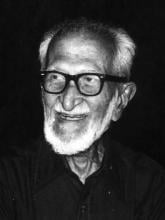
Sálim Moizuddin Abdul Ali (12 November 1896 – 20 June 1987), commonly referred to as the Birdman of India, was the first person to conduct systematic surveys of birds from across India.

Haisako Koyama (1916 – 1997) was a Japanese solar observer whose dedication to recording sunspots – cooler parts of the sun’s surface that appear dark – produced a sunspot record of historic importance.
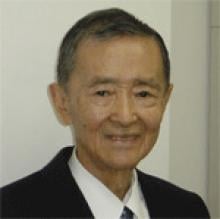
Michiaki Takahashi (17 February 1928 – 16 December 2013) was a Japanese virologist who developed the first chickenpox vaccine.
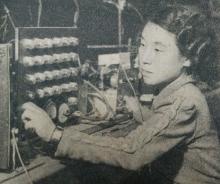
Toshiko Yuasa (11 December 1909 – 1 February 1980) was the first Japanese female physicist whose research on radioactivity shed light on beta decay – the process in which an atom emits a beta particle (electron) and turns into a different element.

Angelita Castro Kelly (1942-2015) was the first female Mission Operations Manager (MOM) of NASA. She spearheaded and supervised the Earth Observing System missions during its developmental stage.
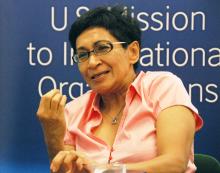
Malaysia’s first astrophysicist, Mazlan binti Othman (born 11 December 1951) was instrumental in launching the country’s first microsatellite, and in sending Malaysia’s first astronaut, Sheikh Muszaphar Shukor, into space.

Bibha Chowdhuri (1913 – 2 June 1991) was an Indian physicist who researched on particle physics and cosmic rays. In 1936, she was the only female to complete a M.Sc. degree at the University of Calcutta.
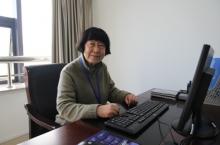
Meemann Chang (born 17 April 1936) is a Chinese palaeontologist who studied the fossils of ancient fish to understand the evolution of life. By examining fossils, she uncovered new insights on how vertebrates, animals with a backbone, migrated from the sea and became adapted to live on land.
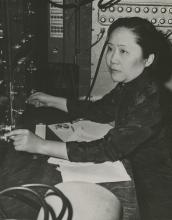
Chien-Shiung Wu (31 May 1912 – 16 February 1997) was an experimental physicist who made several important contributions to nuclear physics. Wu worked on the Manhattan Project – a top-secret program for the production of nuclear weapons during World War II and helped to develop a process for separating uranium into U235 and U238.
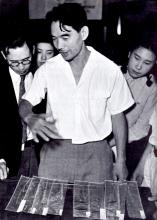
Hitoshi Kihara (1893 – 1986) was one of the most famous Japanese geneticists of the 20th century. One of his most significant contributions was identifying sex chromosomes (X and Y) in flowering plants.
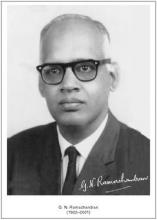
Gopalasamudram Narayanan Ramachandran (8 October 1922 – 7 April 2001) is best known for developing the Ramachandran plot to understand the structure of short chains of amino acids, known as peptides.
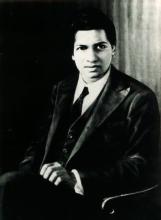
Srinivasa Ramanujan (22 December 1887 – 26 April 1920) was a math prodigy and widely considered one of India’s greatest mathematicians. Despite having almost no formal training in mathematics, he made substantial contributions to mathematical analysis, number theory, infinite series and continued fractions.
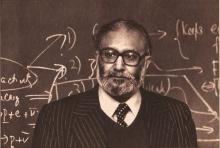
Mohammad Abdus Salam (29 January 1926 – 21 November 1996) was a theoretical physicist and the first Pakistani to receive a Nobel Prize in science.
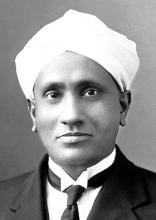
Sir Chandrasekhara Venkata Raman (7 November 1888 – 21 November 1970) was an Indian physicist who performed ground-breaking research in the field of light-scattering.
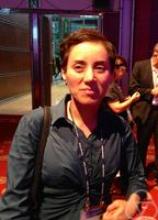
Mathematician Maryam Mirzakhani (12 May 1977 – 14 July 2017) was the first and only woman and Iranian to date to win the Fields Medal in 2014 for her work on curved surfaces.
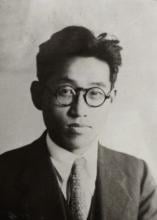
Joo-myung Seok (November 13, 1908 – October 6, 1950) was a Korean butterfly entomologist who made important contributions to the taxonomy of the native butterfly species in Korea.
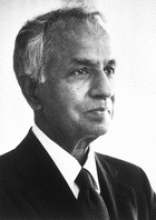
Subrahmanyan Chandrasekhar (19 October 1910 – 21 August 1995) was an Indian astrophysicist who studied the structure and evolution of stars.
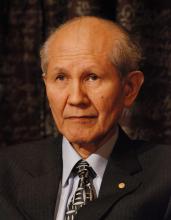
Osamu Shimomura (27 August 1928 – 19 October 2018) was a Japanese organic chemist and marine biologist who dedicated his career to understanding how organisms emitted light.
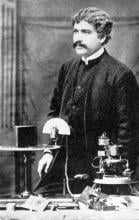
Sir Jagadish Chandra Bose (30 November 1858 – 23 November 1937) was a scientist and inventor who contributed to a wide range of scientific fields such as physics, botany and biology.
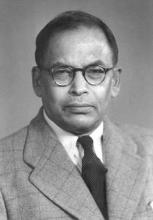
Meghnad Saha (6 October 1893 – 16 February 1956) was an Indian astrophysicist best known for formulating the Saha ionization equation which describes the chemical and physical properties of stars.
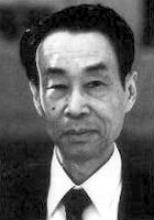
Motoo Kimura (13 November 1924 – 13 November 1994) was a Japanese theoretical population geneticist who is best remembered for developing the neutral theory of molecular evolution.

Chika Kuroda (24 March 1884 – 8 November 1968) was a Japanese chemist whose research focussed on the structures of natural pigments.
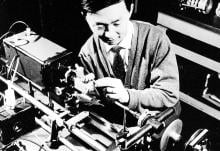
Charles Kuen Kao (Nov. 4, 1933 to Sept. 23, 2018) was an engineer who is regarded as the father of fibre optics. His work in the 1960s on long distance signal transmission using very pure glass fibres revolutionized telecommunications, enabling innovations such as the Internet.
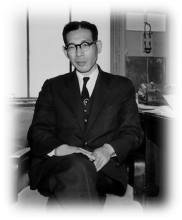
The field of solid-state ionics originated in Europe, but Takehiko Takahashi of Nagoya University in Japan was the first to coin the term ‘solid ionics’ in 1967. ‘Solid-state ionics’ first appeared in 1971 in another of his papers, and was likely a play on ‘solid-state electronics’, another rapidly growing field at the time.
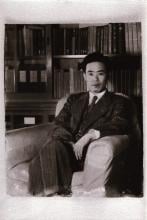
Japanese physicist Ukichiro Nakaya (1900-1962) made the world’s first artificial snowflakes. He started his research on snow crystals in the early 1930s at Hokkaido University, where there is an unlimited supply of natural snow in winter. By taking over 3,000 photographs, he established a classification of natural snow crystals and described their relationship with weather conditions.
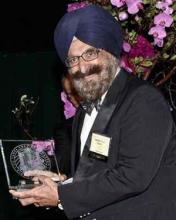
Physicist Narinder Singh Kapany (31 October 1926 – 4 December 2020) pioneered the use of optical fibres to transmit images, and founded several optical technology companies. Born in Punjab, India, he worked at a local optical instruments factory before moving to London for PhD studies at Imperial College. There, he devised a flexible fibrescope to convey images along bundles of glass fibres.
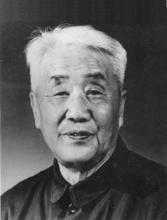
Chinese palaeontologist, archaeologist and anthropologist Pei Wenzhong (January 19, 1904 – September 18, 1982) is regarded as a founder of Chinese anthropology.
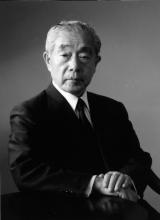
Japanese chemist Kenichi Fukui (4 October 1918 – 9 January 1998) was the first Asian scientist to be awarded the Nobel Prize in Chemistry. Together with Roald Hoffman, he received this honour in 1981 for his independent research into the mechanisms of chemical reactions.
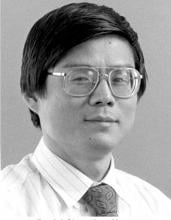
South Korean theoretical physicist Daniel Chonghan Hong (3 March 1956 – 6 July 2002) achieved fame in the public sphere through his research into the physics of popcorn.
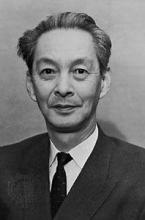
Shinichiro Tomonaga (31 March 1906 – 8 July 1979), together with Richard Feynman and Julian Schwinger, was awarded the Nobel Prize in Physics in 1965, for their contributions to advance the field of quantum electrodynamics. Tomonaga was also a strong proponent of peace, who actively campaigned against the proliferation of nuclear weapons and promoted the peaceful use of nuclear energy.
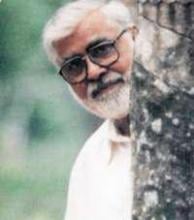
Known as Mr. Natural Rubber, chemist and researcher B. C. Shekhar (17 November 1929 – 6 September 2006) introduced a number of technical innovations that helped put Malaysia’s natural rubber industry on the world map.

Lin Lanying (7 February 1918 – 4 March 2003) was a Chinese material engineer remembered for her contributions to the field of semiconductor and aerospace materials. Lanying was born into a family who did not believe in educating girls and she was not allowed to go to school.
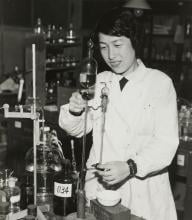
Japanese geochemist Katsuko Saruhashi developed the first method and tools for measuring carbon dioxide in seawater