

Science
News

16 Jan 2014
The Agency for Science, Technology and Research (A*STAR)
A study of the thermodynamic properties of copper connections uncovers a route to improving the reliability of electronic devices
16 Jan 2014
The Agency for Science, Technology and Research (A*STAR)
Using a copper catalyst to unite carbon dioxide with organic molecules under mild conditions could make this ubiquitous gas industrially useful
16 Jan 2014
The Agency for Science, Technology and Research (A*STAR)
Using a newly developed technique, protective casings for microscale devices can be built quickly and cheaply without damaging components
15 Jan 2014
The Agency for Science, Technology and Research (A*STAR)
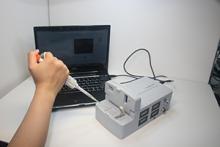
A portable instrument that replaces a full-size laboratory provides accurate multi-element analysis in less than a minute
15 Jan 2014
The Agency for Science, Technology and Research (A*STAR)
Developed at A*STAR, the first electrically pumped random lasers for mid-infrared radiation are set to enable applications in sensing and imaging
08 Jan 2014
Waseda University
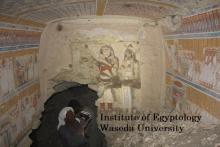
Tokyo, 8 Jan - Waseda university researchers discovered a new private tomb in the el-Khokha area of the Theban necropolis, across the Nile from Luxor. The owner of the tomb is Khonsuemheb, who was called Chief of the Workshop for Mut and Chief Brewer of the Temple of Mut.
07 Jan 2014
National Institute for Materials Science (NIMS)
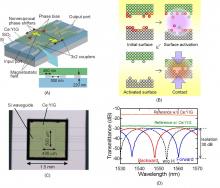
Tokyo, 7 Jan - In a paper published in Science and Technology of Advanced Materials today, researchers demonstrated the first optical isolator on silicon waveguide platforms.
06 Jan 2014
Tokyo Institute of Technology
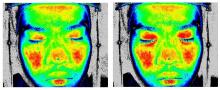
(Tokyo, 6 Jan 2014) Researchers at Tokyo Institute of Technology identify links between the palatability of various tastes and circulation in different parts of the face.
06 Jan 2014
The Agency for Science, Technology and Research (A*STAR)
Singapore, 6 Jan - Tera-Barrier Films invents alternative stretchable plastic for prolonging shelf-life of pharmaceuticals, food and electronics.
02 Jan 2014
Universiti Putra Malaysia (UPM)
The research presented include laxative tea from Agarwood, inducing young trees and leaves and stems to produce the resin and sustainable methods of extraction for the prized incense that can cost up to US$10,000 a kilo.
20 Dec 2013
Organization of Frontier Science and Innovation, Kanazawa University
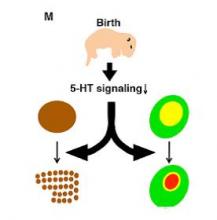
(Kanazawa, Japan, 20 December 2013) Hiroshi Kawasaki and colleagues at Kanazawa University, Tokyo University, Tokyo Institute of Technology and Kumamoto University in Japan have identified how sensory map development is regulated in mice pups at birth, and the molecular signalling responsible.
19 Dec 2013
The Agency for Science, Technology and Research (A*STAR)
Sheets of carbon just one atom thick could make effective transparent electrodes in certain types of photovoltaic cells
19 Dec 2013
The Agency for Science, Technology and Research (A*STAR)
Dr. Li Haizhou is recognised for his achievements in speech and language technology. As a pioneer in human language technology for Asian languages, Dr. Li has made outstanding contributions in transforming the interface of mobile applications and breaking down the language barriers for Asian society.
18 Dec 2013
Ulsan National Institute of Science and Technology (UNIST)
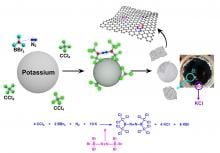
(Ulsan, South Korea 18 Dec. 2013): UNIST announced a method for the mass production of boron/nitrogen co-doped graphene nanoplatelets, which led to the fabrication of a graphene-based field-effect transistor (FET) with semiconducting nature. This opens up opportunities for practical use in electronic devices.
17 Dec 2013
International Center for Materials Nanoarchitectonics (MANA)
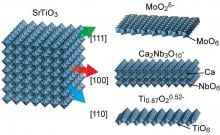
(Tsukuba, 17 December 2013) Molecularly thin two-dimensional crystals can alleviate the lattice matching restrictions of epitaxial crystalline thin film growth, as reported by researchers in Japan.
17 Dec 2013
Waseda University
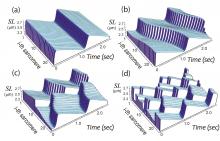
Researchers have successfully developed a realistic theoretical model that provides a rational explanation for the spontaneous oscillatory contraction (SPOC) of muscle. The findings were published in Physical Review Letters recently.

16 Dec 2013
Universiti Teknologi MARA (UiTM)
This study explored the use of inexpensive materials as alternatives to treat effluents from various industries such as petroleum, metals, food processing, textile, industries as well as municipal waste waters and has become a global environmental issue.
11 Dec 2013
Okayama University
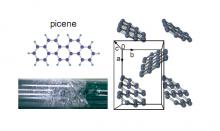
(Okayama, Japan, 12 Dec 2013) Focus on the only group in the world researching on superconducting picene. Prof Yoshihiro Kubozono team's work at Okayama University has potential for innovative applications of solid picene and organic superconductors, graphene and other functional materials.

11 Dec 2013
Okayama University
(Okayama, Japan, 12 Dec 2013) Content highlights include research on superconducting solid picene; naturally occurring nanobacteria-like particles and ectopic calcification; rice plants and manganese; earth science; nano-pathophysiology; and large porous zeolite.

08 Dec 2013
Toyohashi University of Technology
Highlights include nanoscale photonic integrated circuit using surface plasmon polaritons on silicon; High pressure cold spray technology; Nitride semiconductor Hall effect magnetic field sensors for extreme environments and innovative analytical tool for the life sciences and biotechnology
06 Dec 2013
Universiti Putra Malaysia (UPM)
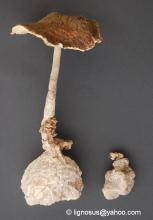
A technique to preserve cells from the rare and popular Tigers Milk Mushroom for later use is published in the latest issue of The Journal of Tropical Agriculture Science. The mushroom is important in communities in Malaysia who use it as a medicinal treatment for various ailments as well as to produce a tonic to maintain health.

06 Dec 2013
Waseda University
Tokyo, 6 Dec - Waseda University announces the formation of an international base for research on compound disasters due to tsunamis, earthquakes, storm surges and volcanic eruptions. The team will include researchers from Canada, the United Kingdom, Iran, Indonesia, Thailand, Tanzania, Bhutan, Chile, and Vietnam
04 Dec 2013
The Agency for Science, Technology and Research (A*STAR)
Quickly switching the orientation of a laser beam enables control over the quantum properties of light
04 Dec 2013
The Agency for Science, Technology and Research (A*STAR)
Hacking programs disguised as games are helping Apple to improve the security of devices operating on its iOS platform
04 Dec 2013
The Agency for Science, Technology and Research (A*STAR)
A microelectromechanical system developed in Singapore provides the 360-degree view that is critical in diagnostic imaging
02 Dec 2013
The Hong Kong Polytechnic University (PolyU)
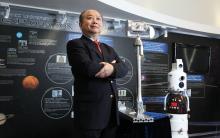
Hong Kong, 2 Dec - Following the launch of Chang’e-3 lunar probe in Xichang Satellite Launch Centre, the Camera Pointing System jointly developed by researchers of The Hong Kong Polytechnic University (PolyU) and China Academy of Space Technology (CAST) is now getting closer for landing on the moon’s surface.
29 Nov 2013
Waseda University
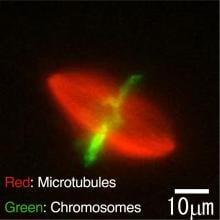
Tokyo, 29 Nov- Researchers at Waseda University in Japan have identified key information to help explain the formation of the “spindle apparatus”, a structure required for cell division. Their findings shed light on the mechanisms behind “self-organization” – an essential characteristic of biological structures.
27 Nov 2013
Waseda University
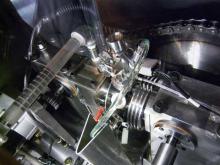
Professor Naitoh of Waseda University has discovered a new compressive combustion principle that can yield engines with the ultimate level of efficiency. With a thermal efficiency of 60% or more in applications including automobiles, power generation, and aircraft, will their low fuel consumption be superior to that of HV vehicles!?

26 Nov 2013
National Institute for Materials Science (NIMS)
A Signing Ceremony was held on October 29 at University of Rennes 1(UR1). This Agreement is aimed to pursue collaboration on exchanging students and researchers.
25 Nov 2013
Waseda University
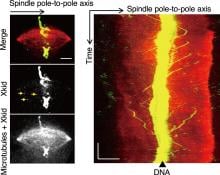
Tokyo, 25 Nov - Researchers at Waseda University in Japan have for the first time directly observed the “molecular motor”, called Xkid, that plays a critical role in facilitating the proper alignment of chromosomes during cell division. The study provides invaluable knowledge on the mechanisms of materials transport in biological systems.
Giants in history

Chinese-American physicist Tsung-Dao Lee (24 November 1926 – 4 August 2024) was awarded the Nobel Prize for Physics in 1957 together with Chen-Ning Yang for their work challenging the symmetry law in subatomic particles. They were the first Chinese Nobel prize winners, with Lee becoming the second-youngest laureate. Born in Shanghai, he went to the United States on scholarship and studied under another Nobel winner, Enrico Fermi.

Turkish astrophysicist Dilhan Eryurt (29 November 1926 – 13 September 2012) conducted research on how the sun affects environmental conditions on the moon.
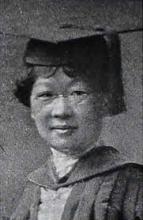
Chinese biochemist Chi Che Wang (1894 - 1979), one of the first Chinese women to study abroad, advanced to prominent research positions at American institutions including the University of Chicago and the Northwestern University Medical School.
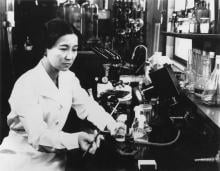
Ruby Sakae Hirose (1904 – 1960) was a Japanese-American scientist whose research contributed significantly to our understanding of blood clotting, allergies and cancer.
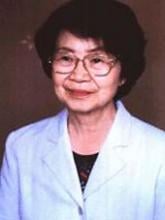
Chinese electron microscopy specialist Li Fanghua (6 January 1932 – 24 January 2020) facilitated the high-resolution imaging of crystal structures by eliminating interference.
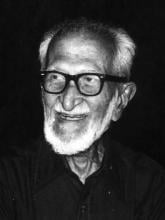
Sálim Moizuddin Abdul Ali (12 November 1896 – 20 June 1987), commonly referred to as the Birdman of India, was the first person to conduct systematic surveys of birds from across India.
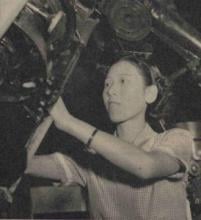
Haisako Koyama (1916 – 1997) was a Japanese solar observer whose dedication to recording sunspots – cooler parts of the sun’s surface that appear dark – produced a sunspot record of historic importance.
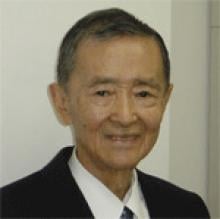
Michiaki Takahashi (17 February 1928 – 16 December 2013) was a Japanese virologist who developed the first chickenpox vaccine.
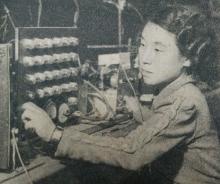
Toshiko Yuasa (11 December 1909 – 1 February 1980) was the first Japanese female physicist whose research on radioactivity shed light on beta decay – the process in which an atom emits a beta particle (electron) and turns into a different element.

Angelita Castro Kelly (1942-2015) was the first female Mission Operations Manager (MOM) of NASA. She spearheaded and supervised the Earth Observing System missions during its developmental stage.
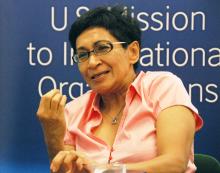
Malaysia’s first astrophysicist, Mazlan binti Othman (born 11 December 1951) was instrumental in launching the country’s first microsatellite, and in sending Malaysia’s first astronaut, Sheikh Muszaphar Shukor, into space.

Bibha Chowdhuri (1913 – 2 June 1991) was an Indian physicist who researched on particle physics and cosmic rays. In 1936, she was the only female to complete a M.Sc. degree at the University of Calcutta.
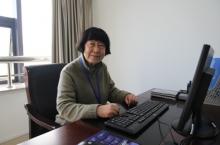
Meemann Chang (born 17 April 1936) is a Chinese palaeontologist who studied the fossils of ancient fish to understand the evolution of life. By examining fossils, she uncovered new insights on how vertebrates, animals with a backbone, migrated from the sea and became adapted to live on land.
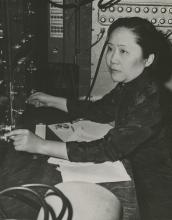
Chien-Shiung Wu (31 May 1912 – 16 February 1997) was an experimental physicist who made several important contributions to nuclear physics. Wu worked on the Manhattan Project – a top-secret program for the production of nuclear weapons during World War II and helped to develop a process for separating uranium into U235 and U238.
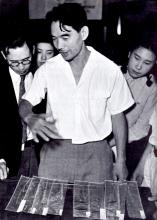
Hitoshi Kihara (1893 – 1986) was one of the most famous Japanese geneticists of the 20th century. One of his most significant contributions was identifying sex chromosomes (X and Y) in flowering plants.
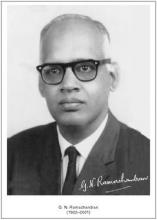
Gopalasamudram Narayanan Ramachandran (8 October 1922 – 7 April 2001) is best known for developing the Ramachandran plot to understand the structure of short chains of amino acids, known as peptides.
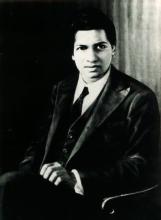
Srinivasa Ramanujan (22 December 1887 – 26 April 1920) was a math prodigy and widely considered one of India’s greatest mathematicians. Despite having almost no formal training in mathematics, he made substantial contributions to mathematical analysis, number theory, infinite series and continued fractions.
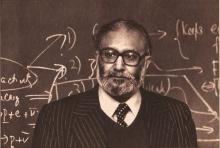
Mohammad Abdus Salam (29 January 1926 – 21 November 1996) was a theoretical physicist and the first Pakistani to receive a Nobel Prize in science.
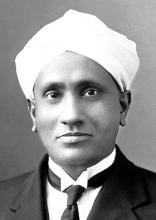
Sir Chandrasekhara Venkata Raman (7 November 1888 – 21 November 1970) was an Indian physicist who performed ground-breaking research in the field of light-scattering.
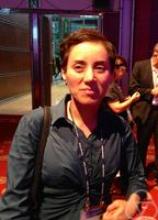
Mathematician Maryam Mirzakhani (12 May 1977 – 14 July 2017) was the first and only woman and Iranian to date to win the Fields Medal in 2014 for her work on curved surfaces.
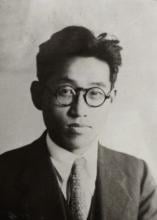
Joo-myung Seok (November 13, 1908 – October 6, 1950) was a Korean butterfly entomologist who made important contributions to the taxonomy of the native butterfly species in Korea.
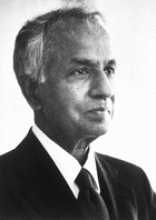
Subrahmanyan Chandrasekhar (19 October 1910 – 21 August 1995) was an Indian astrophysicist who studied the structure and evolution of stars.
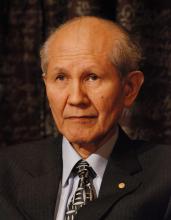
Osamu Shimomura (27 August 1928 – 19 October 2018) was a Japanese organic chemist and marine biologist who dedicated his career to understanding how organisms emitted light.
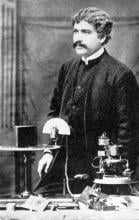
Sir Jagadish Chandra Bose (30 November 1858 – 23 November 1937) was a scientist and inventor who contributed to a wide range of scientific fields such as physics, botany and biology.
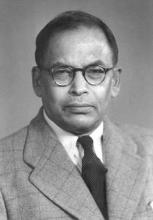
Meghnad Saha (6 October 1893 – 16 February 1956) was an Indian astrophysicist best known for formulating the Saha ionization equation which describes the chemical and physical properties of stars.
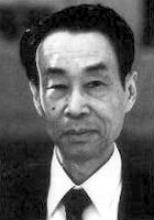
Motoo Kimura (13 November 1924 – 13 November 1994) was a Japanese theoretical population geneticist who is best remembered for developing the neutral theory of molecular evolution.

Chika Kuroda (24 March 1884 – 8 November 1968) was a Japanese chemist whose research focussed on the structures of natural pigments.
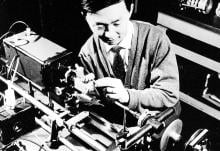
Charles Kuen Kao (Nov. 4, 1933 to Sept. 23, 2018) was an engineer who is regarded as the father of fibre optics. His work in the 1960s on long distance signal transmission using very pure glass fibres revolutionized telecommunications, enabling innovations such as the Internet.
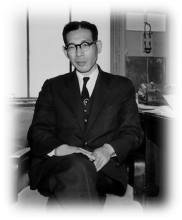
The field of solid-state ionics originated in Europe, but Takehiko Takahashi of Nagoya University in Japan was the first to coin the term ‘solid ionics’ in 1967. ‘Solid-state ionics’ first appeared in 1971 in another of his papers, and was likely a play on ‘solid-state electronics’, another rapidly growing field at the time.
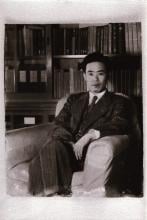
Japanese physicist Ukichiro Nakaya (1900-1962) made the world’s first artificial snowflakes. He started his research on snow crystals in the early 1930s at Hokkaido University, where there is an unlimited supply of natural snow in winter. By taking over 3,000 photographs, he established a classification of natural snow crystals and described their relationship with weather conditions.
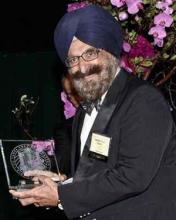
Physicist Narinder Singh Kapany (31 October 1926 – 4 December 2020) pioneered the use of optical fibres to transmit images, and founded several optical technology companies. Born in Punjab, India, he worked at a local optical instruments factory before moving to London for PhD studies at Imperial College. There, he devised a flexible fibrescope to convey images along bundles of glass fibres.
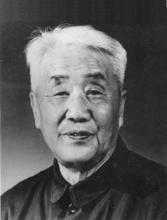
Chinese palaeontologist, archaeologist and anthropologist Pei Wenzhong (January 19, 1904 – September 18, 1982) is regarded as a founder of Chinese anthropology.
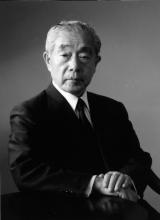
Japanese chemist Kenichi Fukui (4 October 1918 – 9 January 1998) was the first Asian scientist to be awarded the Nobel Prize in Chemistry. Together with Roald Hoffman, he received this honour in 1981 for his independent research into the mechanisms of chemical reactions.
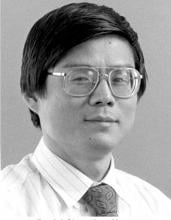
South Korean theoretical physicist Daniel Chonghan Hong (3 March 1956 – 6 July 2002) achieved fame in the public sphere through his research into the physics of popcorn.
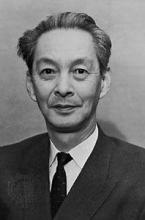
Shinichiro Tomonaga (31 March 1906 – 8 July 1979), together with Richard Feynman and Julian Schwinger, was awarded the Nobel Prize in Physics in 1965, for their contributions to advance the field of quantum electrodynamics. Tomonaga was also a strong proponent of peace, who actively campaigned against the proliferation of nuclear weapons and promoted the peaceful use of nuclear energy.
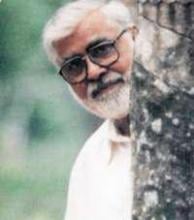
Known as Mr. Natural Rubber, chemist and researcher B. C. Shekhar (17 November 1929 – 6 September 2006) introduced a number of technical innovations that helped put Malaysia’s natural rubber industry on the world map.

Lin Lanying (7 February 1918 – 4 March 2003) was a Chinese material engineer remembered for her contributions to the field of semiconductor and aerospace materials. Lanying was born into a family who did not believe in educating girls and she was not allowed to go to school.
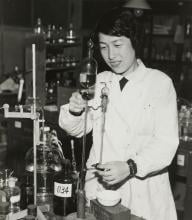
Japanese geochemist Katsuko Saruhashi developed the first method and tools for measuring carbon dioxide in seawater