

Science
News

27 May 2011
RIKEN
A new video has been uploaded on the official YouTube "RIKEN Channel".
27 May 2011
RIKEN
RIKEN (President Ryoji Noyori) and LEPL-Ivane Javakhishvili Tbilisi State University* (TSU, Rector Alexander Kvitashvili) in Georgia signed an agreement on May 10, 2011 to promote research cooperation in the fields of genetics and genomics.
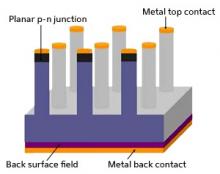
27 May 2011
The Agency for Science, Technology and Research (A*STAR)
Nanopillars significantly boost the power conversion efficiency of thin-film solar cells
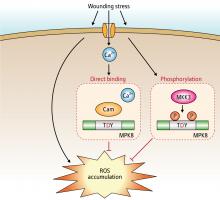
27 May 2011
RIKEN
Identification of a key compound that regulates plant responses to wounding could provide benefits on three fronts
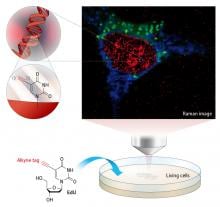
27 May 2011
RIKEN
Revealing the inner workings of cells takes a step forward using a newly developed Raman microscopy technique
27 May 2011
RIKEN
A new research group, the RIKEN Quantitative Biology Center (QBiC), was established in April 2011 based on the idea that life should be seen as “dynamic biological systems” made up of elements which interact in complex spatiotemporal relationships, and that these systems need to be understood in order to gain a true understanding of life.

25 May 2011
Nature Publishing Group
Summaries of newsworthy papers - News and Comment: The future of vaccines; Planetary science: How Mars had a growth spurt; Biology: Immune response to HIV; Physics: How to measure an electron; Virology: Long-term evolution of swine flu; Neuroscience: Molecular pathology in autism; And finally… They might be Ordovician giants
25 May 2011
Universiti Teknologi MARA (UiTM)
Muhammad Azhar Bin Zulkffle and his team at University Teknologi MARA, Perlis, Malaysia, studied the micro and macronutrient content of several maize varieties using Inductively Coupled Plasma Mass Spectrometry (ICPMS) to screen the best variety.

23 May 2011
The World Academy of Sciences (TWAS)
The call is now open for the 2011 Ernesto Illy Trieste Science Prize. This year's prize will be given in the field of materials science.
22 May 2011
Nature Publishing Group
Summaries of newsworthy papers - Geoscience: Better earthquake risk maps needed; Chemical Biology: Commodity chemicals by design; Structural & Molecular Biology: Connecting genetics to diseases; Nanotechnology: A superconducting first near absolute zero; Genetics: Risk variant for prostate cancer in African-American men
20 May 2011
RIKEN
An enzyme helps control the extension of cellular tendrils by regulating the delivery of supplies needed for growth
20 May 2011
RIKEN
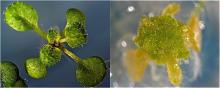
Identification a master regulator of the response of plants to injury sheds light on organ regeneration
19 May 2011
RIKEN
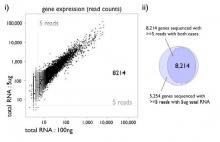
A new gene expression technique adapted for single molecule sequencing has enabled researchers at the RIKEN Omics Science Center (OSC) to accurately and quantitatively measure gene expression levels using only 100 nanograms of total RNA.
18 May 2011
Nature Publishing Group
Summaries of newsworthy papers - Astronomy: Lonely planets; Cancer: Overcoming treatment-resistant leukaemia; Ecology: Overestimating extinction rates; Climate science: Currents from the deep; Biology: The evolution of proteins; Geophysics: Melting of the Earth’s inner core; And finally… When is a snake not a snake?
17 May 2011
RIKEN
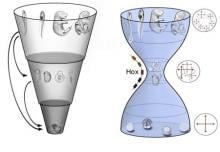
A new comparative transcriptomic analysis of four vertebrate species conducted by Naoki Irie in RIKEN's Laboratory for Evolutionary Morphology strongly suggests that the 'hourglass model' is the more accurate description of how the vertebrate phylotype manifests.
17 May 2011
Waseda University
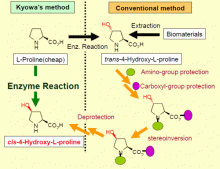
Prof. Kuniki Kino (Department of Applied Chemistry, Faculty of Science and Engineering) and Dr. Ryotaro Hara (Research Institute for Science and Engineering), Waseda University, have discovered a new enzyme which has been utilized to develop an innovative new industrial manufacturing method for cis-4-hydroxy-L-proline, an amino acid derivative.
16 May 2011
The Hong Kong Polytechnic University (PolyU)
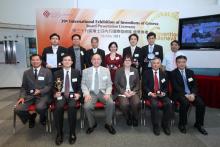
The Hong Kong Polytechnic University (PolyU) has set a record of reaping 10 prizes at the 39th International Exhibition of Inventions of Geneva, with an array of innovations which range from myopia-retarding contact lenses to DNA Bio-sensor and solar energy device.
15 May 2011
Nature Publishing Group
Summaries of newsworthy papers - Geoscience: Net loss of landscape during 2008 Wenchuan earthquake; Cell Biology: Directing the building of blood vessels; Genetics: Exome sequencing for autism; Geoscience: Oxygen oases for tiny animals; Methods: Renewable reagents for detecting human proteins; Physics: Single spins resolved in imaging experiment
13 May 2011
RIKEN
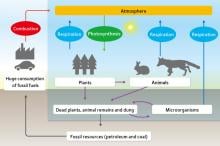
Insights gained by the Biosphere Oriented Biology Research Unit into complex biological systems could revolutionize energy production and re-integrate society into the global ecological cycle
13 May 2011
RIKEN
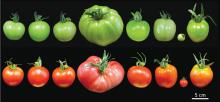
Assessing the chemical diversity of genetically modified organisms is an important first step for evaluating their safety
13 May 2011
RIKEN
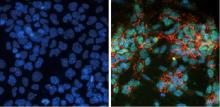
A single protein is sufficient to switch on the various genes that kick off the development of the embryonic nervous system
12 May 2011
RIKEN
RIKEN (President Ryoji Noyori) and the Max Planck Society (MPG; President Peter Gruss) signed an agreement on April 27, 2011, to strengthen their collaboration by establishing a joint research center for systems chemical biology, a field that seeks to achieve a systematic understanding of biological systems from a chemistry perspective.
12 May 2011
RIKEN
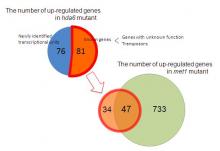
Researchers at the RIKEN Plant Science Center (PSC) have clarified a key epigenetic mechanism by which an enzyme in the model plant Arabidopsis protects cells from harmful DNA elements.
11 May 2011
Nature Publishing Group
Summaries of newsworthy papers - Astronomy: Hot Jupiters in a spin; Stem cells: Generation of liver cells from fibroblasts; Comment: WHO needs change; Ageing: How dietary restriction extends nematode lifespan
Microbiology: New group of ‘hidden’ fungi discovered; Physics: How to control complex network systems;
And finally… Sulphur so good
11 May 2011
The World Academy of Sciences (TWAS)
TWAS, the academy of sciences for the developing world, is currently seeking nominations of young scientists in Africa whose research in computer science promises to have a positive impact in the developing world.
10 May 2011
Waseda University
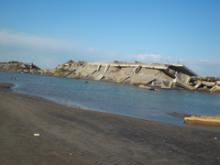
The whole picture of the damage is not clear yet, but coastal disaster professionals including myself were not able to specifically predict such a devastating disaster in Japan. Although I think there are many hardships in restoring the coastal areas, I believe that we are responsible for supporting restoration of the devastated areas.
10 May 2011
Waseda University
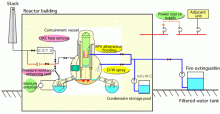
A severe earthquake and massive tsunami hit the Pacific coastline of eastern Japan on March 11, 2011. A total of six nuclear power plants automatically shut down because of the earthquake. Power from outside the plant was also lost. Emergency diesel generators started operating.
08 May 2011
Nature Publishing Group
Summaries of newsworthy papers - Neuroscience: Generalizing fear; Geoscience: Unexpectedly high earthquake risk east of the Andes; Nature: Marsupial ménage in the Palaeocene; Geoscience: Impact-generated nitrogen on Titan?
06 May 2011
Nature Publishing Group
In Nature China this month - Microbiology: Duck amuck; Public health: Rural virus turns a ruckus; Invertebrate palaeontology: Spider queen; Medical genetics: Follow your heart; Superconductors: The right description
06 May 2011
RIKEN
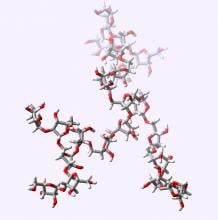
Novel tuberculosis treatments could result from success in artificially synthesizing sugar-based structures of the bacterium’s cell wall
Giants in history

Chinese-American physicist Tsung-Dao Lee (24 November 1926 – 4 August 2024) was awarded the Nobel Prize for Physics in 1957 together with Chen-Ning Yang for their work challenging the symmetry law in subatomic particles. They were the first Chinese Nobel prize winners, with Lee becoming the second-youngest laureate. Born in Shanghai, he went to the United States on scholarship and studied under another Nobel winner, Enrico Fermi.

Turkish astrophysicist Dilhan Eryurt (29 November 1926 – 13 September 2012) conducted research on how the sun affects environmental conditions on the moon.
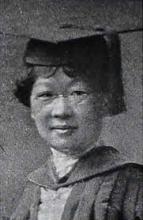
Chinese biochemist Chi Che Wang (1894 - 1979), one of the first Chinese women to study abroad, advanced to prominent research positions at American institutions including the University of Chicago and the Northwestern University Medical School.
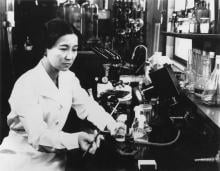
Ruby Sakae Hirose (1904 – 1960) was a Japanese-American scientist whose research contributed significantly to our understanding of blood clotting, allergies and cancer.
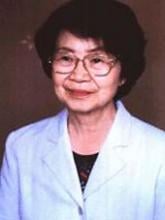
Chinese electron microscopy specialist Li Fanghua (6 January 1932 – 24 January 2020) facilitated the high-resolution imaging of crystal structures by eliminating interference.
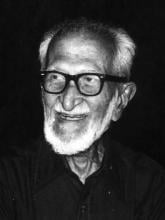
Sálim Moizuddin Abdul Ali (12 November 1896 – 20 June 1987), commonly referred to as the Birdman of India, was the first person to conduct systematic surveys of birds from across India.
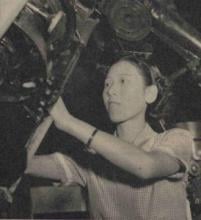
Haisako Koyama (1916 – 1997) was a Japanese solar observer whose dedication to recording sunspots – cooler parts of the sun’s surface that appear dark – produced a sunspot record of historic importance.
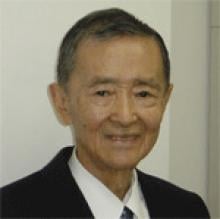
Michiaki Takahashi (17 February 1928 – 16 December 2013) was a Japanese virologist who developed the first chickenpox vaccine.
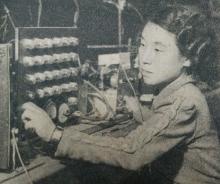
Toshiko Yuasa (11 December 1909 – 1 February 1980) was the first Japanese female physicist whose research on radioactivity shed light on beta decay – the process in which an atom emits a beta particle (electron) and turns into a different element.

Angelita Castro Kelly (1942-2015) was the first female Mission Operations Manager (MOM) of NASA. She spearheaded and supervised the Earth Observing System missions during its developmental stage.
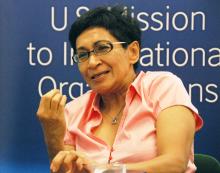
Malaysia’s first astrophysicist, Mazlan binti Othman (born 11 December 1951) was instrumental in launching the country’s first microsatellite, and in sending Malaysia’s first astronaut, Sheikh Muszaphar Shukor, into space.

Bibha Chowdhuri (1913 – 2 June 1991) was an Indian physicist who researched on particle physics and cosmic rays. In 1936, she was the only female to complete a M.Sc. degree at the University of Calcutta.
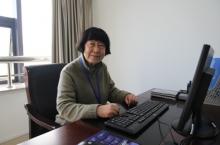
Meemann Chang (born 17 April 1936) is a Chinese palaeontologist who studied the fossils of ancient fish to understand the evolution of life. By examining fossils, she uncovered new insights on how vertebrates, animals with a backbone, migrated from the sea and became adapted to live on land.
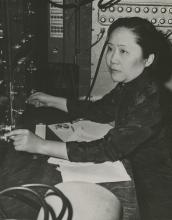
Chien-Shiung Wu (31 May 1912 – 16 February 1997) was an experimental physicist who made several important contributions to nuclear physics. Wu worked on the Manhattan Project – a top-secret program for the production of nuclear weapons during World War II and helped to develop a process for separating uranium into U235 and U238.
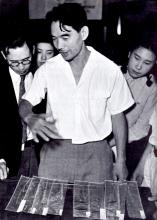
Hitoshi Kihara (1893 – 1986) was one of the most famous Japanese geneticists of the 20th century. One of his most significant contributions was identifying sex chromosomes (X and Y) in flowering plants.
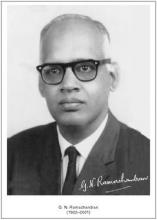
Gopalasamudram Narayanan Ramachandran (8 October 1922 – 7 April 2001) is best known for developing the Ramachandran plot to understand the structure of short chains of amino acids, known as peptides.
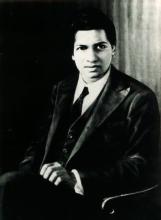
Srinivasa Ramanujan (22 December 1887 – 26 April 1920) was a math prodigy and widely considered one of India’s greatest mathematicians. Despite having almost no formal training in mathematics, he made substantial contributions to mathematical analysis, number theory, infinite series and continued fractions.
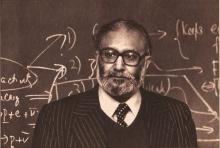
Mohammad Abdus Salam (29 January 1926 – 21 November 1996) was a theoretical physicist and the first Pakistani to receive a Nobel Prize in science.
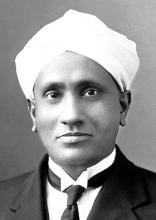
Sir Chandrasekhara Venkata Raman (7 November 1888 – 21 November 1970) was an Indian physicist who performed ground-breaking research in the field of light-scattering.
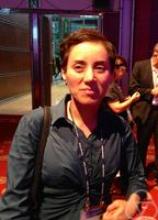
Mathematician Maryam Mirzakhani (12 May 1977 – 14 July 2017) was the first and only woman and Iranian to date to win the Fields Medal in 2014 for her work on curved surfaces.
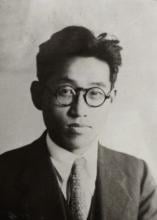
Joo-myung Seok (November 13, 1908 – October 6, 1950) was a Korean butterfly entomologist who made important contributions to the taxonomy of the native butterfly species in Korea.
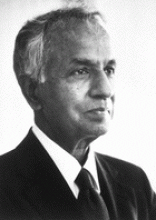
Subrahmanyan Chandrasekhar (19 October 1910 – 21 August 1995) was an Indian astrophysicist who studied the structure and evolution of stars.
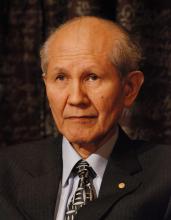
Osamu Shimomura (27 August 1928 – 19 October 2018) was a Japanese organic chemist and marine biologist who dedicated his career to understanding how organisms emitted light.
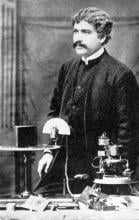
Sir Jagadish Chandra Bose (30 November 1858 – 23 November 1937) was a scientist and inventor who contributed to a wide range of scientific fields such as physics, botany and biology.
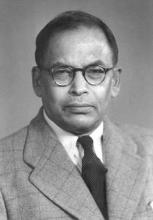
Meghnad Saha (6 October 1893 – 16 February 1956) was an Indian astrophysicist best known for formulating the Saha ionization equation which describes the chemical and physical properties of stars.
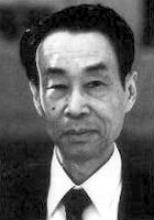
Motoo Kimura (13 November 1924 – 13 November 1994) was a Japanese theoretical population geneticist who is best remembered for developing the neutral theory of molecular evolution.

Chika Kuroda (24 March 1884 – 8 November 1968) was a Japanese chemist whose research focussed on the structures of natural pigments.
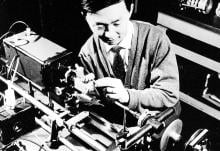
Charles Kuen Kao (Nov. 4, 1933 to Sept. 23, 2018) was an engineer who is regarded as the father of fibre optics. His work in the 1960s on long distance signal transmission using very pure glass fibres revolutionized telecommunications, enabling innovations such as the Internet.
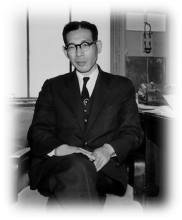
The field of solid-state ionics originated in Europe, but Takehiko Takahashi of Nagoya University in Japan was the first to coin the term ‘solid ionics’ in 1967. ‘Solid-state ionics’ first appeared in 1971 in another of his papers, and was likely a play on ‘solid-state electronics’, another rapidly growing field at the time.
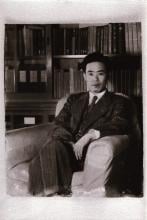
Japanese physicist Ukichiro Nakaya (1900-1962) made the world’s first artificial snowflakes. He started his research on snow crystals in the early 1930s at Hokkaido University, where there is an unlimited supply of natural snow in winter. By taking over 3,000 photographs, he established a classification of natural snow crystals and described their relationship with weather conditions.
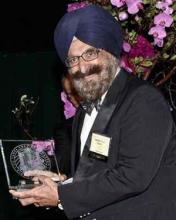
Physicist Narinder Singh Kapany (31 October 1926 – 4 December 2020) pioneered the use of optical fibres to transmit images, and founded several optical technology companies. Born in Punjab, India, he worked at a local optical instruments factory before moving to London for PhD studies at Imperial College. There, he devised a flexible fibrescope to convey images along bundles of glass fibres.
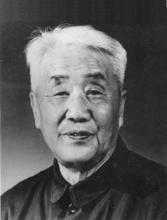
Chinese palaeontologist, archaeologist and anthropologist Pei Wenzhong (January 19, 1904 – September 18, 1982) is regarded as a founder of Chinese anthropology.
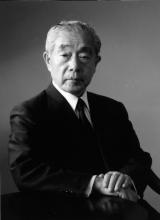
Japanese chemist Kenichi Fukui (4 October 1918 – 9 January 1998) was the first Asian scientist to be awarded the Nobel Prize in Chemistry. Together with Roald Hoffman, he received this honour in 1981 for his independent research into the mechanisms of chemical reactions.
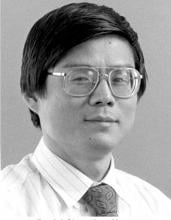
South Korean theoretical physicist Daniel Chonghan Hong (3 March 1956 – 6 July 2002) achieved fame in the public sphere through his research into the physics of popcorn.
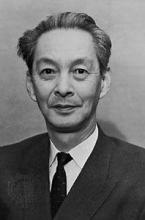
Shinichiro Tomonaga (31 March 1906 – 8 July 1979), together with Richard Feynman and Julian Schwinger, was awarded the Nobel Prize in Physics in 1965, for their contributions to advance the field of quantum electrodynamics. Tomonaga was also a strong proponent of peace, who actively campaigned against the proliferation of nuclear weapons and promoted the peaceful use of nuclear energy.
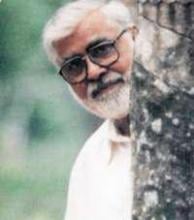
Known as Mr. Natural Rubber, chemist and researcher B. C. Shekhar (17 November 1929 – 6 September 2006) introduced a number of technical innovations that helped put Malaysia’s natural rubber industry on the world map.

Lin Lanying (7 February 1918 – 4 March 2003) was a Chinese material engineer remembered for her contributions to the field of semiconductor and aerospace materials. Lanying was born into a family who did not believe in educating girls and she was not allowed to go to school.
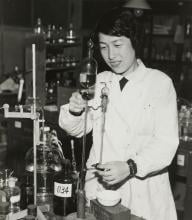
Japanese geochemist Katsuko Saruhashi developed the first method and tools for measuring carbon dioxide in seawater