
Science
News
09 Mar 2011
The Agency for Science, Technology and Research (A*STAR)
Singapore, 9 March 2011 - Global experts in nanoformulation will be gathering in Singapore for the first time to exchange ideas and foster collaborations with international partners in NanoFormulation2011, the 2nd of three international events organised under an EU-funded programme called InForm (Integrating Nanomaterials in Formulations).
08 Mar 2011
RIKEN
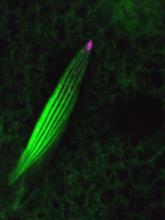
Some molecules have a single, highly specific function in physiology, while others have a much broader remit. Kinases in the IKK family are of the latter sort, playing a variety of roles. A new report from RIKEN shows that this factor regulates shuttling of endosomes in the tips of growing mechanosensory bristles.
08 Mar 2011
RIKEN
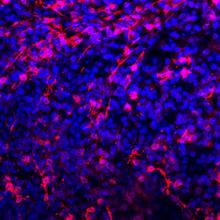
Retinitis pigmentosa (RP) is a cluster of genetically determined eye disorders that cause visual defects such as night blindness and narrowing of the field of vision, due to progressive loss of rod photoreceptors. New work by Zi-Bing Jin and colleagues looks to add a set of powerful new tools for those searching for treatments for RP.
08 Mar 2011
RIKEN
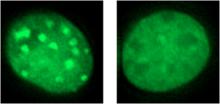
A great many cellular processes are switched on or off by the modification of a given enzyme or other protein by addition of a phosphate molecule, known as phosphorylation. In a new study, researchers at RIKEN have shown that phosphorylation of the protein HP1α boosts its ability to bind to heterochromatin resulting in stabilization of chromosomes

07 Mar 2011
National Institute for Materials Science (NIMS)
Dr. Kazuhiro Hono, NIMS Fellow and Managing Director of Magnetic Materials Center, had received the TMS Fellows Award from the Minerals, Metals & Materials Society (TMS).

07 Mar 2011
Nature Publishing Group
Summaries of newsworthy papers - Medicine: Minimally invasive diagnosis of Down syndrome; Genetics: Variants associated with heart disease; Methods: A simple pluripotency test for human stem cells; Chemical Biology: TB in view; Genetics: Variant associated with high risk of sick sinus syndrome; And finally…Biotechnology: Biofuels from proteins
04 Mar 2011
RIKEN
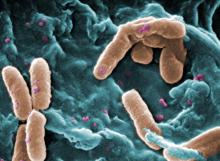
The structure of a greenhouse gas-producing bacterial enzyme may yield insights into the evolution of our earliest oxygen-breathing ancestors
04 Mar 2011
RIKEN
Calculations can now predict when and how spins of electrons and ions arrange in one-dimensional multiferroic materials
04 Mar 2011
RIKEN
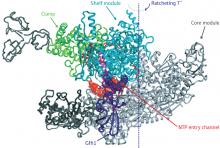
An analysis of the interactions of a gene-reading enzyme with an inhibitor protein provides surprising insights

04 Mar 2011
The Hong Kong Polytechnic University (PolyU)
Seafood is known to often contain small quantities of mercury. A team of researchers from the Hong Kong Polytechnic University (PolyU) have been investigating the impacts of long term exposure to mercury on the brain, determining its effect on protein expression.
04 Mar 2011
The Hong Kong Polytechnic University (PolyU)
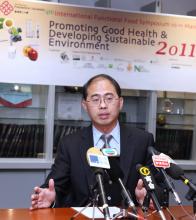
The Hong Kong Polytechnic University (PolyU) will host the fifth International Functional Food Symposium, which is themed on “Promoting Good Health and Developing a Sustainable Environment”, on its campus from 10 to 11 March 2011.

03 Mar 2011
Universiti Putra Malaysia (UPM)
Researchers have measured the genetic diversity of saline tolerant rice from across India. This analysis is used to predict which genotypes should be used to develop higher yields in difficult, salt rich soil conditions, and the work is published in the February edition of Pertanika Journal of Tropical Agricultural Science (JTAS).
03 Mar 2011
The Agency for Science, Technology and Research (A*STAR)
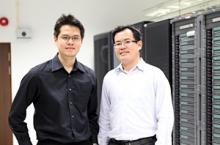
The rapid development of computational tools is shedding light on new genetic and molecular studies, but it is also creating headaches for the scientists involved in this research.
03 Mar 2011
The Agency for Science, Technology and Research (A*STAR)
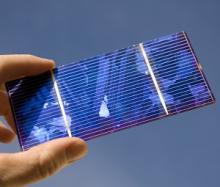
Short pulses of laser light can crystallize amorphous silicon and create a nanostructured surface texture ideal for solar-cell applications
03 Mar 2011
A*STAR I2R
30 international experts gather for workshop organized jointly by the US Board on Global Science and Technology and Singapore’s Agency for Science, Technology and Research
02 Mar 2011
Nature Publishing Group
Summaries of newsworthy papers - Astrophysics: How the Sun loses its spots; Climate science: Local impact of insolation on climate variation; Quantum physics: Another role for Bose–Einstein condensates; And finally… The double life of annelid worms.
02 Mar 2011
Nature Publishing Group
In Nature China this week - Immunology: Allergy control; Medical biology: To my heart's keeper; Organic chemistry: Come together; Plant genomics: Soy story; Metals: Strong and stretchy; Solid-state physics: Small vibrations, big applications.
02 Mar 2011
Universiti Sains Malaysia
Universiti Sains Malaysia (USM) is the first university in the region to take the initiative in conducting research on Orang Utan, the most endangered species in the world.

02 Mar 2011
Universiti Malaysia Sarawak
Universiti Malaysia Sarawak's (Unimas) ‘Sarawak Dolphin Project' (SDP) took a step forward in combating threats to coastal cetaceans in the region through a regional workshop in Permai Rainforest Resort.

01 Mar 2011
Universiti Teknologi MARA (UiTM)
A team of plant experts from the Faculty of Applied Sciences, Universiti Teknologi MARA, have conducted research on the potential use of the plant growth regulators, paclobutrazol and uniconazole, to enhance flowering in Etlingera elatior.
01 Mar 2011
Universiti Malaysia Sarawak
It is the responsibility of scientists to work closely with government bodies and developers on the best way to prevent biodiversity loss due to development.
28 Feb 2011
Universiti Teknologi MARA (UiTM)
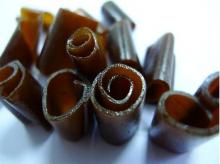
UiTM food researchers Noriham Abdullah, Marina Zulkifli, Mohd Hilmi Hassan, Wan Nur Zahidah Wan Zainon and Nur Ilmiah Alimin have developed a new process for the formulation of fruit peel based snacks to bridge the gap between fast, on-the-go snacking and meeting consumer health concerns.
27 Feb 2011
Nature Publishing Group
Summaries of newsworthy papers - Chemical Biology: Biofuels by bugs; Geoscience: Weakness in the San Andreas Fault
25 Feb 2011
National Institute for Materials Science (NIMS)
Kyoto University and University of Illinois announced on 14th January 2011 that they have succeeded in observing half-height magnetization steps in strontium ruthenium oxide (Sr2RuO4).
25 Feb 2011
National Institute for Materials Science (NIMS)
Entanglement is the basis of quantum computing. Although spin ensembles, such as those used in liquid-state nuclear magnetic resonance have been examined, the results contain no entanglement and ultimately constitute classical simulations of quantum algorithms.
25 Feb 2011
RIKEN
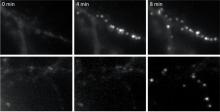
Insights into a specific secretion mechanism in the brain could lead to a better understanding of anxiety in unfamiliar or stressful environments
25 Feb 2011
RIKEN
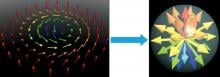
Exotic entities that arrange into a crystalline structure at near room-temperature could lead to a new approach to electronic memory
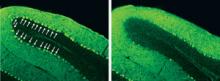
25 Feb 2011
RIKEN
Particular types of neuronal loss and brain damage are caused by a molecular mechanism associated with calcium signaling
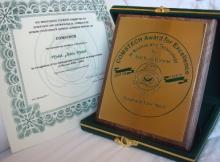
24 Feb 2011
Universiti Putra Malaysia (UPM)
A professor from the Department of Computer and Communication Systems, Faculty of Engineering, Universiti Putra Malaysia, Prof. Dr. Mohd. Adzir Mahdi had been awarded COMSTECH Young Scientist Award.
23 Feb 2011
Nature Publishing Group
Summaries of newsworthy papers - Climate science: Not a drop to drink; News Features and Comment: The animal-testing conflict; Neuroscience: Helpless neurons; Earth science: Volcanic tremor explained; Physics: Coupled quantum pendulums; And finally… A leg-up for arthropod evolution
Giants in history

Chinese-American physicist Tsung-Dao Lee (24 November 1926 – 4 August 2024) was awarded the Nobel Prize for Physics in 1957 together with Chen-Ning Yang for their work challenging the symmetry law in subatomic particles. They were the first Chinese Nobel prize winners, with Lee becoming the second-youngest laureate. Born in Shanghai, he went to the United States on scholarship and studied under another Nobel winner, Enrico Fermi.

Turkish astrophysicist Dilhan Eryurt (29 November 1926 – 13 September 2012) conducted research on how the sun affects environmental conditions on the moon.
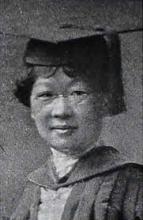
Chinese biochemist Chi Che Wang (1894 - 1979), one of the first Chinese women to study abroad, advanced to prominent research positions at American institutions including the University of Chicago and the Northwestern University Medical School.
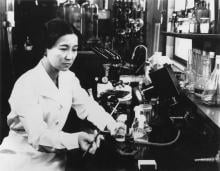
Ruby Sakae Hirose (1904 – 1960) was a Japanese-American scientist whose research contributed significantly to our understanding of blood clotting, allergies and cancer.

Chinese electron microscopy specialist Li Fanghua (6 January 1932 – 24 January 2020) facilitated the high-resolution imaging of crystal structures by eliminating interference.
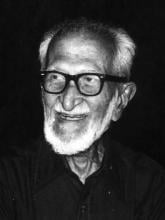
Sálim Moizuddin Abdul Ali (12 November 1896 – 20 June 1987), commonly referred to as the Birdman of India, was the first person to conduct systematic surveys of birds from across India.

Haisako Koyama (1916 – 1997) was a Japanese solar observer whose dedication to recording sunspots – cooler parts of the sun’s surface that appear dark – produced a sunspot record of historic importance.
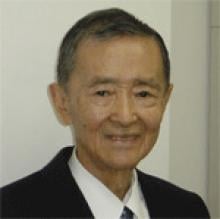
Michiaki Takahashi (17 February 1928 – 16 December 2013) was a Japanese virologist who developed the first chickenpox vaccine.
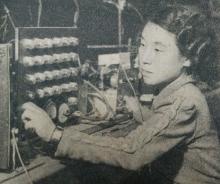
Toshiko Yuasa (11 December 1909 – 1 February 1980) was the first Japanese female physicist whose research on radioactivity shed light on beta decay – the process in which an atom emits a beta particle (electron) and turns into a different element.

Angelita Castro Kelly (1942-2015) was the first female Mission Operations Manager (MOM) of NASA. She spearheaded and supervised the Earth Observing System missions during its developmental stage.
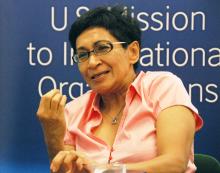
Malaysia’s first astrophysicist, Mazlan binti Othman (born 11 December 1951) was instrumental in launching the country’s first microsatellite, and in sending Malaysia’s first astronaut, Sheikh Muszaphar Shukor, into space.

Bibha Chowdhuri (1913 – 2 June 1991) was an Indian physicist who researched on particle physics and cosmic rays. In 1936, she was the only female to complete a M.Sc. degree at the University of Calcutta.

Meemann Chang (born 17 April 1936) is a Chinese palaeontologist who studied the fossils of ancient fish to understand the evolution of life. By examining fossils, she uncovered new insights on how vertebrates, animals with a backbone, migrated from the sea and became adapted to live on land.
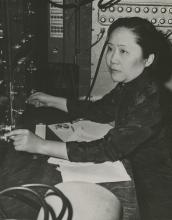
Chien-Shiung Wu (31 May 1912 – 16 February 1997) was an experimental physicist who made several important contributions to nuclear physics. Wu worked on the Manhattan Project – a top-secret program for the production of nuclear weapons during World War II and helped to develop a process for separating uranium into U235 and U238.

Hitoshi Kihara (1893 – 1986) was one of the most famous Japanese geneticists of the 20th century. One of his most significant contributions was identifying sex chromosomes (X and Y) in flowering plants.
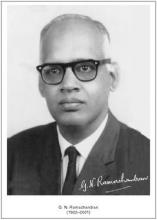
Gopalasamudram Narayanan Ramachandran (8 October 1922 – 7 April 2001) is best known for developing the Ramachandran plot to understand the structure of short chains of amino acids, known as peptides.
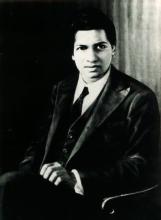
Srinivasa Ramanujan (22 December 1887 – 26 April 1920) was a math prodigy and widely considered one of India’s greatest mathematicians. Despite having almost no formal training in mathematics, he made substantial contributions to mathematical analysis, number theory, infinite series and continued fractions.
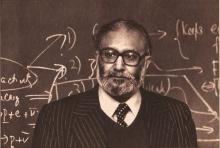
Mohammad Abdus Salam (29 January 1926 – 21 November 1996) was a theoretical physicist and the first Pakistani to receive a Nobel Prize in science.
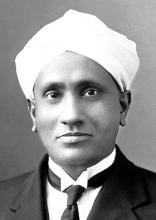
Sir Chandrasekhara Venkata Raman (7 November 1888 – 21 November 1970) was an Indian physicist who performed ground-breaking research in the field of light-scattering.
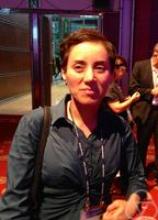
Mathematician Maryam Mirzakhani (12 May 1977 – 14 July 2017) was the first and only woman and Iranian to date to win the Fields Medal in 2014 for her work on curved surfaces.

Joo-myung Seok (November 13, 1908 – October 6, 1950) was a Korean butterfly entomologist who made important contributions to the taxonomy of the native butterfly species in Korea.
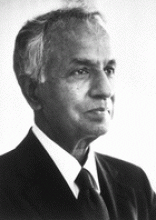
Subrahmanyan Chandrasekhar (19 October 1910 – 21 August 1995) was an Indian astrophysicist who studied the structure and evolution of stars.
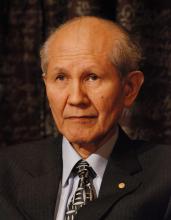
Osamu Shimomura (27 August 1928 – 19 October 2018) was a Japanese organic chemist and marine biologist who dedicated his career to understanding how organisms emitted light.
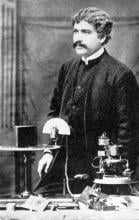
Sir Jagadish Chandra Bose (30 November 1858 – 23 November 1937) was a scientist and inventor who contributed to a wide range of scientific fields such as physics, botany and biology.
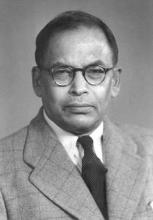
Meghnad Saha (6 October 1893 – 16 February 1956) was an Indian astrophysicist best known for formulating the Saha ionization equation which describes the chemical and physical properties of stars.
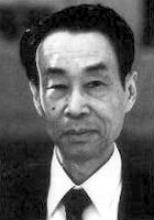
Motoo Kimura (13 November 1924 – 13 November 1994) was a Japanese theoretical population geneticist who is best remembered for developing the neutral theory of molecular evolution.

Chika Kuroda (24 March 1884 – 8 November 1968) was a Japanese chemist whose research focussed on the structures of natural pigments.
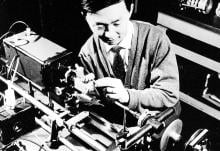
Charles Kuen Kao (Nov. 4, 1933 to Sept. 23, 2018) was an engineer who is regarded as the father of fibre optics. His work in the 1960s on long distance signal transmission using very pure glass fibres revolutionized telecommunications, enabling innovations such as the Internet.
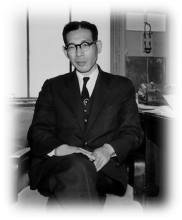
The field of solid-state ionics originated in Europe, but Takehiko Takahashi of Nagoya University in Japan was the first to coin the term ‘solid ionics’ in 1967. ‘Solid-state ionics’ first appeared in 1971 in another of his papers, and was likely a play on ‘solid-state electronics’, another rapidly growing field at the time.

Japanese physicist Ukichiro Nakaya (1900-1962) made the world’s first artificial snowflakes. He started his research on snow crystals in the early 1930s at Hokkaido University, where there is an unlimited supply of natural snow in winter. By taking over 3,000 photographs, he established a classification of natural snow crystals and described their relationship with weather conditions.
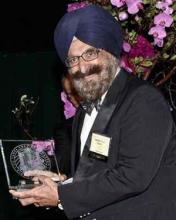
Physicist Narinder Singh Kapany (31 October 1926 – 4 December 2020) pioneered the use of optical fibres to transmit images, and founded several optical technology companies. Born in Punjab, India, he worked at a local optical instruments factory before moving to London for PhD studies at Imperial College. There, he devised a flexible fibrescope to convey images along bundles of glass fibres.
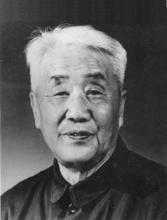
Chinese palaeontologist, archaeologist and anthropologist Pei Wenzhong (January 19, 1904 – September 18, 1982) is regarded as a founder of Chinese anthropology.
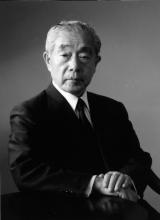
Japanese chemist Kenichi Fukui (4 October 1918 – 9 January 1998) was the first Asian scientist to be awarded the Nobel Prize in Chemistry. Together with Roald Hoffman, he received this honour in 1981 for his independent research into the mechanisms of chemical reactions.
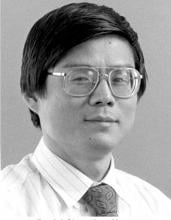
South Korean theoretical physicist Daniel Chonghan Hong (3 March 1956 – 6 July 2002) achieved fame in the public sphere through his research into the physics of popcorn.
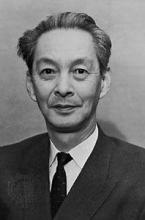
Shinichiro Tomonaga (31 March 1906 – 8 July 1979), together with Richard Feynman and Julian Schwinger, was awarded the Nobel Prize in Physics in 1965, for their contributions to advance the field of quantum electrodynamics. Tomonaga was also a strong proponent of peace, who actively campaigned against the proliferation of nuclear weapons and promoted the peaceful use of nuclear energy.
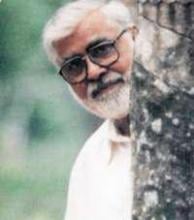
Known as Mr. Natural Rubber, chemist and researcher B. C. Shekhar (17 November 1929 – 6 September 2006) introduced a number of technical innovations that helped put Malaysia’s natural rubber industry on the world map.

Lin Lanying (7 February 1918 – 4 March 2003) was a Chinese material engineer remembered for her contributions to the field of semiconductor and aerospace materials. Lanying was born into a family who did not believe in educating girls and she was not allowed to go to school.
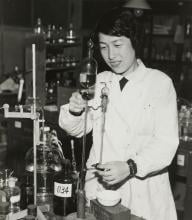
Japanese geochemist Katsuko Saruhashi developed the first method and tools for measuring carbon dioxide in seawater