

Science
News
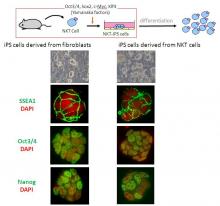
01 Jun 2010
RIKEN
Tokyo, 2 June - A technique for producing natural killer T (NKT) cells, known for their role in suppressing tumor growth, has been successfully demonstrated for the first time using induced pluripotent stem (iPS) cells. The technique opens the door to effective new cell-targeted treatments for cancer.
30 May 2010
Asia Research News
Asia Research News highlights interesting research from selected institutions in Asia. Interesting articles in Agriculture, Aquaculture, Technology, Language, Environment, Society, Health and Medicine and Health Technology.

28 May 2010
RIKEN
Solving part of the long-standing puzzle of the electronic properties of an enigmatic temperature phase of a titanium oxide may yield new clues
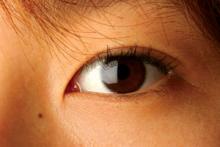
28 May 2010
RIKEN
Proper maturation of the visual cortex in mice, and possibly humans, depends on a maternal gene
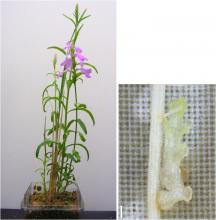
27 May 2010
RIKEN
Tokyo, 27 May - A research team at RIKEN, Japan’s flagship research organization, has uncovered the first ever evidence of nuclear gene transfer from host to parasite plant species. The discovery, reported in Science this week, hints at a greater role for horizontal gene transfer in plant evolution.

27 May 2010
The Hong Kong Polytechnic University (PolyU)
More than 300 leading experts in geospatial information science (GIS) from over 20 countries and regions are gathering at The Hong Kong Polytechnic University (PolyU) from 26 to 28 May to participate in the Joint International Conference on Theory, Data Handling and Modelling in GeoSpatial Information Science.

26 May 2010
Nature Publishing Group
Summaries of newsworthy papers include: Clues from beneath Mars; Island-hopping dinosaurs; Keeping the flow; The magic of tin; A double-edged sword; A weak lowermost mantle? The secret life of Nectocaris
26 May 2010
Nature Publishing Group
A review in the journal Mucosal Immunolog,y as part of a special issue about allergy, details how a breakdown in lung tolerance to harmless allergens such as pollens, dander or dust can trigger the onset of asthma.
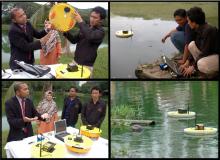
24 May 2010
Universiti Sains Malaysia
A team of Universiti Sains Malaysia (USM) researchers have produced a device based on the concept of Autonomous Surface Vehicles (ASV) which can accelerate the process of marine data collection and minimize manpower.
24 May 2010
Nature Publishing Group
In an Opinion piece online in Nature, David Valentine suggests that scientists should measure the methane dissolved in the gulf’s waters to estimate the total spillage.
24 May 2010
RIKEN
TOKYO, 24 May - The Bioinformatics And Systems Engineering (BASE), a division of RIKEN, Japan’s flagship research institute, is holding its first ever International Rational Genome Design Contest (GenoCon) on the semantic web between May 25 and September 30.
23 May 2010
Nature Publishing Group
Gene improves grain yield in rice; Methane from extinct herbivores; How will global warming affect El Niño?; Cutting to the core of protein splicing; Ancient warming caused increased wildfire risk; Integrating signals
21 May 2010
RIKEN
On March 18–19, RIKEN held its second symposium on biosupercomputing in downtown Tokyo, focusing on new directions in life science research made possible by high-performance supercomputing
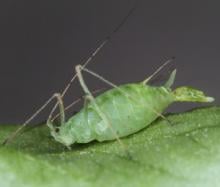
21 May 2010
RIKEN
Genomic data reveal surprising insights into the essential partnership between a widespread plant pest and a symbiotic bacterium dwelling within its cells

21 May 2010
RIKEN
Discovery of the heaviest known Borromean nucleus provides a new testing ground for fundamental nuclear models
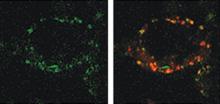
21 May 2010
RIKEN
Inducing cells to destroy a misfolded protein alleviates the symptoms of Huntington's disease in mice
21 May 2010
Nature Publishing Group
Researchers at the J. Craig Venter Institute (JCVI) made the much-anticipated announcement today in the journal Science that they have created a replicating “synthetic cell” — a bacterium with its DNA replaced by a 100% prosthetic genome.

20 May 2010
The World Academy of Sciences (TWAS)
Deadline Extended to 15 June 2010
19 May 2010
Nature Publishing Group
Accelerating the search for drugs; Climate warming and malaria; Definitely warmer; Cancer culprit found; Disarming the world's nukes; A different class, times two?; New clues to high-Tc superconductivity from fullerides; Toxoplasma exocytosis enzyme; Natural weapons
19 May 2010
Nature Publishing Group
Summaries of newsworthy papers include: Fake Botox, Real Threat; Washing Carbon Out of the Air; Did Neandertals Think Like Us?; Alzheimer’s: Forestalling the Darkness
19 May 2010
Nature Publishing Group
The average health status of people who drink low or moderate amounts of alcohol is better than tee-totallers suggests a study published in the European Journal of Clinical Nutrition.
19 May 2010
Nature Publishing Group
Maternal warmth appears to reduce the expression of pro-inflammatory proteins which are associated with adverse circumstances and are implicated in the onset of major depression and cardiovascular disease.
18 May 2010
Nature Publishing Group
Genome wide association studies dominate human genetic research today, but why have the variants identified explained so little of the heritability of common disorders such as diabetes and heart disease?
18 May 2010
Nature Publishing Group
Summaries of newsworthy papers include: Large Rashba spin splitting of a metallic surfacestate band on a semiconductor surface; Intestinal stem cells lacking the Math1 tumour suppressor are refractory to Notch inhibitors
16 May 2010
Nature Publishing Group
Patterns in future health impacts from heatwaves; World’s smallest pump is made from pure glass; Brain imaging — the cells behind the signals; New genes involved in autism and intellectual disability; Coming between a virus and its host; Surviving DNA damage in stem cells
14 May 2010
RIKEN
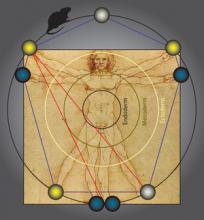
An atlas of protein–protein interactions reveals the collaborative efforts underlying gene regulation in mice and men
14 May 2010
RIKEN
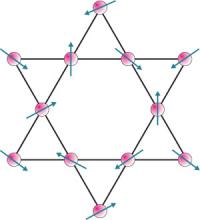
The presence of exotic particles, called spinons, might now be detectable in a magnetic field, providing insight into quantum magnet properties
14 May 2010
Waseda University
Nanotechnology is technology for the complete control of materials in the extremely microscopic field of nanometers (1 nanometer = 10-9 meters). Many unknown areas still exist in this field of manipulating materials on a scale that is close to an atomic level.
14 May 2010
Waseda University
The Ministry of Education, Culture, Sports, Science and Technology’s Private University Academic Research Development Promotion Project is a project to ensure private universities become a foundation for research and development and a pillar for promoting development.
14 May 2010
Waseda University
"Research organizations", independently introduced by Waseda University, are the organizational framework meant to fulfill a general role, as well as to promote strategic research activity on the part of the university.
Giants in history

Chinese-American physicist Tsung-Dao Lee (24 November 1926 – 4 August 2024) was awarded the Nobel Prize for Physics in 1957 together with Chen-Ning Yang for their work challenging the symmetry law in subatomic particles. They were the first Chinese Nobel prize winners, with Lee becoming the second-youngest laureate. Born in Shanghai, he went to the United States on scholarship and studied under another Nobel winner, Enrico Fermi.

Turkish astrophysicist Dilhan Eryurt (29 November 1926 – 13 September 2012) conducted research on how the sun affects environmental conditions on the moon.
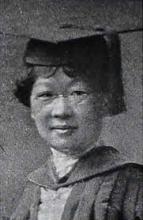
Chinese biochemist Chi Che Wang (1894 - 1979), one of the first Chinese women to study abroad, advanced to prominent research positions at American institutions including the University of Chicago and the Northwestern University Medical School.
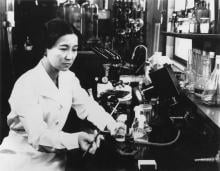
Ruby Sakae Hirose (1904 – 1960) was a Japanese-American scientist whose research contributed significantly to our understanding of blood clotting, allergies and cancer.
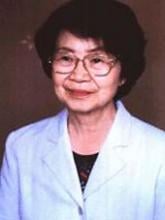
Chinese electron microscopy specialist Li Fanghua (6 January 1932 – 24 January 2020) facilitated the high-resolution imaging of crystal structures by eliminating interference.
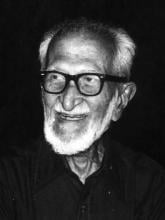
Sálim Moizuddin Abdul Ali (12 November 1896 – 20 June 1987), commonly referred to as the Birdman of India, was the first person to conduct systematic surveys of birds from across India.
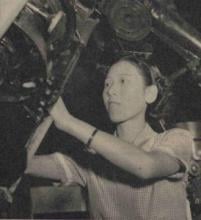
Haisako Koyama (1916 – 1997) was a Japanese solar observer whose dedication to recording sunspots – cooler parts of the sun’s surface that appear dark – produced a sunspot record of historic importance.
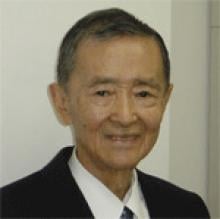
Michiaki Takahashi (17 February 1928 – 16 December 2013) was a Japanese virologist who developed the first chickenpox vaccine.
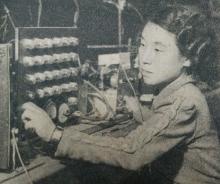
Toshiko Yuasa (11 December 1909 – 1 February 1980) was the first Japanese female physicist whose research on radioactivity shed light on beta decay – the process in which an atom emits a beta particle (electron) and turns into a different element.

Angelita Castro Kelly (1942-2015) was the first female Mission Operations Manager (MOM) of NASA. She spearheaded and supervised the Earth Observing System missions during its developmental stage.
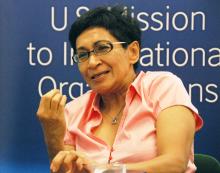
Malaysia’s first astrophysicist, Mazlan binti Othman (born 11 December 1951) was instrumental in launching the country’s first microsatellite, and in sending Malaysia’s first astronaut, Sheikh Muszaphar Shukor, into space.

Bibha Chowdhuri (1913 – 2 June 1991) was an Indian physicist who researched on particle physics and cosmic rays. In 1936, she was the only female to complete a M.Sc. degree at the University of Calcutta.
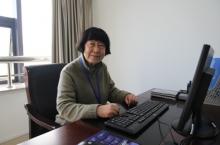
Meemann Chang (born 17 April 1936) is a Chinese palaeontologist who studied the fossils of ancient fish to understand the evolution of life. By examining fossils, she uncovered new insights on how vertebrates, animals with a backbone, migrated from the sea and became adapted to live on land.
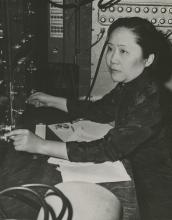
Chien-Shiung Wu (31 May 1912 – 16 February 1997) was an experimental physicist who made several important contributions to nuclear physics. Wu worked on the Manhattan Project – a top-secret program for the production of nuclear weapons during World War II and helped to develop a process for separating uranium into U235 and U238.
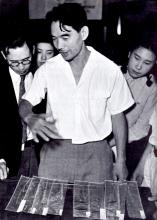
Hitoshi Kihara (1893 – 1986) was one of the most famous Japanese geneticists of the 20th century. One of his most significant contributions was identifying sex chromosomes (X and Y) in flowering plants.
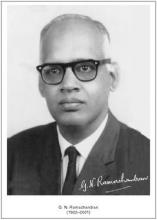
Gopalasamudram Narayanan Ramachandran (8 October 1922 – 7 April 2001) is best known for developing the Ramachandran plot to understand the structure of short chains of amino acids, known as peptides.
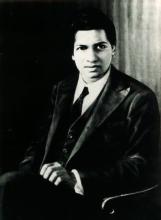
Srinivasa Ramanujan (22 December 1887 – 26 April 1920) was a math prodigy and widely considered one of India’s greatest mathematicians. Despite having almost no formal training in mathematics, he made substantial contributions to mathematical analysis, number theory, infinite series and continued fractions.
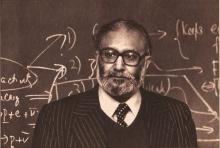
Mohammad Abdus Salam (29 January 1926 – 21 November 1996) was a theoretical physicist and the first Pakistani to receive a Nobel Prize in science.
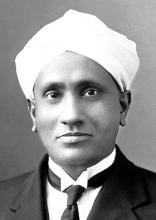
Sir Chandrasekhara Venkata Raman (7 November 1888 – 21 November 1970) was an Indian physicist who performed ground-breaking research in the field of light-scattering.

Mathematician Maryam Mirzakhani (12 May 1977 – 14 July 2017) was the first and only woman and Iranian to date to win the Fields Medal in 2014 for her work on curved surfaces.
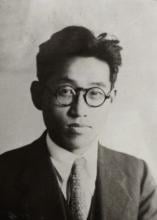
Joo-myung Seok (November 13, 1908 – October 6, 1950) was a Korean butterfly entomologist who made important contributions to the taxonomy of the native butterfly species in Korea.
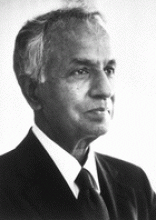
Subrahmanyan Chandrasekhar (19 October 1910 – 21 August 1995) was an Indian astrophysicist who studied the structure and evolution of stars.
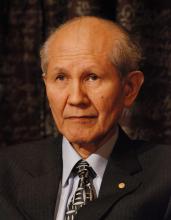
Osamu Shimomura (27 August 1928 – 19 October 2018) was a Japanese organic chemist and marine biologist who dedicated his career to understanding how organisms emitted light.
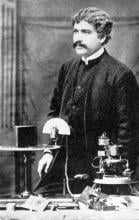
Sir Jagadish Chandra Bose (30 November 1858 – 23 November 1937) was a scientist and inventor who contributed to a wide range of scientific fields such as physics, botany and biology.
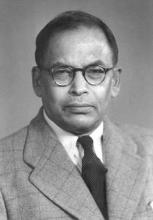
Meghnad Saha (6 October 1893 – 16 February 1956) was an Indian astrophysicist best known for formulating the Saha ionization equation which describes the chemical and physical properties of stars.
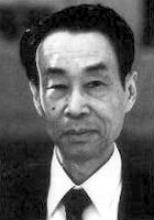
Motoo Kimura (13 November 1924 – 13 November 1994) was a Japanese theoretical population geneticist who is best remembered for developing the neutral theory of molecular evolution.

Chika Kuroda (24 March 1884 – 8 November 1968) was a Japanese chemist whose research focussed on the structures of natural pigments.
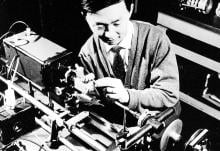
Charles Kuen Kao (Nov. 4, 1933 to Sept. 23, 2018) was an engineer who is regarded as the father of fibre optics. His work in the 1960s on long distance signal transmission using very pure glass fibres revolutionized telecommunications, enabling innovations such as the Internet.
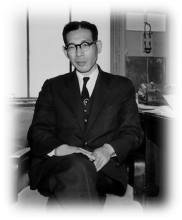
The field of solid-state ionics originated in Europe, but Takehiko Takahashi of Nagoya University in Japan was the first to coin the term ‘solid ionics’ in 1967. ‘Solid-state ionics’ first appeared in 1971 in another of his papers, and was likely a play on ‘solid-state electronics’, another rapidly growing field at the time.
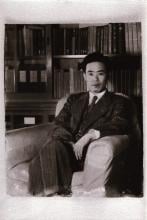
Japanese physicist Ukichiro Nakaya (1900-1962) made the world’s first artificial snowflakes. He started his research on snow crystals in the early 1930s at Hokkaido University, where there is an unlimited supply of natural snow in winter. By taking over 3,000 photographs, he established a classification of natural snow crystals and described their relationship with weather conditions.
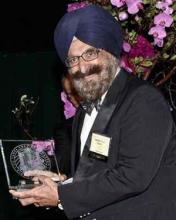
Physicist Narinder Singh Kapany (31 October 1926 – 4 December 2020) pioneered the use of optical fibres to transmit images, and founded several optical technology companies. Born in Punjab, India, he worked at a local optical instruments factory before moving to London for PhD studies at Imperial College. There, he devised a flexible fibrescope to convey images along bundles of glass fibres.
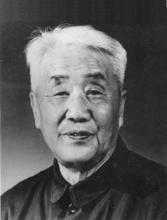
Chinese palaeontologist, archaeologist and anthropologist Pei Wenzhong (January 19, 1904 – September 18, 1982) is regarded as a founder of Chinese anthropology.
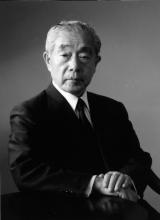
Japanese chemist Kenichi Fukui (4 October 1918 – 9 January 1998) was the first Asian scientist to be awarded the Nobel Prize in Chemistry. Together with Roald Hoffman, he received this honour in 1981 for his independent research into the mechanisms of chemical reactions.
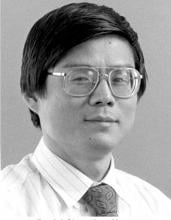
South Korean theoretical physicist Daniel Chonghan Hong (3 March 1956 – 6 July 2002) achieved fame in the public sphere through his research into the physics of popcorn.
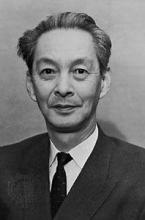
Shinichiro Tomonaga (31 March 1906 – 8 July 1979), together with Richard Feynman and Julian Schwinger, was awarded the Nobel Prize in Physics in 1965, for their contributions to advance the field of quantum electrodynamics. Tomonaga was also a strong proponent of peace, who actively campaigned against the proliferation of nuclear weapons and promoted the peaceful use of nuclear energy.
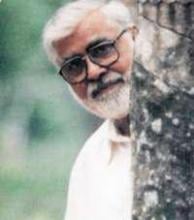
Known as Mr. Natural Rubber, chemist and researcher B. C. Shekhar (17 November 1929 – 6 September 2006) introduced a number of technical innovations that helped put Malaysia’s natural rubber industry on the world map.

Lin Lanying (7 February 1918 – 4 March 2003) was a Chinese material engineer remembered for her contributions to the field of semiconductor and aerospace materials. Lanying was born into a family who did not believe in educating girls and she was not allowed to go to school.
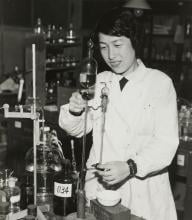
Japanese geochemist Katsuko Saruhashi developed the first method and tools for measuring carbon dioxide in seawater