
Science
News

18 Apr 2007
Nature Publishing Group
Summaries of newsworthy papers include Geology: The big melts and Fossils: Tell it to the trees
15 Apr 2007
NAM S&T Centre
Microelectronics is the cornerstone of the information technologies that pervade virtually every aspect of contemporary life. This publication contains contributions from renowned experts and status reports on the subject from several developing countries: Cuba, India, Pakistan, Philippines, Sri Lanka, Tanzania and Turkey.
15 Apr 2007
Nature Publishing Group
Genetic susceptibility to Crohn disease, Mutation leads to male infertility, Astrocytes kill neurons in ALS, Increasing bad cholesterol levels
15 Apr 2007
Nature Publishing Group
TEN QUESTIONS SCIENCE CAN’T ANSWER (YET), PLEASURABLE KINGDOM ▪ SEX, DRUGS AND DNA ▪ LONESOME GEORGE
11 Apr 2007
Nature Publishing Group
Summaries of newsworthy papers include Cancer: Genes linked to chemotherapy response, Smart materials: A light touch, Photochemistry: Quantum tricks in photosynthesis and finally… Punish the rich
11 Apr 2007
NAM S&T Centre
In line with its resolute efforts to promote south-south cooperation, the NAM S&T Centre has instituted two Fellowship schemes aimed at supporting deserving young scientists in developing countries.
08 Apr 2007
Nature Publishing Group
Amplification of oestrogen receptor gene in breast cancer, Natural genetic variant influencing rice grain weight, Stabilization contra retardation, How one’s own DNA can cause autoimmunity, Enrichment of metabolites with chemical probes
04 Apr 2007
Nature Publishing Group
Summaries of newsworthy papers include Winds of change, Antibiotic-resistant bacteria meet their match?, Geomagnetic data captured in crystals, A salty solution, The great electron escape and Algorithm for group success?
02 Apr 2007
International Development Research Centre (IDRC)
They are unlikely heroes — poor families who eke out a living fishing by lantern-light. Yet, they have been recognized internationally for their efforts to conserve the marine environment on the Danajon Bank in the Central Philippines.
01 Apr 2007
Nature Publishing Group
Fibre circuits for electronic fabrics, From A and B to O: Towards universal red blood cells, Prostate cancer risk variants and Autoantibody production by perturbed B cells

01 Apr 2007
Asia Research News
The Arab Science and Technology Foundation (ASTF) is pleased to announce that the registration phase for the Competition Made in the Arab World (MIA) is extended to April 15th 2007
29 Mar 2007
Universiti Sains Malaysia
Rana monjerai is believed to only exist around the mountainous and cool, Gunung Jerai area and live in areas near clean rivers, far from pollution.
26 Mar 2007
Nature Publishing Group
Researchers have discovered a pair of twins who are identical through their mother’s side, but share only half their genes on their father’s, reports a News Exclusive from [email protected].
25 Mar 2007
Nature Publishing Group
Summaries of newsworthy papers published in Nature Journals online on 25 March 2007 including: Too much of a good thing?, Protein sensing in full colour, Next-generation glass, The shape of drugs to come, Genetic variant associated with susceptibility to osteoarthritis, Brain cells seen in context.

23 Mar 2007
Keio University
Scientists at Keio University report a first-of-a-kind quantitative picture of molecular components of the common intestinal bacterium E. coli. The group studied this unicellular organism at an unprecedented depth to reveal the remarkable overall robustness of its metabolic network to gene deletion and changes in growth conditions.

22 Mar 2007
Universiti Malaysia Sabah
In its decade long research into frogs and toads in Borneo, the Institute for Tropical Biology and Conservation has achieved much including highlighting conservation priority areas, setting up Asia's first Frog Museum and is now working on popularising biodiversity for environmental conservation with 'Anurans Tourism'.
21 Mar 2007
Nature Publishing Group
Materials: Brute force yields new molecules, Neuroscience: Emotion and moral judgements, Earth sciences: Ocean crust formation, Geology: The driving force of plate tectonics, Organic chemistry: Unprotected complexity, Evolutionary ecology: Understanding evolutionary bursts
21 Mar 2007
Nature Publishing Group
Teen smokers who were also exposed to nicotine before birth show a dramatic reduction in attention capacities related to vision and hearing. The study also demonstrates that male and female attention capacities are affected by the exposure in different ways.
18 Mar 2007
Nature Publishing Group
Summaries of newsworthy papers in Nature journals online on 18 March 2007 including Understanding cancer spread, Spawn of hag, and Reversing the magnetic vortex core.
14 Mar 2007
Nature Publishing Group
Summaries of newsworthy papers appearing in Nature Vol.446 No.7133 dated 15 MARCH 2007: Fossil sheds light on middle ear evolution, The aftermath of a catastrophic collision, The shape and evolution of subduction zones, Life history of a photon, Light fantastic, Tracking tremor beneath Japan and Surprise addition to flowering plant family tree
13 Mar 2007
Nature Publishing Group
Scientists have identified unforeseen mechanisms by which quinolones - a family of broad-spectrum antibiotics among the most widely prescribed - induce bacterial cell death. The study is published online this week in Molecular Systems Biology.
11 Mar 2007
Nature Publishing Group
Summary of newsworthy papers appearing in Nature Journals on 11 March 2007: Seeing antigen-presenting cells in action, Multiferroics as the ultimate memory? How stress causes anxiety in adolescent mice, Bacteria-mediated immune system paralysis, Jumonji family removing the mark & A cheap alternative for large scale RNA interference screens.
09 Mar 2007
Institute of Bioengineering and Nanotechnology
IBN’s Nano-Bio Kits help teachers show the latest applications in bioengineering and nanotechnology through interactive experiments
07 Mar 2007
Nature Publishing Group
Commentary: Trial and distribution, Hydrology: Water on Mars revisited, Materials: Silica to silicon, Evolution: Small genome paved the way for flight?, Plant biology: Size matters, Planetary science: Sun makes an asteroid spin faster
04 Mar 2007
Nature Publishing Group
Summaries of newsworthy papers include Genomic marker for lung cancer, A natural barrier to HIV transmission, Mitochondrial point mutations do not limit lifespan, New immune cell exit strategy
02 Mar 2007
International Development Research Centre (IDRC)
IDRC's research activities focus on four program areas: Social and Economic Policy, Environment and Natural Resource Management, Information and Communication Technologies(ICTs) for Development and Innovation, Policy and Science
01 Mar 2007
Nature Publishing Group
This pioneering Web 2.0 toolkit will help scientists everywhere to meet like-minded researchers, hold online discussions, showcase their work via personal homepages, share information with groups (open or private) and tag content. Participation is free to all.
28 Feb 2007
Nature Publishing Group
Summaries of newsworthy papers include Microscopy: Microscopes offer chemical ID, Immunology: Silkworm virus sussed, Developmental biology: Skin deep, Materials: How flat can flat get?, Organization in the zebrafish spinal cord
28 Feb 2007
Institute of Bioengineering and Nanotechnology
18-year-old’s award-winning research project brings her to the Nobel Prize ceremonies; Other students inspired to take up research scholarships

28 Feb 2007
International Rice Research Institute
Los Baños, Philippines – The important role, and impact, of women in rice research has been highlighted with the awarding of the L'Oréal-UNESCO Women in Science awards for 2007
Giants in history

Chinese-American physicist Tsung-Dao Lee (24 November 1926 – 4 August 2024) was awarded the Nobel Prize for Physics in 1957 together with Chen-Ning Yang for their work challenging the symmetry law in subatomic particles. They were the first Chinese Nobel prize winners, with Lee becoming the second-youngest laureate. Born in Shanghai, he went to the United States on scholarship and studied under another Nobel winner, Enrico Fermi.

Turkish astrophysicist Dilhan Eryurt (29 November 1926 – 13 September 2012) conducted research on how the sun affects environmental conditions on the moon.
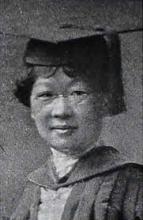
Chinese biochemist Chi Che Wang (1894 - 1979), one of the first Chinese women to study abroad, advanced to prominent research positions at American institutions including the University of Chicago and the Northwestern University Medical School.
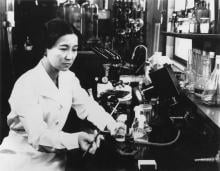
Ruby Sakae Hirose (1904 – 1960) was a Japanese-American scientist whose research contributed significantly to our understanding of blood clotting, allergies and cancer.
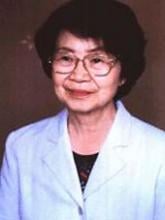
Chinese electron microscopy specialist Li Fanghua (6 January 1932 – 24 January 2020) facilitated the high-resolution imaging of crystal structures by eliminating interference.
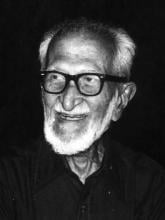
Sálim Moizuddin Abdul Ali (12 November 1896 – 20 June 1987), commonly referred to as the Birdman of India, was the first person to conduct systematic surveys of birds from across India.
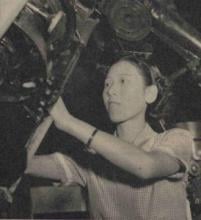
Haisako Koyama (1916 – 1997) was a Japanese solar observer whose dedication to recording sunspots – cooler parts of the sun’s surface that appear dark – produced a sunspot record of historic importance.
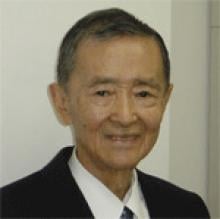
Michiaki Takahashi (17 February 1928 – 16 December 2013) was a Japanese virologist who developed the first chickenpox vaccine.
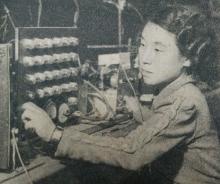
Toshiko Yuasa (11 December 1909 – 1 February 1980) was the first Japanese female physicist whose research on radioactivity shed light on beta decay – the process in which an atom emits a beta particle (electron) and turns into a different element.

Angelita Castro Kelly (1942-2015) was the first female Mission Operations Manager (MOM) of NASA. She spearheaded and supervised the Earth Observing System missions during its developmental stage.
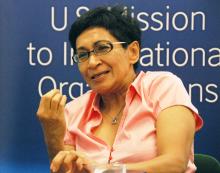
Malaysia’s first astrophysicist, Mazlan binti Othman (born 11 December 1951) was instrumental in launching the country’s first microsatellite, and in sending Malaysia’s first astronaut, Sheikh Muszaphar Shukor, into space.

Bibha Chowdhuri (1913 – 2 June 1991) was an Indian physicist who researched on particle physics and cosmic rays. In 1936, she was the only female to complete a M.Sc. degree at the University of Calcutta.
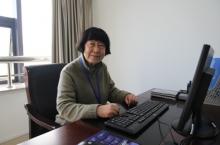
Meemann Chang (born 17 April 1936) is a Chinese palaeontologist who studied the fossils of ancient fish to understand the evolution of life. By examining fossils, she uncovered new insights on how vertebrates, animals with a backbone, migrated from the sea and became adapted to live on land.
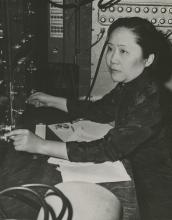
Chien-Shiung Wu (31 May 1912 – 16 February 1997) was an experimental physicist who made several important contributions to nuclear physics. Wu worked on the Manhattan Project – a top-secret program for the production of nuclear weapons during World War II and helped to develop a process for separating uranium into U235 and U238.
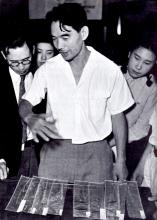
Hitoshi Kihara (1893 – 1986) was one of the most famous Japanese geneticists of the 20th century. One of his most significant contributions was identifying sex chromosomes (X and Y) in flowering plants.
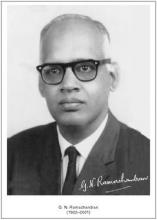
Gopalasamudram Narayanan Ramachandran (8 October 1922 – 7 April 2001) is best known for developing the Ramachandran plot to understand the structure of short chains of amino acids, known as peptides.
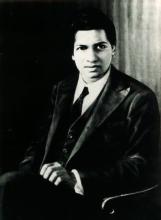
Srinivasa Ramanujan (22 December 1887 – 26 April 1920) was a math prodigy and widely considered one of India’s greatest mathematicians. Despite having almost no formal training in mathematics, he made substantial contributions to mathematical analysis, number theory, infinite series and continued fractions.
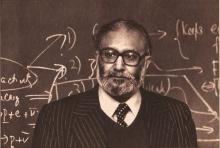
Mohammad Abdus Salam (29 January 1926 – 21 November 1996) was a theoretical physicist and the first Pakistani to receive a Nobel Prize in science.
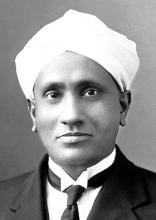
Sir Chandrasekhara Venkata Raman (7 November 1888 – 21 November 1970) was an Indian physicist who performed ground-breaking research in the field of light-scattering.
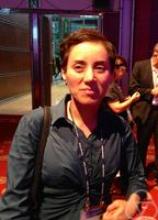
Mathematician Maryam Mirzakhani (12 May 1977 – 14 July 2017) was the first and only woman and Iranian to date to win the Fields Medal in 2014 for her work on curved surfaces.
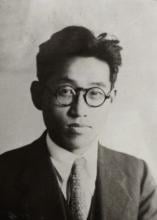
Joo-myung Seok (November 13, 1908 – October 6, 1950) was a Korean butterfly entomologist who made important contributions to the taxonomy of the native butterfly species in Korea.
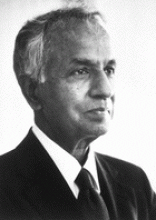
Subrahmanyan Chandrasekhar (19 October 1910 – 21 August 1995) was an Indian astrophysicist who studied the structure and evolution of stars.
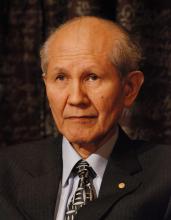
Osamu Shimomura (27 August 1928 – 19 October 2018) was a Japanese organic chemist and marine biologist who dedicated his career to understanding how organisms emitted light.
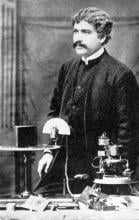
Sir Jagadish Chandra Bose (30 November 1858 – 23 November 1937) was a scientist and inventor who contributed to a wide range of scientific fields such as physics, botany and biology.
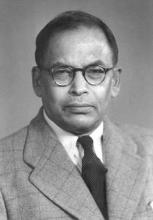
Meghnad Saha (6 October 1893 – 16 February 1956) was an Indian astrophysicist best known for formulating the Saha ionization equation which describes the chemical and physical properties of stars.
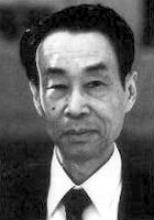
Motoo Kimura (13 November 1924 – 13 November 1994) was a Japanese theoretical population geneticist who is best remembered for developing the neutral theory of molecular evolution.

Chika Kuroda (24 March 1884 – 8 November 1968) was a Japanese chemist whose research focussed on the structures of natural pigments.
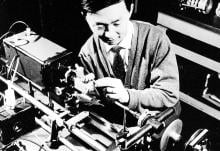
Charles Kuen Kao (Nov. 4, 1933 to Sept. 23, 2018) was an engineer who is regarded as the father of fibre optics. His work in the 1960s on long distance signal transmission using very pure glass fibres revolutionized telecommunications, enabling innovations such as the Internet.
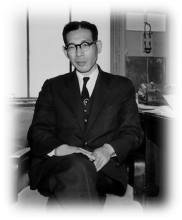
The field of solid-state ionics originated in Europe, but Takehiko Takahashi of Nagoya University in Japan was the first to coin the term ‘solid ionics’ in 1967. ‘Solid-state ionics’ first appeared in 1971 in another of his papers, and was likely a play on ‘solid-state electronics’, another rapidly growing field at the time.
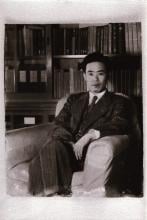
Japanese physicist Ukichiro Nakaya (1900-1962) made the world’s first artificial snowflakes. He started his research on snow crystals in the early 1930s at Hokkaido University, where there is an unlimited supply of natural snow in winter. By taking over 3,000 photographs, he established a classification of natural snow crystals and described their relationship with weather conditions.
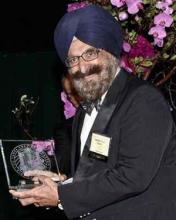
Physicist Narinder Singh Kapany (31 October 1926 – 4 December 2020) pioneered the use of optical fibres to transmit images, and founded several optical technology companies. Born in Punjab, India, he worked at a local optical instruments factory before moving to London for PhD studies at Imperial College. There, he devised a flexible fibrescope to convey images along bundles of glass fibres.
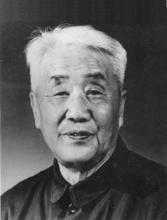
Chinese palaeontologist, archaeologist and anthropologist Pei Wenzhong (January 19, 1904 – September 18, 1982) is regarded as a founder of Chinese anthropology.
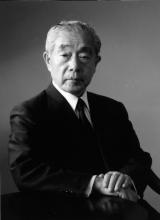
Japanese chemist Kenichi Fukui (4 October 1918 – 9 January 1998) was the first Asian scientist to be awarded the Nobel Prize in Chemistry. Together with Roald Hoffman, he received this honour in 1981 for his independent research into the mechanisms of chemical reactions.
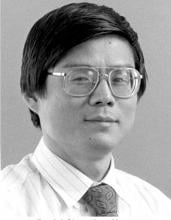
South Korean theoretical physicist Daniel Chonghan Hong (3 March 1956 – 6 July 2002) achieved fame in the public sphere through his research into the physics of popcorn.
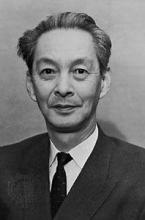
Shinichiro Tomonaga (31 March 1906 – 8 July 1979), together with Richard Feynman and Julian Schwinger, was awarded the Nobel Prize in Physics in 1965, for their contributions to advance the field of quantum electrodynamics. Tomonaga was also a strong proponent of peace, who actively campaigned against the proliferation of nuclear weapons and promoted the peaceful use of nuclear energy.
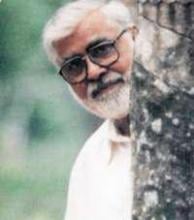
Known as Mr. Natural Rubber, chemist and researcher B. C. Shekhar (17 November 1929 – 6 September 2006) introduced a number of technical innovations that helped put Malaysia’s natural rubber industry on the world map.

Lin Lanying (7 February 1918 – 4 March 2003) was a Chinese material engineer remembered for her contributions to the field of semiconductor and aerospace materials. Lanying was born into a family who did not believe in educating girls and she was not allowed to go to school.
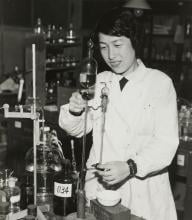
Japanese geochemist Katsuko Saruhashi developed the first method and tools for measuring carbon dioxide in seawater